

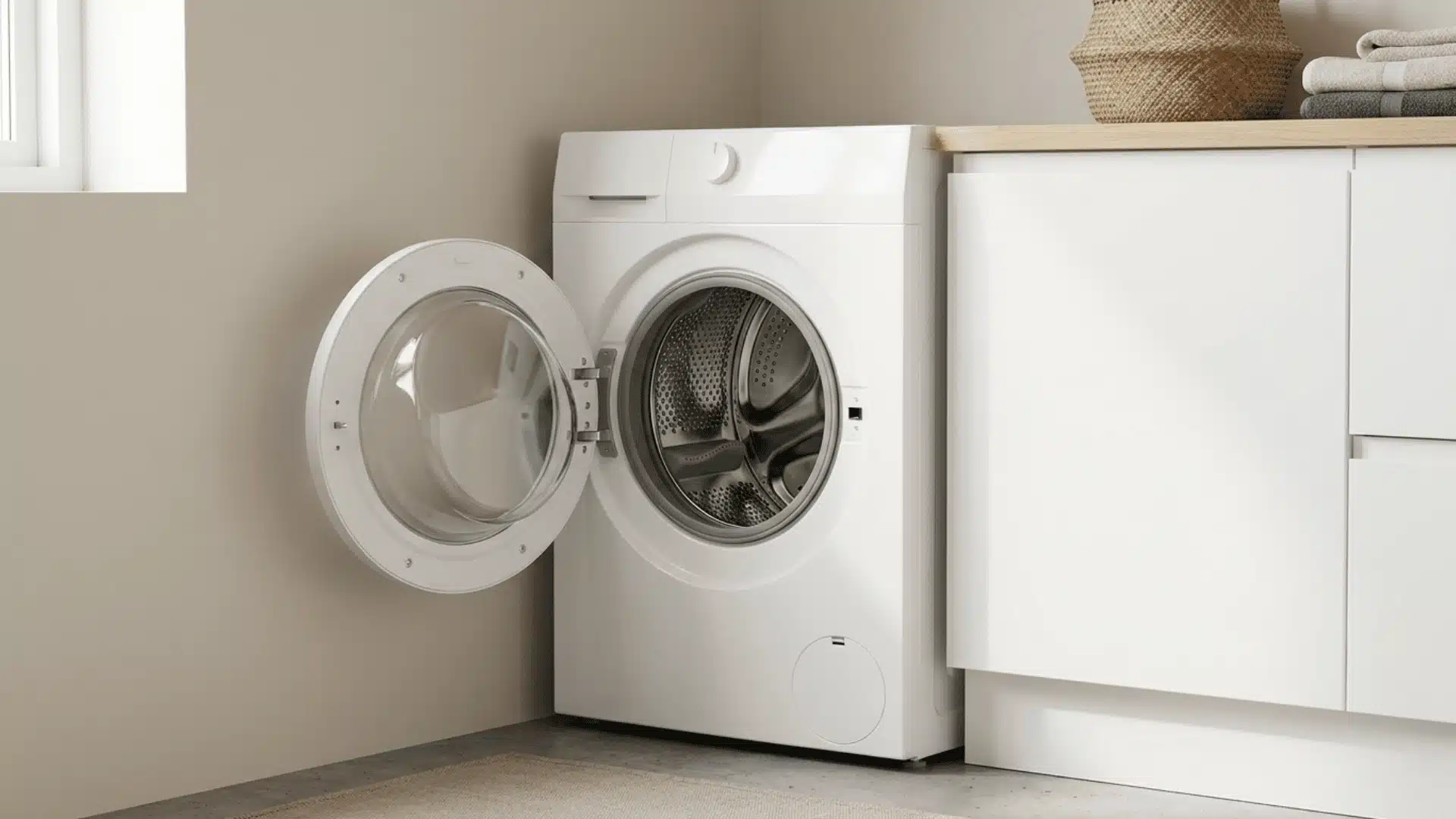
The smell in your washing machine is not coming from the drum. It comes from three specific spots: the rubber door gasket, the detergent dispenser, and the filter.
A good DIY washing machine cleaner uses white vinegar and baking soda in two separate cycles. But those cycles only work when the physical buildup in those three spots is already gone. Run the cycles first and you are just pushing loosened grime back through the machine.
This guide covers the manual steps, the two-cycle sequence, and the three habits that stop the smell from coming back.
Why Does a Washing Machine Smell, and Where Does the Problem Actually Start?
The gasket, dispenser, and filter are the three spots that hold the smell. They stay sealed and damp between every wash. That combination of trapped moisture and no airflow is exactly what mold and mildew need to grow.
The drum gets a hot rinse with every wash. Those three areas do not.
There is a second layer to this that catches most people off guard.
Excess detergent does not rinse away cleanly. It leaves a sticky residue on the drum walls, inside the dispenser, and in the rubber folds of the gasket.
That residue traps moisture and gives mold a surface to grip. You end up with both the condition and the food source in the same place.
The filter compounds the problem further. It collects hair, lint, and debris with every wash. When it gets clogged, water cannot drain fully, which means standing water sits inside the machine after the cycle ends. No hot rinse will fix that; the problem there is physical, not chemical.
If you have been running cleaning cycles and the smell keeps coming back, this is why. The cycles clean the drum. They do not reach any of these three spots. You need to clear the buildup by hand first, then run the cycles.
What Do You Need to Make a DIY Washing Machine Cleaner?
White vinegar and baking soda do the heavy lifting. Vinegar dissolves mineral deposits and breaks down soap scum. Baking soda neutralizes the odor the vinegar cycle disturbs but does not fully eliminate on its own. In two separate cycles, they cover both problems.
Here is what to gather before you start:
- Distilled white vinegar: used in the first cycle and for manual scrubbing on the gasket and dispenser
- Baking soda: goes directly into the drum for the second cycle to neutralize residual odor
- Microfiber cloths: for wiping the drum, door, and gasket dry after each phase
- An old toothbrush: the only tool that gets into the gasket folds and the dispenser cavity properly
- A shallow pan or old towel: place this under the filter before opening it, and there will be standing water
That is everything. If you want to add a few drops of essential oil to the baking soda cycle for scent, you can, it is optional and does nothing for cleaning performance.
How to Clean a Washing Machine with Vinegar and Baking Soda
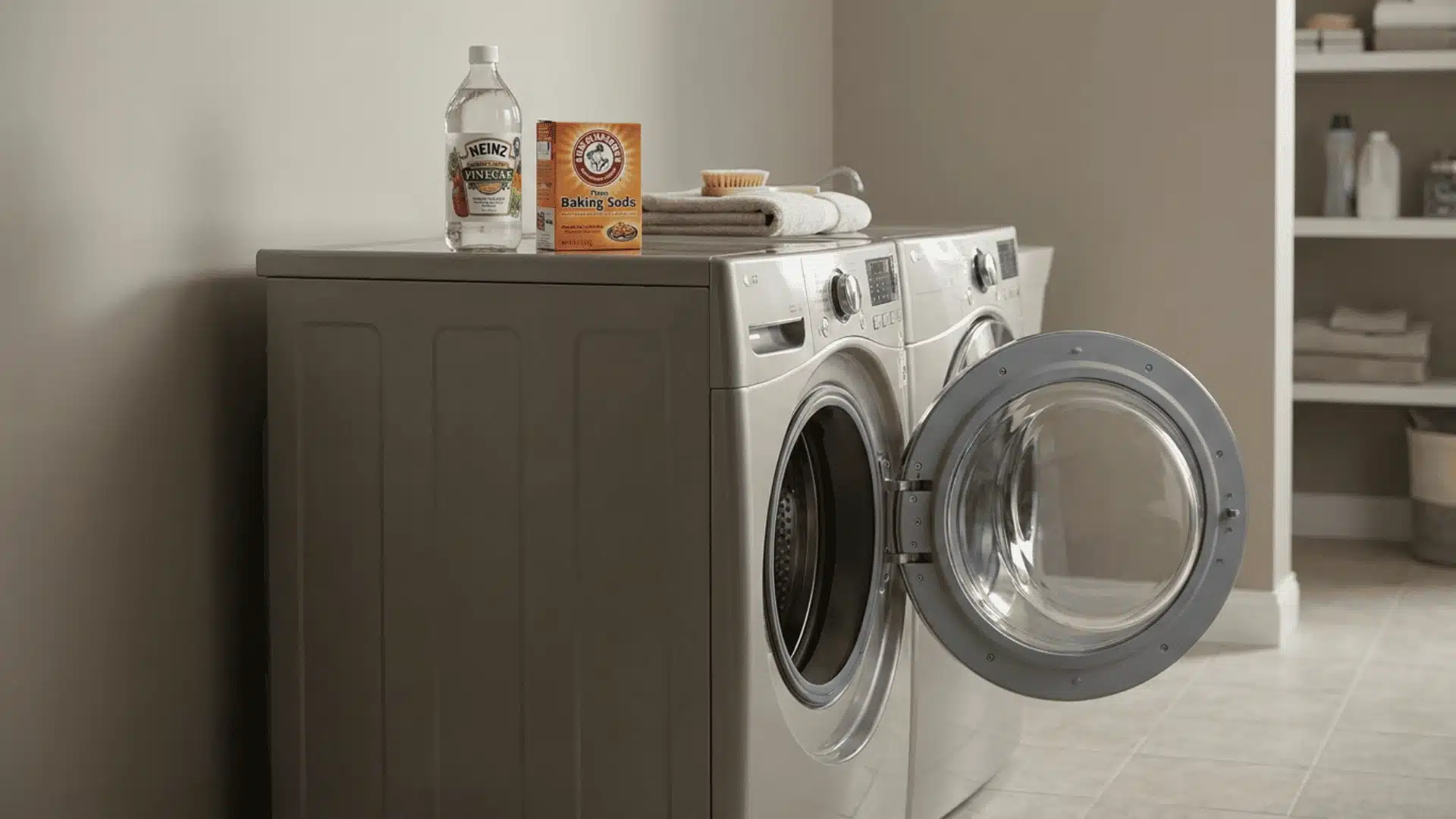
There are three phases and the order is not negotiable. Manual cleaning first, then the vinegar cycle, then the baking soda cycle. Reverse the order and you get a surface clean, not a real one.
Step 1 — Clean the Gasket, Dispenser, and Filter by Hand
Start here. These three spots hold the actual buildup that produces the smell. The cycles that follow will not reach any of them.
Clean the Rubber Gasket (Front-Loaders Only)
Check the door seal. You’ll probably see some dark gunk or mold hiding in the folds.
Spray it with plain white vinegar and grab an old toothbrush to scrub every crease, especially the bottom where water collects. Then, wipe it dry with a microfiber cloth.
If the mold is really black and stubborn, put on a mold gel and leave it overnight before wiping. If you have a top-loader, skip this step; there’s no gasket to worry about.
Clean the Detergent Dispenser
Pull out the detergent drawer. Most just slide out, but if there’s a tab at the back, press it. Soak the drawer in warm water with a splash of vinegar for 10–15 minutes.
Then scrub off any leftover residue, rinse, and let it air dry. Don’t forget the little cavity the drawer sits in, spray that with vinegar and scrub it too. Gunk loves to hide there.
Clean the Filter
Check your manual to find the filter. On front-loaders, it’s usually behind a small panel at the bottom front. On top-loaders, it’s often inside the drum rim or in the agitator.
Put a towel and a shallow pan underneath before opening it. Take out the filter, rinse it under hot water, and clear any hair or lint. If it smells, soak it in vinegar for a few minutes first.
Don’t skip this; I’ve seen machines that looked fine on the outside but had filters so clogged the water inside was brown.
Step 2 — Run the Vinegar Cycle, Then the Baking Soda Cycle
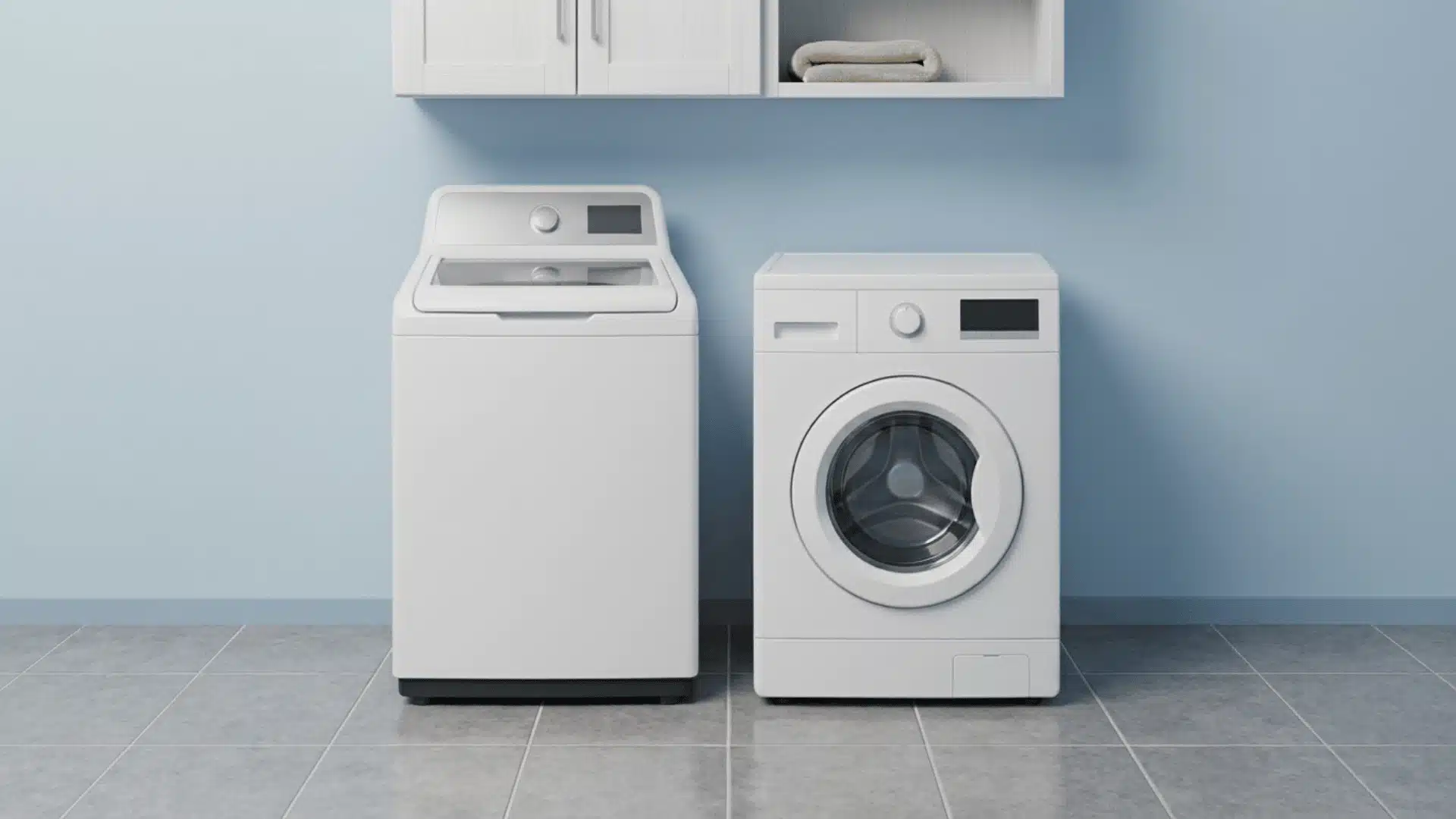
Two cycles, run back to back but separately. Vinegar and baking soda cancel each other out when mixed in the same cycle, they neutralize and produce nothing useful for cleaning. Run them in sequence and each one does its job.
Cycle 1 — Vinegar
Pour distilled white vinegar directly into the drum or the main detergent dispenser.
Use 2 cups for a front-loader. Use 3 to 4 cups for a top-loader, which has a larger drum.
Set the machine to the hottest water setting and the largest load size, then run a full cycle. The hot water activates the vinegar to break down hard water mineral deposits and loosen detergent buildup coating the drum walls and internal hoses.
If your top-loader allows it, pause the cycle once the drum fills and let the vinegar sit for 30 to 60 minutes before resuming. Front-loaders do not need the soak.
Cycle 2 — Baking Soda
Leave the machine empty. Pour half a cup of baking soda directly into the drum and run another full cycle on the same hot, large setting. This cycle neutralizes the residual acidity left by the vinegar and clears the odor it disturbed but did not fully remove.
If your machine has a Tub Clean or Self Clean setting, use it instead of selecting hot and large manually. It is the manufacturer’s intended path for this process and produces the same result.
Step 3 — Wipe Down and Build the Habits That Stop the Smell Returning
Once the second cycle finishes, run a damp microfiber cloth around the inside of the drum and across the door seal. Then wipe the exterior panels and door with a mild cleaner. Two minutes of work removes anything the cycles loosened but did not fully flush.
Now the three habits. In my experience, these matter more than how often you run a cleaning cycle.
Leave the door open after every wash. Not just on cleaning day, every single time. A closed door traps residual moisture inside the drum and seal, which is the exact condition mold needs to grow back. If your machine has a dispenser drawer, pull it out slightly too.
Use less detergent. If you are measuring by eye or filling the cap, you are almost certainly using too much. Excess detergent does not rinse out cleanly. It coats the drum and dispenser, builds up over time, and feeds the same odor problem you just removed. Less detergent, rinsed more completely, beats more detergent rinsed partially, every time.
Open door, pulled dispenser drawer, less detergent. Those three habits do more to keep your machine clean than any cleaning routine will.
Wrapping Up
A DIY washing machine cleaner made from white vinegar and baking soda genuinely works, but only when it follows the manual step, not instead of it.
The gasket, dispenser, and filter are where the problem lives. Clear those first, run the two cycles in order, and the smell goes.
Keep the door open after every wash, pull the dispenser drawer out to dry, and cut back on detergent.
Those three habits are what keep it gone. If the smell returns, go back to the filter. That is where the answer almost always is.
Frequently Asked Questions
How often should I clean my washing machine?
Once a month works for most households. If you notice odor or visible residue before that, clean immediately and do not wait for the schedule. Front-loaders need it more consistently than top-loaders because the sealed door traps more moisture. The monthly habit also keeps the filter from becoming clogged enough to cause standing water inside the machine.
My machine still smells after cleaning. What did I miss?
Check the filter first. It is the most commonly skipped step and the most likely reason the smell comes back. If the gasket has visible black mold, one wipe with vinegar will not clear it; apply a mold-specific gel, let it sit overnight, then wipe it off. A clogged filter holds standing water that no cycle can reach.
Can I use bleach instead of vinegar?
You can, but do not mix bleach with vinegar or baking soda; the combination can release harmful fumes. Bleach kills surface mold but does not dissolve mineral deposits or detergent residue the way vinegar does. Use one or the other, never together, and run a plain hot rinse cycle after bleach to clear any residue from the drum.
Do I need to clean my washing machine if it has a self-clean cycle?
The self-clean cycle handles the drum but does not reach the gasket, the dispenser drawer, or the filter. Run it regularly for the drum, but still clean those three components by hand every month. The self-clean cycle supplements the manual steps; it does not replace them.