

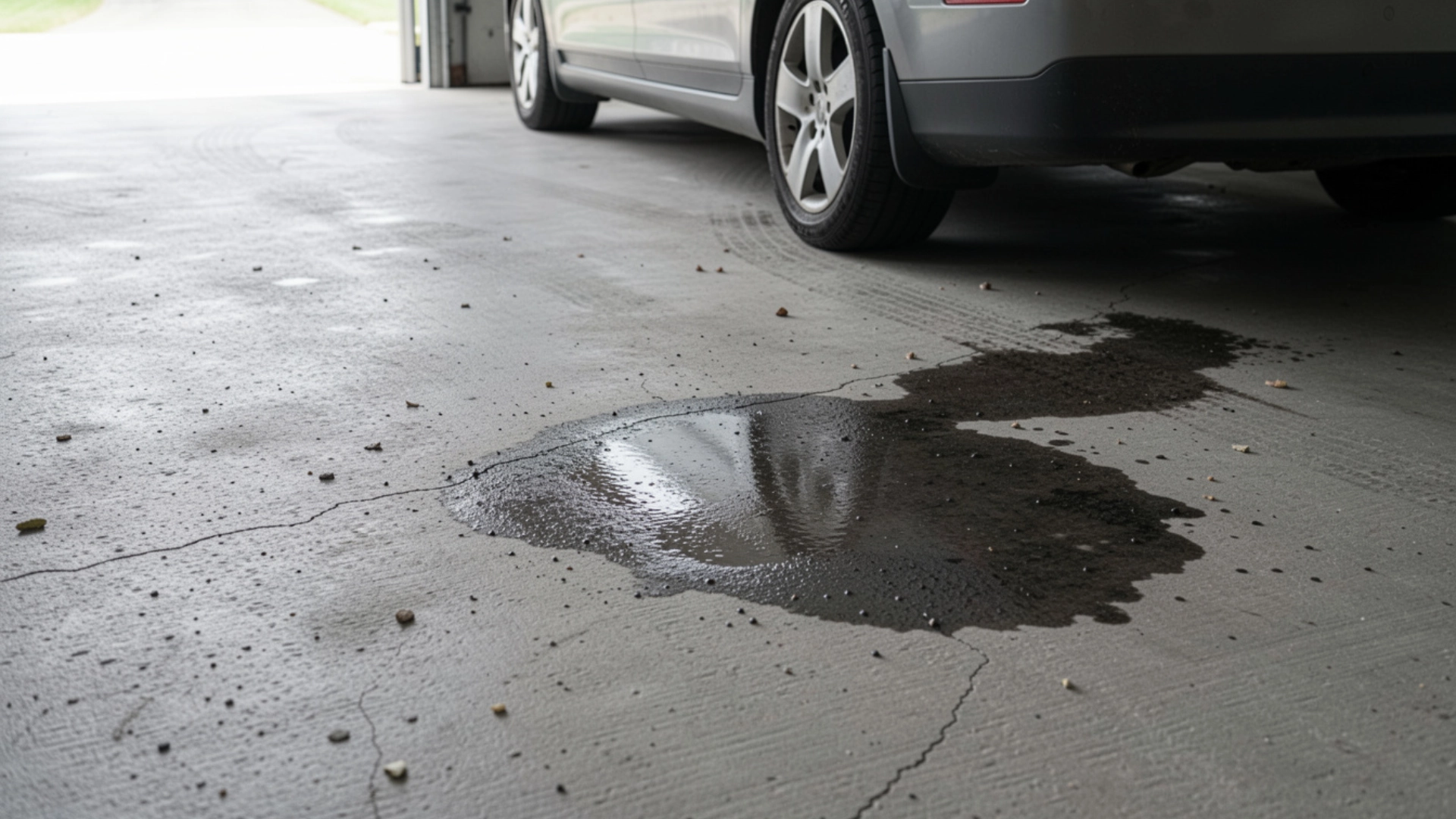
The first time I saw an oil stain spread across my garage floor, I thought hard scrubbing would fix it. It did not. The mark stayed dark, while the surrounding concrete looked cleaner, making the stain stand out even more.
Learning how to get oil stains out of concrete starts with understanding what happened beneath the surface. Concrete absorbs oil, so timing, stain depth, and surface condition all affect what works.
You will first assess the stain, then choose a method suited to its age. Fresh spills need quick action, while older marks demand more patience. The right approach can save your floor from damage and spare you from repeating the same frustrating cleanup.
What Should You Check Before Cleaning an Oil Stain?
Before reaching for a cleaner, spend a minute checking the stain and the concrete beneath it. Is the oil still wet, recently dried, or several months old? The stain’s age decides which treatment will work best.
Next, check the surface itself:
- Is the concrete sealed or unsealed?
- Is it polished or left plain?
- Is it painted or bare?
Each finish reacts differently to cleaning products. A harsh degreaser may damage paint or weaken an existing sealer. Sweep away dirt, leaves, and grit before applying anything. Loose debris can block the cleaner from reaching the stained surface.
Test strong products on a small, hidden area first. I have seen cleaners leave a pale patch worse than the original stain. That quick test takes only a few minutes. It can save you from damaging a much larger area.
How Do You Remove a Fresh Oil Stain From Concrete?
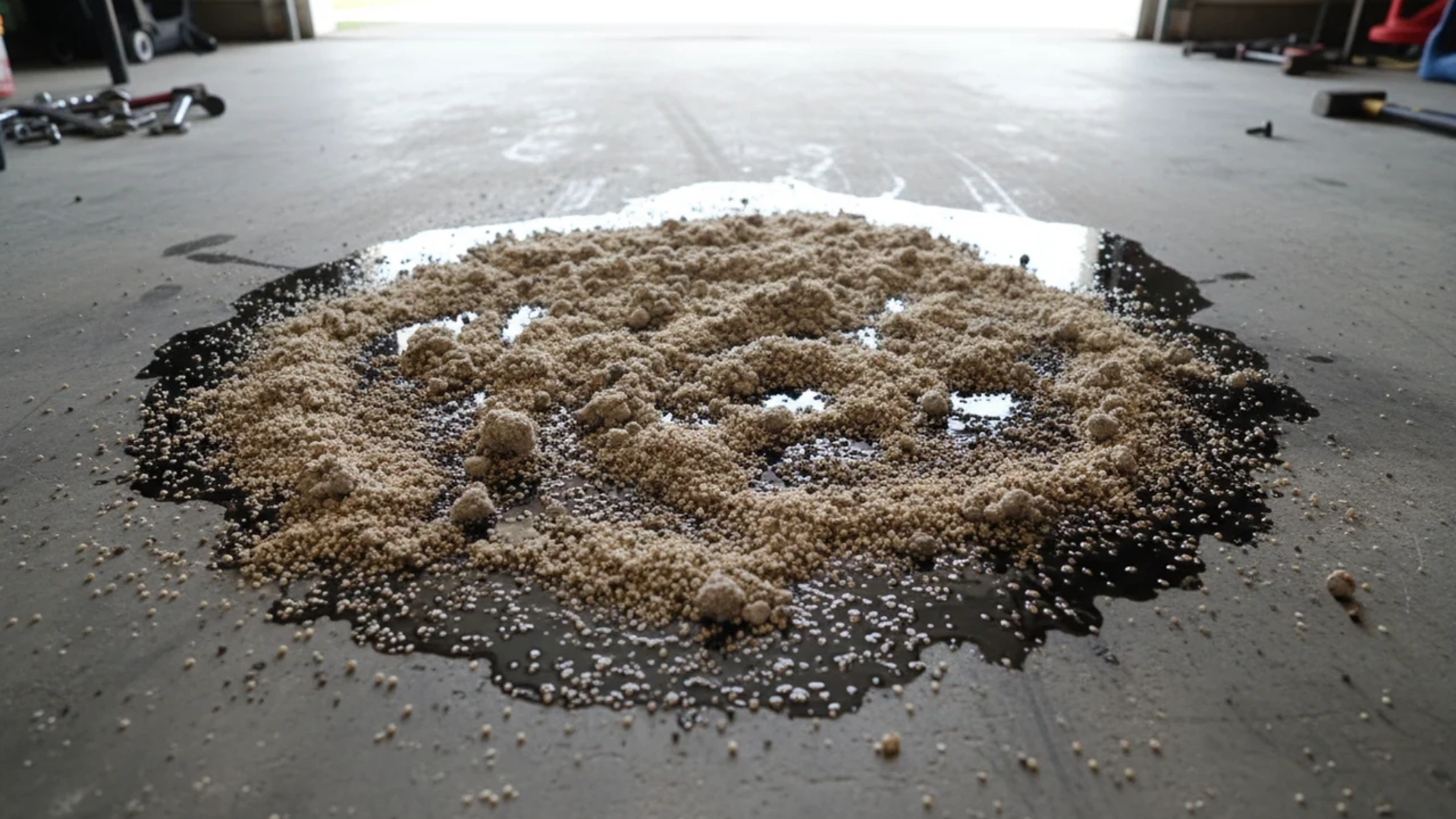
Fresh oil is easier to remove before it settles deep into the concrete. The key is working in the right order. First, pull up as much liquid as possible. Then clean the residue left behind. Starting with soap too soon can spread the stain and make the job harder.
| Stage | Action | Purpose |
|---|---|---|
| Soak up | Cover the stain with clay cat litter, baking soda, or cornstarch in a thick layer. | Collects loose oil before it sinks further. |
| Widen coverage | Go slightly beyond the stain’s outline. | Reaches liquid that has spread beneath the surface. |
| Set contact | Press gently without dragging the material, then let it sit for at least 15 minutes, longer for larger spills. | Improves absorption without enlarging the spill. |
| Remove | Sweep everything away once the color stops changing. | Clears saturated material before washing begins. |
| Break down | Apply dish soap or detergent paste. | Loosens greasy residue close to the surface. |
| Agitate | Use a stiff nylon brush in short rounds. | Lifts residue without scratching the concrete. |
| Finish | Rinse, dry, and review the result. | Reveals whether another treatment is necessary. |
Once the area dries, check the color under normal light. A faint shadow may remain after the first round, especially on unsealed concrete. Repeat the cleaning step instead of scrubbing harder. Patience usually gives you a better result and lowers the chance of scratching or discoloring the surface.
How Do You Remove Old Oil Stains From Concrete?
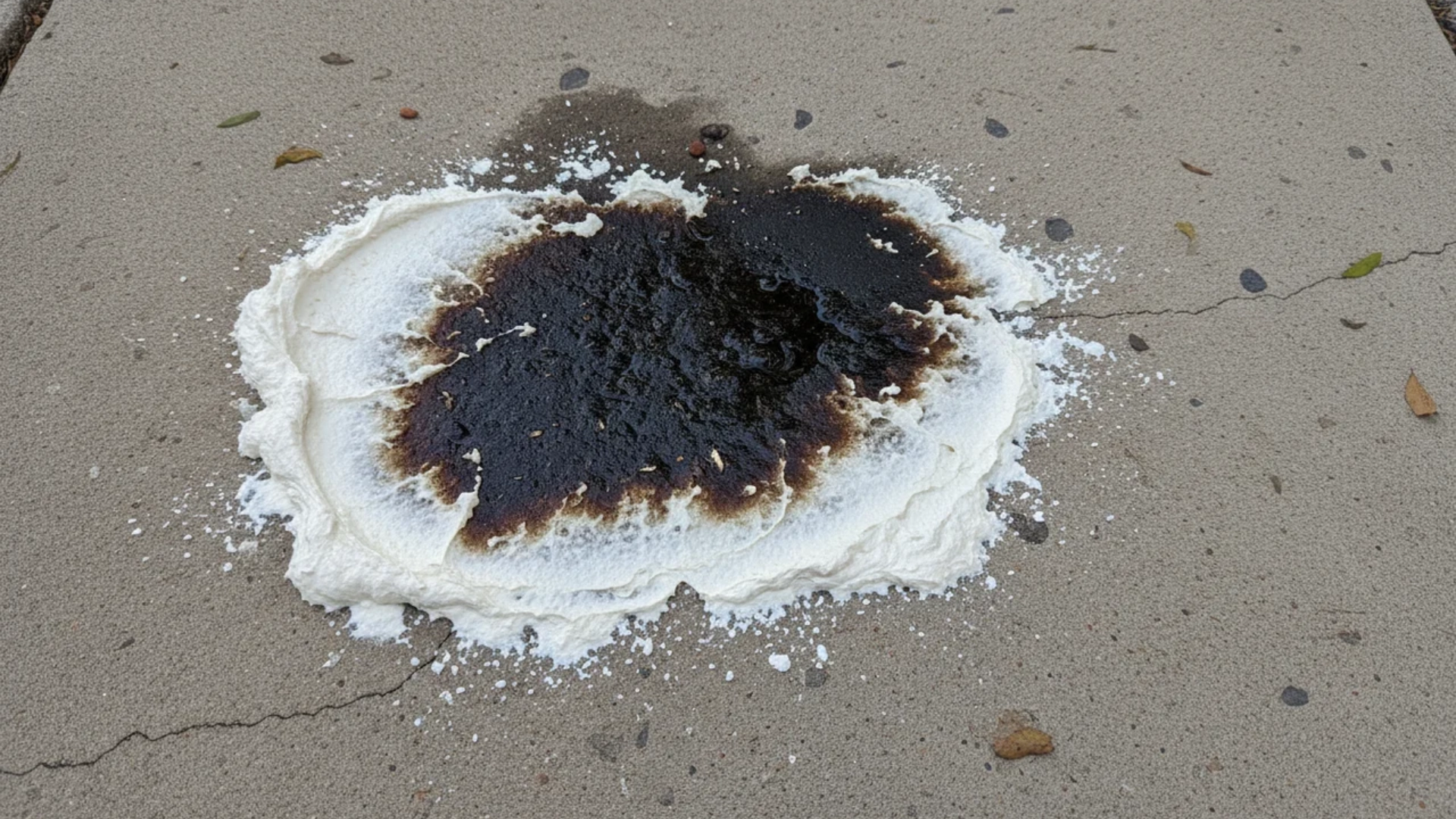
Old oil stains need more patience because the oil has already settled inside the concrete. I would not expect one quick scrub to fix them. The goal is to loosen what sits near the surface first, then pull out anything trapped deeper below.
- Apply a concrete degreaser slightly beyond the stain’s visible edge. Oil often spreads farther beneath the surface.
- Let the product sit for the label’s recommended time. Keep it damp enough to continue working.
- Scrub the area with a stiff nylon brush. Use firm pressure without scraping or damaging the concrete.
- Rinse from the cleaner outer area toward the center. This keeps oily water from spreading across the floor.
- Let the concrete dry completely before checking the result. A dark shadow usually means oil remains deeper inside.
- Mix a poultice using an approved cleaner and an absorbent powder, such as diatomaceous earth.
- Spread the paste over the mark, cover it as directed, and let it dry fully.
- Remove the dried material and repeat if needed.
A degreaser handles oil near the surface, while a poultice draws deeper residue upward. That difference matters with older marks. Some stains need several rounds, and a faint shadow may remain. Work slowly, follow product directions, and judge the result only after the concrete dries.
How Should You Rinse, Check, and Repeat the Treatment?
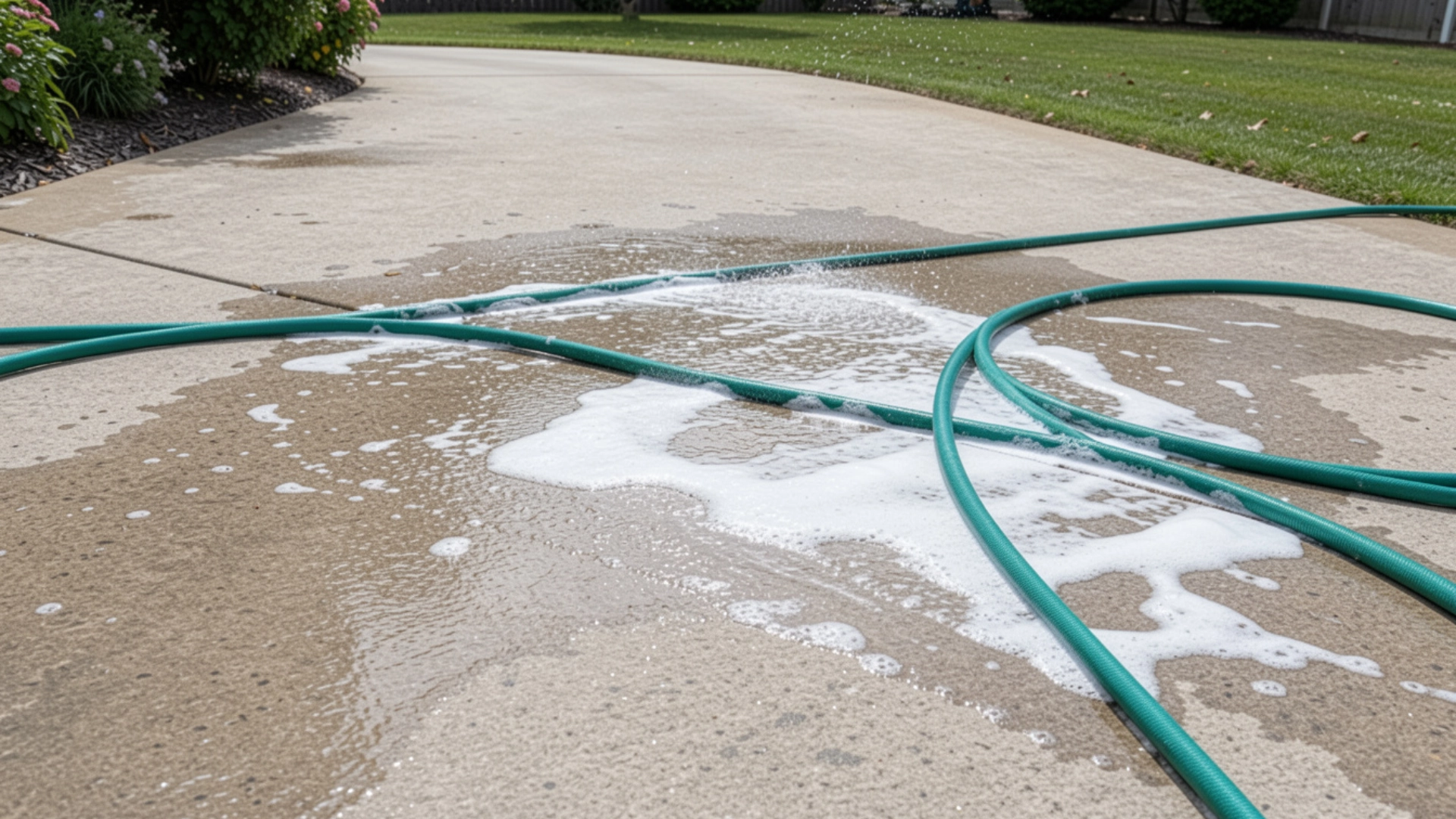
Once you finish treating the stain, let the concrete dry before judging the result. Wet concrete can hide marks that return later.
Rinse away every trace of cleaner and loosened oil. Then wait until the surface looks fully dry.
Cleaning Without a Pressure Washer
- Scrub with a stiff nylon brush after the cleaner has had enough time to work.
- Rinse slowly with a garden hose instead of flooding the whole area.
- Use a wet vacuum to collect dirty water inside garages or covered spaces.
- Avoid scrubbing harder when progress slows, since contact time matters more than force.
This method works well for many small and medium stains because slow, repeated scrubbing gives the degreaser time to break down oil without spreading it into a bigger, harder-to-manage puddle.
Using a Pressure Washer Safely
- Begin with a 25- to 40-degree nozzle and stand at least 12 inches away.
- Test the pressure on a hidden section before moving over the stain.
- Keep the nozzle moving to prevent permanent lines or surface damage.
- Use pressure washing after degreasing, since water alone rarely lifts deep oil.
Repeat the same treatment before changing products, and never mix bleach with ammonia.
How Can You Prevent Future Oil Stains on Concrete?
Cleaning up a stain once is easier than dealing with the same spot again next month. A few simple habits keep new oil from soaking into your floor in the first place.
- Catch drips early. Place an oil drip mat or a shallow plastic tray under any vehicle, mower, or generator that leaks even a little.
- Fix the leak, not just the puddle. A slow drip that keeps returning usually points to a seal or gasket that needs attention.
- Wipe up spills the same day. Oil that sits for a week has far more time to work into unsealed concrete than oil you catch within a few hours.
- Seal the surface. A concrete sealer rated for oil resistance gives future spills less to soak into, which makes cleanup faster if a leak does happen.
None of these steps take long, but they save you from repeating the entire cleaning process a few months from now.
How Do You Know the Stain Is Actually Gone?
Judge the result only once the concrete is completely dry; wet concrete can hide discoloration that reappears as it dries.
Compare the treated spot to the surrounding concrete rather than expecting pure white; unstained concrete has its own natural variation in tone.
If a faint shadow is still visible after two or three full treatment cycles, you’re most likely looking at oil that’s polymerized or migrated too deep to reach, a sign to stop treating rather than escalate to a stronger chemical.
Final Thoughts
Oil stains look permanent when they first settle into concrete, but many can be lifted with the right approach. The real difference comes from matching the treatment to the stain’s age, depth, and surface type.
Now you know how to get oil stains out of concrete without guessing or scrubbing until your arms hurt. Fresh oil needs absorption first. Older stains may need degreaser, repeated cleaning, or a poultice to pull oil upward.
Do not judge the result while the concrete is wet, and do not rush into stronger chemicals. Let each treatment work, check the dry surface, and repeat when needed. Choose the method that fits your stain, then share your results or favorite cleaning tip in the comments below.
Frequently Asked Questions
Does Dawn dish soap remove oil stains from concrete?
Dawn and similar heavy-duty dish soaps work well on fresh, surface-level oil, especially after the excess has already been blotted or absorbed. They’re less effective on old, set-in stains, since the oil has moved past the surface into the concrete’s pores, where a dedicated degreaser works better.
Does WD-40 remove oil stains from concrete?
No, WD-40 is itself a petroleum-based lubricant, so applying it to an oil stain adds to the residue rather than removing it. It’s better suited to loosening rust or a stuck part before cleaning, not as a concrete stain remover. A dedicated degreaser or absorbent is the better tool here.
How do you get old oil stains out of concrete?
Apply a concrete-safe degreaser directly to the dry stain and let it sit for the full time listed on the label so the saponification reaction can finish. Scrub, rinse, and let the surface dry before checking it. If a shadow remains, a poultice made with an absorbent powder can pull oil from deeper in the pores; repeat as needed.
Are oil stains permanent on concrete?
Not always, but they can be. Fresh spills usually lift completely with prompt treatment. Older oil that has penetrated deep into the pore network, or oil that has polymerized over time, can leave a faint shadow even after repeated cleaning, that’s chemistry, not a sign the technique failed.