

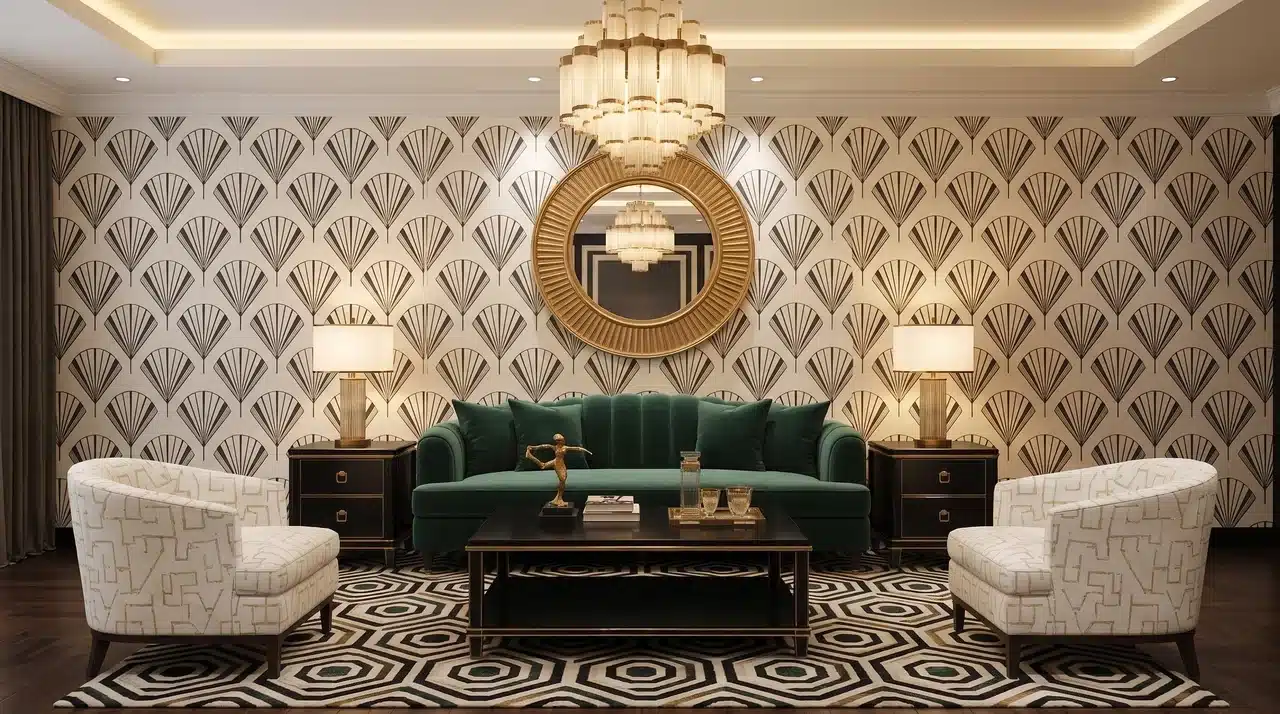
| Room Type | Living room, bedroom, entryway, or kitchen — Art Deco adapts to any room |
| Style | Art Deco |
| Budget | $50-$150 for a single accent piece; $1,500-$5,000+ for a full room refresh |
| Room Size | Works in small apartments and large open-plan rooms alike |
| Best For | Homeowners who want a bold, glamorous look built around a few well-chosen statement pieces |
| Avoid If | You prefer an all-neutral, minimalist, or farmhouse palette with no metallic accents |
Art Deco interior design pairs bold geometric pattern, polished metal, and jewel-toned color with just a few statement pieces — and the single biggest mistake homeowners make is adding too much of it at once.
I’ve walked into plenty of rooms where every surface was gold, mirrored, or patterned, and the result read as a costume party rather than a considered space.
The rooms that actually work follow a much simpler formula: one dominant color, one metal finish, and one or two pieces with real presence.
Below, I’ll break down what genuinely defines Art Deco style, then walk through eleven specific ways to bring it into a room without tipping into excess.
What Is Art Deco Interior Design?
Art Deco interior design grew out of Paris in the 1920s, when the country was rebuilding its cultural identity after World War I.
The style took its name from the 1925 Exposition Internationale des Arts Décoratifs et Industriels Modernes, and it spread through American cities over the following two decades.
The Smithsonian describes American Art Deco as the most important decorative style of the late 1920s and 1930s in the United States, spanning sculpture, furniture, textiles, glass, ceramics, and silver.
What I find homeowners underestimate is how flexible the style actually is. It pulled from ancient
Egyptian motifs, the precision of early industrial machinery, and a widespread belief that modern life and beauty belonged together.
That range is exactly why a single lacquered cabinet or one brass pendant light can carry the entire look on its own; you don’t need a fully committed period room to make the reference read clearly.
The Defining Elements of Art Deco Style
Every strong Art Deco room comes back to four ingredients working together: geometric pattern, luxe materials, jewel-toned color, and furniture with real visual weight. Skip any one of these and the room reads as generic glamour rather than Art Deco specifically.
Geometric Patterns and Motifs
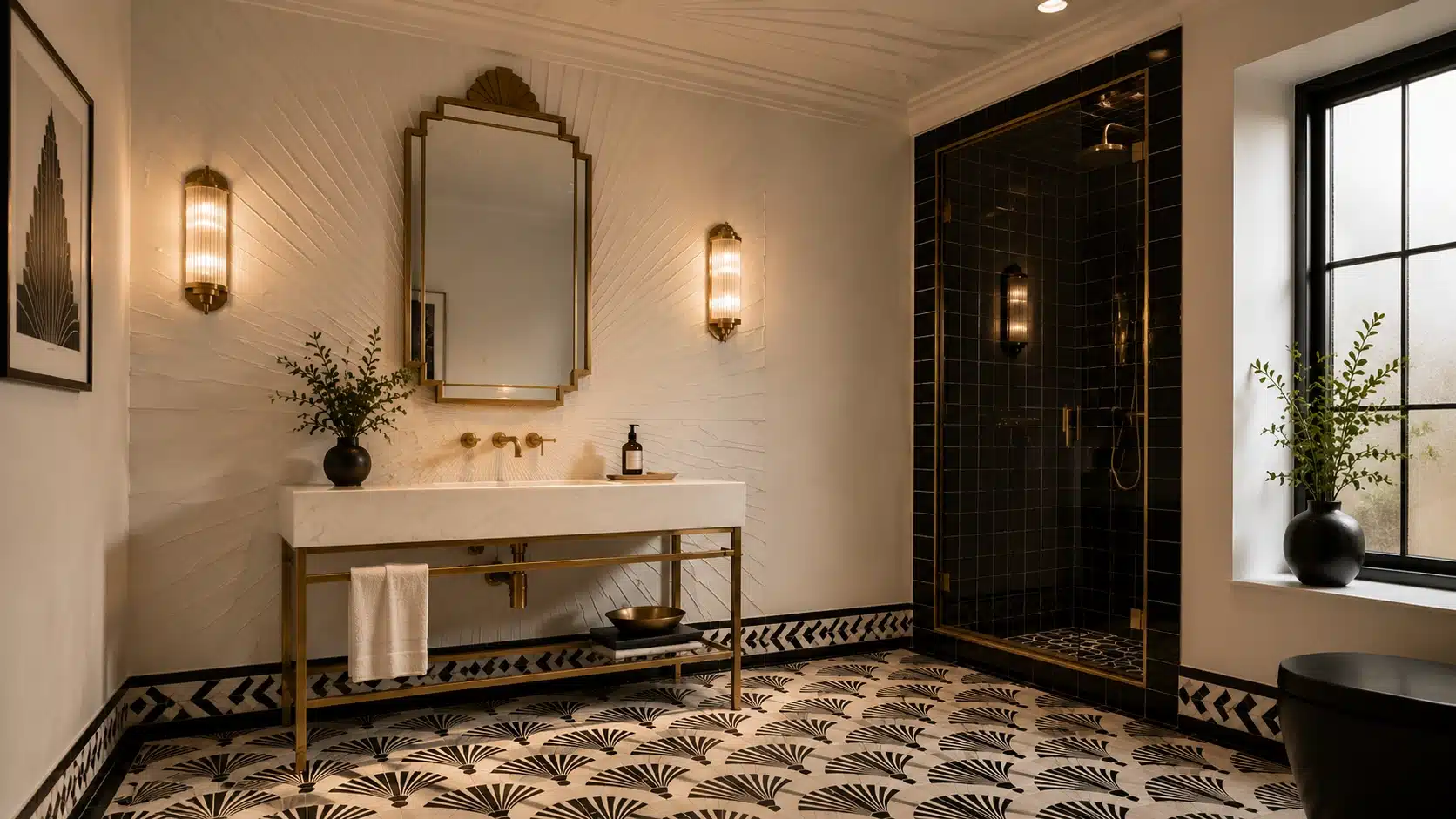
Sunbursts, chevrons, zigzags, and fan shapes are the motifs that signal Art Deco fastest. I keep patterns to one surface at a time, a floor, a rug, or a single accent wall, rather than repeating it across a room.
Once a chevron pattern shows up on the rug, the floor tile, and the wallpaper in the same space, the eye stops resting anywhere.
Luxurious Materials and Finishes
Brass, chrome, marble, lacquered wood, mirrored glass, velvet, and silk give the style its polished character.
Reflective finishes brighten a narrow room quickly, but too much mirror or gloss without a soft counterweight can feel cold within a few hours of actually living in the space.
I pair hard, shiny surfaces with velvet seating or a textured wool rug in nearly every room I plan, the same reasoning that makes an oversized cushioned sofa feel so at home next to a lacquered console instead of another glossy surface.
Bold, Jewel-Toned Color
Emerald, sapphire, ruby, and amethyst carry Art Deco far better than pastels ever will.
Pick one jewel tone as the anchor, then build the rest of the palette from black, cream, or a warm metallic; adding a second saturated color almost always competes with the first instead of supporting it.
Statement Furniture and Lighting
Curved forms, strong symmetry, geometric inlay, and brass detailing define Art Deco furniture, while lighting often shows up as frosted glass, stepped shades, or tiered pendants.
Two or three statement pieces per room is the ceiling I work toward; a bold sofa, a sculptural light, and a refined sideboard create real impact without crowding the space.
| Tip: Choose one jewel tone and one metal finish before you buy anything else. Every fabric, hardware pull, and light fixture in the room should trace back to those two decisions; it’s the fastest way to keep an Art Deco room from feeling scattered. |
Art Deco Interior Design Ideas to Try at Home
You don’t need to renovate a whole house to bring this style in. Each idea below covers one part of the room- color, pattern, furniture, or finish- so you can layer in as many or as few as your budget and space allow.
1. Pair Jewel Tones With Warm Metals
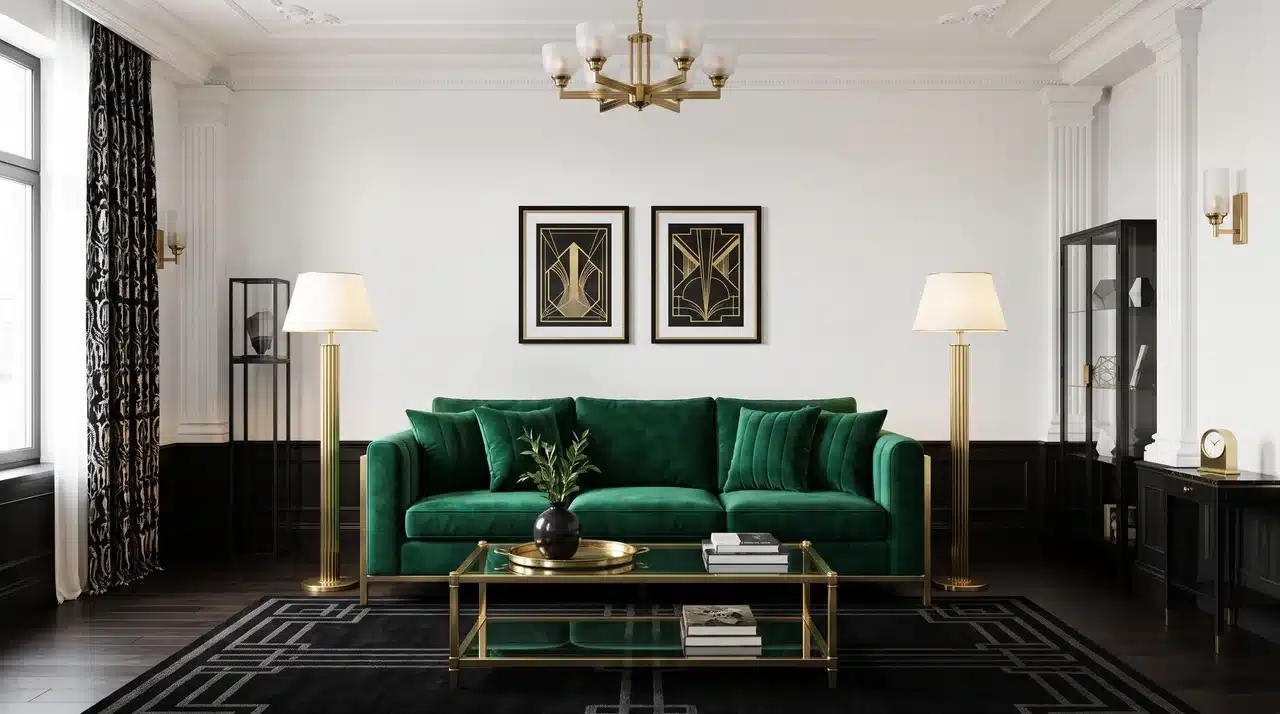
Start with an emerald, sapphire, burgundy, or deep teal sofa or accent chair, then keep the surrounding walls in cream, black, or charcoal so the color has room to stand out.
Add brass, bronze, or muted gold in small doses: a coffee table frame, a lamp base, a picture frame, rather than a full metallic room.
If the jewel tone reads too heavy on a small wall, a soft dove-gray paint on the trim keeps the color from overwhelming the room.
Budget: a velvet accent pillow or throw runs $30-$80, while a reupholstered or new jewel-toned sofa typically lands between $900 and $2,500.
2. Create Contrast With Black and Ivory
Black and ivory produce the sharp visual definition Art Deco is known for. Use the darker tone to frame architectural details, door casing, a fireplace surround, a tiled floor border, and let the lighter tone carry the larger wall and ceiling surfaces.
A walnut console or side table softens the contrast so the room doesn’t feel stark, and the same logic behind a dramatic black-trimmed doorway applies here; dark framing reads sharper against a plain, light field than it does surrounded by more pattern.
This is one of the lowest-cost ideas on the list if you’re working with paint alone: figure $50-$100 per gallon for a quality black or ivory interior paint.
3. Feature One Geometric Pattern
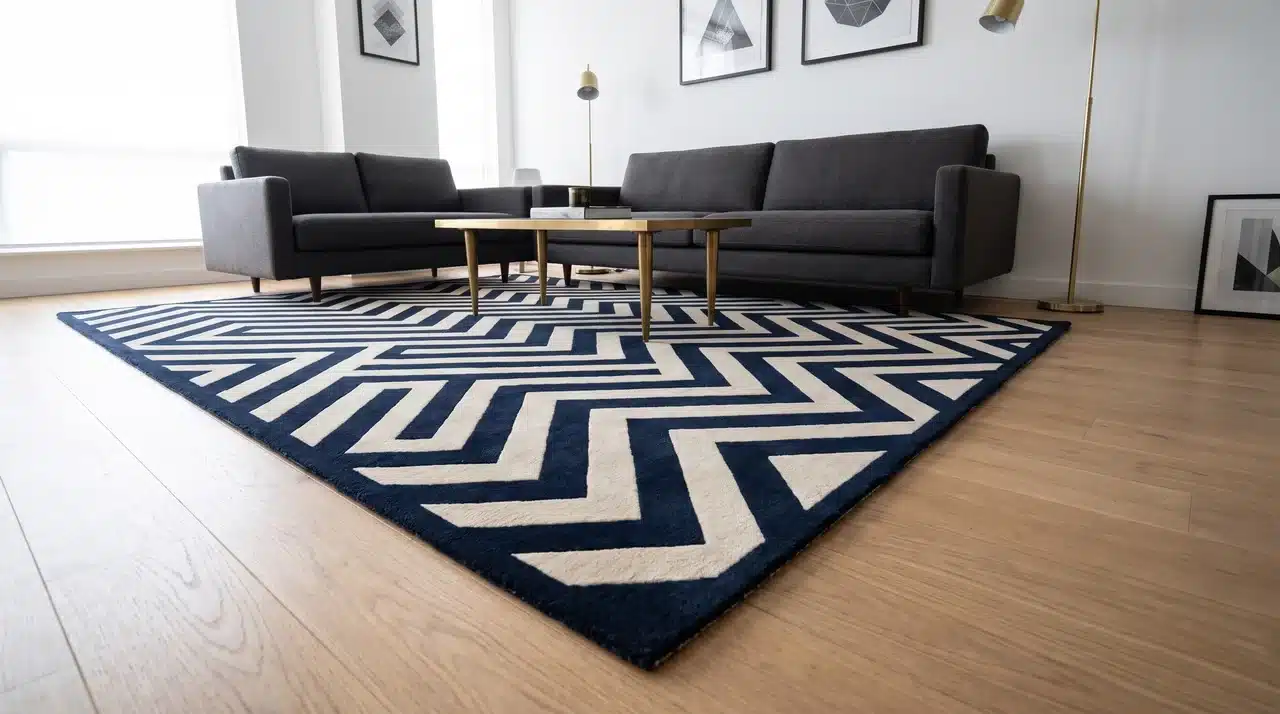
Choose one motif, fan, chevron, sunburst, or a stepped form and apply it to a single surface: a rug, a wallpapered accent wall, or a tiled floor.
A navy-and-cream chevron rug under a sofa or dining table lets the geometry anchor the room while everything else stays plain.
Rugs in this style typically run $150-$600 depending on size and material; resist the pull to repeat the same pattern on a second surface in the same room.
4. Introduce Curved Furniture
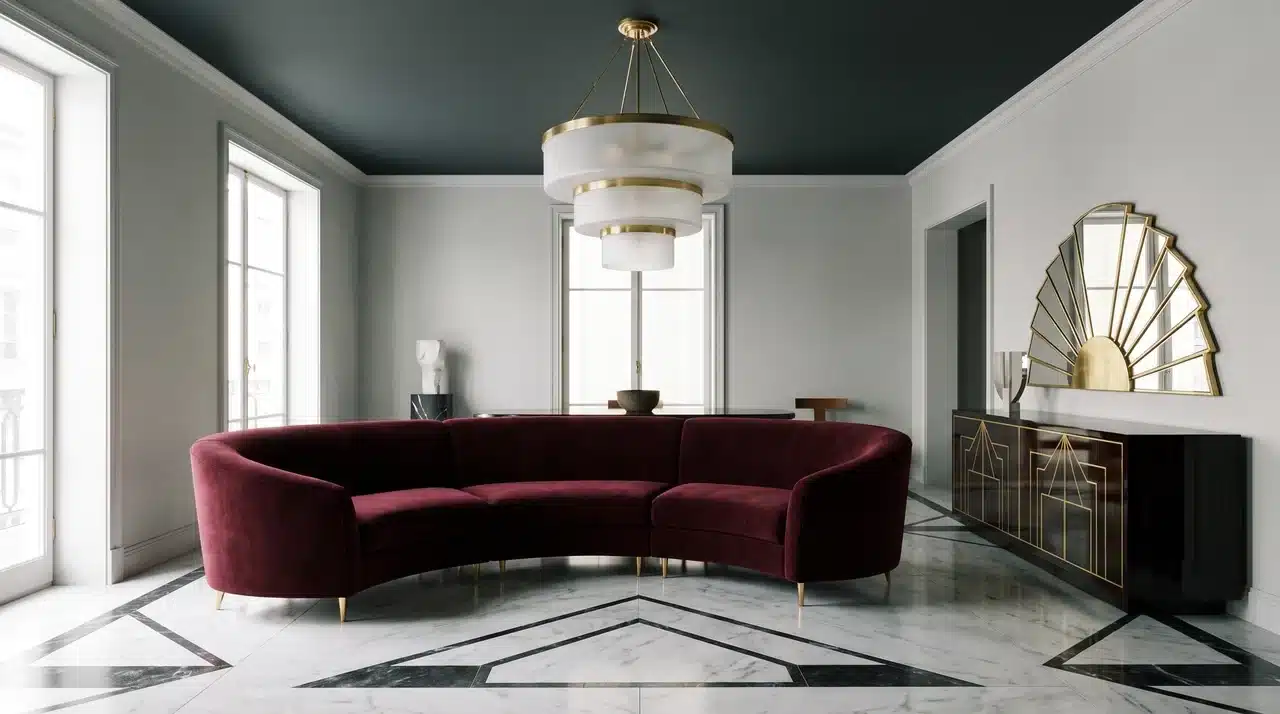
Barrel chairs, rounded sofas, scalloped headboards, and circular tables balance out the sharp angles of Art Deco pattern and architecture.
Before buying a large curved piece, measure furniture depth, doorway width, and the clearance around it; curved silhouettes often take up more floor space than a straight-lined equivalent of the same seat count.
Pair one curved anchor piece with a simple geometric rug rather than curving every piece in the room.
5. Add Velvet in a Focused Area
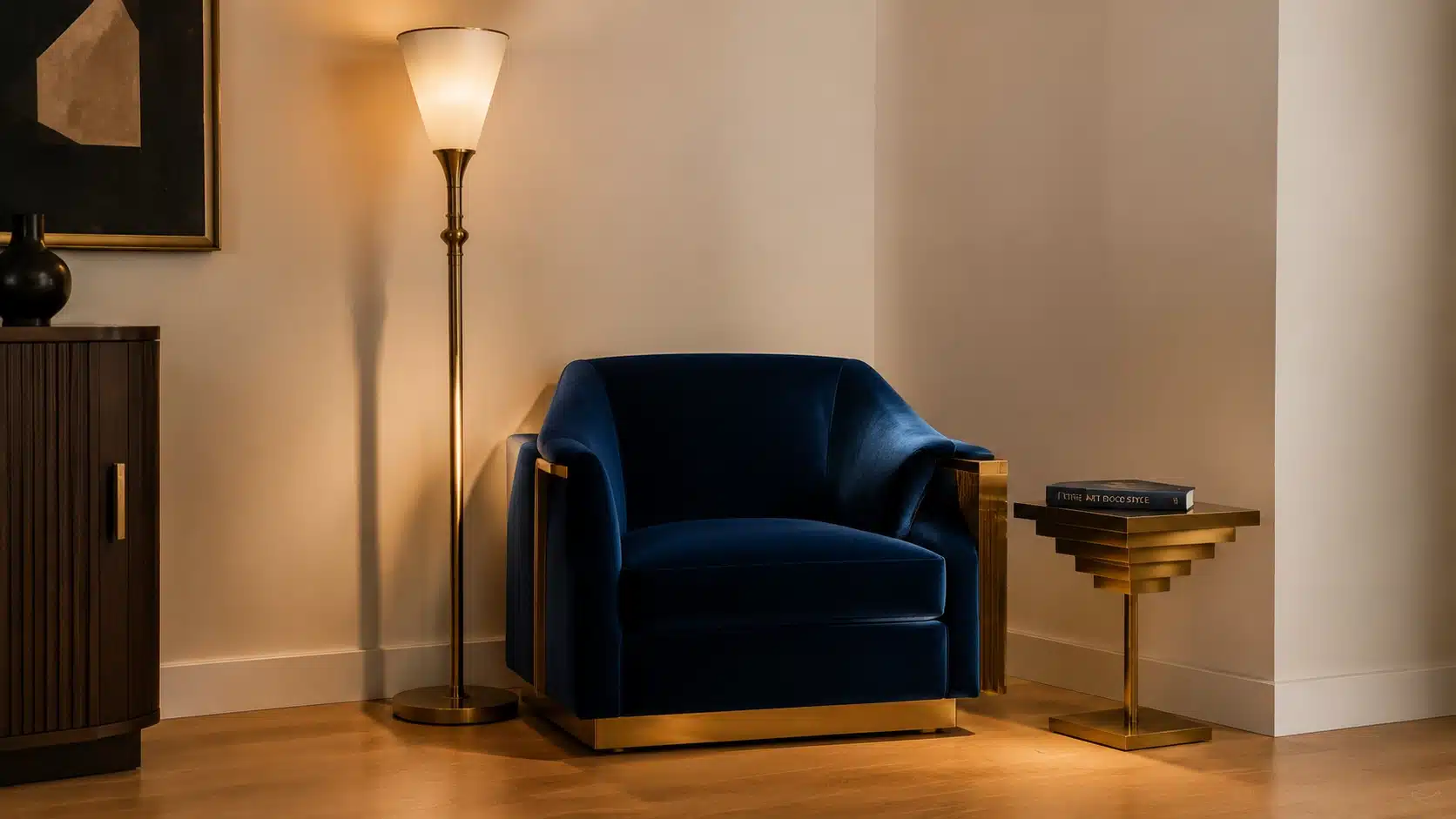
Velvet brings the depth and color saturation that Art Deco depends on, but it works best applied to one main piece, a single armchair or a limited group of pillows,rather than every textile in the room.
Choose a low-profile armchair with clean lines, upholster it in emerald, sapphire, or burgundy velvet, and set a brass floor lamp beside it rather than behind it.
If you have pets or young kids, ask about performance velvet, which handles daily wear and spot cleaning far better than traditional cotton velvet.
6. Use Stone as a Grounding Material
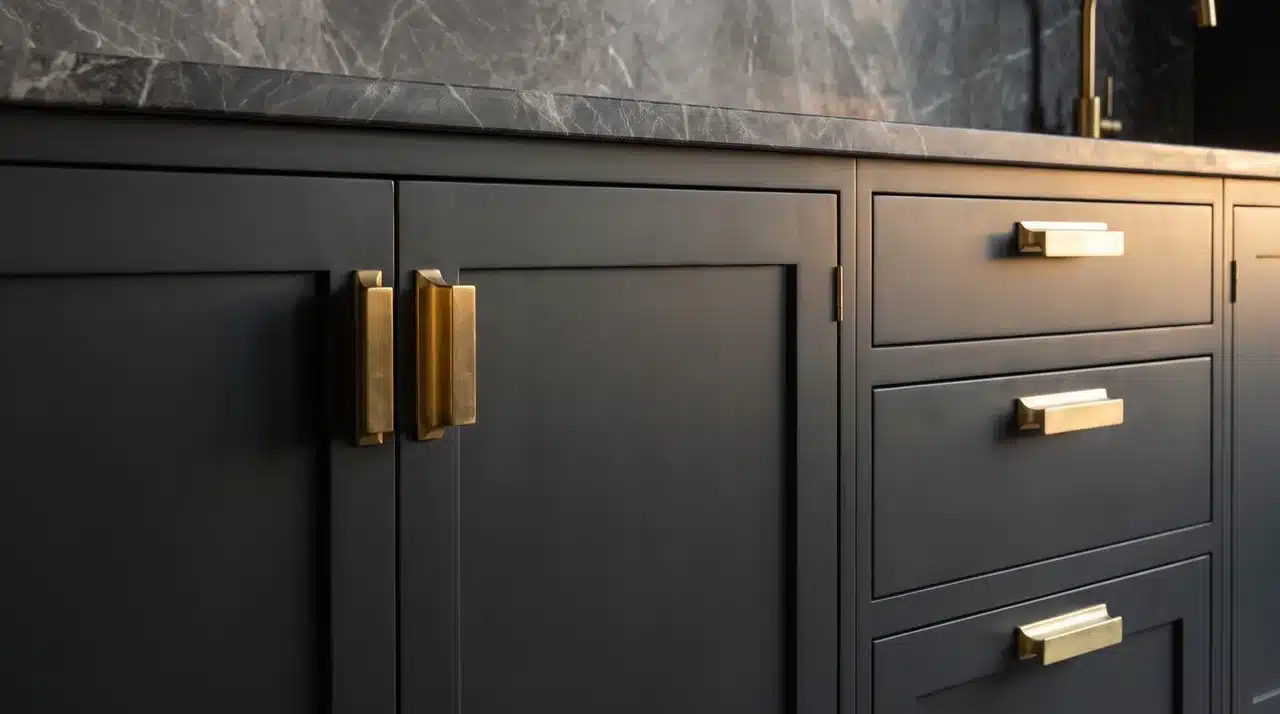
Marble, granite, and terrazzo bring natural veining and a sense of permanence that pattern and paint can’t replicate.
Real marble typically runs $50-$100 per square foot installed, while porcelain or quartz alternatives with a similar look land closer to $40-$70 per square foot, a reasonable substitute if the budget doesn’t stretch to natural stone.
Pair a pale stone counter or hearth surround with dark wood and brass hardware for the clearest Art Deco read.
7. Bring in Walnut and Wood Veneer
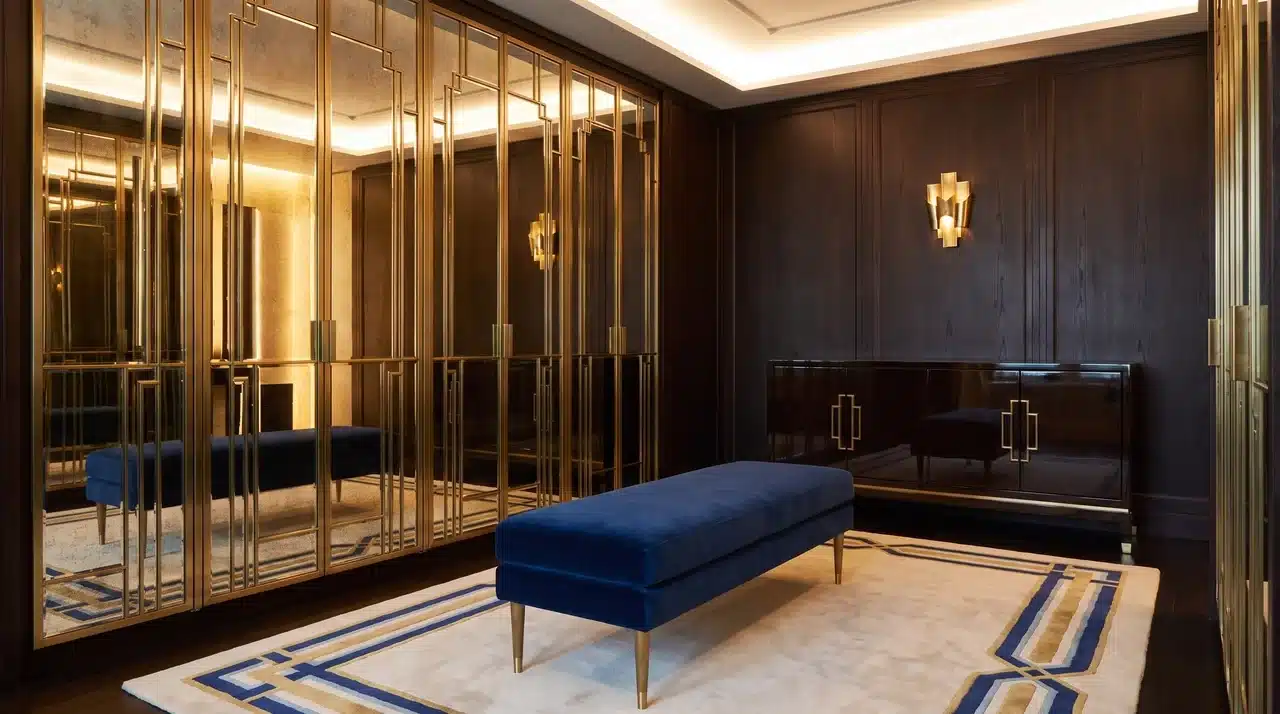
Walnut and patterned wood veneer add warmth without relying on additional color or ornament; a sideboard, cabinet fronts, or a wall panel all work well.
If you’re buying vintage veneer furniture, check carefully for lifting edges, moisture damage, and prior repairs before purchasing; veneer that’s already separating from the substrate is expensive to restore properly.
New walnut furniture in this style generally starts around $600 for a small side table and climbs from there with size.
8. Control Shine with Lacquered Finishes
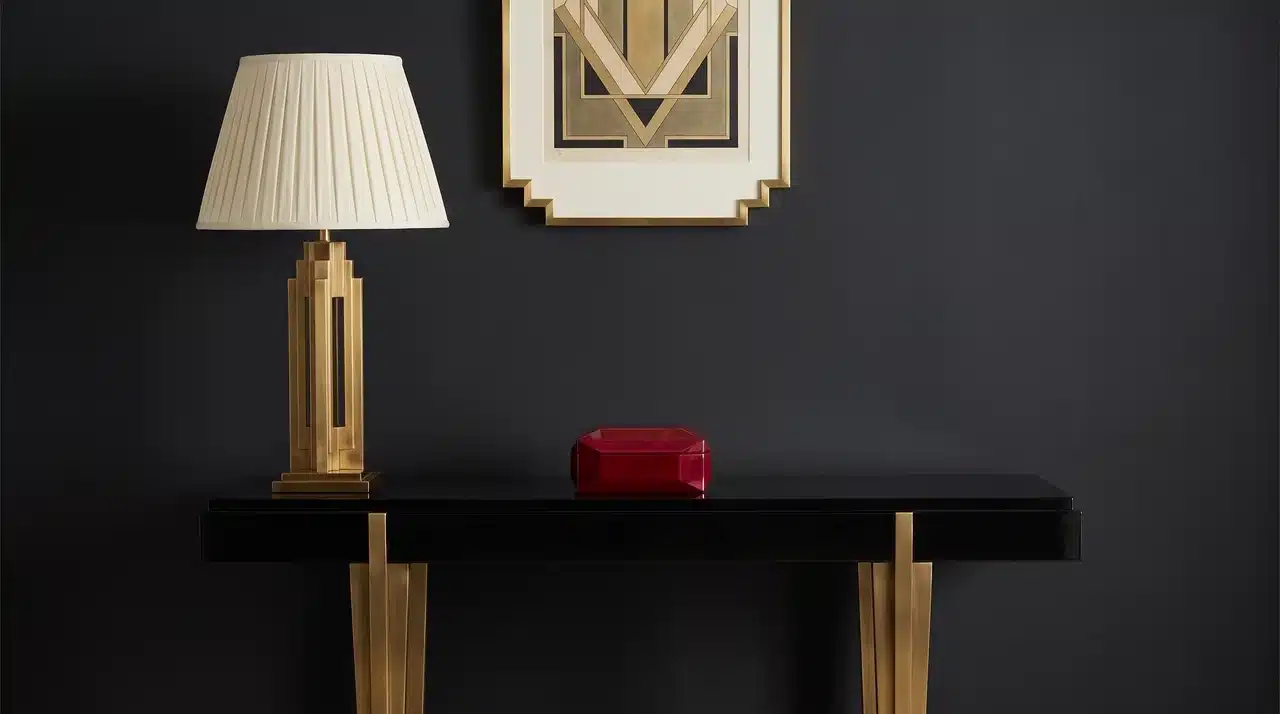
A single lacquered console, cabinet, or occasional table introduces the polished surface Art Deco is known for without turning the whole room glossy.
Place the lacquered piece against a matte wall so it reads as a focal point rather than blending into other reflective surfaces.
Lacquer shows fingerprints, dust, and fine scratches quickly, so plan on wiping it down with a soft microfiber cloth rather than an abrasive one.
9. Increase Depth with Decorative Glass
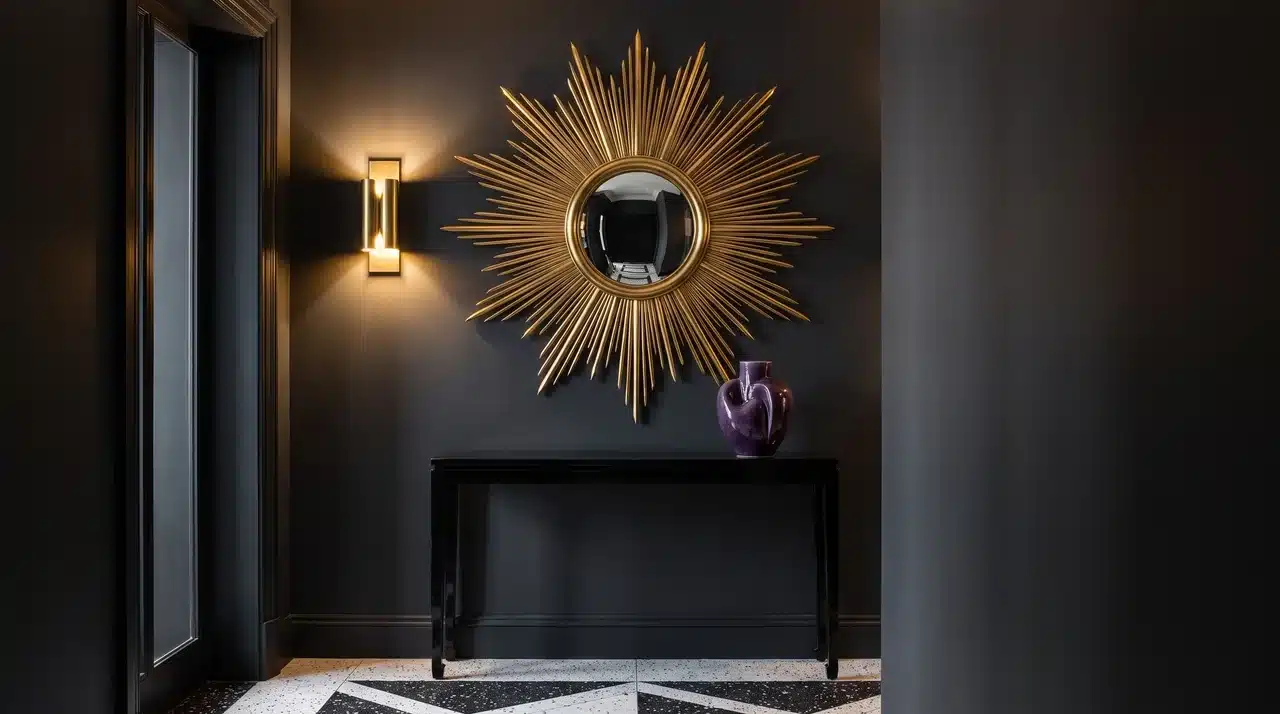
Ribbed glass, smoked glass panels, and a sunburst or stepped-frame mirror all add depth and reflection without repeating the metallic finishes covered above.
Before hanging a large mirror, check what it will actually reflect; a mirror facing a cluttered closet or a blank wall wastes the effect, while one placed to catch a window or a lamp doubles the light in the room.
A quality brass-framed sunburst mirror typically runs $150-$400 depending on size.
10. Make Lighting a Focal Feature
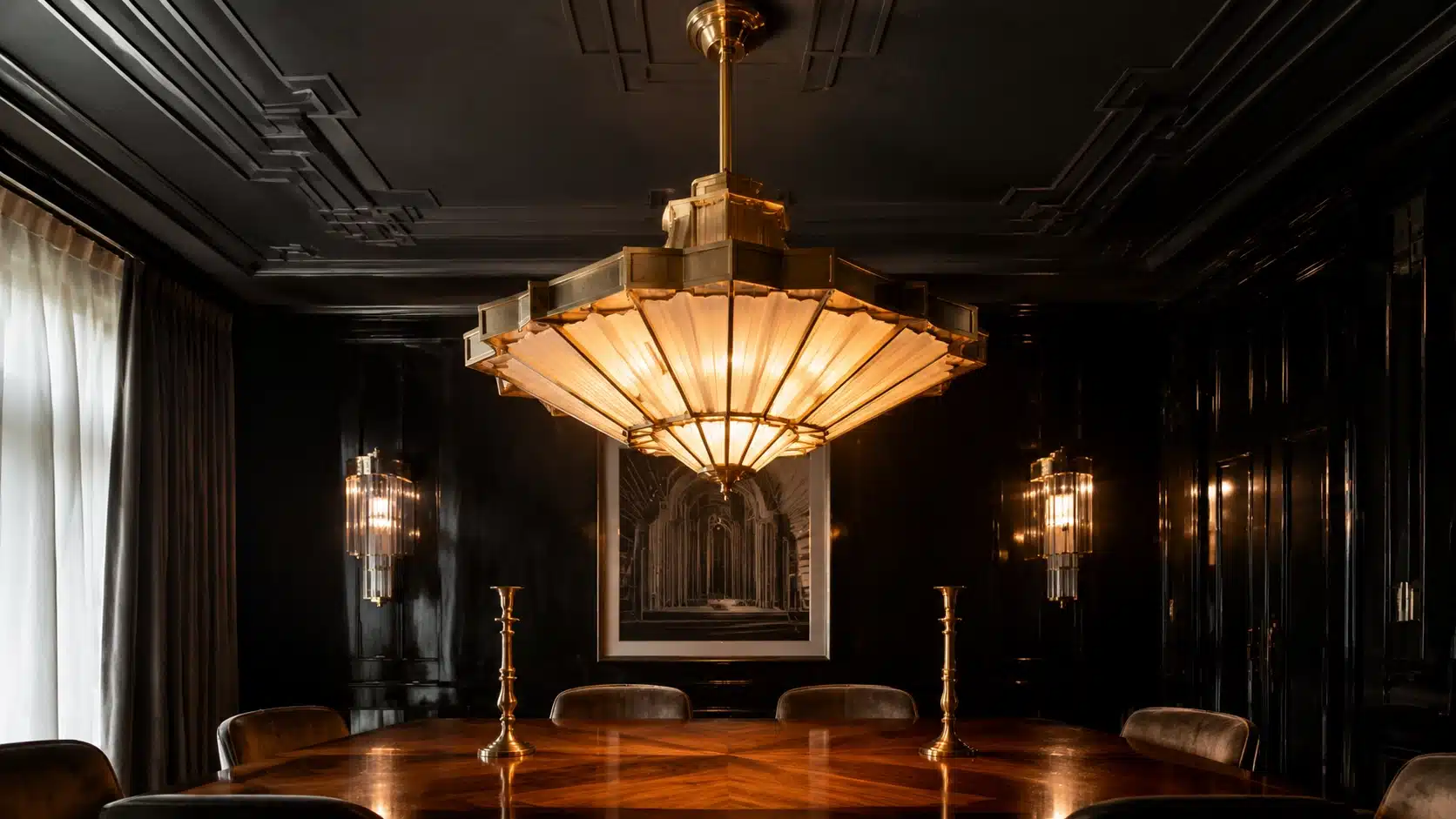
A stepped-brass or frosted-glass pendant hung low over a dining table or reading corner can shift a room’s entire mood without moving a single piece of furniture.
Use a warm-toned bulb rather than a cool white one, and add a dimmer if the fixture allows, Art Deco lighting is meant to layer soft, directional light rather than flood a room evenly.
If you’re rewiring or replacing an older fixture, verify the work meets current electrical code, and hire a licensed electrician for anything beyond a simple swap.
11. Use a Neo Deco Approach
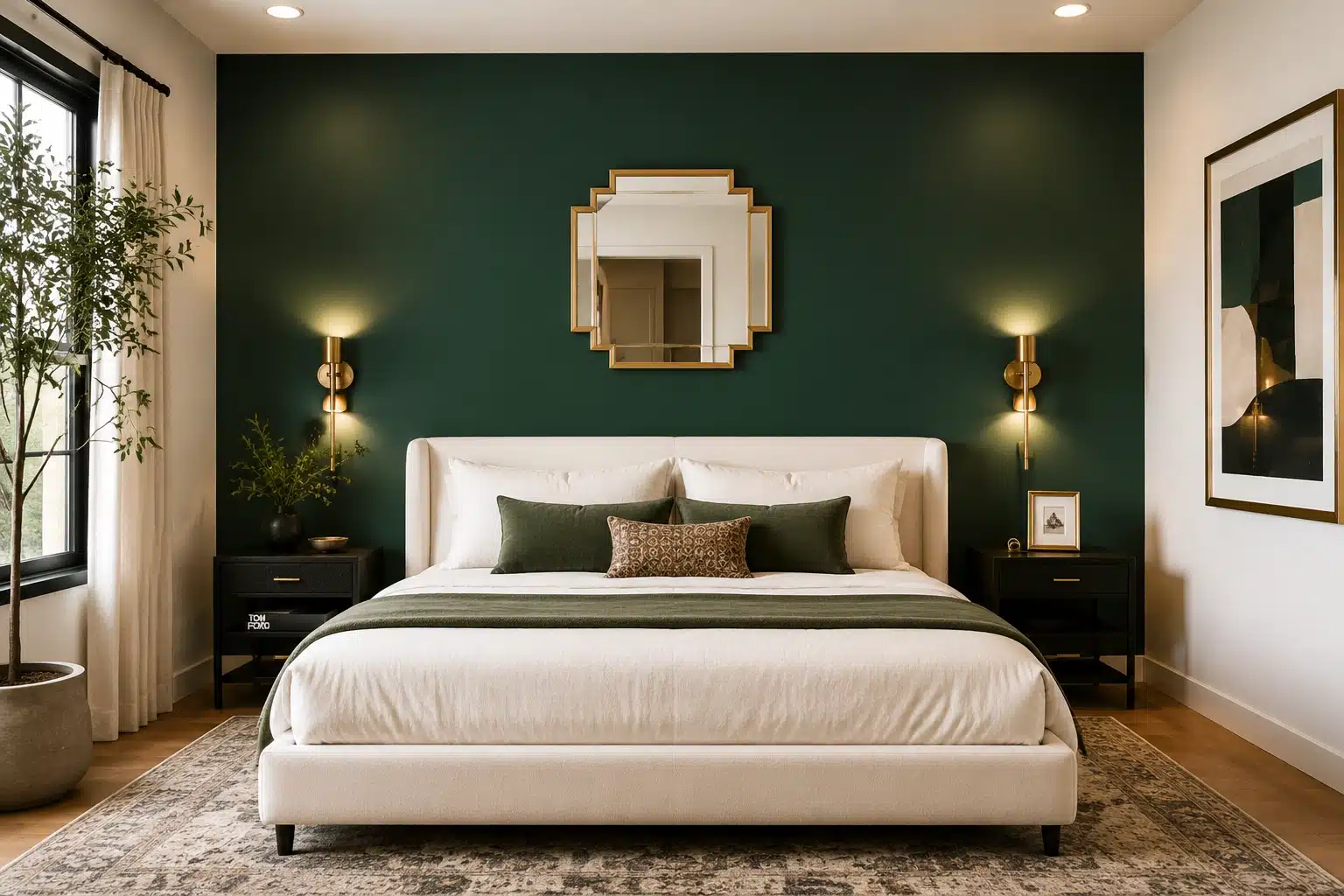
Neo Deco is a simplified, modern read on the style; keep the curves, the jewel tone, and one sculptural light, but drop most of the pattern and ornament.
A single emerald accent wall behind the bed, paired with brass sconces and one geometric mirror, delivers the reference without the room feeling like a period set.
This is the easiest entry point if you’re renting or not ready to commit to a full Art Deco room: paint one wall, add one brass fixture, and stop there.
Common Art Deco Decorating Mistakes to Avoid
Art Deco is one of the most misread styles in interior design, and knowing what it isn’t will save you from the mistakes that tip a room from elegant into overdone.
| Confused With | Key Difference |
| Art Nouveau | Curved, organic forms borrowed from nature instead of straight lines and geometric repetition |
| Hollywood Regency | Softer and more decorative overall, without Art Deco’s architectural discipline |
| Maximalism | Stacks pattern and gold trim across every surface instead of restrained, deliberate placement |
Faux metallics are the other trap worth naming directly. Plastic-finish gold and spray-painted brass catch the eye for the wrong reasons, and they tarnish or chip within a year of regular use.
One genuine solid brass piece- a lamp, a set of cabinet pulls, a mirror frame- will always outperform an entire room dressed in imitation finishes. Restraint is the through line in every well-executed Art Deco room: two well-chosen pieces consistently do more than ten competing ones.
Art Deco on Every Budget
You don’t need a full renovation budget to get this look right. Here’s how the same ideas scale up or down depending on what you’re working with.
| Budget Level | What to Prioritize | Typical Cost |
| Starter | Cabinet hardware swap, one accent wall, a sunburst mirror | $100-$500 |
| Mid-Range | Geometric rug, velvet accent chair, a new pendant light | $500-$2,000 |
| Full Room | Reupholstered sofa, lacquered console, stone surface, layered lighting | $3,000-$8,000+ |
Whichever tier fits your project, the sequencing matters more than the spend: choose your jewel tone and metal first, then layer in pattern and statement furniture, never the other way around.
| Note: Always weigh your room’s natural light, ceiling height, and existing floor finish before committing to a full Art Deco palette. A north-facing room with limited daylight will read darker and moodier with a deep jewel tone than a south-facing room with the same paint color. |
With the room’s structure and budget mapped out, the questions that come up most often tend to be about scale and cost — here’s what homeowners ask before starting.
Bringing The Look Together
A successful Art Deco room feels bold because every choice has a purpose, not because every surface demands attention. Art Deco interior design becomes easier when you begin with one jewel tone, one metal finish, and a strong focal piece.
Geometric patterns, curved furniture, velvet, stone, walnut, glass, and sculptural lighting can support that foundation in measured amounts.
I recommend matching each decision to your room size, natural light, daily needs, and available budget. Those checks help prevent crowded layouts, poor proportions, and finishes that require more care than expected.
I suggest starting with one idea that suits your space, testing it beside what you already own, and sharing your finished result or questions below.
Frequently Asked Questions
What are the four key features of Art Deco design?
Art Deco is built on four things working together: bold geometric shapes like sunbursts and zigzags, luxurious materials such as brass, lacquered wood, and marble, rich jewel-toned colors, and streamlined statement furniture or lighting. No single element defines the look on its own. It’s the combination, used with restraint, that reads as Art Deco rather than just glamorous.
What items make a room look cheap in Art Deco style?
Overusing shiny materials, like too much faux gold trim or plastic-finish metallics, is what tips a room from elegant into cheap. Mixing too many bold patterns across every surface has the same effect. The style works best when one or two rich materials anchor the space instead of competing for attention.
How is Art Deco different from Art Nouveau?
Art Deco relies on straight lines, symmetry, and geometric repetition, while Art Nouveau is built around curved, organic forms inspired by nature. Art Deco feels structured and bold while Art Nouveau feels flowing and soft. They emerged around the same era but pull from opposite visual instincts.
What are the rules of Art Deco design?
There’s no rigid rulebook, but the style leans on a few consistent habits: pair bold geometry with luxe materials, keep colors rich rather than pastel, and let a few statement pieces do the work instead of filling every surface. Balance and restraint matter as much as boldness does.