


The first time I came across the term “short sale,” I understood why it confused so many people. A home sale with the word “short” in it sounds like it should happen quickly, but that is not what it means.
What is a short sale in real estate is a question I often see from buyers and homeowners trying to understand their options. The word actually refers to the seller coming up short on the mortgage balance, not the time it takes to close the deal.
In this blog, I’ll break down how short sales work, what they mean for buyers and sellers, and where they differ from other selling options.
What Is a Short Sale in Real Estate?
A short sale sounds like a quick home sale, but the word “short” has nothing to do with time. It means the money from the sale falls short of what the homeowner still owes on the mortgage.
That’s a very different starting point than shopping for move-in ready spec homes, where the asking price simply reflects what a builder wants for a finished property, not a debt the seller still owes.
For example, assume a seller owes $300,000 on a mortgage, but the property sells for $260,000. The sale leaves a $40,000 difference before closing costs and other approved expenses are included. The lender reviews the offer and decides if accepting the lower amount makes financial sense.
Three main parties take part in the transaction:
- The Seller: Lists the property and provides the financial records required by the lender.
- The Buyer: Submits an offer and waits for the lender to review the price and terms.
- The Lender: Reviews the property value, mortgage balance, offer, and expected proceeds before making a decision.
Selling a property for less than its original purchase price does not automatically make it a short sale. The proceeds must fall below the mortgage payoff and related selling expenses.
The seller can accept an offer conditionally, but cannot approve the reduced mortgage payoff. The lender may approve, counter, or reject the offer. This added approval stage separates a short sale from a regular property transaction and often makes the closing process longer.
How Does a Short Sale Work?
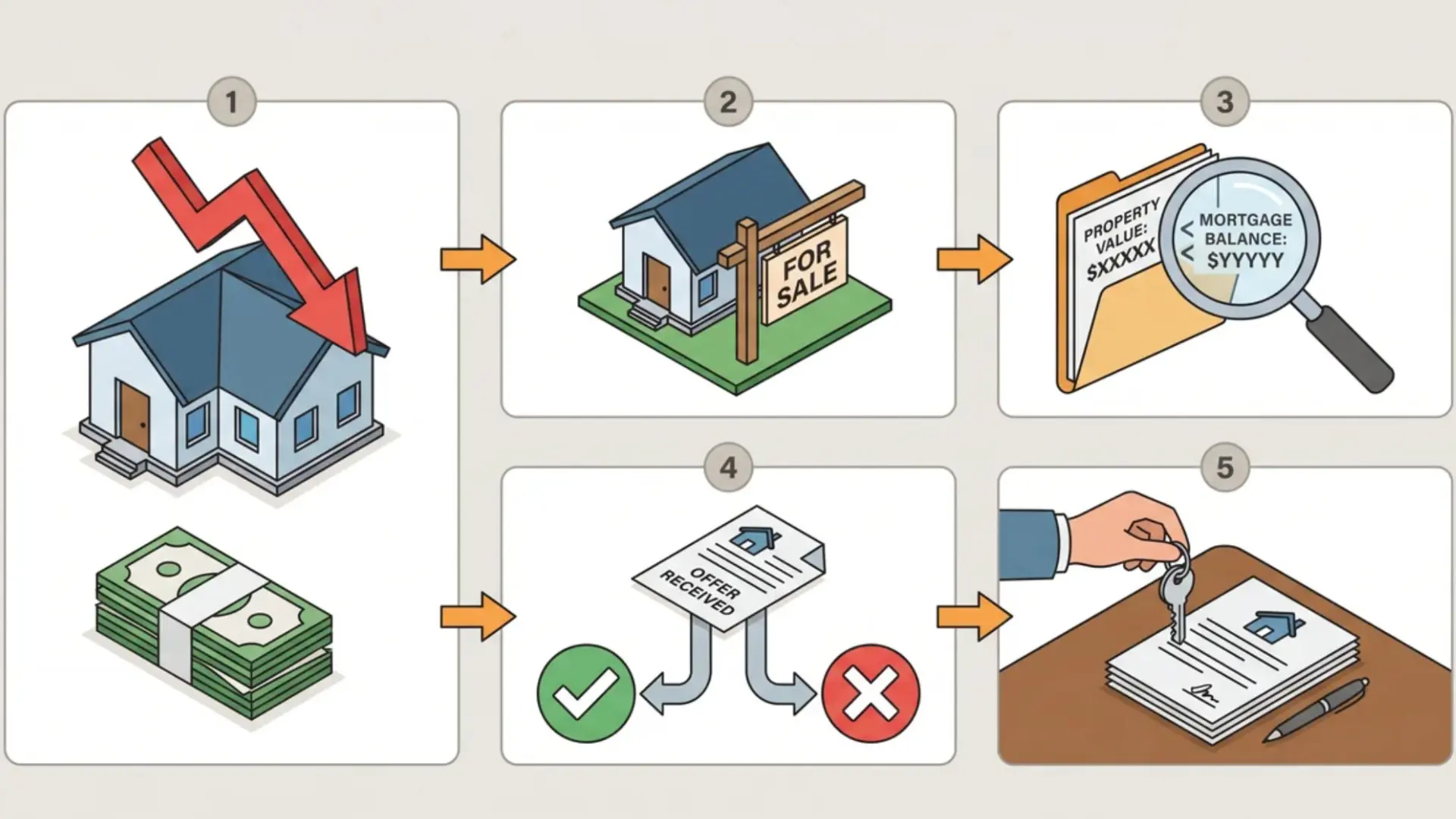
From what I’ve seen, the hardest part for people to understand is that a short sale is not controlled by one person. The seller starts the process, but the lender’s decision affects every next step.
Step 1: Seller Experiences Financial Hardship
A short sale usually begins when a homeowner can no longer keep up with mortgage payments or owes more than the home is worth. The situation is often caused by major life changes or financial pressure.
Common reasons include:
- Losing a job or a major source of income
- Unexpected medical expenses
- Divorce or separation
- A drop in home value
- Falling behind on mortgage payments
The homeowner may decide that selling the property is a better option than waiting for foreclosure.
Step 2: Seller Lists the Property
Once the homeowner decides to sell, the property goes on the market like a regular home. A buyer can view the home, make an offer, and begin the purchase process. Whether the home is a standard subdivision house or a converted barndominium layout, the listing process itself looks the same.
The important difference is that the seller cannot accept the offer on their own. Since the sale amount may not fully cover the mortgage, the lender must review and approve the deal first.
Step 3: Lender Reviews the Short Sale Request
After receiving an offer, the seller sends the details to the mortgage lender. The lender looks at several factors before deciding if the sale makes financial sense.
The review usually includes:
- Current property value
- Remaining mortgage balance
- Seller’s financial situation
- Buyer’s offer amount
The lender wants to know if accepting the offer is a better option than moving toward foreclosure.
Step 4: Lender Accepts or Rejects the Offer
Thelender has the final decision. If the offer is approved, the sale can continue toward closing.
If the lender rejects the offer, the buyer and seller may need to adjust the terms, submit a new offer, or consider another solution.
This approval step is why short sales often take longer than regular home sales.
Step 5: Closing Takes Place
Once the lender approves the sale, the final paperwork can move forward. The buyer completes the purchase, and ownership of the property transfers to the new owner.
The mortgage is handled based on the agreement made with the lender. In some cases, the remaining balance may be forgiven, while other situations depend on lender rules and state laws.
A short sale is not just a lower-priced home sale. It is a process where the lender must agree to accept less money than the original mortgage amount.
Why Would a Lender Accept Less Money?
A lender compares the likely result of a short sale with the cost and risk of foreclosure.
Foreclosure may involve legal fees, property maintenance, unpaid taxes, insurance, security, and resale expenses. A vacant property can also lose value before the lender sells it.
A reasonable short-sale offer may give the lender a faster and more predictable recovery. However, the lender may reject the request if the offer is too low, the paperwork is incomplete, or another option is expected to recover more money.
The lender’s decision is based mainly on its expected financial result, not simply the seller’s desire to leave the property.
Who May Qualify for a Short Sale?
There is no single qualification standard for every mortgage. Lenders and loan programs follow their own requirements, but several factors are common.
- Documented Hardship: The seller can show a financial reason for being unable to maintain the mortgage.
- Insufficient Proceeds: The likely sale proceeds cannot cover the mortgage payoff and approved expenses.
- Complete Records: The seller supplies the requested income, debt, banking, and mortgage information.
- Reasonable Offer: The buyer’s offer reflects the property’s condition and local market value.
- Lienholder Agreement: Every lender or lienholder required for closing accepts the proposed payment.
A seller does not always need to be in foreclosure before requesting help. The mortgage servicer can explain the rules tied to the specific loan.
What Does a Short Sale Mean for Sellers?

A mistake I often see sellers make is waiting too long before looking at their options. Once mortgage payments become difficult, knowing the available choices early can help them make better decisions.
One possible benefit is that a short sale may allow the homeowner to sell the property before foreclosure happens. This can give the seller a chance to move forward instead of staying stuck with a home they can no longer afford.
A short sale may also have a smaller impact on credit compared with foreclosure, depending on the situation. However, it is not a simple reset button. The seller may still face credit effects, and the outcome can vary based on lender policies and other financial details.
Sellers should also expect more paperwork. The lender may ask for proof of income, bank statements, hardship letters, and other documents to understand why the short sale is needed.
Some challenges sellers should keep in mind:
- The process often takes longer than a normal home sale
- The lender must approve the final offer
- Financial records are usually required
- Remaining debt may still be an issue in some cases
A short sale does not always remove the full mortgage balance. The seller should confirm the lender’s terms and understand any possible remaining obligations before moving forward.
What Does a Short Sale Mean for Buyers?
For buyers, a short sale can look like a chance to purchase a home at a lower price. However, the process works differently from a typical home purchase.
Buyers are often drawn to short sales because of the price, but I’ve found that patience matters just as much as the budget. A lower asking price does not always mean a simple purchase.
The biggest attraction is the potential price. Since the seller may owe more than the home is worth, buyers may find properties priced below similar homes in the area. Some buyers also face less competition because not everyone wants to wait through the longer approval process.
However, short sale buyers need patience. The offer is not complete just because the seller accepts it. The mortgage lender must review and approve the deal before the purchase can move ahead.
Buyers should be prepared for a few challenges:
- The waiting period can be longer than a regular sale
- Homes are often sold as-is, with limited repairs from the seller
- The lender may reject the offer or request changes
Before making an offer, buyers should get a home inspection, understand the timeline, and be comfortable with the extra waiting involved. A short sale can work well for the right buyer, but it requires more patience than a standard home purchase.
Short Sale: Seller vs. Buyer
The same transaction creates different responsibilities and risks for each party.
| Factor | Seller | Buyer |
|---|---|---|
| Main goal | Sell without repaying the full mortgage from the proceeds | Purchase under lender-controlled terms |
| Documents | Provides financial and hardship records | Provides an offer and financing evidence |
| Approval | Needs permission for the reduced payoff | Waits for the lender’s price decision |
| Main risk | Debt, tax, and credit consequences | Delay, rejection, and repair costs |
| Property condition | May lack funds for repairs | Commonly accepts the property as-is |
| Final authority | Cannot approve the reduced payoff alone | Cannot rely only on seller acceptance |
Neither side controls the transaction alone. The sale depends on the buyer, seller, lender, and every required lienholder reaching an agreement.
What Happens to the Remaining Mortgage Debt?
The gap left after applying the sale proceeds to the mortgage is commonly called a deficiency.
The Consumer Financial Protection Bureau advises sellers in states where they may be responsible for a deficiency to ask the lender to waive it before completing a short sale.
An approval letter may:
- Forgive the full deficiency
- Require the seller to contribute money
- Require the seller to sign a promissory note
- Leave collection rights unchanged
- Address only one mortgage while another lien remains
A vague approval letter can create trouble later. Sellers should look for clear wording stating that the lender waives or releases the remaining balance when that is part of the agreement.
State law, loan type, lien position, and written terms can affect the outcome. A real estate attorney can explain the seller’s legal responsibility in the relevant state.
Forgiven mortgage debt may also affect federal taxes. The Internal Revenue Service states that canceled debt may need to be reported as income unless an exception or exclusion applies. Tax treatment depends on the property, the debt, the agreement date, and the seller’s finances. A tax professional should review the current rules rather than relying on assumptions.
Short Sale vs. Foreclosure
A short sale and foreclosure can both involve an unaffordable mortgage, but control of the property changes in different ways.
| Factor | Short Sale | Foreclosure |
| Who handles the sale? | Seller, subject to lender approval | Lender takes the property through a legal process |
| Seller involvement | Seller lists the property and reviews offers | Seller has limited control |
| Buyer transaction | Buyer purchases from the current owner | Buyer may purchase through an auction or lender sale |
| Timing | Often takes several months | Depends on state law and lender action |
| Credit | Can cause serious negative effects | Can cause serious negative effects |
| Remaining debt | Depends on the agreement and state law | May remain, depending on the loan and state law |
| Property condition | Often sold as-is | Often sold as-is |
A short sale may prevent a completed foreclosure, but it does not automatically protect the seller’s credit or cancel the deficiency.
How Long Does a Short Sale Take?
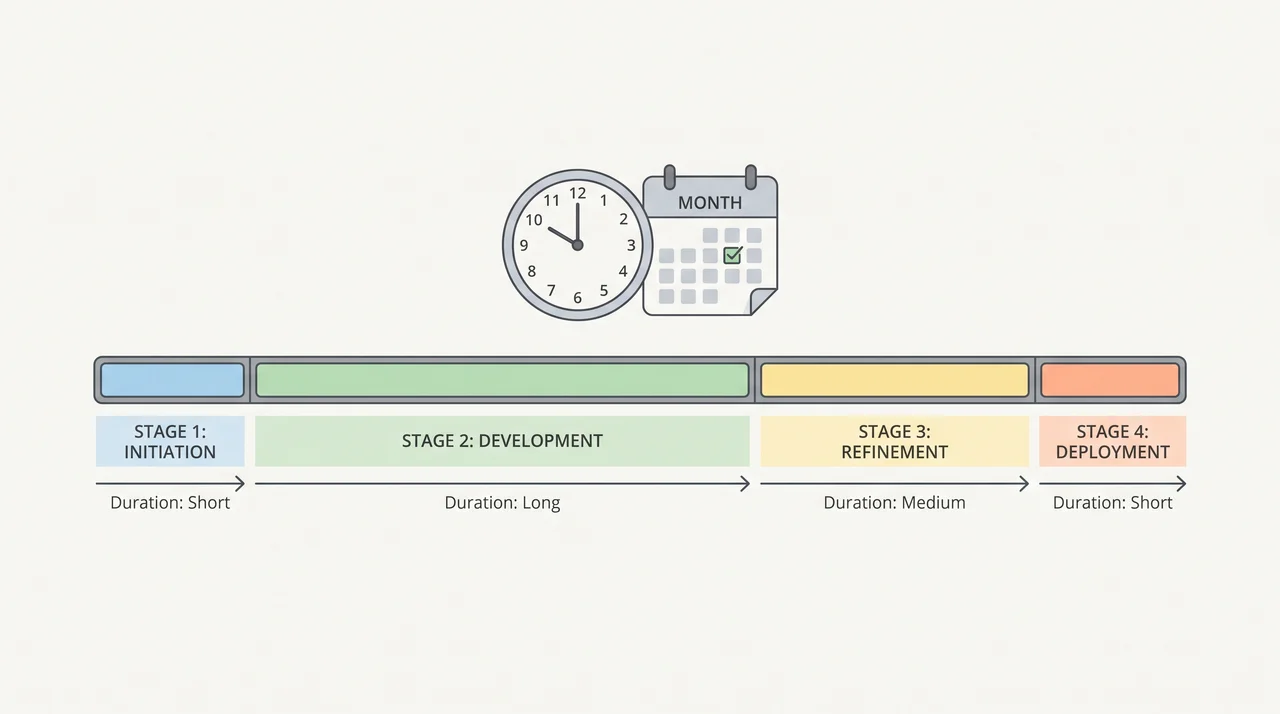
A short sale can take several months from start to finish. The timeline depends on the lender, the paperwork, the property details, and how quickly each step is completed.
The process usually follows these stages:
- Listing the property: The timeline depends on the local market and how quickly a buyer submits an offer.
- Receiving a buyer offer: Finding the right buyer can take anywhere from days to several months.
- Lender review and approval: This is often the longest stage because the lender checks the offer, property value, and financial details.
- Closing the sale: Once approval is received, the final paperwork can be completed and ownership can transfer.
Several factors can affect how long the process takes:
- Number of lenders: A property with multiple loans may need approval from more than one lender.
- Documentation quality: Missing or incomplete paperwork can delay the review.
- Market conditions: Buyer demand and property value can affect how quickly an offer is accepted.
The waiting period can feel frustrating, but each step helps the lender decide if accepting the short sale is the right choice.
Who Pays Closing Costs in a Short Sale?
Closing expenses depend on the purchase agreement, local practice, and lender approval.
| Expense | Common Source of Payment | Key Point |
| Agent commission | Sale proceeds | Lender approves the amount |
| Title and escrow fees | Sale proceeds or buyer | Local practices differ |
| Buyer inspection | Buyer | Usually paid even if the sale fails |
| Buyer appraisal | Buyer or lender arrangement | Required for many financed purchases |
| Repairs | Often buyer | Property is commonly sold as-is |
| Unpaid taxes | Sale proceeds | Payment must appear on the approved settlement |
| Other liens | Negotiated proceeds | Each lienholder may need to consent |
| Buyer closing-cost request | Sale proceeds, if approved | Lender may reduce or reject the request |
A seller cannot freely promise credits or concessions when those payments reduce the lender’s proceeds. Every approved expense should appear on the final settlement statement.
Can You Negotiate a Short Sale Price?
A buyer can negotiate a short sale price, but approval depends on both the seller and the mortgage lender.
The seller may accept an offer, yet the lender makes the final decision after reviewing market value, property condition, and expected recovery compared with foreclosure. Once a conditional acceptance is in place, the lender can approve, counter, or reject the offer.
A stronger offer typically includes:
- Recent comparable sales data from the local market to support pricing for lender review
- Professional inspection report outlining property condition issues and clarity
- Written repair estimates for major required fixes for negotiations
- Mortgage preapproval or verified proof of funds for verification
- Clear closing timeline that meets lender requirements to avoid delays
- Limited contingencies that do not weaken the offer to strengthen the offer
Tips for Buying a Short-Sale Home
Preparation helps buyers judge the full cost and avoid waiting on an unsuitable transaction.
- Confirm Approval Status: Ask if the lender has reviewed the listing price or a prior offer.
- Order an Inspection: Check the structure, roof, plumbing, electrical system, and major equipment.
- Research the Title: Find out if the property has second mortgages, judgments, or other liens.
- Maintain Financing: Keep income, credit, and mortgage documents current during the review.
- Estimate Repairs: Add urgent and near-term repairs to the purchase budget.
- Protect Key Rights: Review inspection, financing, appraisal, and approval terms carefully.
- Set a Time Limit: Decide how long the transaction can remain uncertain.
- Compare Total Costs: Measure the purchase against similar standard-sale properties.
Patience matters, but patience alone does not turn a weak purchase into a good one.
Tips for Sellers Considering a Short Sale
Early action gives sellers more time to compare available mortgage options.
- Contact the Servicer: Ask what loss-mitigation programs apply to the mortgage.
- Collect Records: Prepare current bank, income, debt, tax, and property documents.
- Request Written Terms: Confirm how the lender plans to treat the deficiency.
- Check Every Lien: A second mortgage, tax lien, or judgment may need separate approval.
- Review Tax Effects: Ask a qualified tax professional about possible canceled-debt income.
- Use Experienced Help: Work with an agent and attorney familiar with short-sale transactions.
- Compare Alternatives: Consider repayment, forbearance, modification, standard sale, or deed in lieu when available.
I would focus closely on the approval letter because its debt language can matter long after the closing date.
Is a Short Sale a Good Idea?
A short sale may make sense when a seller cannot afford the mortgage, lacks enough equity for a standard sale, and receives acceptable lender terms. It may be less suitable when another mortgage solution allows the seller to keep the property or repay the loan without a deficiency dispute.
For a buyer, the transaction may make sense when the price reflects the property’s condition and the closing schedule remains flexible. It may be a poor fit for someone who needs a firm moving date or cannot cover major repairs.
The right answer depends on the numbers, written terms, property condition, and available alternatives.
Before You Decide
Understanding what is a short sale in real estate requires more than comparing the mortgage balance with the sale price. The lender controls the reduced payoff, while the seller remains responsible for checking the debt and tax terms.
Buyers must account for delays, repairs, financing, and the risk of rejection. I recommend that sellers contact their mortgage servicer before missing more deadlines and obtain every promise in writing.
I also recommend that buyers compare the property’s full cost with similar standard listings. Careful document review can prevent a seemingly manageable sale from creating larger financial problems later.
Frequently Asked Questions
Can you negotiate the price of a short sale home?
Yes, buyers can submit an offer and negotiate with the seller, but the final decision depends on the lender. Since the lender must approve the sale, a buyer’s offer is not always accepted even if the seller agrees.
Do you need cash to buy a short sale home?
No, buyers do not always need cash. Many short sale purchases are made using traditional mortgages or other financing options. However, buyers should expect the lender to review the offer carefully before approval.
Who pays closing costs on a short sale?
Closing costs are usually handled according to the purchase agreement and lender approval. In some cases, the buyer may pay certain costs, while the lender may approve other arrangements during the review process.
Can a bank refuse a short sale?
Yes, a lender can reject a short sale offer. The bank may decide the offer is too low, the paperwork is incomplete, or another option would recover more money.
Can you sell a house with two mortgages through a short sale?
Yes, but it can be more complicated. Both lenders usually need to agree to the terms before the sale can move forward, which can add extra time to the process.
Do short sale homes need repairs before selling?
Short sale homes are often sold as-is, meaning the seller may not make repairs before closing. Buyers should inspect the property and understand its condition before making an offer.