

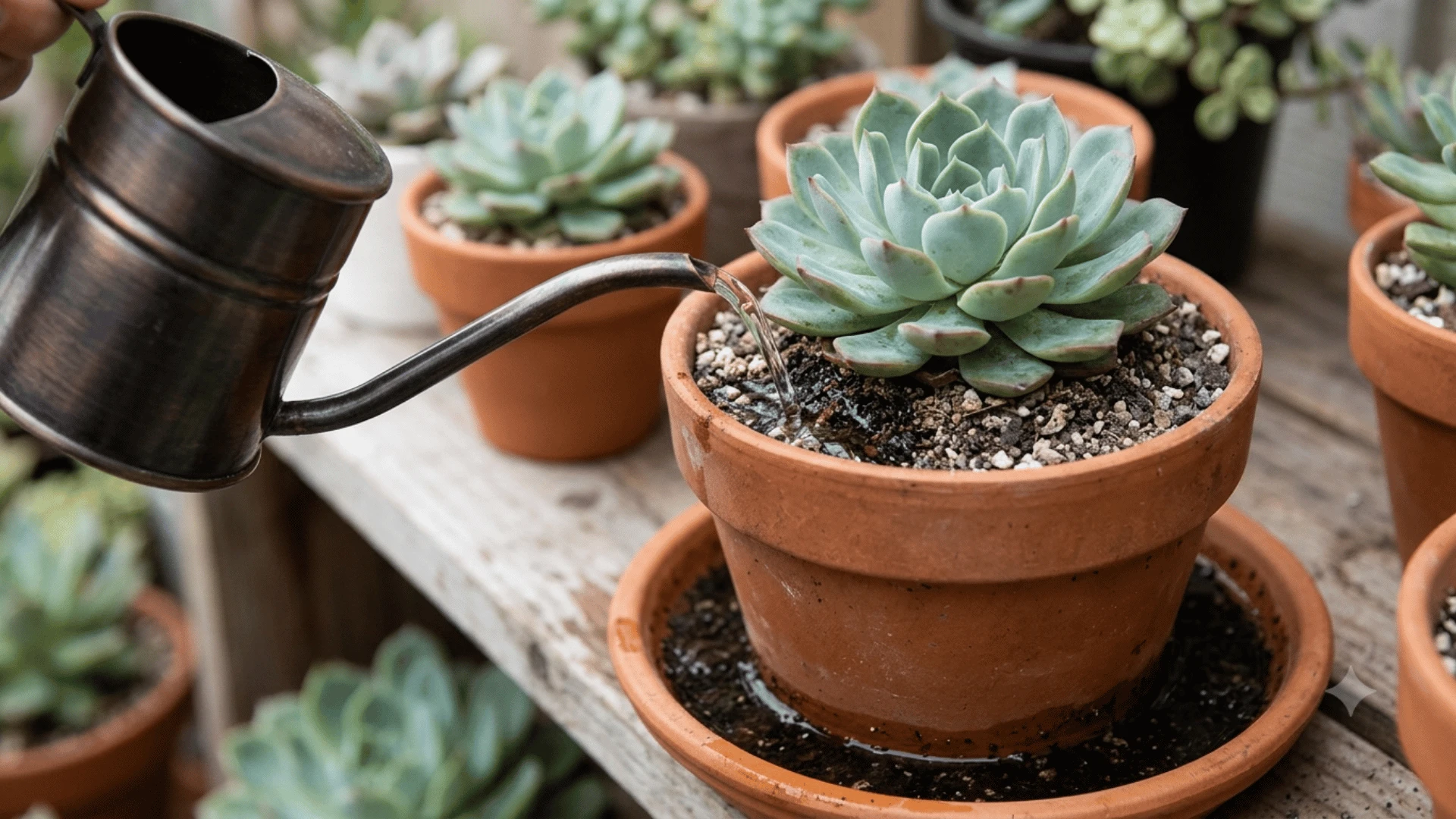
I killed my first succulent in less than a month. I thought I was doing everything right, but I was actually overwatering it and setting it up for root rot. If you’ve struggled with the same thing.
Learning how to water succulents is usually where most people go wrong, not because they don’t care, but because the timing feels confusing. Getting the basics of caring for succulents correctly makes the watering part much less intimidating once you understand the plant’s rhythm.
I used to guess and hope for the best, but that only made things worse. Once I started checking the soil and reading the plant’s signals, everything changed.
You’ll learn exactly when to water, what signs to look for, and how to keep your succulents healthy without second-guessing every step.
How Often Should You Water Succulents?
Succulents do not need water on the same day every week. Their soil needs time to dry completely between waterings, so the right frequency depends on the plant’s actual conditions.
Pot size, soil, temperature, sunlight, airflow, humidity, and container material all affect how quickly moisture disappears. A small terracotta pot in a sunny window may dry much faster than a large glazed pot in a cooler room. Part of getting this right also comes down to choosing the right mix in the first place, since dense or moisture-retentive blends dry at a completely different pace than a gritty, fast-draining one.
That is why I treat watering schedules as rough references rather than rules. Check the soil and plant before adding water.
If the soil still feels damp or the leaves remain firm and full, wait. Watering a little late is generally safer than watering while the roots are still sitting in moisture.
How to Know When Your Succulent Needs Water
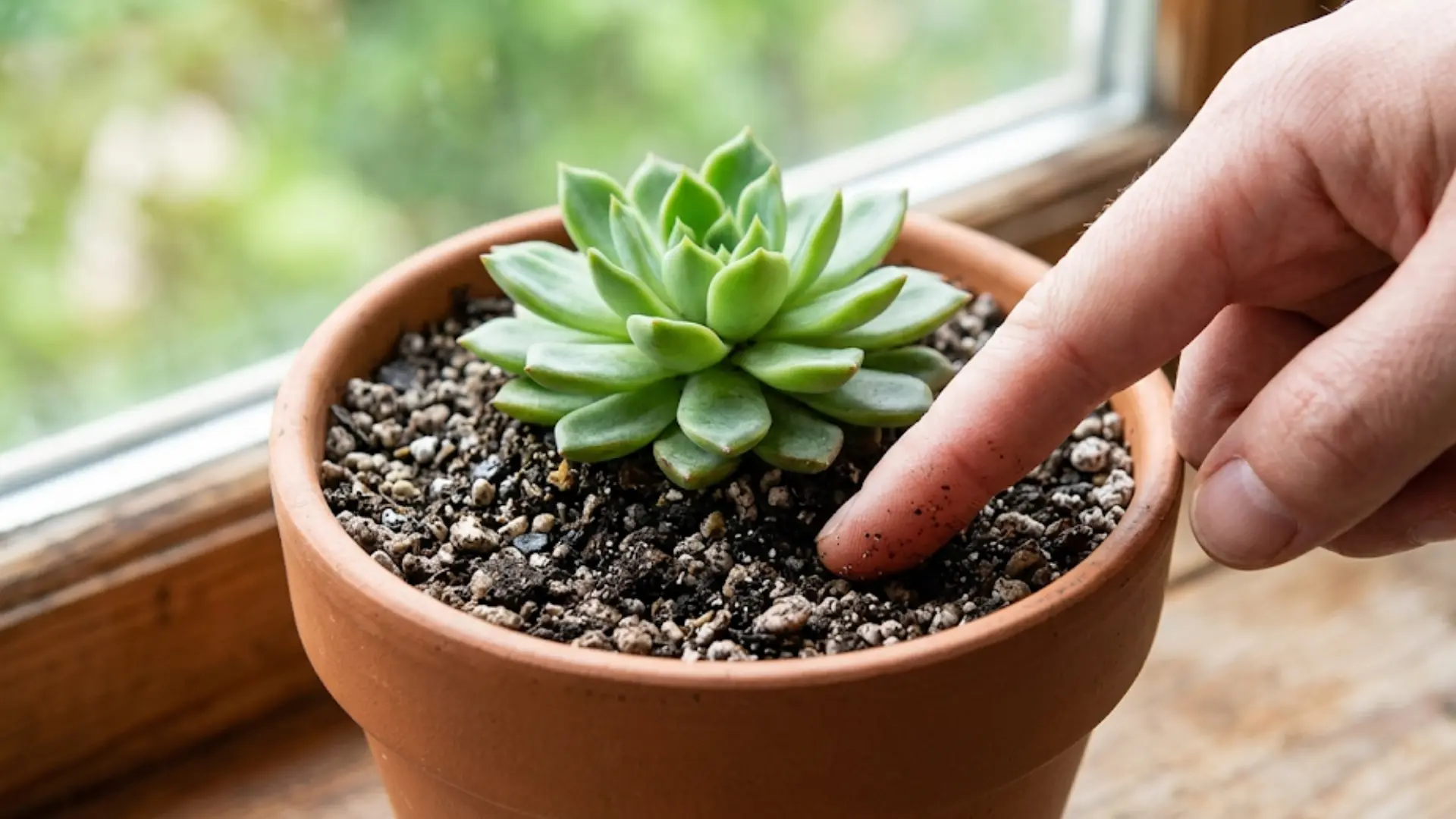
A calendar cannot tell what is happening inside the pot. The soil and leaves give much better clues about when a succulent is ready for another drink, and the signals can shift depending on various succulent plant types you’re growing, since some hold water longer in their leaves than others.
Check the Soil
Start with the soil. Push your finger about 1 to 2 inches into the potting mix. If it feels cool or damp, leave the plant alone.
Checking only the surface can be misleading because the top layer may dry while moisture remains deeper around the roots.
For a more reliable check, feel through the drainage hole or push a clean popsicle stick deeper into the soil. If soil sticks to the stick or leaves a damp mark, give the pot more time.
You may also notice that a completely dry pot feels much lighter when lifted.
Check the Leaves
The leaves provide another useful clue.
A well-hydrated succulent usually has firm, plump leaves. When the plant begins using its stored water, those leaves may become slightly softer, thinner, or wrinkled.
Some plants may also pull their leaves inward around the rosette.
I prefer using the soil and leaves together. Dry soil plus mild signs of thirst usually gives a much clearer answer than relying on either signal alone.
There is no need to wait until the leaves become severely shriveled or crispy.
How to Water Succulents With the Soak-and-Dry Method
The soak-and-dry method is simple: thoroughly wet the soil, allow excess water to escape, then leave the plant alone until the soil dries again.
Before starting, have a watering can, faucet, or hose ready. The succulent should also be planted in well-draining soil and preferably in a container with a drainage hole. If your current pot doesn’t drain well, it’s worth looking into repotting your succulents before you settle into a watering routine, since fighting bad drainage every week gets old fast.
Step 1: Make Sure the Soil Is Completely Dry
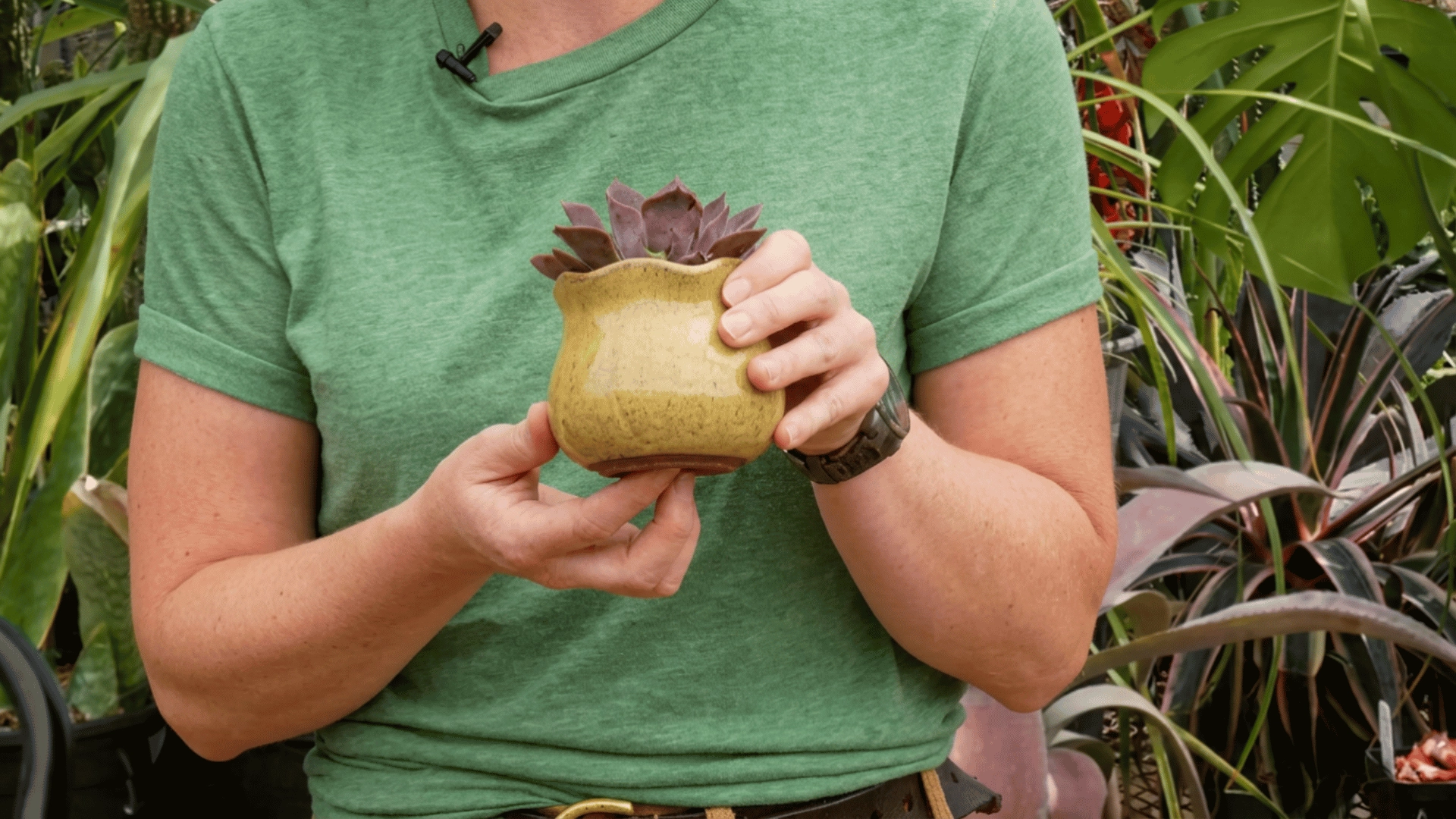
Check deeper than the surface before adding water.
Feel the soil through the drainage hole, use a popsicle stick, or lift the container and compare its weight with how it feels after watering.
If you find moisture deeper in the pot, wait.
Watering while the root area is still damp keeps the soil wet for longer and increases the chance of root problems.
Step 2: Look for Mild Signs of Thirst
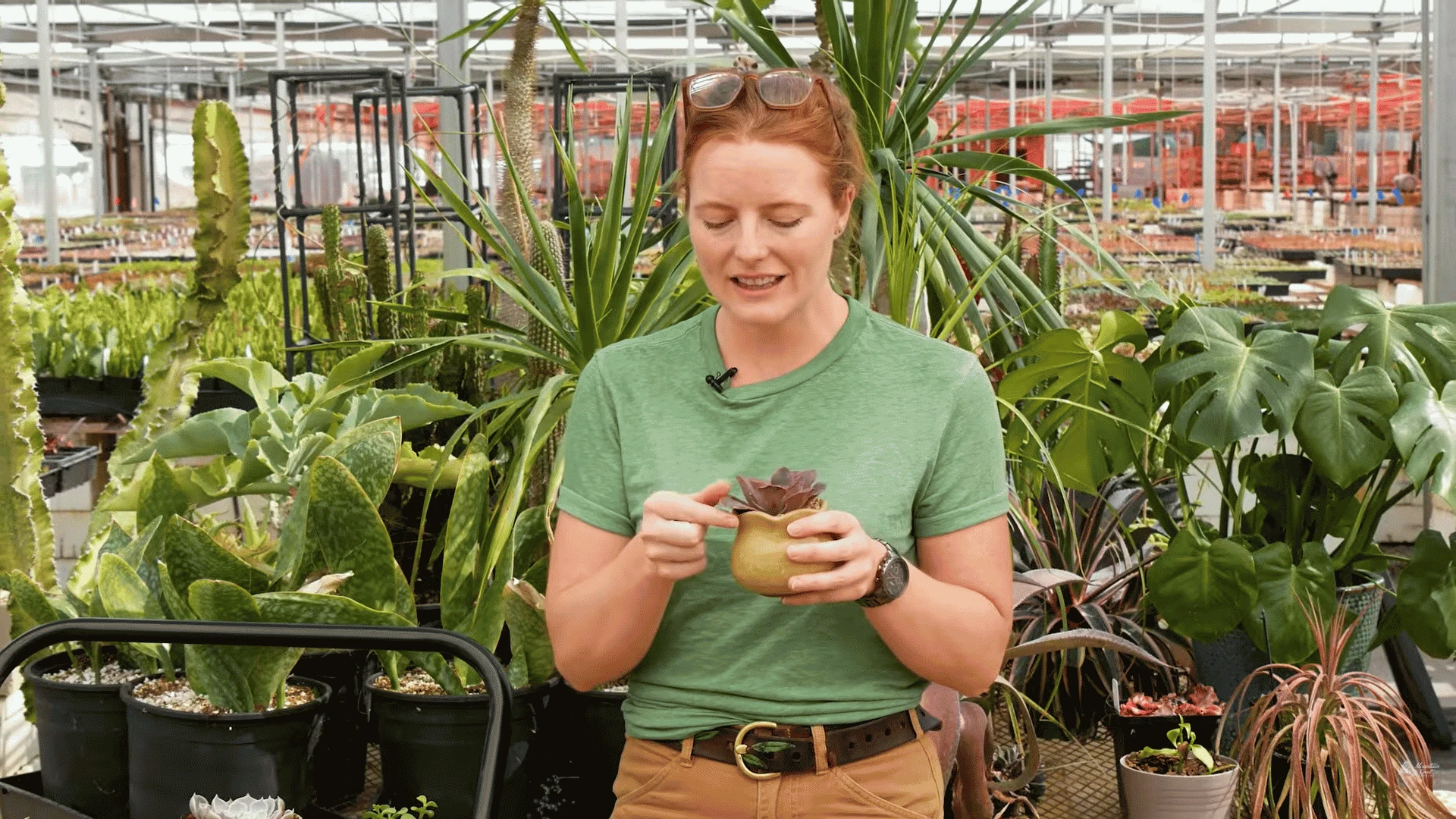
Once the soil is dry, check the plant. Slightly softer, more flexible, or lightly wrinkled leaves can mean the succulent is starting to use its stored moisture.
Healthy leaves should not need to become severely shriveled before you act. If the soil is dry but the leaves remain firm and full, waiting a little longer is usually fine.
Step 3: Soak the Soil Thoroughly
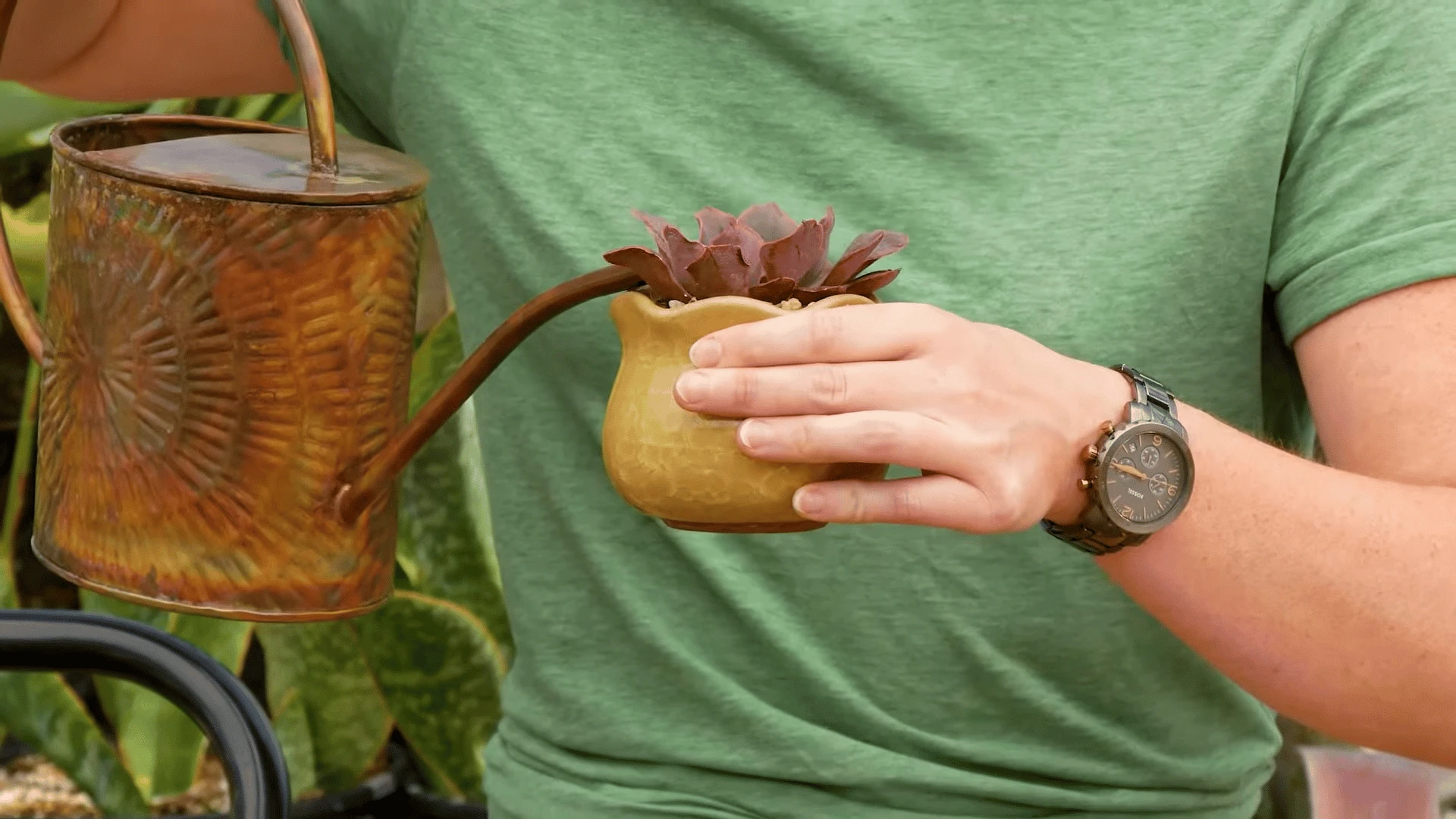
When the plant needs water, give it a proper drink. Pour water slowly over the soil around the base of the succulent. Continue until the entire root area has been wetted and excess water starts running through the drainage hole.
Avoid giving only a small splash. A little surface water may never reach the deeper roots and can leave the upper layer damp without properly hydrating the plant.
Step 4: Let Extra Water Drain
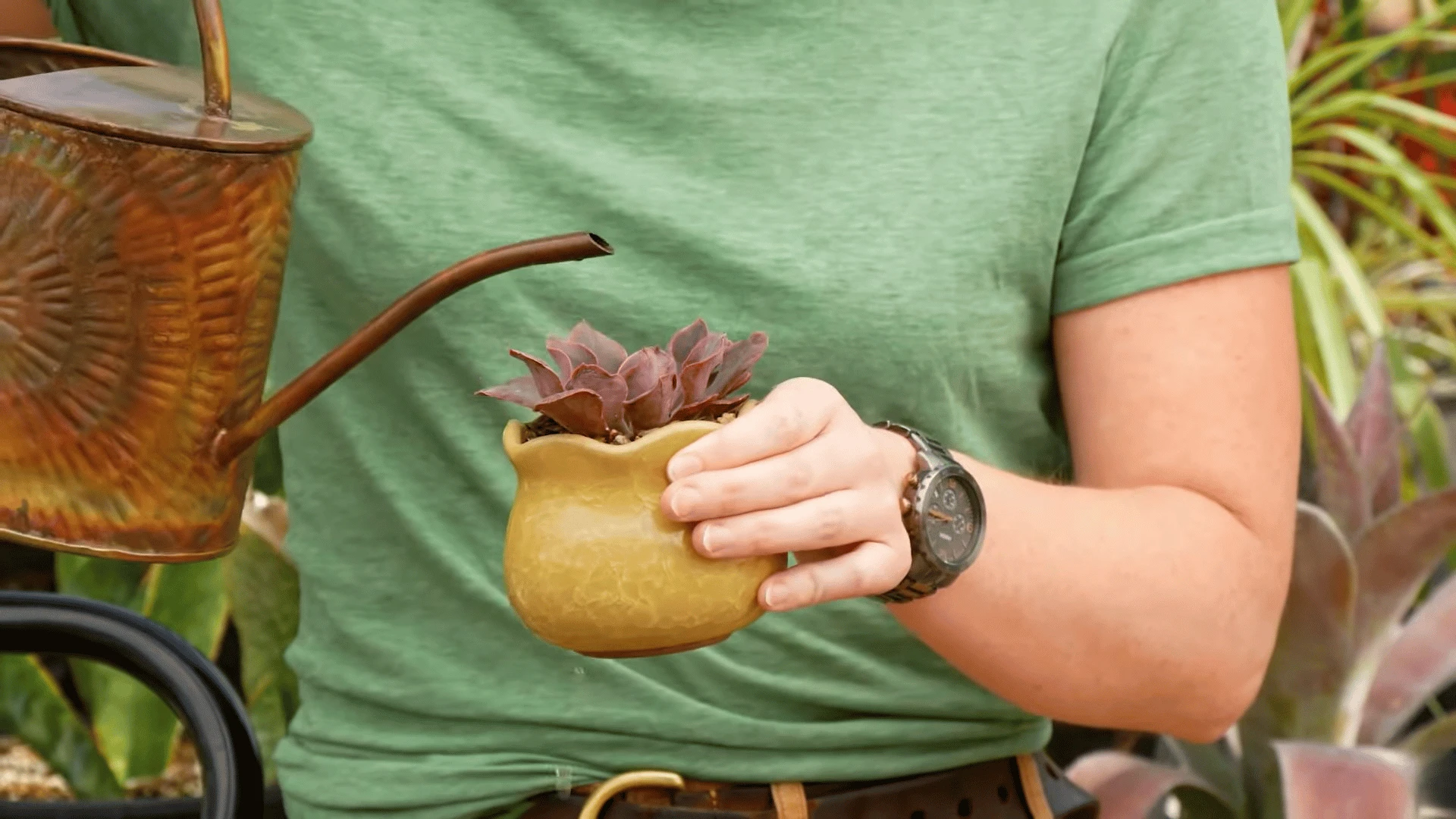
Once the soil is saturated, let the excess water escape completely. For indoor plants, I find it easier to water over a sink. Leave the pot there until it stops dripping before returning it to its usual place.
Do not leave the container sitting in a saucer filled with runoff. Succulents cope well with dry periods, but constantly wet roots can quickly become a problem.
Step 5: Leave the Plant Alone While It Dries
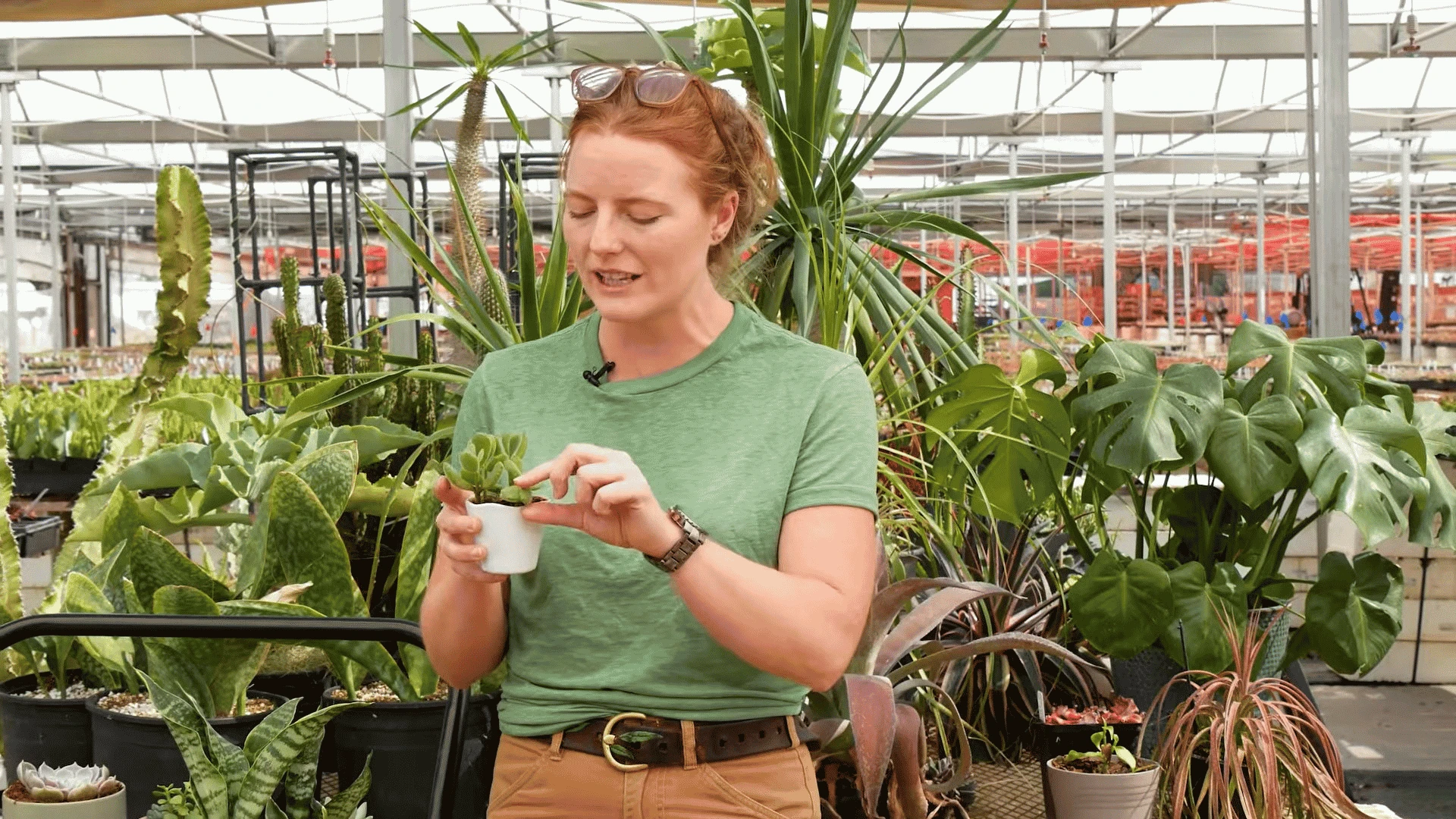
The drying period is just as important as the watering itself. Do not add another small drink a few days later because the soil surface looks dry. Moisture may still be sitting deeper in the pot.
Check again before the next watering. Leaves that remain firm and healthy are another reason to wait. If leaves become mushy, translucent, yellow, slimy, or unusually dark, stop watering and check the soil and roots.
Step 6: Adjust to the Plant’s Growing Conditions
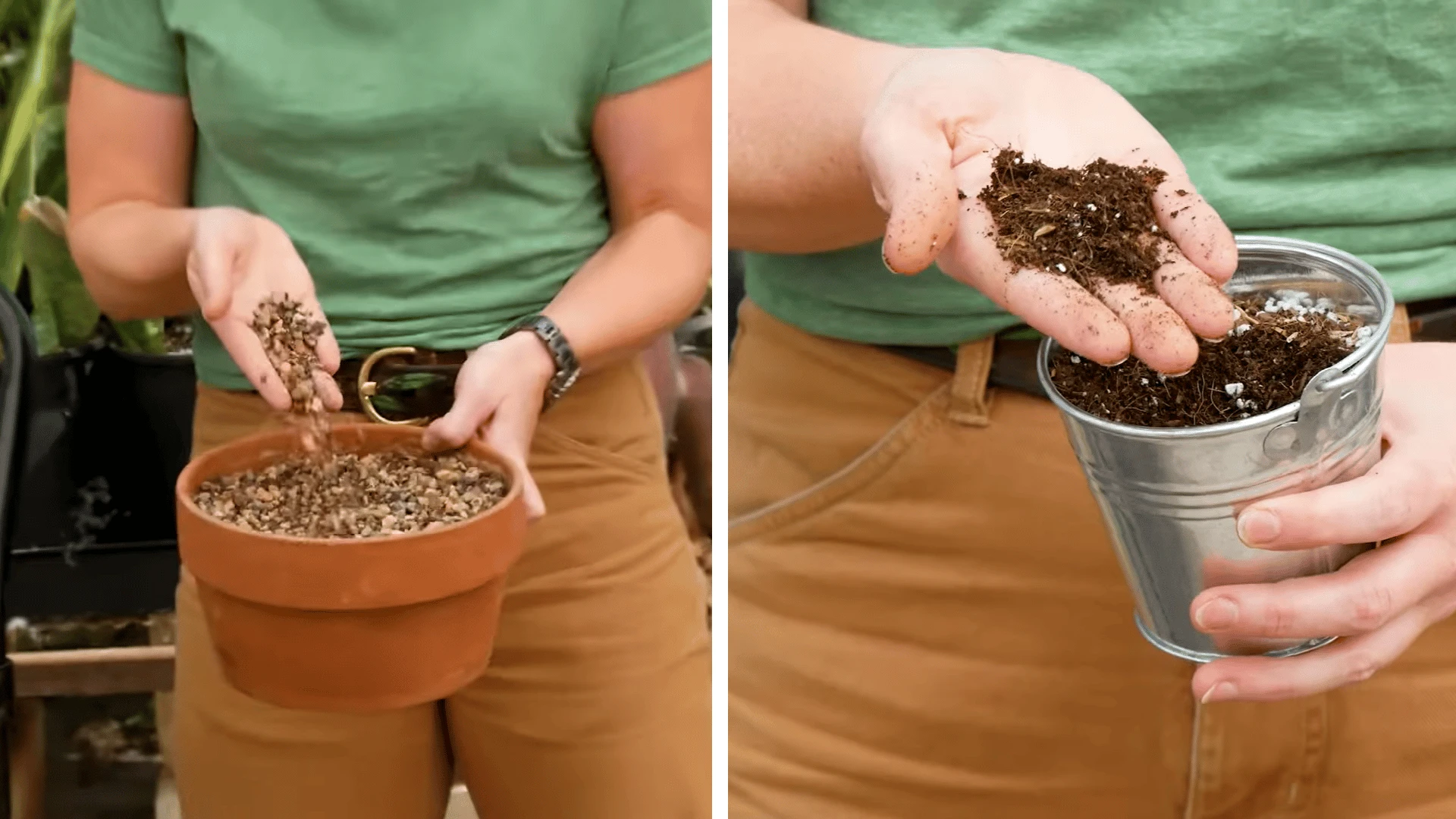
No two pots dry at exactly the same speed. Gritty succulent soil usually dries faster than dense potting soil. Terracotta also releases moisture more quickly than less breathable containers.
Small pots can dry rapidly because they hold less soil, while larger containers may stay damp much longer. Climate and season matter too. Rather than memorizing a number of days, check the plant each time and respond to its current condition.
For a complete walkthrough of the process, check out the video tutorial below:
Top Watering vs. Bottom Watering Succulents
Top and bottom watering both work for succulents, but each method suits different soil conditions, containers, and watering situations best.
| Method | How It Works | Best For | Main Caution |
|---|---|---|---|
| Top Watering | Pour water directly over the soil until excess water flows through the drainage hole. | Routine watering and pots with good drainage. | Avoid leaving water trapped between tightly packed leaves or inside the rosette. |
| Bottom Watering | Place the pot in shallow water and allow the soil to absorb moisture from below. | Very dry, compacted, or water-repellent soil that does not absorb water evenly from above. | Remove the pot after the soil absorbs enough moisture and let excess water drain completely. |
For routine care, top watering is simpler, while bottom watering helps dry soil absorb moisture more evenly through the pot. Once you’ve got watering down, it’s a natural next step to try propagating succulents at home and turn one healthy plant into several.
How Much Water Do Succulents Need?
Succulents need less frequent watering, but that does not mean they need tiny amounts of water. When it’s time to water, wet the soil thoroughly.
Trying to measure water in tablespoons can make succulent care harder because every container, plant, and soil mix holds moisture differently.
A small pot needs less total water than a large planter, but both should receive enough to wet their root zones. The bigger concern is what happens afterward.
Water needs to drain away, and the potting mix needs time to dry. Frequent small sips often create more problems than a complete soak followed by a proper dry period.
How Growing Conditions Affect Succulent Watering
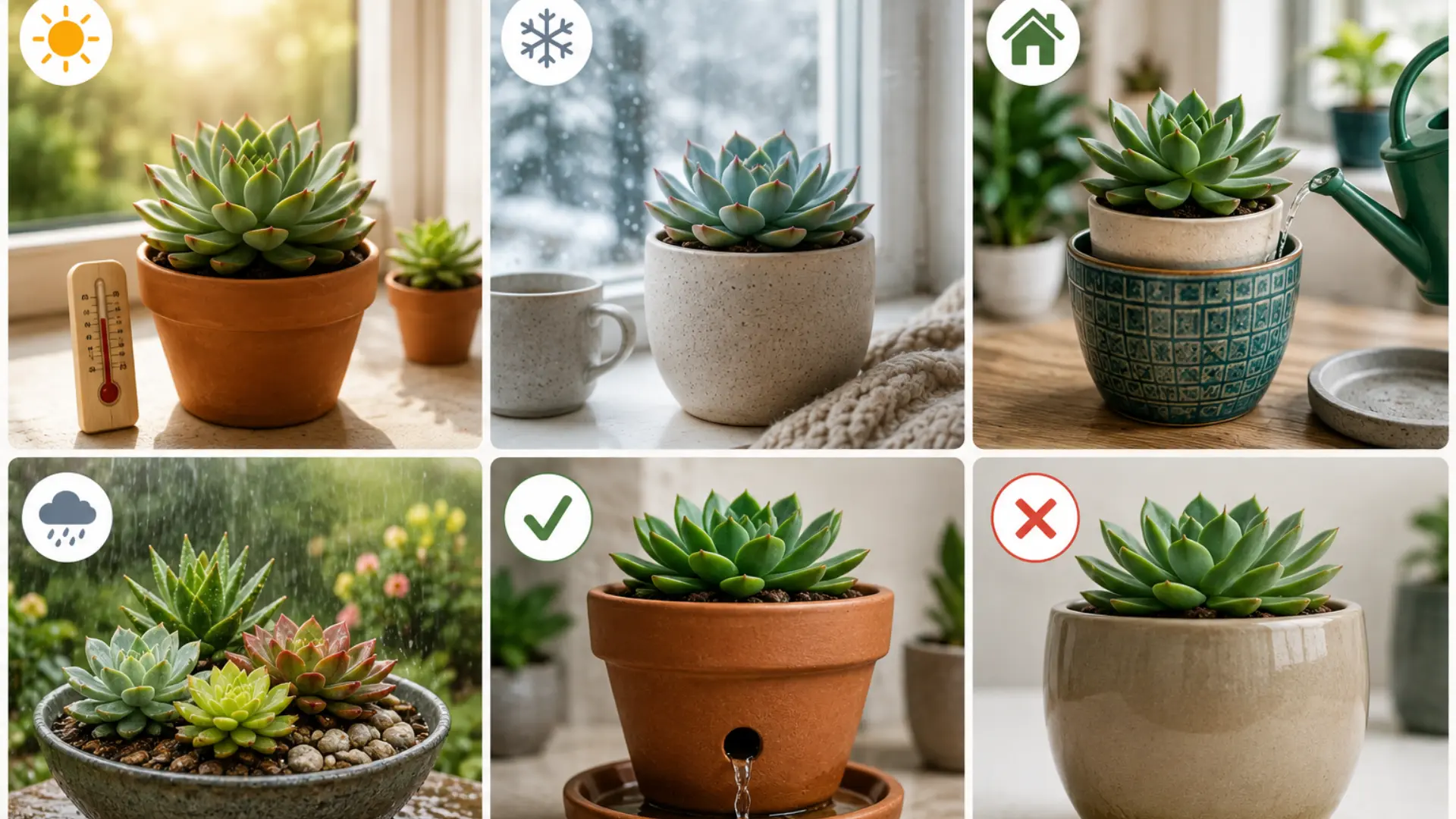
Season, location, pot size, and drainage all affect how quickly succulent soil dries. Use these conditions to decide when another watering is needed.
1. Watering Succulents in Summer
Warm temperatures, stronger sunlight, and longer days can make soil dry faster. Succulents growing actively may need more frequent moisture checks during summer.
A small pot in a sunny window may dry within several days, while a larger container can stay moist much longer. Use weekly watering only as a rough reference. Check the soil before adding water.
2. Watering Succulents in Winter
Cooler temperatures and slower growth usually mean succulent soil takes longer to dry. Some plants may go several weeks between waterings during winter.
Once-a-month watering can be a useful starting point in some conditions, but it should never replace a soil check. If moisture remains around the roots, leave the plant dry until the potting mix is ready.
3. Watering Indoor Succulents
Indoor succulents often have less airflow and more stable temperatures, which can make their soil dry slowly.
Check plants kept away from bright windows especially carefully. Decorative outer pots can also trap runoff without making it obvious. After watering, remove any collected water so the inner container does not remain wet around the bottom.
4. Watering Outdoor Succulents
Sun, heat, and wind often make outdoor containers dry faster, while rainfall can keep them wet for much longer.
Check pots after heavy rain before adding more water. During hot and dry periods, inspect the soil more often. Frequent checking does not mean frequent watering, though. Add water only after the root zone has dried.
5. Succulents in Pots With Drainage Holes
Drainage holes allow extra water to leave the container after a thorough soak. Water until moisture flows from the bottom, then let the pot drain completely.
Check the hole occasionally for compacted soil or roots that may block it. Empty runoff from saucers and decorative containers rather than allowing the bottom of the pot to remain in water.
6. Succulents in Pots Without Drainage
Pots without drainage need more careful watering because excess moisture can collect beneath the roots where it is difficult to notice.
Avoid adding large amounts of water at once, and check the soil carefully before watering again. For easier long-term care, moving the succulent into a container with a drainage hole gives better control over excess moisture.
Should You Mist Succulents?
Misting is not a replacement for regular watering.
A spray bottle mainly wets the surface of the soil and leaves. Mature succulent roots sit deeper in the container, so a light mist may never deliver enough moisture where the plant needs it.
Repeated misting can also keep the top of the potting mix damp without properly soaking the root area.
Use a proper soak when the plant needs water, then allow the soil to dry. A succulent does not need constant moisture around its leaves to stay hydrated.
Signs of Overwatering and Underwatering Succulents
Leaf appearance can provide useful clues, but always check the soil before deciding what caused the problem.
| Sign | Overwatered Succulent | Underwatered Succulent |
|---|---|---|
| Leaves | Soft, swollen, translucent, or yellow | Thin, wrinkled, or slightly shriveled |
| Texture | Mushy or unusually soft | Softer and less full |
| Soil | Remains damp for a long time | Completely dry |
| Stem | May become soft or dark | Usually remains firm |
| What to Do | Stop watering and inspect drainage | Water deeply once the soil is dry |
Do not diagnose the plant from one leaf alone. An older bottom leaf naturally drying is different from several leaves suddenly becoming mushy or translucent. Use the condition of the soil, roots, stem, and several leaves together.
Common Succulent Watering Mistakes
A few habits can undo good succulent care even when the basic watering method seems correct.
- Watering Too Often: Adding more water before the potting mix dries keeps moisture around the roots for too long.
- Giving Small Sips: A light splash may wet only the surface instead of reaching the full root area.
- Following Fixed Schedules: Sunday is not automatically watering day. Temperature, light, pot size, and soil all affect drying speed.
- Ignoring Poor Drainage: Water that cannot escape remains around the roots and keeps the soil wet longer.
- Misting Mature Plants: Surface mist does not provide the deep watering established succulent roots need.
- Leaving Standing Water: Empty saucers and decorative containers after watering so the bottom of the pot does not remain wet.
Avoiding these habits removes many of the common causes of watering trouble.
Conclusion
Learning how to water succulents became much easier for me once I stopped treating the calendar as the boss.
Check the soil. Check the leaves. Give the plant a deep drink when it needs one, let the extra water drain, and then leave it alone while the pot dries.
That simple pattern matters more than trying to find the perfect number of days between waterings.
I still check my own plants this way. Their pots, seasons, and drying times vary, but the basic rule stays the same: soak thoroughly, allow the soil to dry, then check again before adding more water.
Frequently Asked Questions
Should I Water a Succulent Right After Repotting?
Give a recently repotted succulent several dry days before watering, especially if roots were disturbed or damaged during the process. This gives small root injuries time to settle before moisture is added around them.
Why Is My Succulent Soil Staying Wet for So Long?
Dense soil, a large pot, low airflow, cooler temperatures, or a container with poor drainage can all slow drying. Check the drainage hole and consider whether the potting mix is holding more moisture than the plant needs.
Is a Drainage Hole Necessary for Succulents?
A succulent can sometimes be grown without one, but watering becomes harder to control because excess moisture cannot escape. A pot with drainage makes soak-and-dry watering much easier and reduces the chance of hidden water collecting around the roots.
Should I Water a Succulent When Only the Topsoil Is Dry?
Not yet. The upper layer can dry long before the soil around the roots. Check deeper in the container or through the drainage hole before deciding. Water again only after the root zone has dried.