

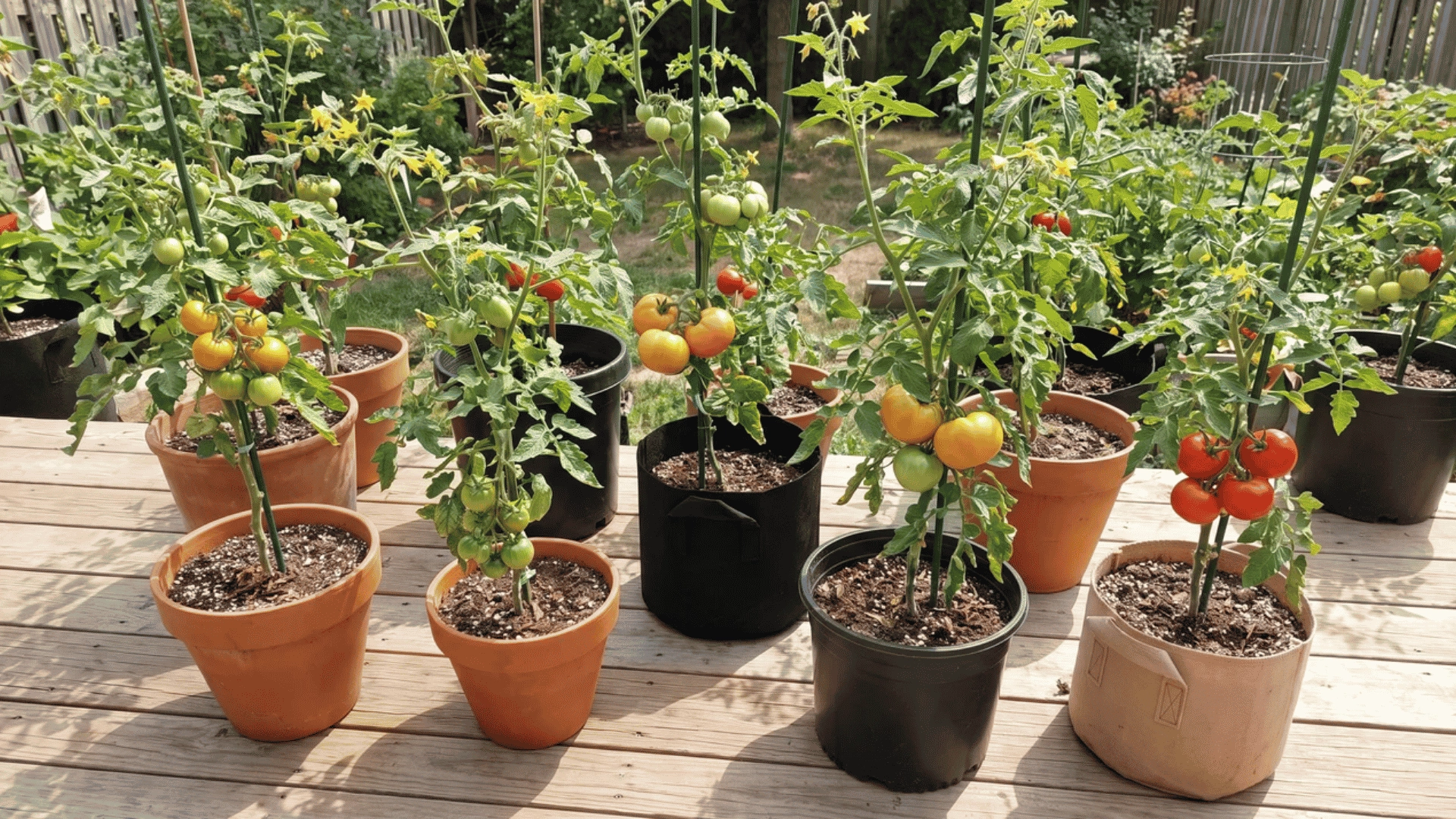
| Plant Name | Tomato (Solanum lycopersicum) |
| USDA Zones | Grown as an annual in Zones 2-11; thrives outdoors once nighttime temperatures stay above 50°F |
| Sunlight | Full sun, 6 to 8 hours daily |
| Water Needs | Moderate to high; containers dry out faster than garden beds |
| Bloom Season | Late spring through summer, continuing into early fall for indeterminate varieties |
| Maintenance | Moderate, daily moisture checks, weekly feeding, and staking at planting time |
Growing tomatoes in pots works well as long as the container gives the roots enough room, usually 5 gallons for a dwarf variety and 15 to 20+ gallons for an indeterminate slicer, paired with six to eight hours of direct sun and soil that never fully dries out.
I’ve grown tomatoes on balconies with nothing but morning light and on wide-open patios with sun from dawn to dusk, and the plants that struggled were almost always the ones stuffed into pots that were too small for their root systems.
Container culture gives you more control over soil quality and drainage than an in-ground bed does, but it also means the plant depends entirely on you for water and nutrients. There’s no surrounding soil to buffer a missed watering or a skipped feeding.
Once you understand that trade-off, potted tomatoes are genuinely one of the more forgiving vegetables you can grow on a deck, balcony, or sunny doorstep.
Choosing the Right Container Size for Tomatoes
Pot size is the single biggest factor in how a container tomato performs. A plant that’s root-bound spends its energy trying to survive rather than setting fruit, and I’ve seen otherwise healthy seedlings stall out completely in a 3-gallon nursery pot.
If you are asking, “can I grow tomatoes in a pot?” the answer is yes, but the container must match the plant’s mature size.
Match the container to the tomato’s mature growth habit, not to what looks proportional at planting time.
| Tomato Type | Recommended Pot Size | Support Needed |
| Micro tomato | 2-5 gallons | Minimal or none |
| Patio or dwarf tomato | 5-10 gallons | Small stake or cage |
| Determinate tomato | 10-15 gallons | Medium cage |
| Indeterminate tomato | 15-20+ gallons | Tall stake or trellis |
| Beefsteak tomato | 20+ gallons | Heavy-duty cage or trellis |
If you’re not sure which growth habit you’re working with, it’s worth sorting that out before you buy a container, since determinate and indeterminate tomatoes have genuinely different root spread and staking needs throughout the season.
Container material matters almost as much as size. Plastic pots hold moisture longer, which helps in hot climates but can lead to soggy roots in humid ones. Grow bags drain fast and stay cooler around the root zone, though they need watering more often.
Terracotta looks the part on a patio but dries out quickest of the three, especially in direct afternoon sun. Whatever you choose, drainage holes are non-negotiable; waterlogged roots are one of the fastest ways to lose a container tomato, and a layer of gravel at the bottom does nothing to replace an actual hole.
Preparing the Right Potting Soil
Skip garden soil entirely for containers. It compacts under repeated watering, squeezes out the air pockets roots need, and dramatically increases the odds of root rot. A fresh, bagged potting mix formulated for containers stays loose and drains properly instead.
Blend in compost for organic matter, and mix in perlite or pumice if the potting mix feels dense; you want a texture that holds moisture without turning to mud.
Tomatoes grow best in slightly acidic soil, with a pH between 6.0 and 6.8, based on factors affecting tomato yield outlined by the University of Nebraska Extension. If you’re reusing soil from a previous season, replace it if it smells sour or previously hosted a diseased plant; a fresh mix resets both the structure and the disease risk.
How to Plant Tomatoes in Pots Step by Step
Preparing the supplies before planting helps each step move smoothly. It also prevents you from disturbing the roots after the tomato seedling is settled.
Materials and Supplies You Will Need
- Healthy tomato seedling
- Large container with drainage holes
- Fresh potting mix
- Compost
- Tomato fertilizer
- Tomato cage, stake, or trellis
- Mulch
- Watering can or hose
- Gardening gloves
- Hand trowel
Step 1. Choose a Sunny Location and Prepare the Pot
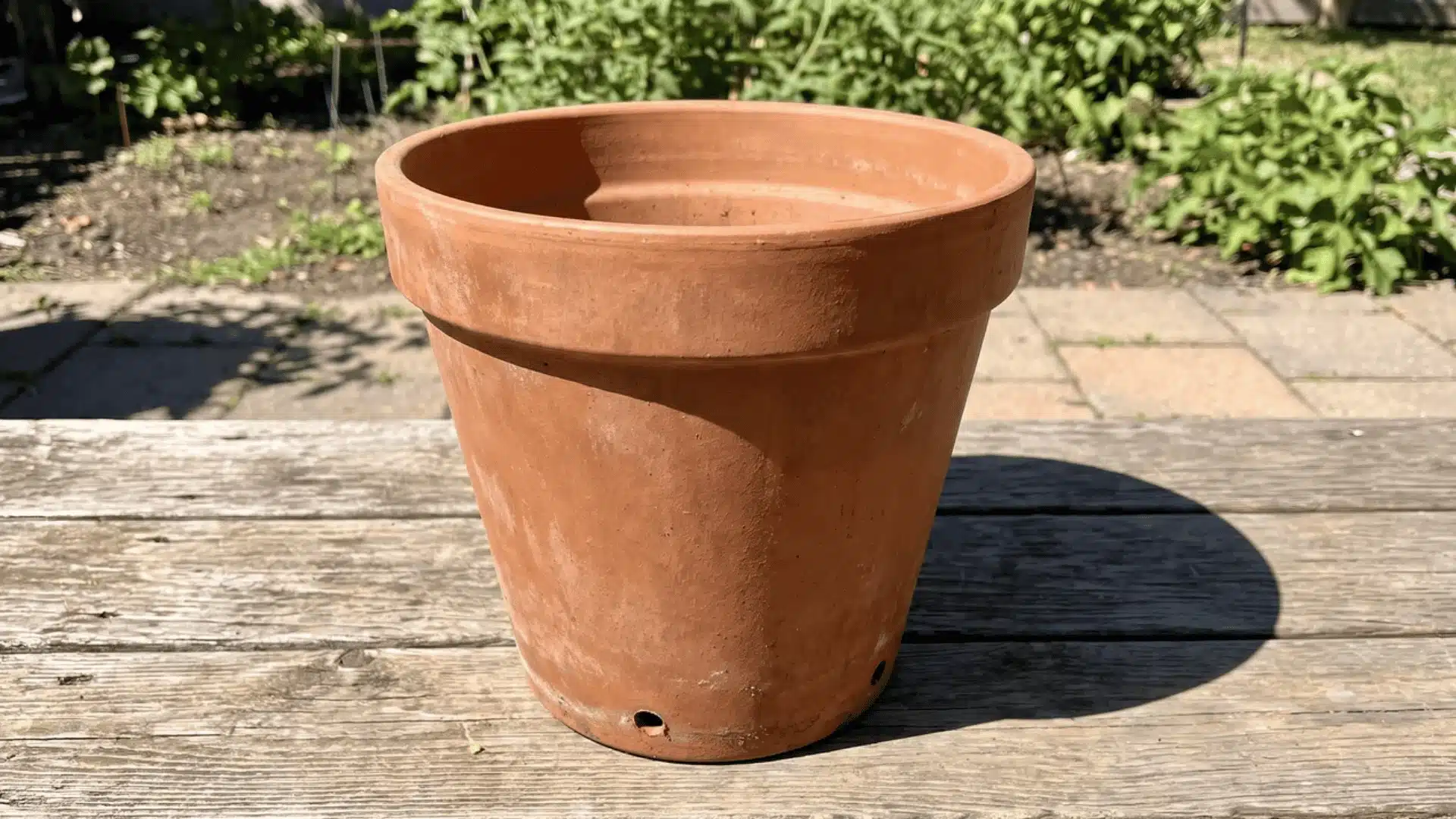
Place the tomato pot where it receives six to eight hours of direct sunlight each day. Choose an area protected from strong winds and close to a water source.
Avoid placing pots against concrete walls or surfaces that reflect intense afternoon heat. Select a stable container with enough room for one tomato plant’s roots.
Make sure the pot has several drainage holes at the bottom. Good drainage prevents excess water from staying around the roots and causing damage.
Step 2. Fill the Container With Potting Mix
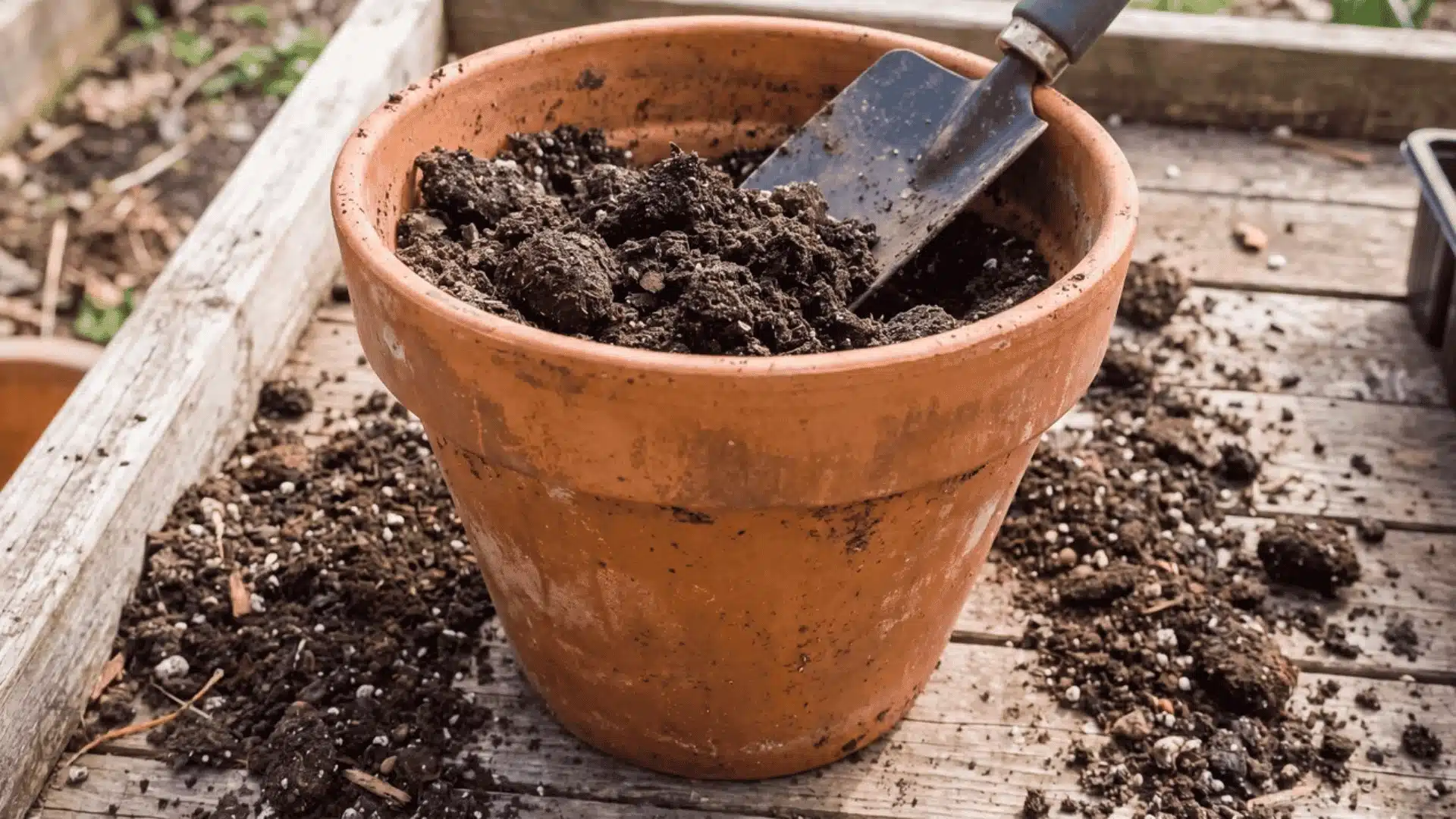
Use fresh potting mix instead of garden soil because garden soil can become compacted inside containers and restrict airflow around roots.
Fill the pot while leaving two to three inches of space below the rim for watering. Mix compost into the soil if extra organic matter is needed.
If the potting mix feels dry, moisten it before planting. A slightly damp mix helps the seedling settle properly after transplanting.
Step 3. Prepare and Plant the Tomato Seedling
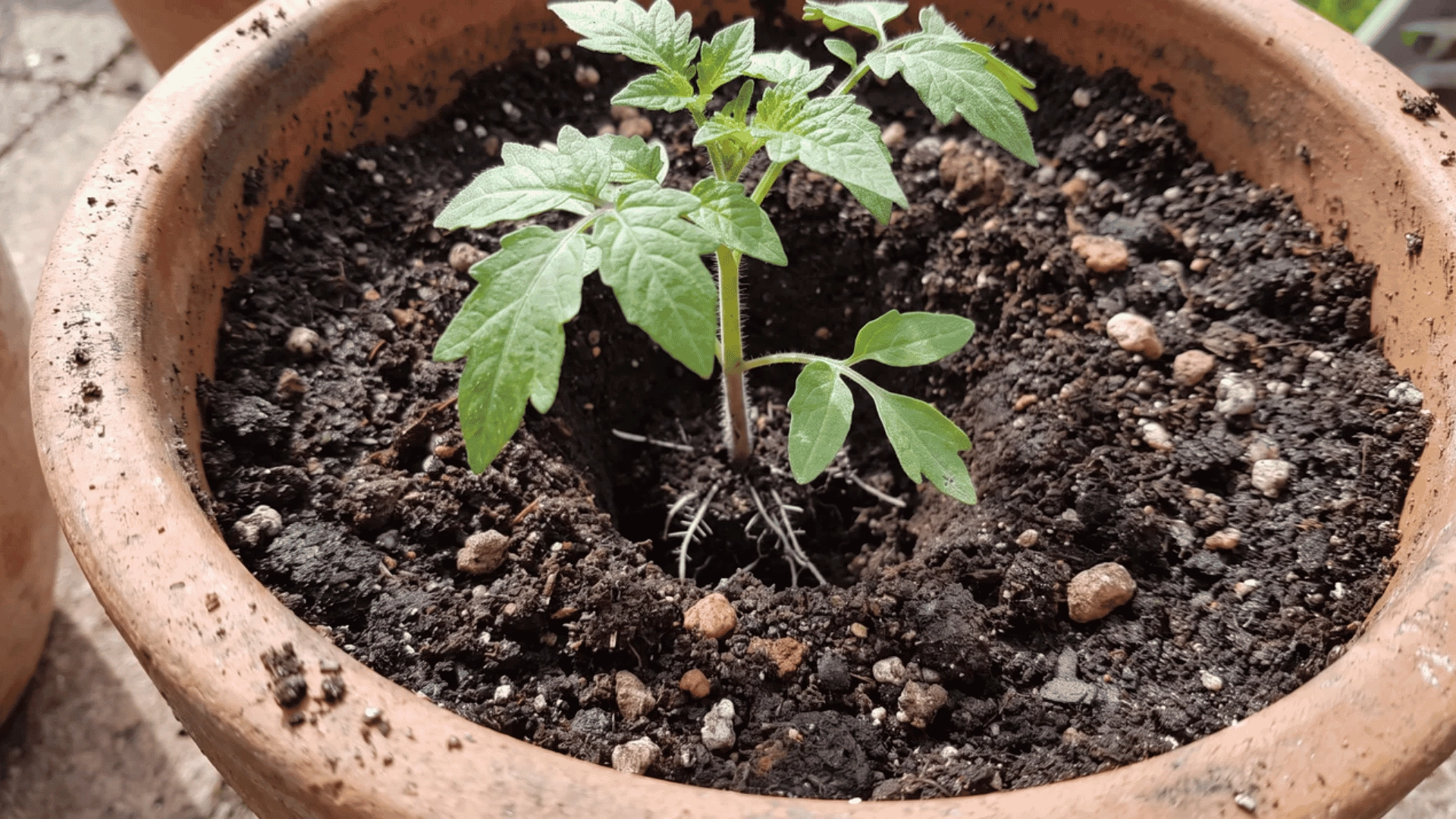
Remove only the lower leaves that would sit below the soil surface after planting. Keep healthy upper leaves intact to support growth.
Handle the seedling carefully and avoid pulling the stem or roots. Plant the tomato deeply by burying part of the stem while keeping upper leaves above the soil.
The buried stem can develop additional roots, creating a stronger root system. Fill around the plant and press the soil gently without compacting it.
Step 4. Add Support and Protect the Soil
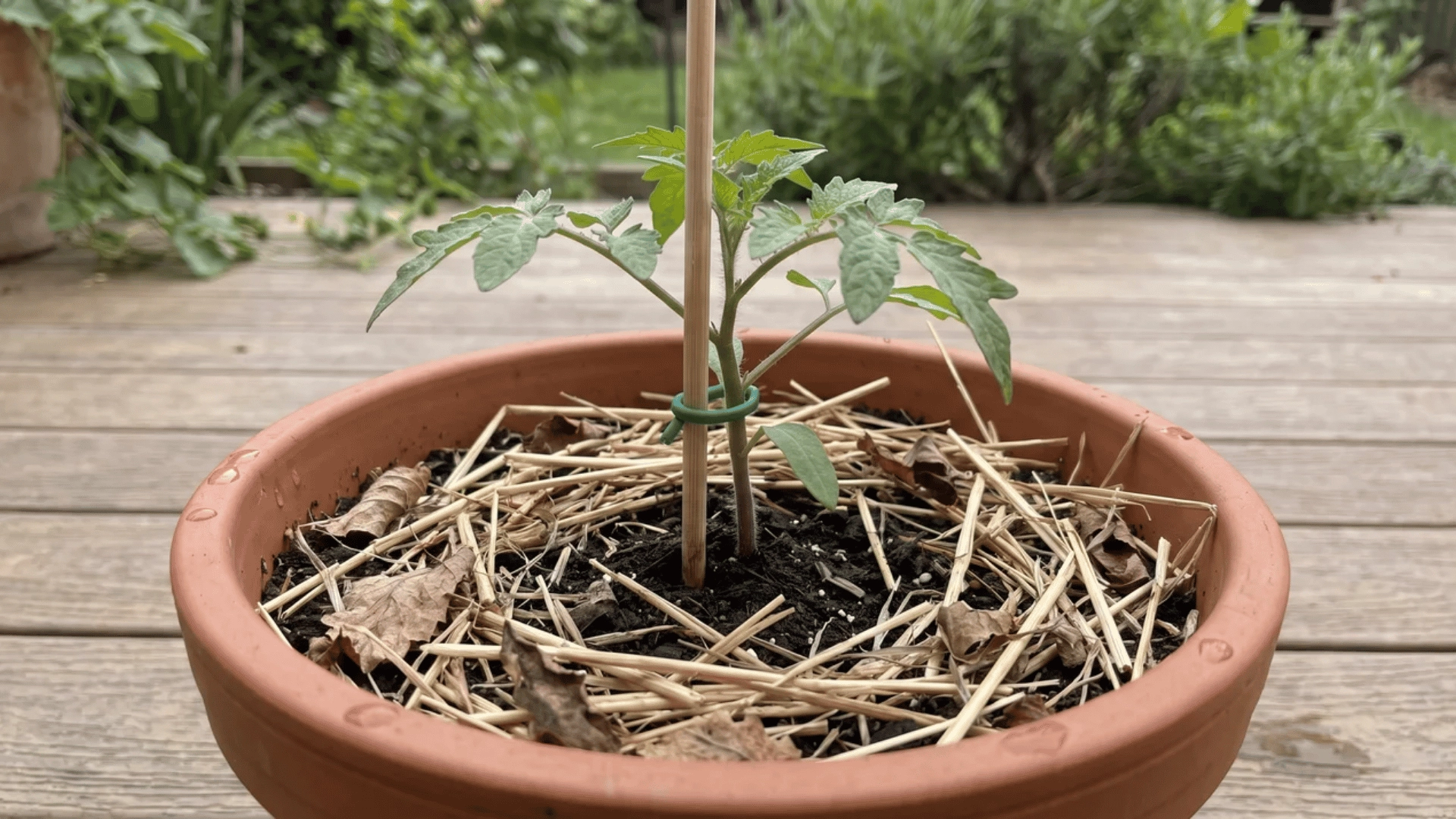
Install a tomato cage, stake, or trellis immediately after planting. Early support prevents root disturbance later and keeps growing stems upright.
Choose support based on the tomato variety. Compact plants may need a smaller cage, while tall varieties need stronger stakes or trellises.
Add a thin mulch layer using straw, shredded leaves, or another lightweight material. Keep mulch away from the main stem to reduce moisture problems.
Step 5. Water the Tomato After Planting
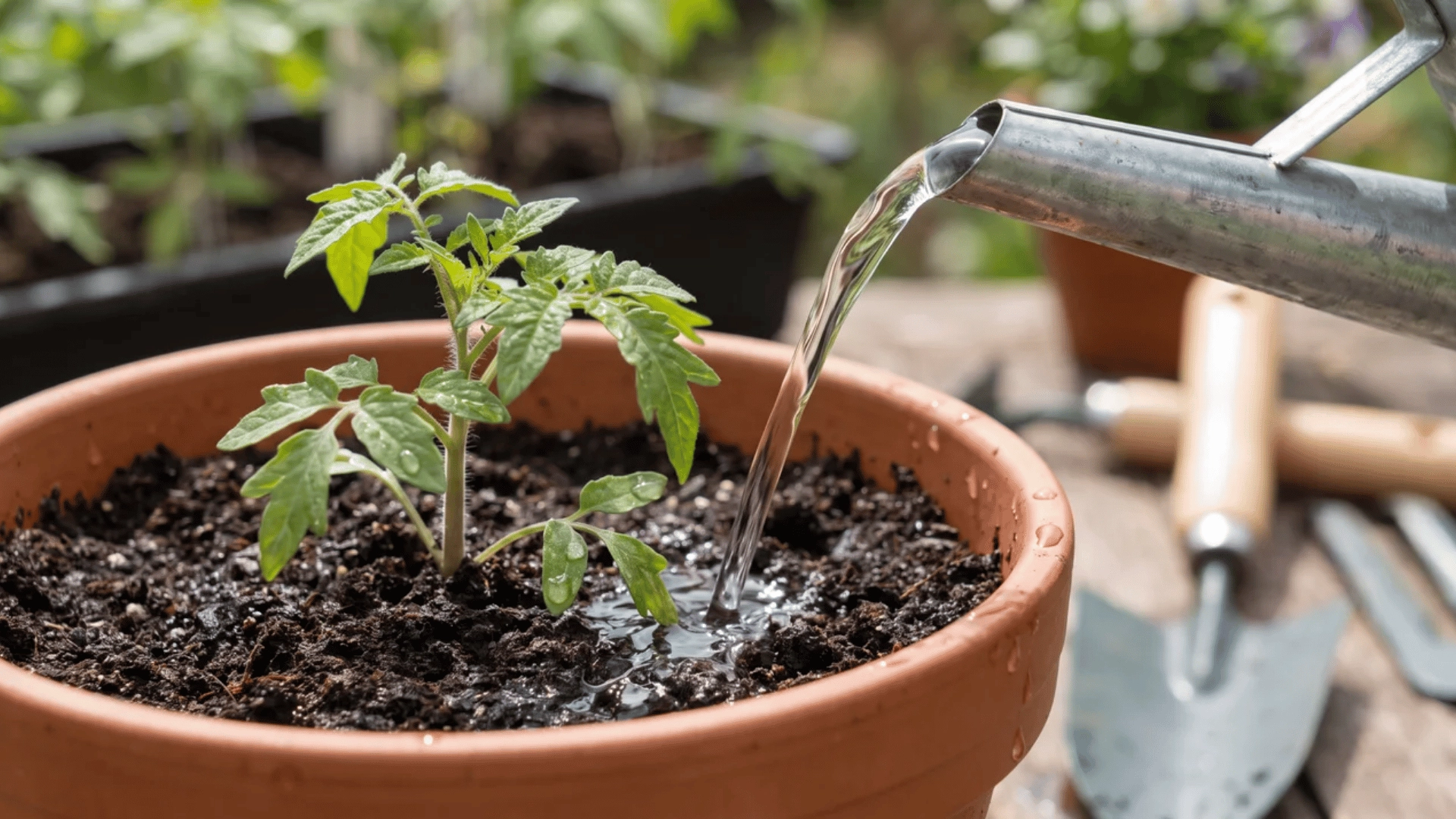
Water slowly around the base of the plant until excess water drains from the bottom. This settles the potting mix and removes air pockets near the roots.
Check the soil level after watering because the mix may sink slightly. Add more potting mix if needed, but avoid covering the upper leaves.
Continue checking moisture during the first few days because newly planted tomatoes adjust quickly to their container environment.
Step 6. Monitor the Plant After Setup
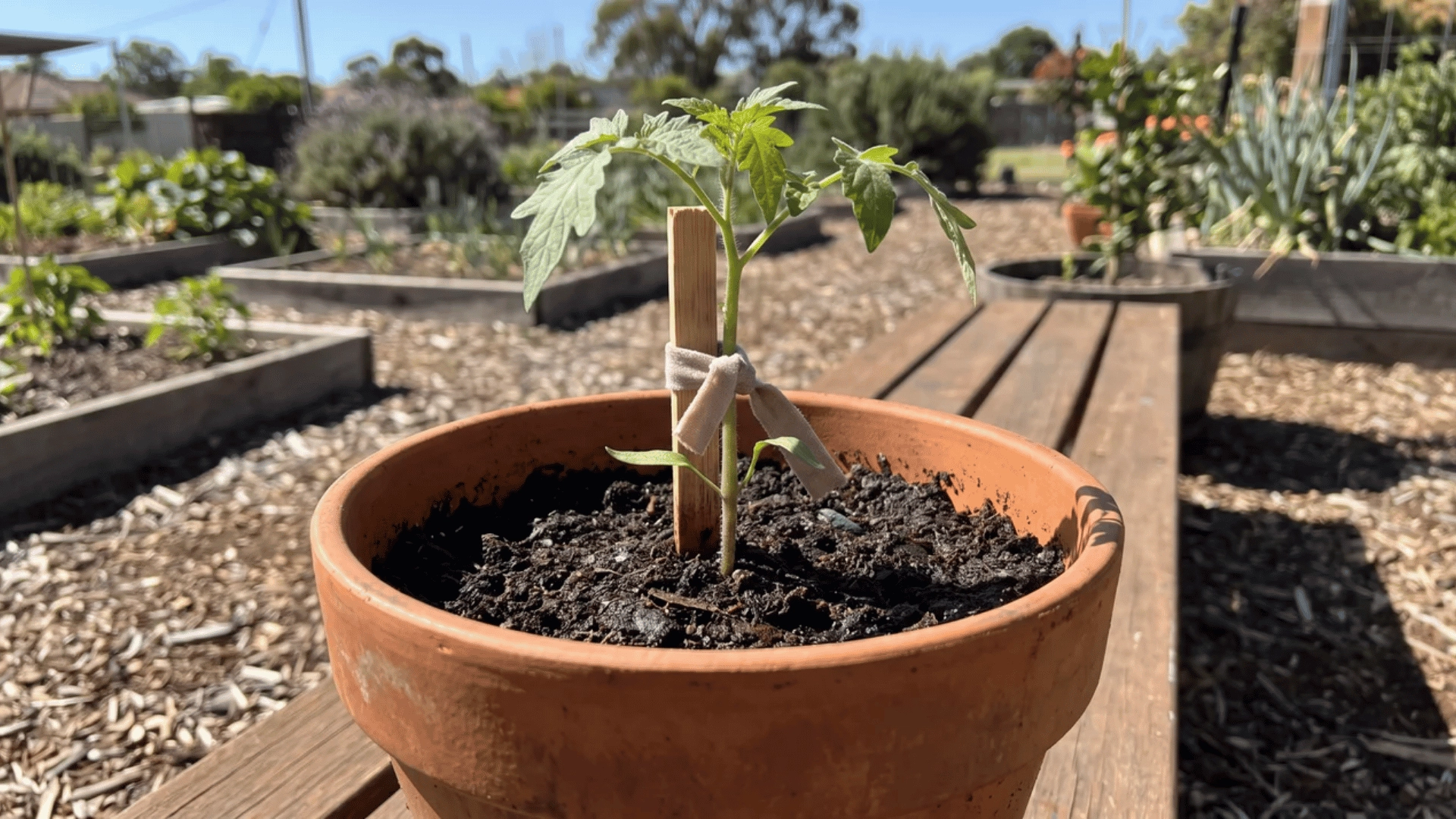
Check the tomato plant regularly after planting for signs of stress, leaning stems, or dry soil. Adjust the support as the plant grows and tie new stems when needed. Keep an eye on drainage, especially after heavy rain.
Remove damaged leaves and maintain the mulch layer throughout the season to help keep moisture levels more stable.
| Tip: Burying two to three inches of stem at planting, rather than setting the seedling at the same depth it sat in its nursery pot, gives the plant an extra layer of roots along the buried section. In containers, where root volume is already limited, that extra root mass makes a noticeable difference in how well the plant handles a hot, dry week. |
Seasonal Care for Potted Tomatoes
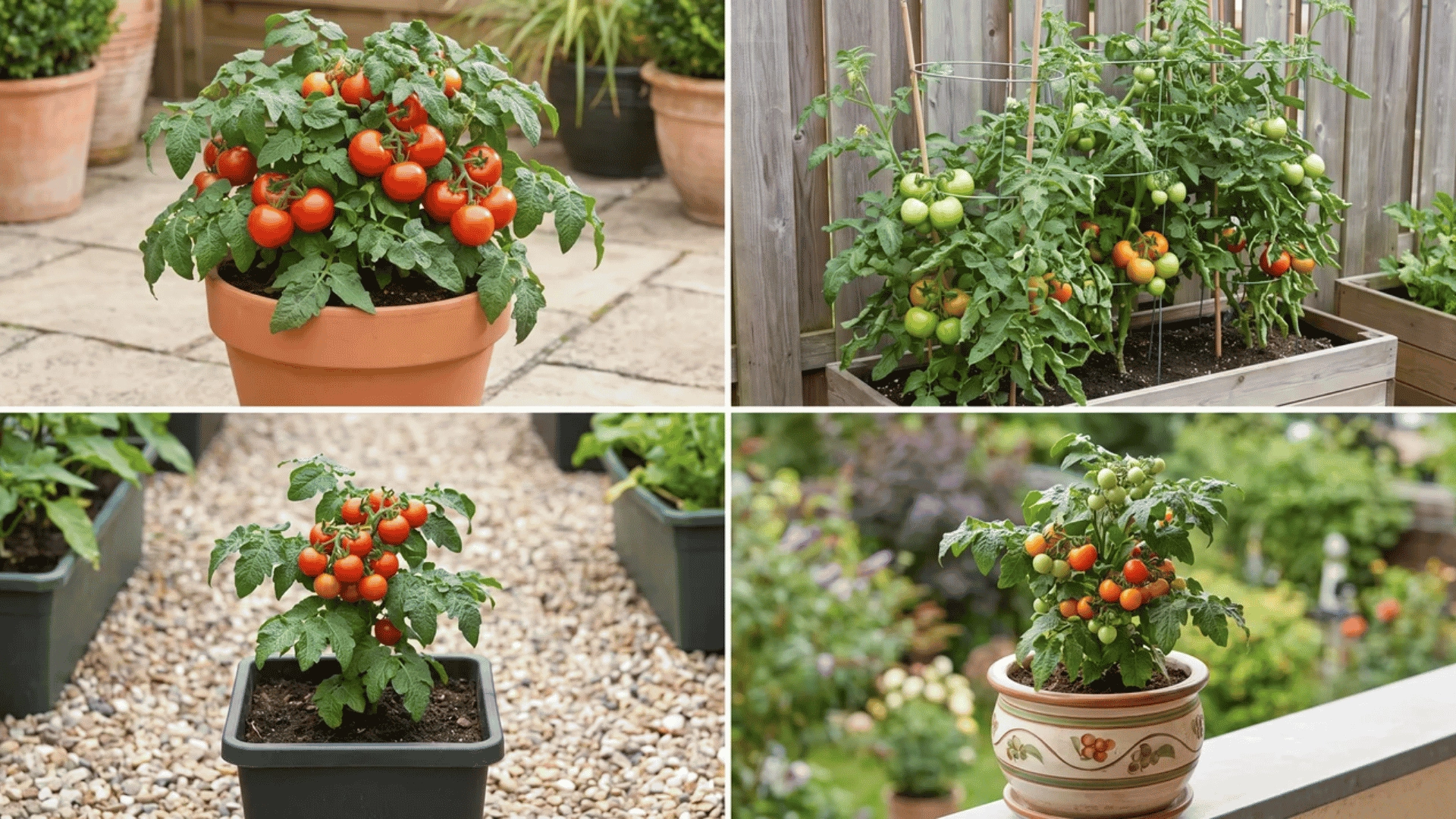
Container tomatoes need more consistent attention than in-ground plants because there’s less soil mass to buffer temperature swings and moisture loss. Here’s how care shifts through the season:
- Spring (planting through early growth): Water daily as roots establish, and hold off on heavy feeding until the plant is settled in.
- Early summer (flowering begins): Switch to a fertilizer lower in nitrogen and higher in phosphorus and potassium once flowers appear, since too much nitrogen produces leafy growth at the expense of fruit.
- Peak summer (fruiting): Expect to check soil moisture once or twice a day during hot, windy stretches. Fruiting plants pull more water from the container than plants that are only setting leaves.
- Early fall (season’s end): Reduce watering as growth slows, and protect plants with a light cover on any night that dips near frost; container roots have less insulation than an in-ground bed.
Check the soil by pressing a finger one to two inches down rather than watering on a fixed schedule. A lighter pot is also a reliable sign that it’s time to water again. Water early in the day at the base of the plant, and keep the foliage dry to cut down on fungal issues.
| Note: Irregular watering, not just underwatering, is behind most of the fruit problems container growers see. Letting the soil dry out completely and then soaking it heavily is what typically causes blossom-end rot and cracked skins, so steady moisture matters more than any single watering session. |
Preventing Pests and Diseases in Container Tomatoes
Potted tomatoes face the same pest pressure as in-ground plants, but the confined soil volume makes early detection more important since there’s nowhere for a stressed root system to recover.
Check leaf undersides weekly for aphids, hornworms, and whiteflies, and remove small infestations by hand before they spread across the plant.
Slugs are another common visitor, especially on young seedlings kept close to the ground on a patio or balcony. Chewed leaves and slime trails near the container are the usual giveaway, and simple hand-picking or a beer trap works just as well around pots as it does in a garden bed.
For fungal issues, good airflow does more than any spray. Space containers so leaves aren’t touching, prune lower leaves that stay damp longest, and always water the soil rather than the foliage.
Companion Plants For Potted Tomatoes
Choosing shallow-rooted companions helps potted tomatoes share limited soil, sunlight, and water without creating unnecessary competition inside the container space.
| Companion Plant | Main Benefit | Placement Advice |
|---|---|---|
| Basil | Shares similar sunlight and watering needs with tomatoes | Plant along the edge of a large container |
| Marigolds | May help deter some soil pests | Grow nearby without crowding the tomato roots |
| Shallow-Rooted Plants | Use less of the container’s limited soil volume | Avoid plants with spreading or aggressive root systems |
Plant companions near the container edge, then monitor moisture and growth so the tomato remains the main plant throughout summer.
Common Mistakes When Growing Tomatoes in Pots
Most container tomato problems trace back to one of these habits:
- Crowding roots. One tomato per properly sized pot; doubling up limits water, nutrients, and airflow for both plants.
- Using garden soil instead of potting mix. It compacts and drains poorly inside a container.
- Watering on a fixed schedule. Check the soil first; conditions change daily with heat and wind.
- Installing support late. Add the cage or stake at planting, not once the plant has already toppled.
- Over-fertilizing with nitrogen. It produces dense foliage and fewer flowers; switch to a bloom-focused feed once flowering starts.
Putting It All Together
Healthy container tomatoes depend on a few basics working together: enough root space, loose potting mix, steady moisture, strong sunlight, and early support.
Growing tomatoes in pots becomes far easier when you match the container to the variety and adjust care as temperatures and growth change. I find that regular soil checks prevent more trouble than a strict watering schedule.
You can also protect fruit production by feeding carefully, watching for pests, keeping leaves dry, and avoiding crowded roots. These habits matter because a potted plant relies on you for every bit of water and nutrition it receives.
Try these steps with your next tomato plant, then share what worked best for your space.
Frequently Asked Questions
Are coffee grounds good for potted tomato plants?
Coffee grounds can be composted first, but adding large amounts directly may compact soil and disturb nutrient balance inside containers.
Can you grow tomatoes in pots from seeds?
Yes, start seeds indoors six to eight weeks before the last frost, then transplant healthy seedlings carefully into prepared containers.
Can beefsteak tomatoes grow in containers?
Yes, beefsteak tomatoes can grow in containers, but they need at least twenty gallons, strong support, steady watering, and sunlight.
Can tomatoes grow all year indoors?
Tomatoes can grow indoors year-round with strong grow lights, warm temperatures, airflow, hand pollination, and enough room for root development.