

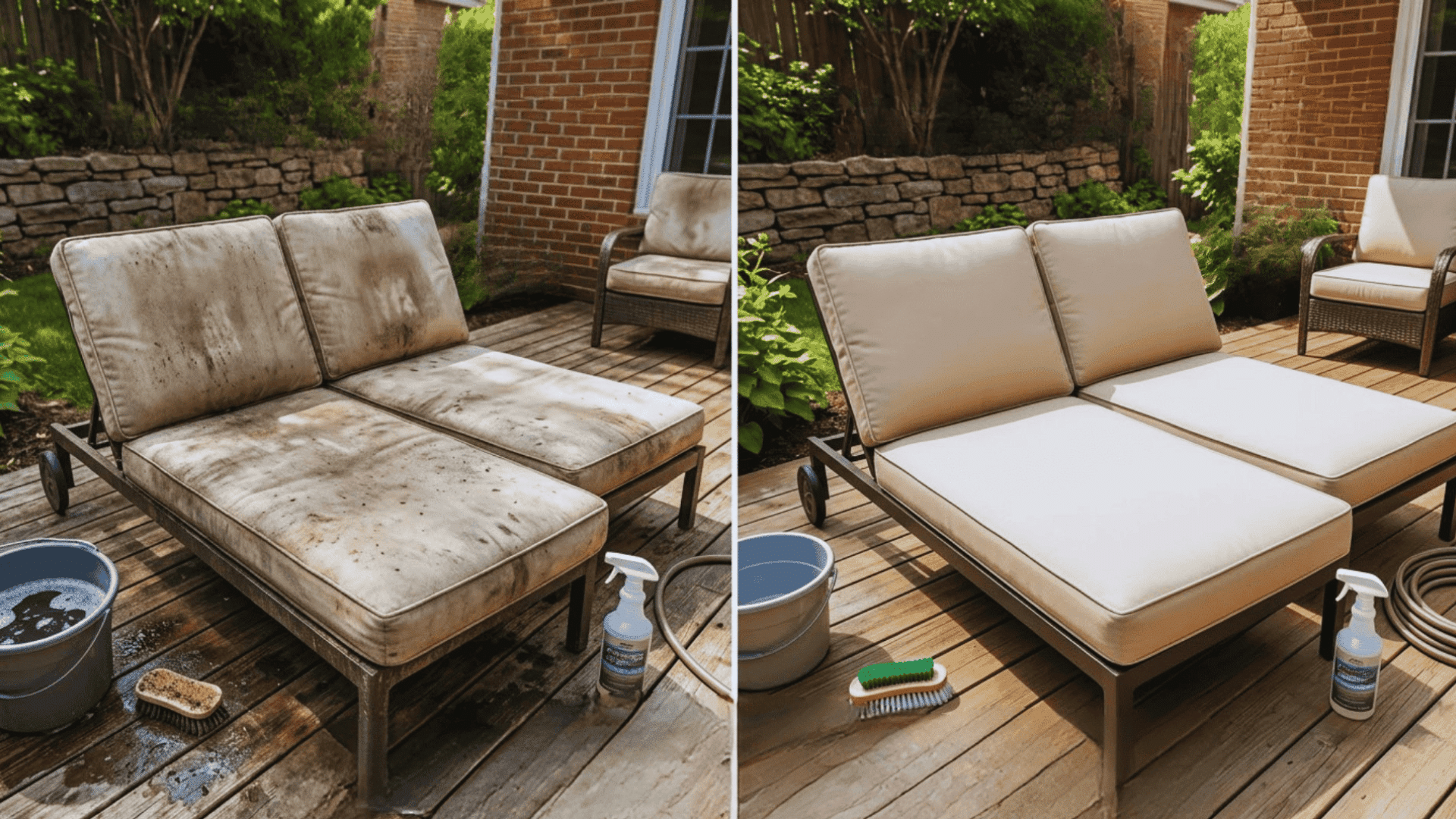
I used to ignore my outdoor cushions until they looked dirty and started to smell.
Dust, spills, and weather can build up fast, and it shows. If your cushions look worn or stained, it may be time to clean them.
And the good part is, you don’t need special tools or difficult methods to clean them.
In this guide, I will show you, step by step, how to clean outdoor cushions for beginners using simple items at home.
You will learn how to remove dirt, deal with stains, and dry them the right way so they stay fresh longer. I will also share easy tips that worked for me and can help you avoid common mistakes.
By the end, you will have a clear, simple method you can follow whenever your cushions need cleaning.
Tools and Materials Needed for Cleaning the Outdoor Cushions
Before you start cleaning, gather a few simple tools to make the process easier, faster, and more effective, without damaging your outdoor cushions.
- Mild soap or detergent: Helps break down dirt and remove stains without damaging the fabric.
- Soft brush or sponge: Helps gently scrub dirt without damaging the cushion surface.
- Garden hose or bucket: Useful for rinsing off soap and leftover dirt.
- White vinegar (optional): Helps remove odors and light mold spots.
- Baking soda (optional): Good for lifting stains and freshening cushions.
- Clean cloth or towel: Helps wipe excess water and speed up drying.
How to Clean Outdoor Cushions the Right Way?
Cleaning outdoor cushions is a simple process that helps remove dirt, stains, and odors while keeping them fresh and ready to use.
Step 1: Place Cushions on a Clean Surface
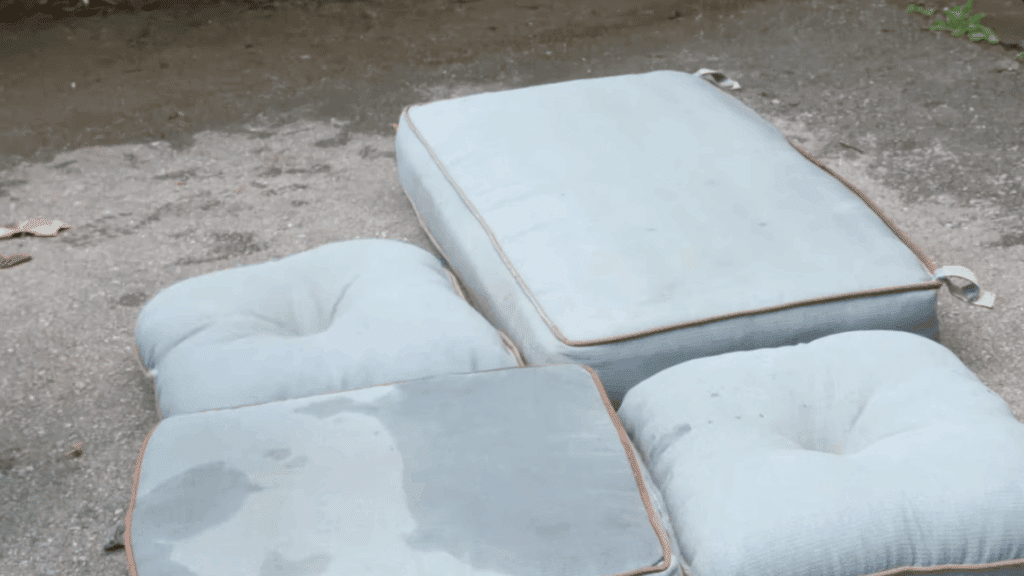
Start by placing the cushions on a clean, solid surface, such as a driveway, deck, or sidewalk.
Avoid grass or mud, as they can make the cushions dirty again during cleaning. A flat surface gives better control when scrubbing and rinsing.
It also prevents extra mess and helps water drain easily.
Make sure there is enough space around the cushions so all sides can be cleaned without moving them too much during the process.
Step 2: Rinse Cushions with Water
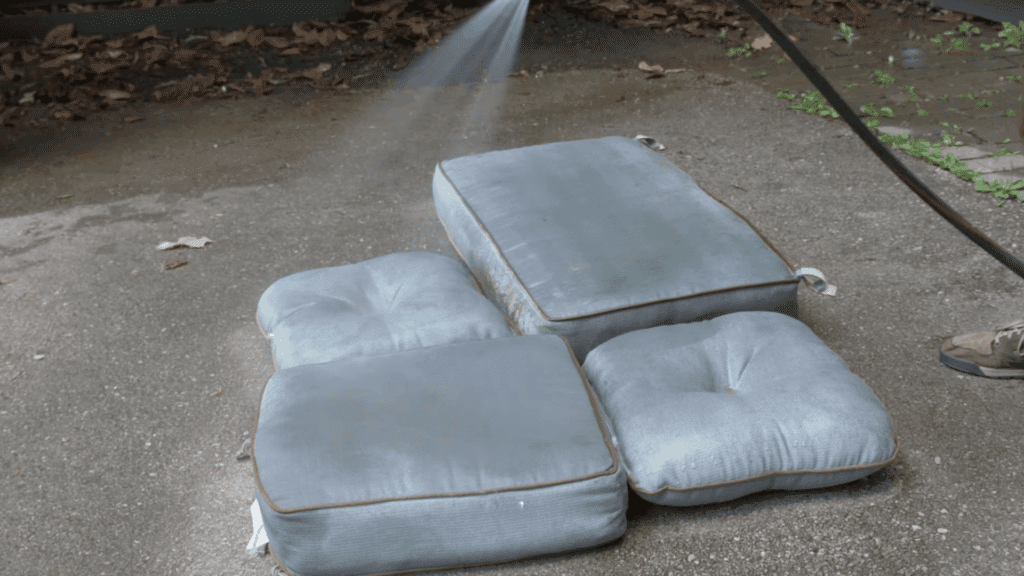
Spray the cushions with water to remove loose dirt, dust, and debris from the surface. Cover all sides evenly so the fabric gets fully wet.
This step helps loosen dirt and prepares the cushions for deep cleaning.
A proper rinse also stops dirt from getting pushed deeper into the fabric during scrubbing.
It may look simple, but it plays an important role in making the cleaning process more effective and helps reduce the effort needed later.
Step 3: Make and Apply Cleaning Solution
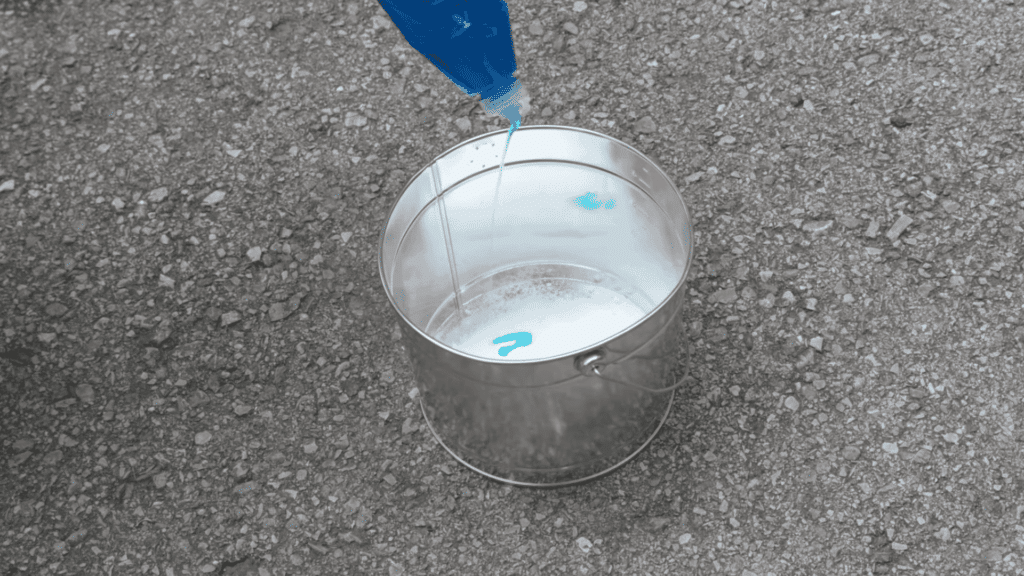
Prepare a cleaning solution by mixing about one cup of borax with a few squirts of dish soap in a bucket of water. Stir it well so everything blends properly.
Use a hard-bristle brush to apply the solution across the cushions.
Spread it evenly and make sure every part is covered.
This simple mix works well for breaking down dirt and stains without damaging the fabric, making it a reliable option for regular home cleaning.
Step 4: Scrub the Entire Cushion
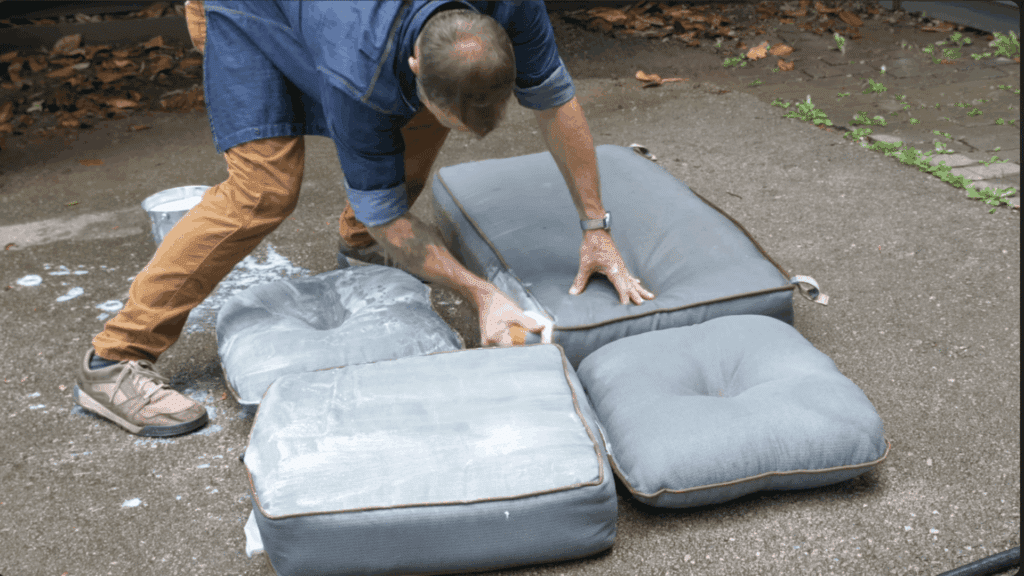
Scrub the cushions using the brush and cleaning solution, working across the full surface. Create a good lather and move the brush in steady strokes.
Focus more on areas with visible stains or mildew to lift dirt from deeper layers of the fabric.
Make sure to clean the edges and sides as well.
Taking time during this step helps improve results and ensures the cushions are cleaned evenly without leaving any dirty spots behind.
Step 5: Let the Solution Sit
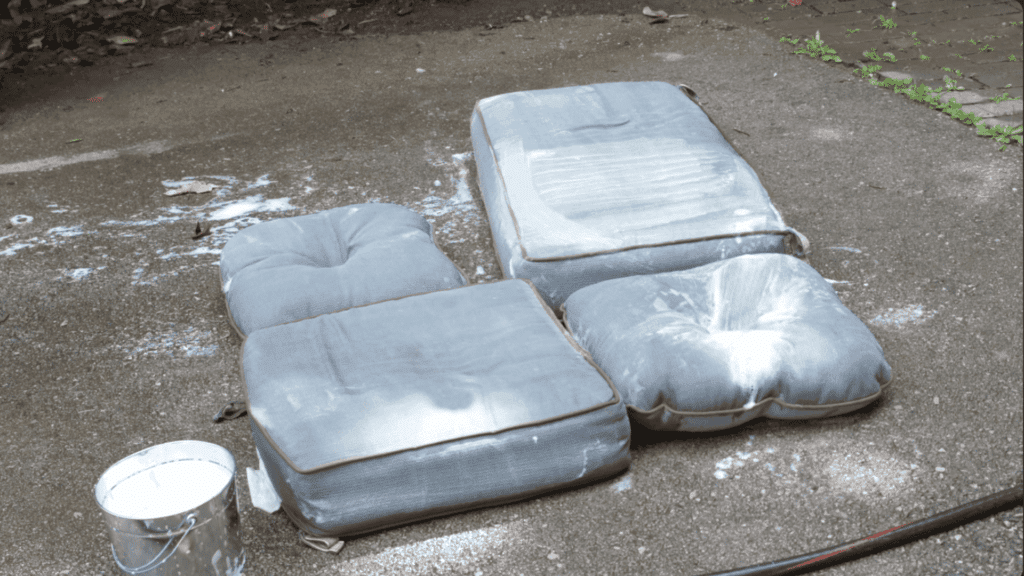
Allow the cleaning solution to sit on the cushions for about five minutes. This gives it time to break down dirt, stains, and any buildup in the fabric.
Avoid letting the solution dry completely, as it works best when slightly damp.
This step reduces the need for extra scrubbing and helps loosen tough dirt.
Allowing the solution to sit properly makes rinsing easier and improves the final cleaning result without requiring more effort.
Step 6: Rinse Thoroughly with Hose
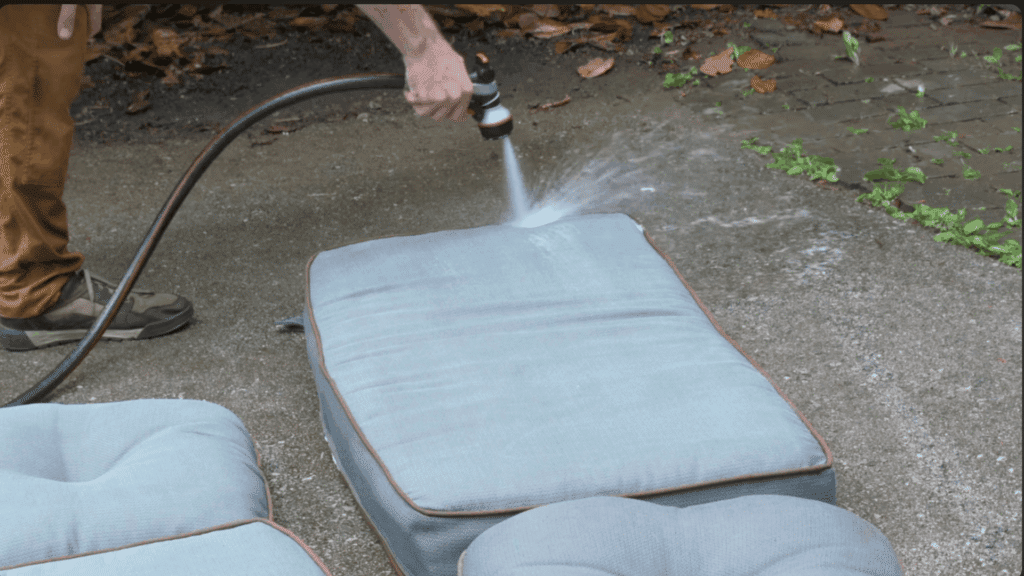
Rinse the cushions using a garden hose with strong water pressure.
Move the hose evenly across the surface to wash away all the cleaning solution and loosened dirt.
Make sure no soap residue is left behind, as it can attract more dirt over time. Pay attention to seams and corners where the solution can collect.
A proper rinse helps restore the fabric’s clean look and ensures the cushions feel fresh without any sticky or soapy buildup after drying.
Step 7: Remove Excess Water
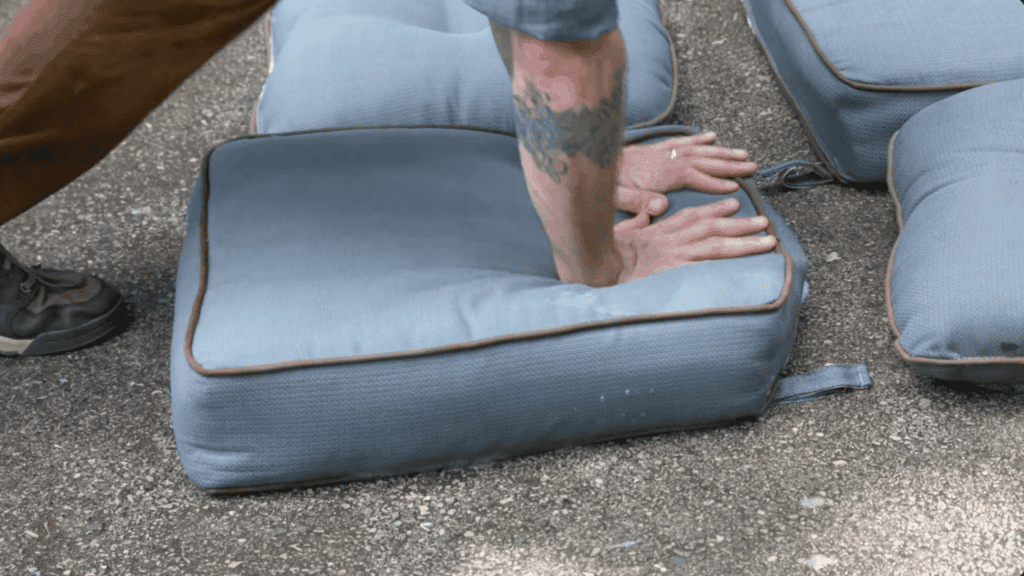
Press down on the cushions to remove as much water as possible after rinsing.
Use firm but gentle pressure to avoid damaging the shape or fabric.
Removing excess water speeds up the drying process and reduces the risk of moisture becoming trapped inside. This step also prevents mold and bad smells from forming later.
It may take a little effort, but getting rid of excess water makes a big difference in how quickly the cushions dry.
Step 8: Dry Cushions in Sunlight
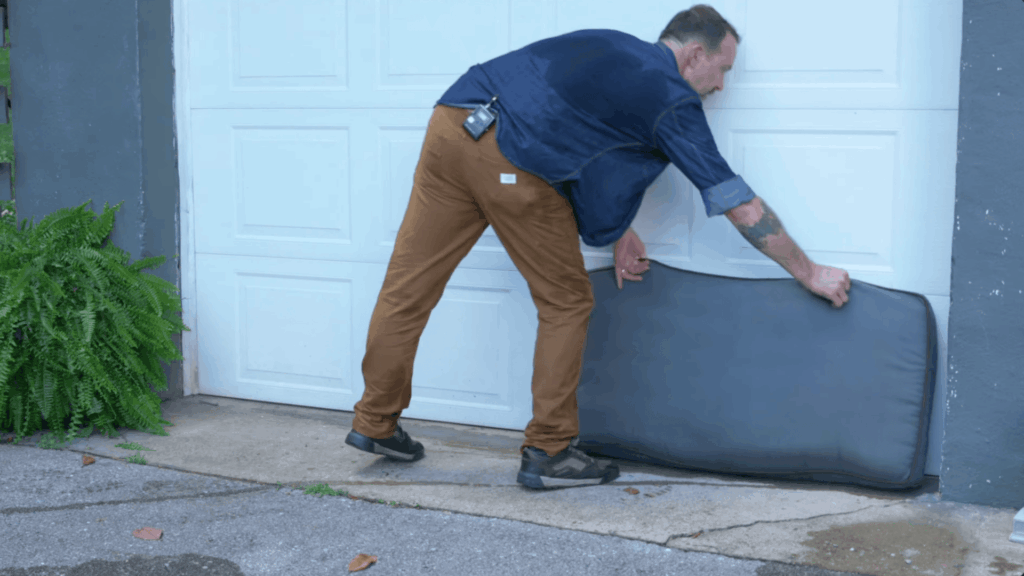
Place the cushions upright against a wall in a sunny area so they can dry fully.
Keeping them vertical allows water to drain out easily while air flows around them. Sunlight helps speed up drying and keeps cushions smelling fresh.
Make sure both sides get enough air exposure. Avoid stacking or laying them flat while wet, as this can trap moisture.
Proper drying is important to keep cushions clean and ready for use, free of any damp smell.
Step 9: Set up the Pressure Washer
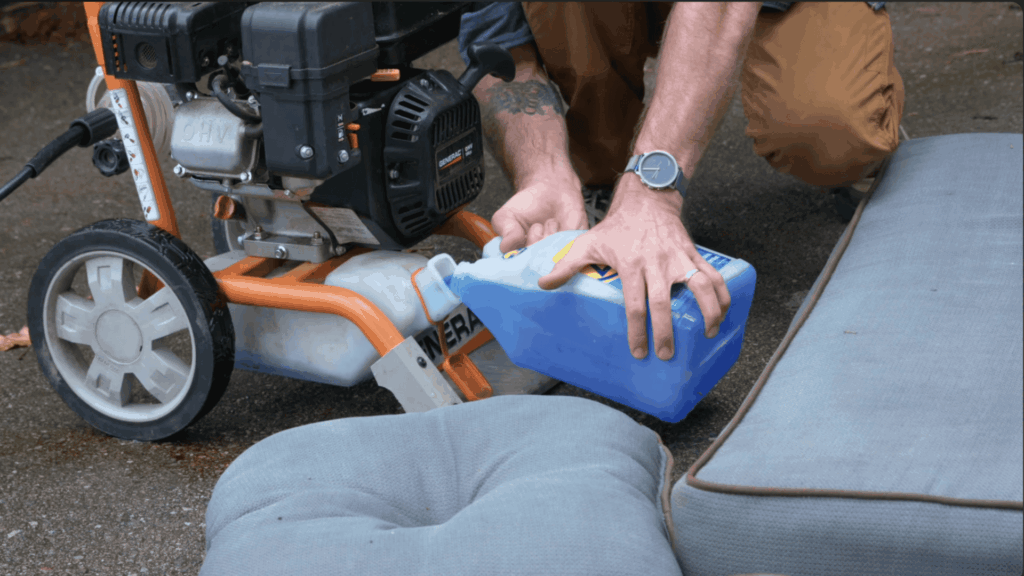
For a faster method, set up a pressure washer by attaching the hose and connecting the cleaning solution.
Before turning it on, press the trigger to check that water flows properly through the system. This helps avoid damage and ensures smooth operation.
Once water moves freely, turn on the pressure washer.
Proper setup is important for safe use and helps the machine work efficiently while cleaning larger cushions or heavily soiled areas.
Step 10: Apply Cleaning Solution with Pressure Washer
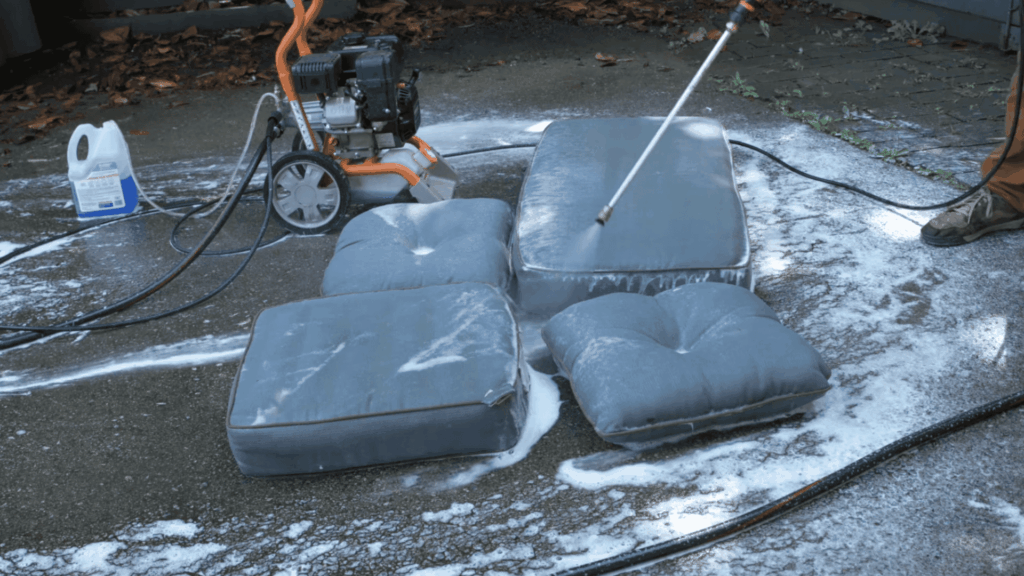
Attach the soap spray tip and apply the cleaning solution evenly across each cushion.
Keep the nozzle at a safe distance to avoid damaging the fabric with high pressure.
Cover all areas, including the top, sides, and edges, to ensure the solution spreads evenly. This method helps apply the cleaner quickly and evenly.
It is especially useful for larger cushions and saves time compared to manual cleaning while still giving strong results.
Step 11: Scrub and Rinse
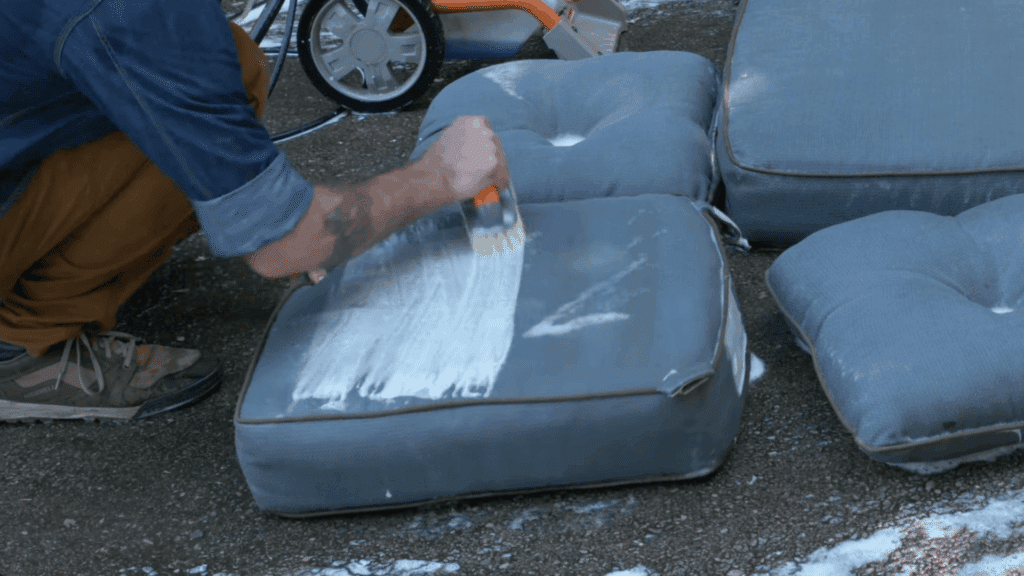
After applying the cleaning solution with the pressure washer, use a hard-bristle brush to scrub areas with stains or dirt buildup.
This helps push the solution deeper into the fabric. Once scrubbing is done, allow the solution to sit for about three to five minutes so it can break down dirt properly.
Then switch to the rinse tip and wash off everything using steady back-and-forth motions.
Make sure to rinse both sides so no soap or dirt is left behind.
Step 12: Final Drying and Setup
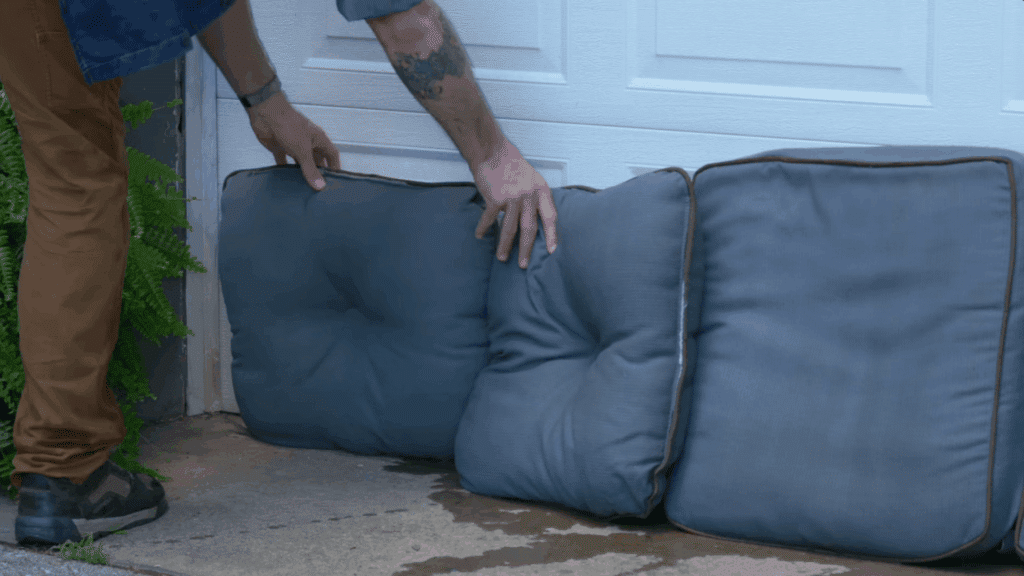
Press out as much water as possible from the cushions after rinsing. Then place them upright against a sunny wall or open area to dry completely.
Good airflow and sunlight help speed up the drying process and prevent moisture from staying inside.
Make sure the cushions are fully dry before placing them back on furniture.
Proper drying helps prevent mold, mildew, and bad smells, keeping the cushions clean, fresh, and ready for regular use.
This tutorial is based on a helpful video by HGTV. You can check out the original video on their YouTube channel here or watch it below.
Tips to Keep Outdoor Cushions Clean Longer
These simple tips can help you keep your outdoor cushions clean, fresh, and in good condition for a longer time while reducing the need for frequent deep cleaning.
- Store cushions when not in use: Keep them indoors or in a dry, protected space to protect them from dust, rain, and sun.
- Use covers or storage boxes: Covers help block dirt and reduce the frequency of cleaning.
- Clean spills right away: Fresh stains are easier to remove before they soak into the fabric.
- Let cushions dry after rain: Drying helps stop mold, mildew, and bad smells.
- Brush off dust weekly: A quick clean keeps dirt from building up over time.
- Keep cushions off the ground to reduce contact with dirt, mud, and moisture.
- Avoid messy areas: Keep cushions away from food spots or places where pets sit.
Cleaning Outdoor Cushions from Personal Experience

Reddit users shared simple and practical ways to clean outdoor cushions based on their own experience. Many people said using a pressure washer works well, as long as the right nozzle is used to avoid damage.
Some users prefer using mild soap, like dish soap, with water, then scrubbing with a brush before rinsing with a hose.
A few mentioned that upholstery tools or carpet cleaners can also help remove dirt effectively.
Vinegar mixed with water is suggested for tough stains, while bleach should be avoided as it can damage fabric. One common tip is to always rinse cushions well and let them dry fully in sunlight.
Some even joked about soaking them in a pool, showing how easy cleaning can be.
Overall, these tips focus on simple methods that work well at home.
Alternative Methods to Clean Outdoor Cushions
If regular cleaning does not suit your setup, there are other simple ways to get the job done. These methods can save time or work better based on the cushion type and dirt level.
- Washing machine method: If the covers are removable, wash them on a gentle cycle with mild detergent and air dry.
- Vinegar solution cleaning: Mix vinegar and water to remove light stains and odors without using strong chemicals.
- Baking soda treatment: Sprinkle baking soda on cushions, let it sit, then brush it off to freshen them.
- Pressure washer method: Use low pressure to clean deep dirt quickly, but keep a distance to avoid fabric damage.
- Spot cleaning method: Use a cloth and mild soap to clean small stains without washing the whole cushion.
- Steam cleaning method: Use a handheld steamer to loosen dirt and kill bacteria for a deeper clean.
How Often Should You Clean Outdoor Cushions?
Regularly cleaning outdoor cushions helps keep them fresh and in good condition for longer. I usually do a light clean every 1 to 2 weeks by brushing off dust and wiping away small dirt before it builds up.
If you notice stains, spills, or bad smells, clean them right away to stop damage.
During heavy use in summer, you may need to clean more often. It also helps to do a deep clean at the start and end of the season.
This keeps your cushions fresh and ready to use. If your cushions stay outside all the time, check them weekly.
Regular cleaning helps extend their life and keeps your space looking neat without much effort.
Conclusion
Cleaning outdoor cushions does not have to feel like a big task. Once you know the right steps, it becomes quick and easy to manage.
I have found that regular care and simple cleaning habits can keep cushions looking fresh for a long time without much effort. You do not need fancy products, just a little time and the right method.
If you stay consistent and handle small messes early, you can avoid deep cleaning too often. Your outdoor space will always feel clean and ready to use.
I hope this guide makes the process clear and simple for you.
If you have your own cleaning tips or have tried any of these steps, share your experience in the comments below. It can really help others, too.