


Do your roses struggle with weak blooms, black spots, or crowded stems every season? Many rose problems start when plants are not pruned correctly.
Dead branches, weak growth, and poor airflow make roses unhealthy and reduce flower production. Pruning removes damaged stems and opens the center of the plant.
It lets sunlight and air move through the bush more easily, which helps roses grow stronger and bloom better. This guide covers how to prune different rose types, remove weak growth, and shape the plant for a stronger season.
Quick Answer: How to Prune Roses Properly
Prune roses by removing dead, weak, and crowded stems to improve airflow and support healthier growth. Cut crossing branches, shape the plant carefully, and avoid heavy pruning on young roses.
Use clean, sharp bypass pruners and prune at the right time for your climate. Different rose types need different pruning methods, especially climbing and shrub roses.
Proper pruning helps roses produce stronger stems, healthier leaves, and better blooms throughout the growing season.
Why Rose Pruning Is Important?
Pruning helps roses stay healthy, grow stronger stems, and produce better flowers. It also improves airflow and plant shape each season.
- Better Airflow: Pruning opens crowded stems and allows air to move through the plant, helping reduce fungal disease problems and moisture buildup.
- Healthier Growth: Removing weak, dead, and damaged stems helps roses focus energy on stronger canes and healthier new growth during spring.
- More Flowers: Proper pruning encourages stronger stems that can support larger blooms and repeated flowering throughout the growing season.
- Improved Plant Shape: An evenly shaped rose bush is easier to manage and far less likely to develop a crowded center over time.
- Disease Prevention: Packed stems and old leaves create damp conditions where black spot and mildew take hold most easily.
- Stronger Stems: Hard or moderate pruning encourages thick new shoots that support healthier foliage and stronger flowers during active growing months.
Together, these benefits make pruning one of the most important things you can do for a rose’s long-term health.
Best Time to Prune Roses
Pruning roses at the right time helps plants grow stronger, produce healthier blooms, and avoid damage from harsh seasonal weather conditions.
| Region/Climate | Best Time to Prune | Main Benefit |
|---|---|---|
| Cold Regions | March to April | Protects fresh growth from late frost damage. |
| Mild Climates | February to March | Helps roses recover and grow faster in spring. |
| Warm Regions | January to February | Supports early blooming and healthy new shoots. |
| Frost-Prone Areas | After the last frost | Prevents cold weather from harming new stems. |
| Tropical Areas | Light pruning anytime | Keeps roses neat and encourages regular flowering. |
| All Regions | Avoid late fall pruning | Helps roses stay dormant during winter weather. |
Rose Pruning Guide for Beginners
Seven simple steps to cut back your roses with confidence, from first snip to final tidy-up.
1. Decide How Much to Prune
Choose between a light prune (keeps the plant taller and fuller) or a hard prune (cuts lower, producing thicker stems and larger blooms). Both work well for hybrid teas, floribundas, and grandifloras. Base your choice on the plant’s health, size, and your desired look.
2. Remove Weak Growth First
Cut away any cane thinner than a pencil, plus dead, damaged, or dry brown wood near the base. This helps the rose focus energy on stronger stems and improves airflow, reducing disease risk.
3. Make Each Cut Correctly
Cut ¼ inch above an outward-facing bud eye at a 45-degree angle sloping away from the bud. This drains water off the wound and directs new growth outward, keeping the center open.
4. Thin Crowded Areas
Remove crossing or rubbing stems entirely to improve spacing, light penetration, and airflow. An open center means leaves dry faster after rain and fungal problems are less likely.
5. Shape the Plant
Hard-pruned bush roses typically keep 5–6 strong stems. For shrub and climbing roses, leave more mature wood; they bloom best on older growth, and cutting too hard reduces flowers.
6. Special Cases
- Young roses: Prune lightly in year one; remove only dead or damaged stems so the plant builds strong roots.
- Climbing roses: Keep the main framework stems; remove only weak or unproductive growth at the base, then tie longer canes horizontally to encourage more blooms along their length.
7. Clean Up After
Strip remaining leaves from stems, clear debris from the soil, and remove old mulch. Finish with a layer of fresh mulch to protect roots and retain moisture.
For a full visual walkthrough, watch the complete video tutorial below:
Different Rose Types and How to Prune Them
Each rose type grows differently, so using the right pruning method helps improve growth, airflow, plant shape, and flowering.
| Rose Type | How to Prune | Best Time to Prune | Important Tips |
|---|---|---|---|
| Hybrid Tea Roses | Cut back hard or moderately and leave 5–6 strong stems. Remove weak and crossing branches. | Late winter or early spring | Hard pruning helps produce larger blooms and stronger stems. |
| Floribunda Roses | Thin crowded stems and lightly shape the plant while keeping more branches. | Late winter or early spring | Moderate pruning supports fuller growth and repeated flowering. |
| English Shrub Roses | Lightly prune and keep more old wood on the plant. Remove dead or damaged stems. | Early spring | Heavy pruning may reduce blooms and make the plant look sparse. |
| Knockout Roses | Trim back about one-third of the plant and remove damaged growth. | Late winter or early spring | These roses are easy to maintain and recover quickly after pruning. |
| Climbing Roses | Keep the main framework stems and remove weak side shoots. | After flowering or late winter | Horizontal stems encourage more flowers across the plant. |
| Newly Planted Roses | Only remove dead or unhealthy stems and avoid heavy cutting. | Early spring | Young roses need extra growth to build strong roots and healthy stems. |
Common Rose Pruning Mistakes
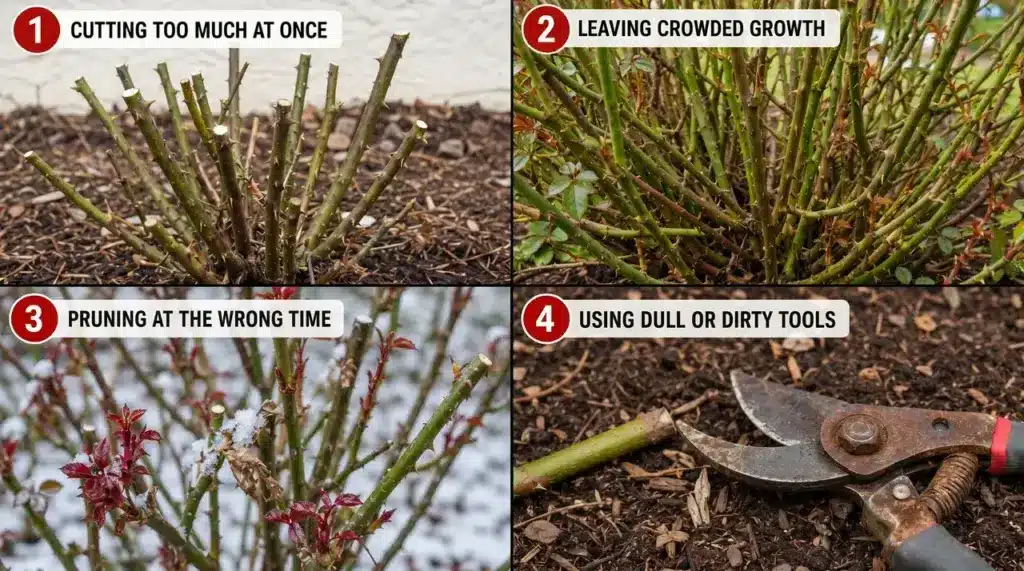
One of my friends began growing roses but made a few pruning mistakes, leaving her plants weak and unhealthy. Below are common pruning mistakes that can damage roses and reduce healthy flower growth.
1. Cutting Too Much at Once
Heavy pruning can weaken roses by removing too much healthy growth and reducing the plant’s stored energy for blooming.
- What Not to Do: Avoid cutting the entire rose bush down too heavily, especially young roses and shrub roses with thin stems.
- What to Do Instead: Remove weak and damaged stems first, then lightly shape the plant while keeping healthy framework stems in place.
- Extra Tip: Newly planted roses and English shrub roses usually grow better with lighter pruning and more old wood left behind.
The key is to work gradually. Take off what is clearly unhealthy, then step back and assess before cutting more.
2. Leaving Crowded Growth
Crowded stems block airflow and sunlight, creating damp conditions that increase the chances of fungal disease and unhealthy plant growth.
- What Not to Do: Do not leave crossing stems and crowded branches packed tightly inside the center of the rose bush.
- What to Do Instead: Thin crowded areas and remove rubbing stems to improve sunlight exposure and airflow through the plant.
- Extra Tip: An open center helps leaves dry faster after rain and lowers the risk of black spot and mildew problems.
An open, vase-shaped center is the target. If canes are touching or crossing, one of them needs to go.
3. Pruning at The Wrong Time
Pruning roses too early or too late can damage fresh growth and reduce healthy flowering during the growing season.
- What Not to Do: Avoid pruning too early before frost ends or too late after strong spring growth has already started.
- What to Do Instead: Prune roses near the end of winter or after the last hard frost in colder regions.
- Extra Tip: Warm climate areas can usually prune earlier because roses begin growing sooner during the season.
A week or two of patience at the end of winter is worth it. Pruning too early means re-doing the work after frost damage.
4. Using Dull or Dirty Tools
Dirty and dull pruning tools can spread disease, damage healthy stems, and slow the plant’s recovery after pruning work is completed.
- What Not to Do: Do not use rusty, dull, or dirty pruners because they can damage stems and spread plant diseases.
- What to Do Instead: Use bypass pruners rather than anvil pruners. Bypass blades slice cleanly through the cane, while anvil blades can crush it and slow healing.
- Extra Tip: Wipe pruning tools clean between plants to reduce the spread of fungal diseases and harmful bacteria.
A sharp, clean bypass pruner is worth the investment. It makes every cut faster, cleaner, and safer for the plant.
Conclusion
Pruning takes patience, but the results are worth it when you follow the right steps. Start by removing dead, damaged, or crowded branches before shaping the plant.
Always use clean tools and avoid cutting too much at once. A good pruning routine helps plants stay healthy, grow stronger, and look neat throughout the season.
It also improves airflow and allows sunlight to reach all parts of the plant. While shaping matters, plant health should always come first.
Try to keep a balanced look instead of forcing a perfect shape. If you feel unsure, prune slowly and step back often to check your progress.
Frequently Asked Questions
What Are the Three C’s of Pruning?
The three C’s mean crossing, crowded, and damaged canes. Remove these branches first to improve airflow, plant shape, and healthy growth in rose bushes.
How Far Back Can You Cut a Rose Bush without Killing It?
Most mature rose bushes can handle pruning back by one-half to two-thirds. Avoid cutting too close to the base unless removing dead wood.
What Is the 45-Degree Rule in Pruning?
The 45-degree rule means making angled cuts above outward-facing buds. This helps water run off the stem and lowers the chance of rot.
Which Type of Pruning Should Be Avoided and Why?
Avoid heavy over-pruning, especially on young roses. Cutting too much weakens the plant, slows blooming, and can leave roses stressed during growth seasons.