

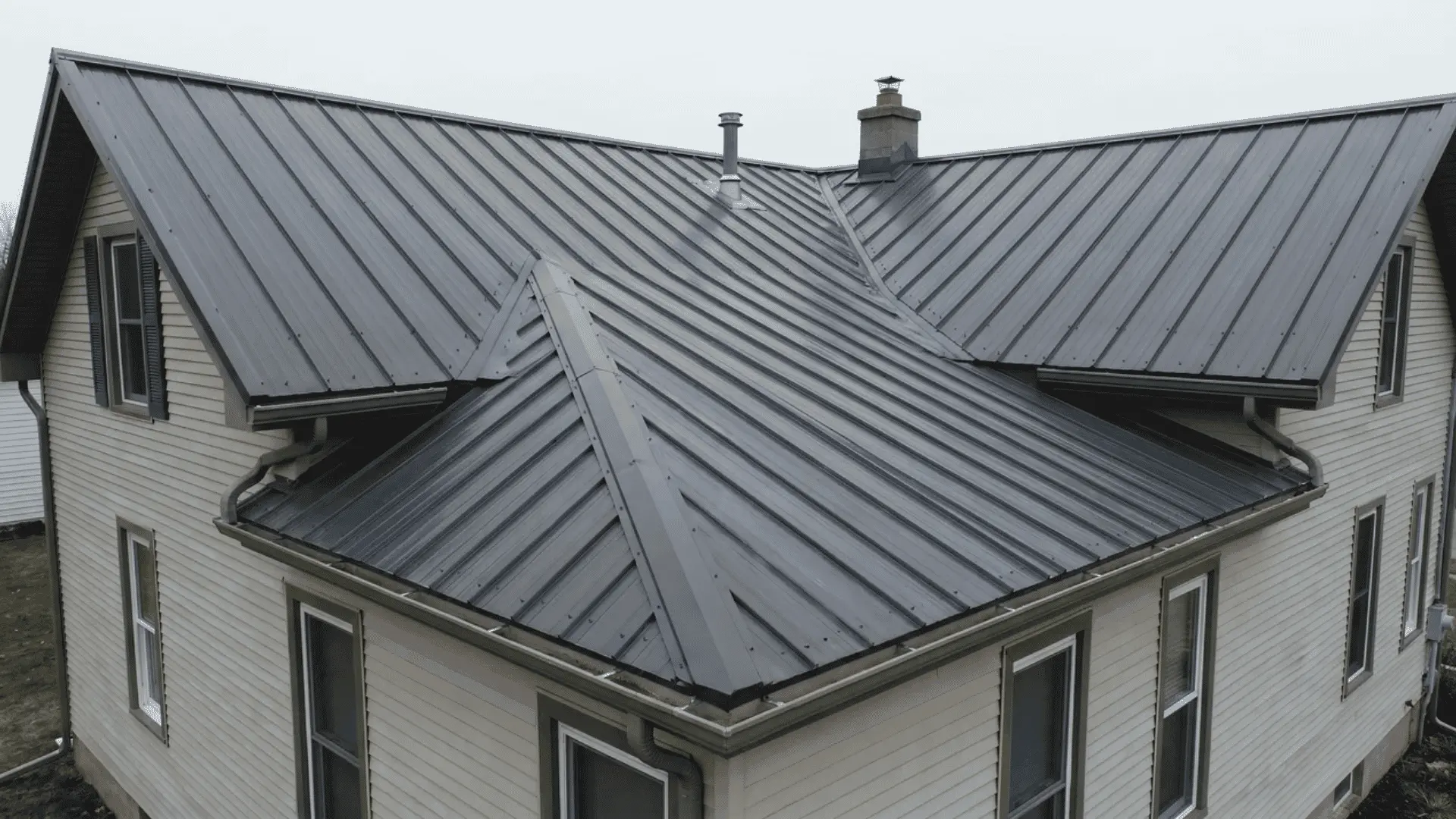
Metal roof maintenance helps control gradual wear on fasteners, seals, and coatings that are affected by temperature shifts, moisture, and seasonal weather changes.
Ongoing care focuses on inspection, cleaning, and small repairs that prevent minor issues from developing into leaks, corrosion, or structural damage across different roof systems.
Understanding long-term performance patterns helps manage risk early, as subtle changes in panels or penetrations often appear before visible failure becomes noticeable on surface areas.
What Does Metal Roof Maintenance Actually Involve?
Metal roofs need maintenance: just not much of it. What the routine looks like largely depends on the type of system you have.
There are two main panel types, and they don’t age the same way.
Exposed-fastener (screw-down) roofs have screws visible on the surface. Those screws have rubber washers that compress over time and eventually need attention.
Standing seam roofs use concealed clips, so fastener monitoring isn’t part of the picture in the same way. Either way, the tasks break into three categories: cleaning, inspection, and repair. Each runs on its own schedule.
The finish, the seals around penetrations, and the fasteners all degrade: just slowly and predictably. That’s actually the good news. Nothing about metal roof maintenance is reactive or unpredictable.
You’re not waiting for something to go wrong. You’re running a short, recurring checklist that keeps small issues from becoming expensive ones.
How Often Should You Maintain a Metal Roof?
The standard timing is twice a year: once in spring, once in fall.
Those timing windows aren’t arbitrary.
Spring catches anything that winter left behind: freeze-thaw stress, debris buildup, fastener movement from repeated expansion and contraction. Fall gets you ahead of the next cold season before water has a chance to find any gaps the summer opened up.
Cleaning runs on a slightly different clock. Once a year is typically enough, and it makes sense to fold it into your fall cycle so the roof goes into winter clean.
Annual and Seasonal Tasks
Two inspection cycles per year cover most roofs in most climates. Here’s how the calendar breaks down:
- Spring: Post-winter inspection: fasteners, seals, flashing, surface scratches
- Fall: Pre-winter inspection plus annual cleaning
- Annually: Gutter and drainage check; sealant condition around all penetrations
Sticking to this schedule means you’re catching wear at the earliest point it’s visible: before it becomes a leak.
After-Storm Checks
Severe weather earns its own check, outside the regular schedule.
After high winds, hail, or a heavy debris event, do a visual scan from the ground or a safe vantage point.
You’re looking for dented panels, displaced flashing, debris sitting in valleys, and anything that looks out of place around vents or the ridge line.
You don’t need to climb up after every storm. But if it was significant, don’t wait until fall to look.
Steel Roof Maintenance: What to Check and Where?
A good inspection takes maybe20 minutes. The goal isn’t to find catastrophic damage: it’s to catch the small things that turn into catastrophic damage if you ignore them. What you’re checking depends on your panel type.
1. Exposed-Fastener (Screw-Down) Roof Inspection Checklist
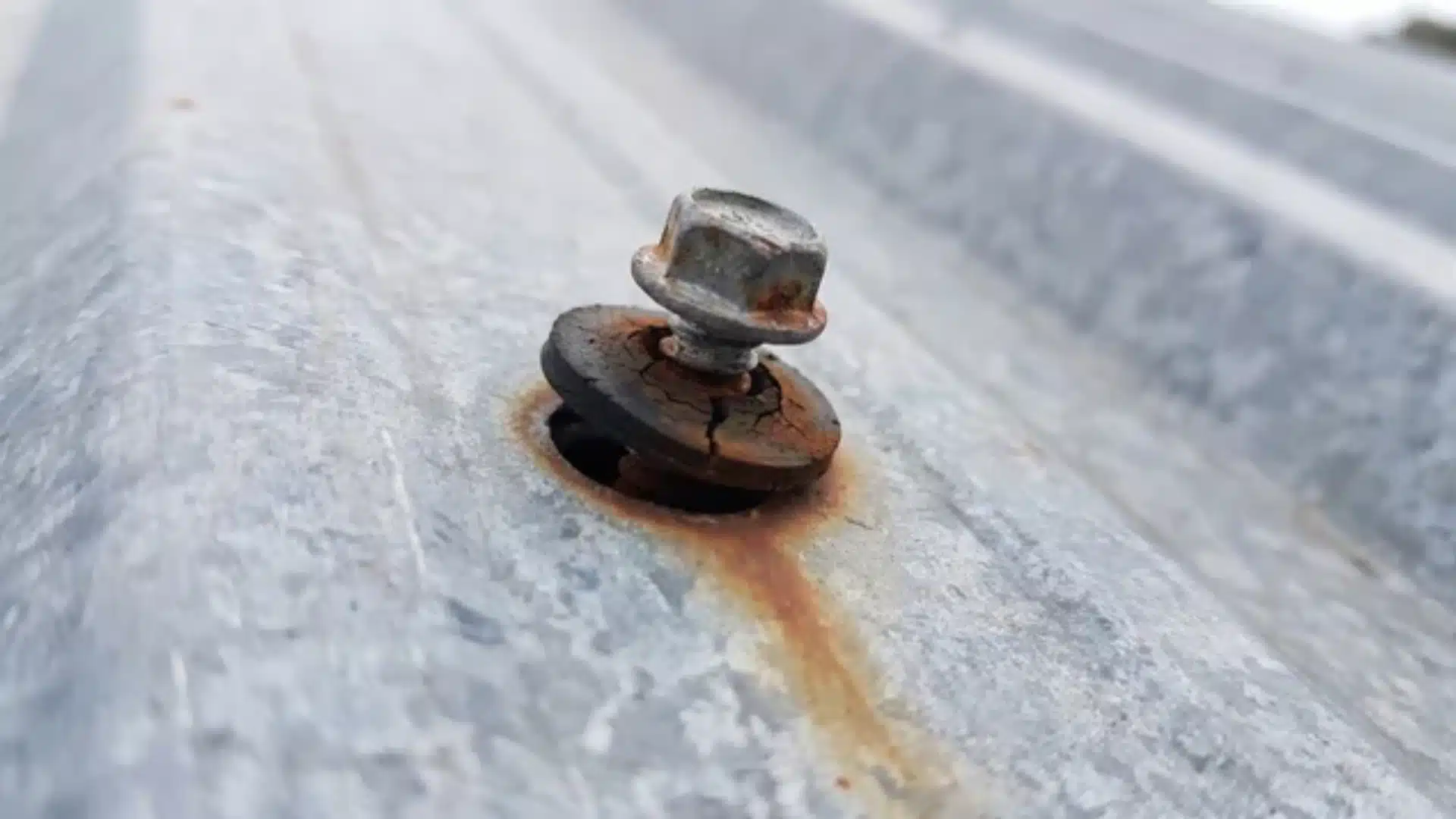
On a screw-down system, the fasteners are your primary concern.
Temperature swings make metal panels expand and contract repeatedly over time. Movement loosens screws and compresses rubber washers. Backed-out screws with flattened washers stop sealing and become entry points for water.
During inspection, check for:
- Screws that are backing out or sitting visibly proud of the panel surface
- Rust streaking below any fastener: a sign the washer has already failed
- Cracked or missing sealant around vents, chimneys, and pipe boots
- Scratches or chips in the panel coating that expose bare metal
These issues are not always visible from the ground. Sealant around vents, chimneys, and pipe boots often starts separating at the edges within five to ten years.
The concern is water behavior. A small gap does not leak straight down. Water can move sideways under panels and appear several feet away from the actual failure point.
If safe roof access is available, checking a sample of fasteners across different areas provides a clear read on the overall condition and any early hidden wear.
2. Standing Seam Roof Inspection Checklist
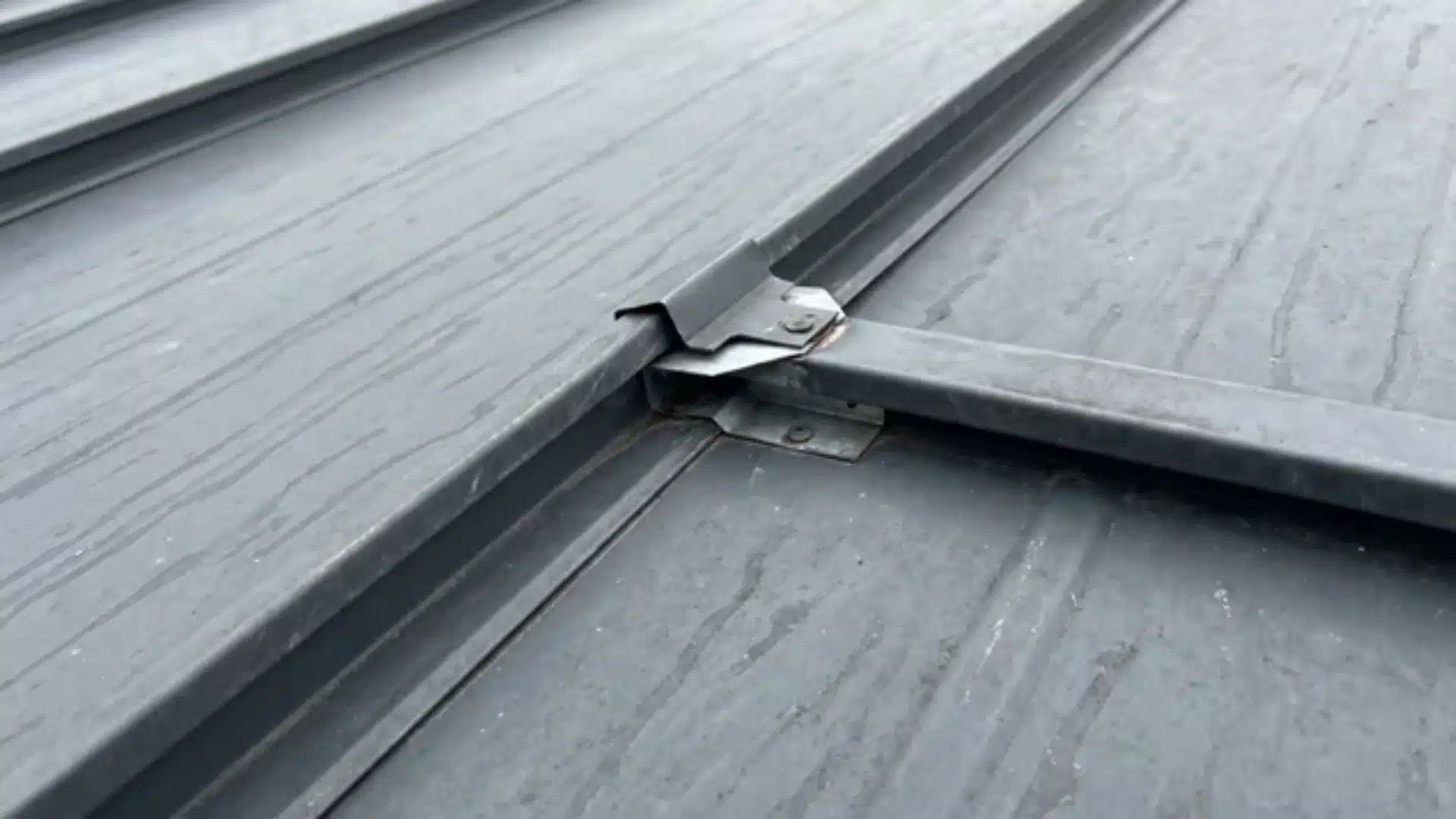
Standing seam systems move differently. The panels are designed to float on concealed clips that accommodate thermal movement without stressing the fasteners. That’s a meaningful difference.
Your inspection focus shifts to:
- Seam integrity: Look for any separation or deformation along the raised seam lines.
- Trim and flashing attachment: Check at the eaves, ridge, and rake edges for secure placement.
- Panel clips: If visible at edges, ensure none have pulled away or loosened.
- Sealant condition around penetrations: Inspect for gaps or early separation, as in any roofing system.
On standing seam systems, sealant is still the most common leak point. Separation starts at edges, water moves sideways, and leaks appear far from failure.
Check every penetration perimeter, not just obvious ones. Flashing and trim remain weak points and require the same careful inspection attention as any roofing system.
3. Gutter and Drainage Check
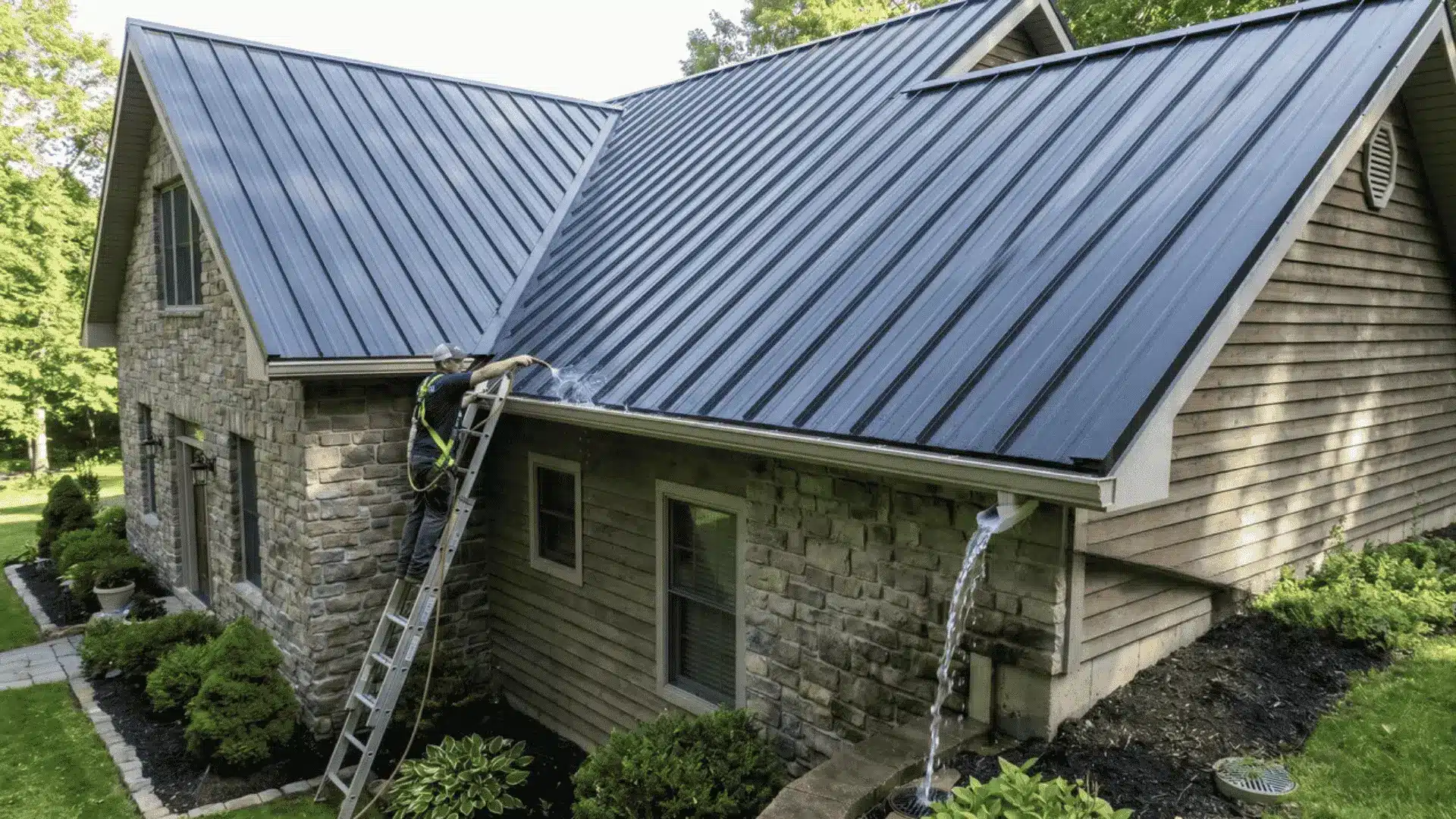
Gutters may seem like a separate topic, but they’re directly connected to your rroof’scondition at the edges.
When gutters clog, water backs up and sits against the roof’s lower edge.
On a metal roof, that pooling accelerates corrosion right where the panels terminate. Over time, it works its way under the edge trim.
Clear the gutters, confirm downspouts are flowing freely, and check that water isn’t pooling anywhere along the eave line after rain. It takes five minutes, and it matters more than most people give it credit for.
How to Clean a Metal Roof without Damaging it?
The cleaning method matters as much as how often you clean. The wrong approach strips the coating that protects your metal panels from rust.
That coating, typically a factory-applied PVDF or SMP finish, is not decorative. It’s the primary corrosion barrier. Once it’s compromised, the underlying metal is exposed, and no amount of cleaning can fix it.
What Not to Use and Why
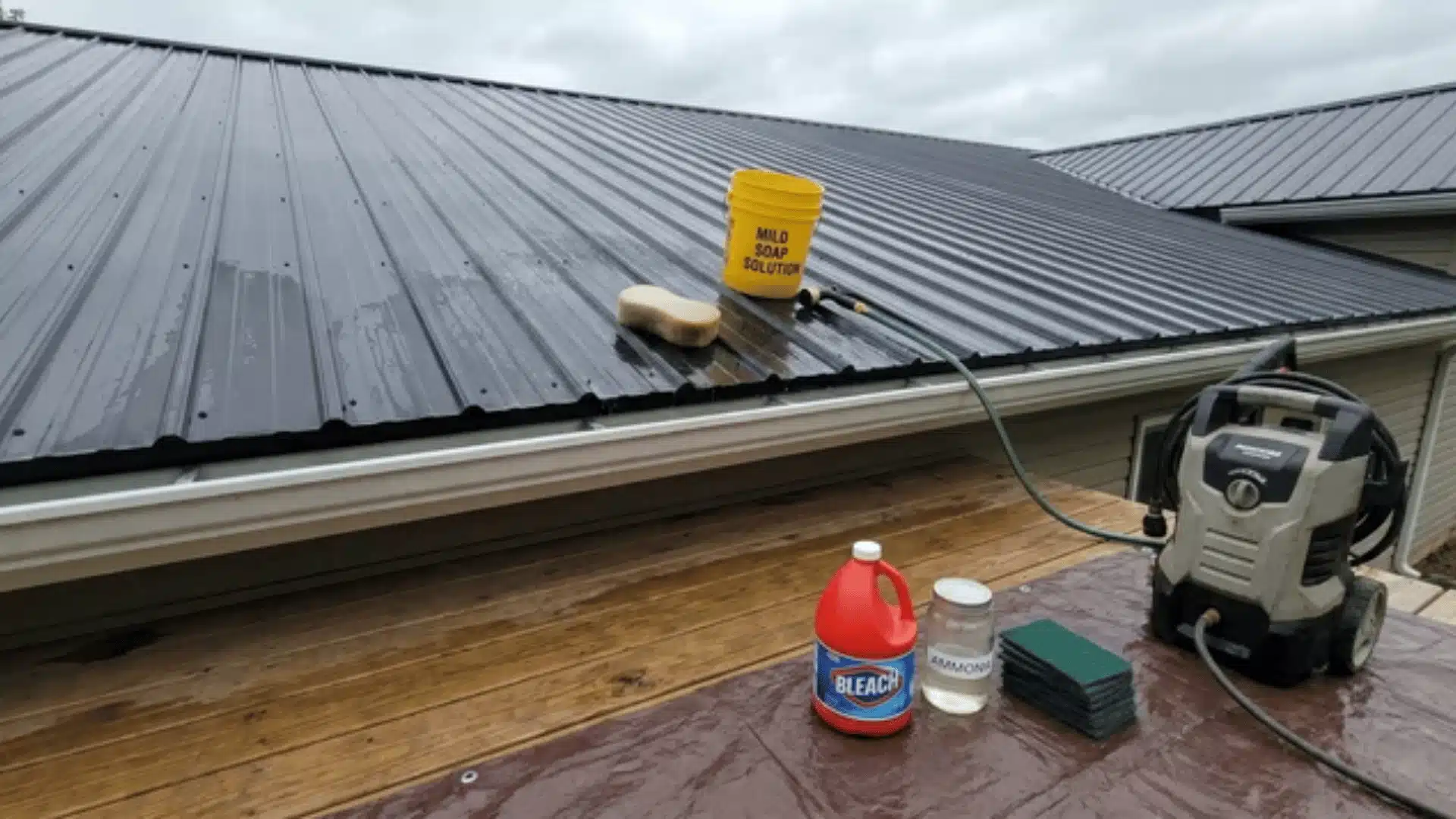
Bleach, ammonia, and abrasive scrubbing tools are the three to avoid. Each one attacks the finish differently.
Bleach and ammonia are chemically aggressive enough to break down the paint system over repeated use. You won’t see the damage immediately, but the coating degrades faster than it should.
Abrasive brushes and scouring pads do the same thing mechanically; they scratch through the finish rather than clean it.
High-pressure washing is a subtler risk. A narrow-tip nozzle at full pressure can force water up under panel laps and seams. It can also etch the coating if held too close.
None of these is worth the risk when mild soap and low pressure get the job done.
Step-By-Step Cleaning Process
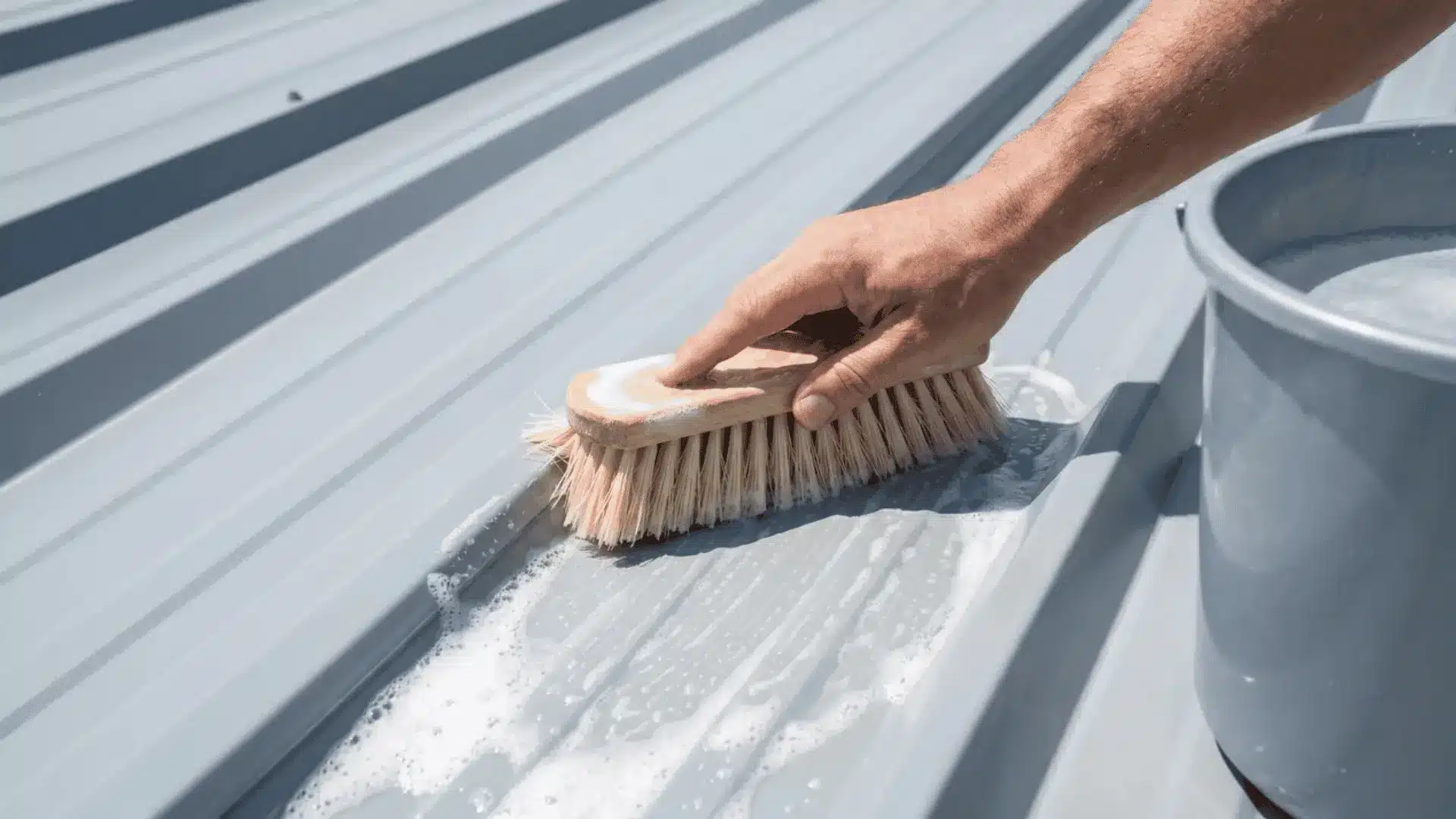
Before you start, clear any loose debris from the surface: leaves, branches, and anything sitting in the valleys. Wet debris dragged across the panel during washing causes scratches.
Then work through these steps:
- Rinse the roof: Use a garden hose or pressure washer with a wide-angle tip below 1,200 PSI.
- Mix your solution: Use a quarter cup of mild dish soap per gallon of water for dirt and light staining.
- Apply top to bottom: Always work with gravity, never against it, to avoid pushing water under laps.
- Scrub gently: Use a soft-bristle brush on stubborn spots.
- Rinse thoroughly: Continue until no soap residue remains.
Note: For mildew staining or heavy oxidation, apurpose-formulated metal roof cleaner will do what dish soap can’t. These are widely available and safe for factory finishes when used as directed.
Household products aren’t a substitute here; reach for something designed for the job.
What to Do When You Find Rust or Coating Damage?
Surface rust is not always serious, but it needs action based on severity and spread. Early response prevents further corrosion and helps maintain long-term metal roof performance.
Scratches or small chips exposing bare metal can be managed. Clean, apply rust-converter primer, then touch up paint. Early treatment stops oxidation from spreading.
Active pitting or perforation means structural compromise. Spot repairs will not last, so this becomes a contractor-level repair rather than a DIY fix.
Widespread coating failure indicates system breakdown, not isolated rust. Spot treatment is ineffective; full coating restoration with an elastomeric or reflective coating is required.
Isolated damage with intact surrounding finish is suitable for DIY repair. Anything widespread, perforated, or structurally compromised… it’s time to call a professional.
Repairs and Treatments that Extend Metal Roof Life
Metal roof systems last longer when issues are treated early. These common repair and coating options help extend service life when applied at the right time.
| Treatment | Typical Service Life | When to Act | DIY or Pro? |
|---|---|---|---|
| Fastener replacement (exposed-fastener systems only) | 10–20 years | Screws backing out, rust streaking below heads, or any leak tracing to a fastener | Single screws: DIY if comfortable on a roof. Full re-fastening: pro scope. |
| Sealant reapplication (all systems) | 10–15 years; less in high-UV climates | Cracked, shrinking, or separating sealant around vents, chimneys, skylights, and pipe boots | DIY with correct prep: old sealant must be fully removed first |
| Roof coatings (all systems) | 10–15 years per application | Scheduled finish treatment on a sound roof; never as a fix for active leaks or failing panels | Pro application is recommended for full coverage |
Choosing the right treatment depends on roof condition and timing. Proper maintenance keeps small issues from turning into structural damage and reduces long-term repair costs.
Conclusion
Consistent metal roof maintenance reduces the risk of hidden leaks, corrosion, and coating failure by addressing small issues early across fasteners, seals, and drainage points.
Learning how damage develops slowly helps improve inspection timing and decision-making, preventing minor wear from escalating into expensive repairs or system-wide deterioration over seasons.
Regular upkeep and timely intervention ensure a longer roof lifespan, better performance, and fewer unexpected failures, keeping systems reliable through changing weather conditions year-round.
Frequently Asked Questions
What is the biggest problem with metal roofs?
On exposed-fastener systems, the most common failure point is fastener degradation. Rubber washers compress and harden over years of thermal cycling, losing their seal long before the screw looks visibly wrong. Catching this during routine inspections and replacing affected fasteners early prevents the majority of metal roof leaks.
How often do screws in a metal roof need to be replaced?
On exposed-fastener systems, plan for inspection around the 10-year mark and replacement somewhere between 10 and 20 years. Climate matters: wider temperature swings mean more thermal cycling and a shorter washer lifespan. Standing seam systems use concealed clips and don’t follow the same replacement schedule.
How often should you coat a metal roof?
Elastomeric and reflective coatings typically last 10 to 15 years before reapplication. Coating works best as a scheduled finish treatment on a sound roof. It isn’t a fix for failing seams, active leaks, or compromised fasteners; address those first, then coat.
Can you pressure wash a metal roof?
Yes, with the right setup. Use a wide-angle tip, stay below 1,200 PSI, and keep at least 12 inches of distance from the surface. A narrow tip at full pressure can force water under panel laps and etch the factory coating. Low pressure with mild soap handles most cleaning without any of that risk.