

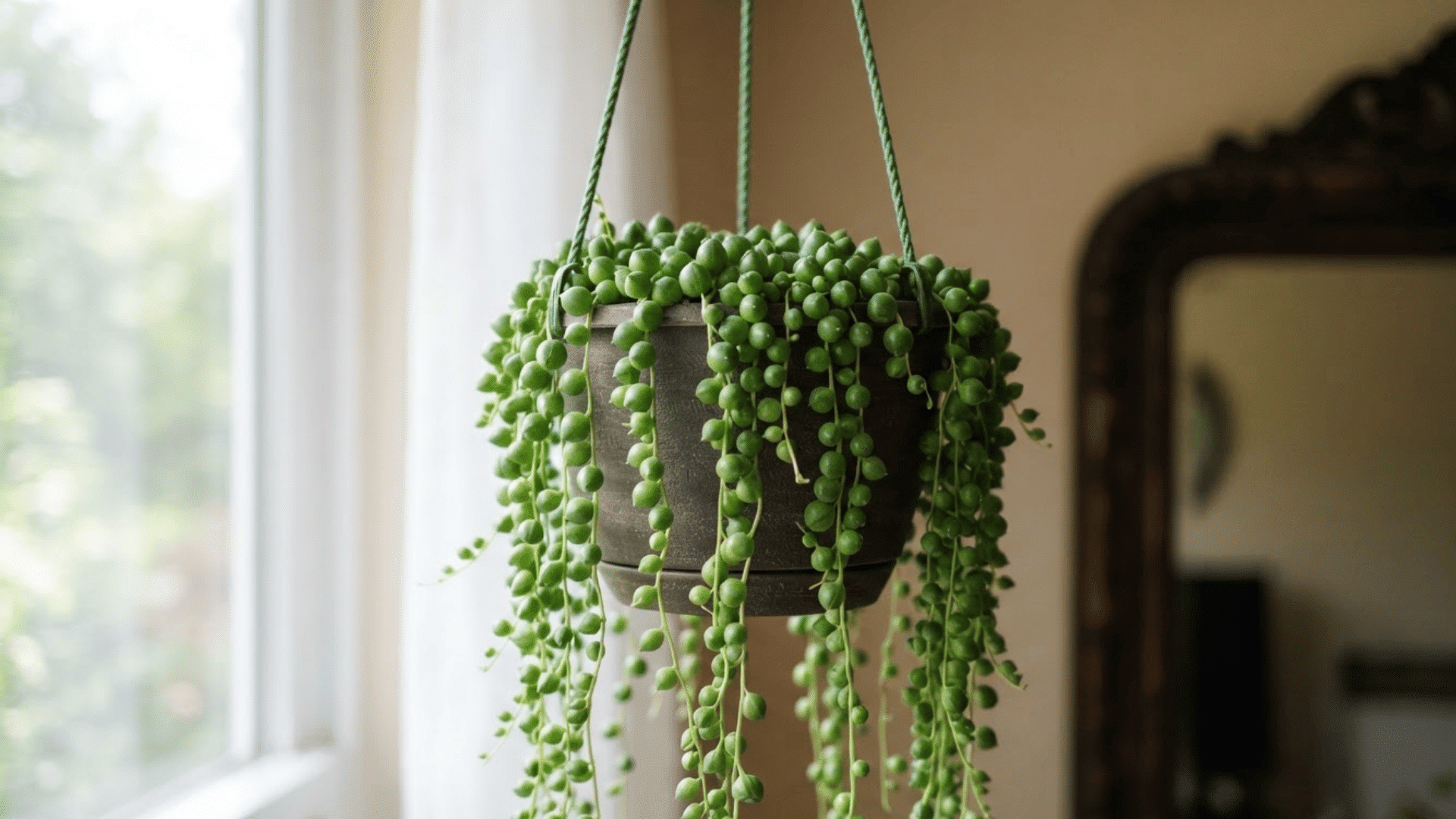
Your string of pearls looked full and healthy when you brought it home, but now the beads are shrinking, turning soft, or dropping from the stems.
It can feel confusing, especially when you think you are giving the plant enough care. String of pearls care gets much easier once you understand how this succulent stores water and responds to light.
Too much water can harm the roots, while low light can leave the stems thin and weak.
With the right soil, watering routine, sunlight, and pot, you can help those trailing green pearls stay full, firm, and healthy for longer.
Key Points
|
Quick Answer: How to Care for String of Pearls?
Keep string of pearls in bright light, water after the soil dries, and use fast-draining soil with good drainage. Place it near a bright window where it gets gentle morning sun, but protect it from strong afternoon heat.
Use a pot with drainage holes so extra water can escape. During spring and summer, feed it lightly with succulent fertilizer. Cut damaged stems and reduce watering during the cooler winter months.
The plant is a trailing succulent native to South Africa, and its bead-shaped leaves store water.
What Are String of Pearls Plants?
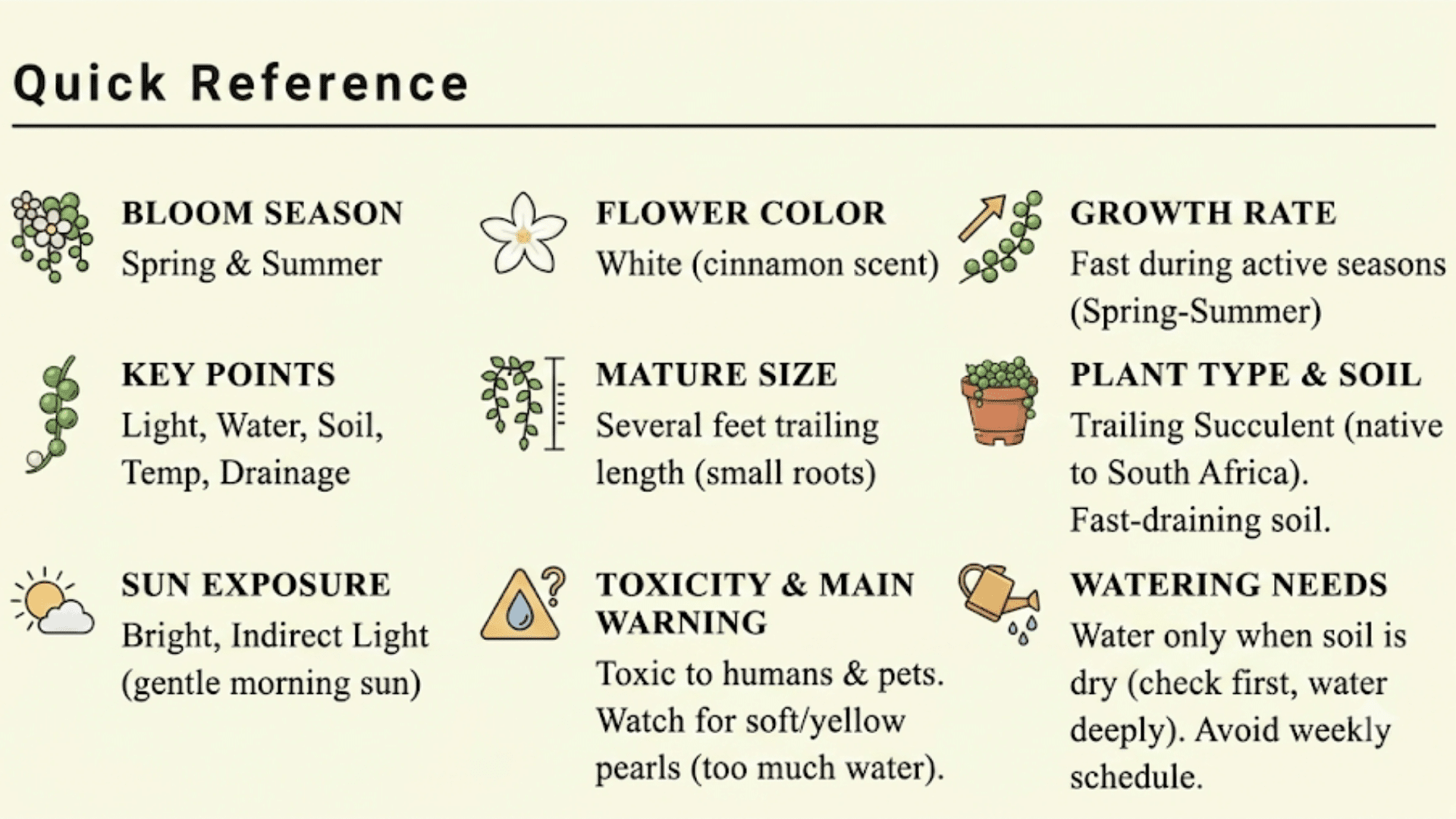
String of pearls, or Curio rowleyanus, is a trailing succulent formerly known as Senecio rowleyanus.
It comes from the dry regions of South Africa, where it grows along the ground and around rocks. Its round green leaves store water, helping the plant handle dry periods.
The thin stems trail downward and can grow several feet long, making the plant a popular choice for hanging pots.
It may also produce small white flowers with a light cinnamon-like scent.
You can grow it indoors or outdoors in warm conditions. Keep it away from pets and small children because eating it can cause harmful reactions.
How to Care for String of Pearls?
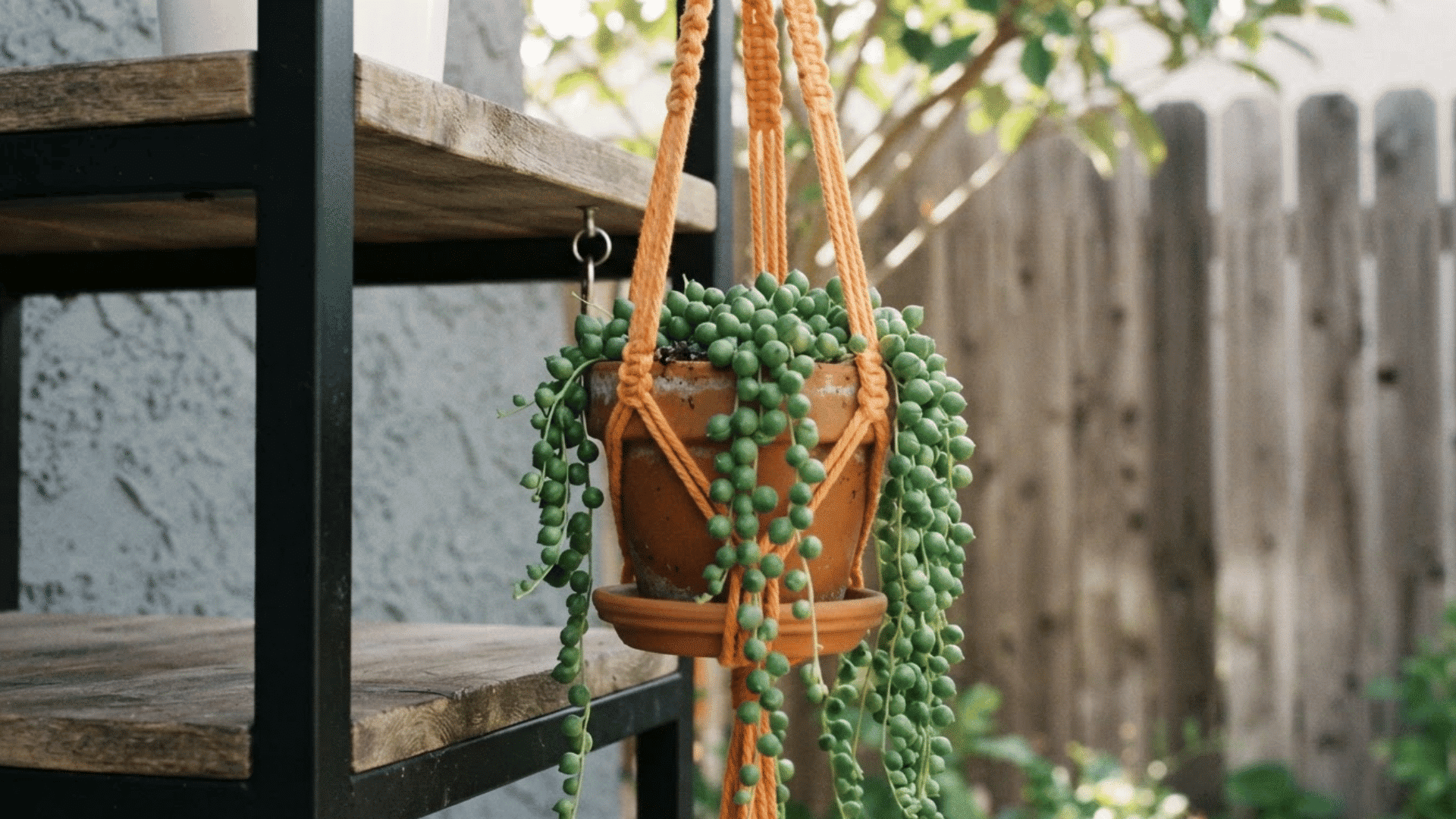
Proper light, careful watering, and fast drainage work together to keep string of pearls healthy and protect its roots from damage.
1. Give It Plenty of Bright Light
Place your string of pearls near an east- or west-facing window where it receives plenty of bright, indirect light. A few hours of gentle morning or late afternoon sun can support healthy growth.
If stems become thin or pearls grow farther apart, the plant may need more light. Protect it from strong midday sun, which can scorch the leaves.
2. Water only when the Soil Dries
Check the soil with your finger before adding water. Once it feels dry, water deeply until excess moisture drains from the pot, rather than giving small amounts often.
Water less during winter when growth slows. Wrinkled pearls may signal thirst, while soft, yellow, or mushy pearls can point to excess water. Avoid following a strict weekly watering schedule.
3. Use Fast-Draining Soil
Plant string of pearls in a cactus or succulent potting mix that allows water to drain quickly. Regular potting soil can stay wet for too long and put the roots at risk.
The best soil for string of pearls is a fast-draining cactus or succulent mix.
University of Wisconsin–Madison recommends letting string of pearls soil dry between waterings and using a well-draining mix to reduce the risk of root rot.
4. Pick a Pot with Drainage
Choose a pot with drainage holes so extra water can leave after each watering. A shallow container often works well because string of pearls has a small, shallow root system.
Terracotta dries faster than plastic and may help prevent wet soil. Avoid placing a small plant in an oversized pot, since the extra soil can hold moisture around its roots longer.
5. Keep Temperature and Humidity in Check
String of pearls prefers warm conditions during its main growing period and slightly cooler temperatures in winter. Keep the plant away from frost, cold windows, and sudden temperature changes.
Most homes provide enough moisture in the air, but knowing how to increase humidity for plants can still help with houseplants that prefer more humid conditions.
6. Fertilize During Active Growth
Feed string of pearls lightly during spring and summer when new growth is active. Use a diluted balanced fertilizer or one made for succulents, following the product label for safe amounts.
Too much fertilizer can damage the roots or cause weak growth. Reduce feeding as temperatures cool, and usually stop during winter when the plant’s growth naturally slows down.
7. Repotting String of Pearls
Repot string of pearls when roots become crowded, soil stays wet longer than usual, or water stops draining properly. Spring is the best time to repot because the plant begins active growth during this period.
Choose a container only one size larger than the old pot, as too much extra soil can hold water for longer. Always use a pot with drainage holes.
8. Pruning
Prune your string of pearls by removing dead, yellow, damaged, or leggy stems with clean scissors or pruning shears.
Trim long vines to maintain a compact shape and encourage fuller growth.
Save healthy green cuttings for propagation, or replant them in sparse areas of the pot to create a denser, more attractive plant.
How to Propagate String of Pearls?
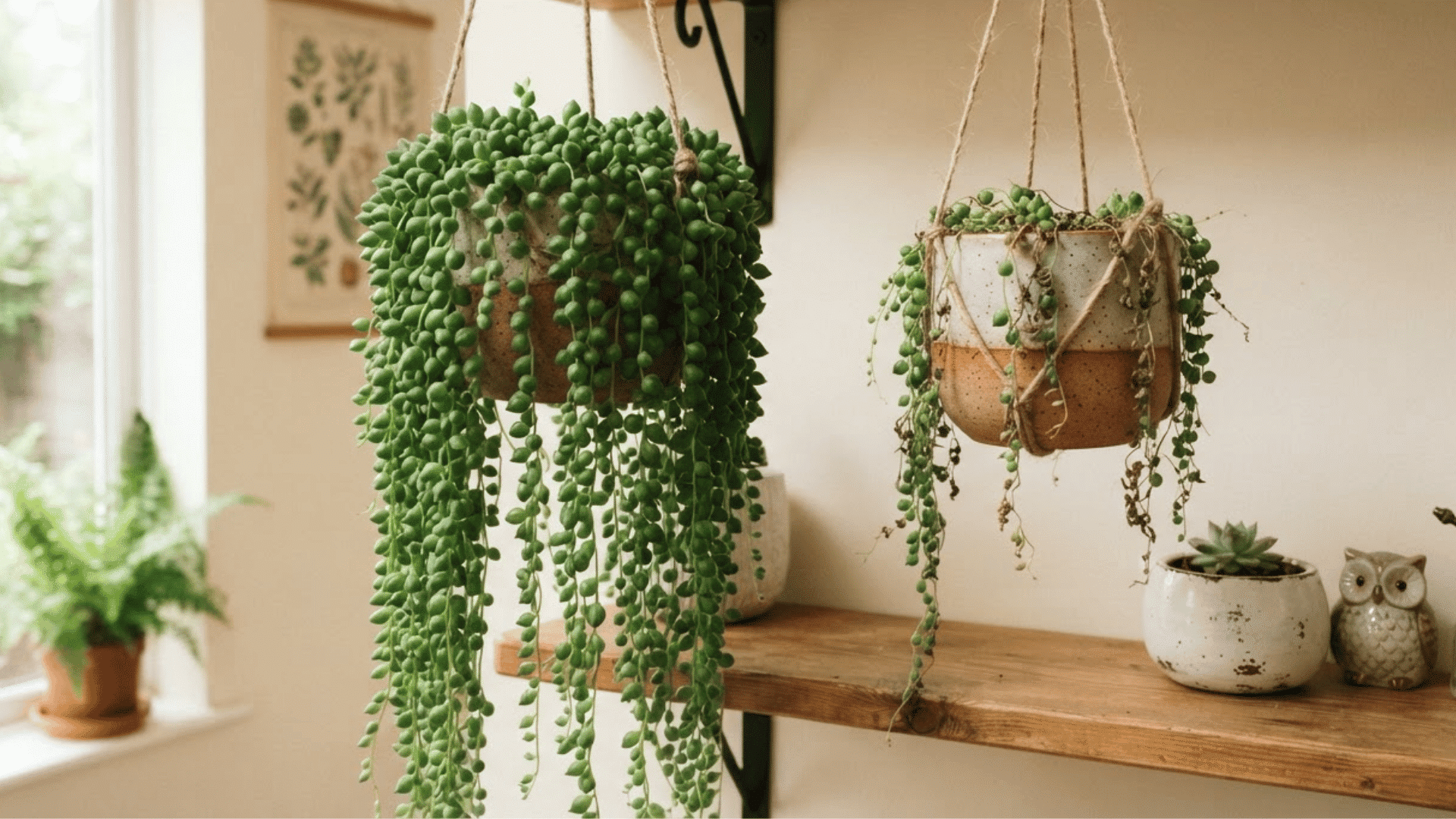
String of pearls is easy to propagate from healthy stem cuttings, and new plants can also help fill sparse areas.
- Step 1: Choose a healthy, firm green stem.
- Step 2: Cut a 4 to 6-inch section.
- Step 3: Remove a few lower pearls.
- Step 4: Place the exposed nodes on soil.
- Step 5: Keep the cutting in bright, indirect light.
- Step 6: Keep the soil lightly moist until roots form.
- Step 7: Root extra strands in sparse areas.
What Reddit Users Say About String of Pearls Care?

Reddit users often say that strong light is one of the biggest factors in keeping string of pearls full and healthy. Several growers recommend giving the top of the pot enough sunlight, since poor light can leave it bare.
One user reported about 18 inches of growth in nine months under a grow light. Users also suggest laying trailing strands across the soil so the nodes can root and fill sparse areas.
Some recommend trimming healthy strands and placing them back into the pot to encourage fuller growth.
Common String of Pearls Problems
Changes in the pearls, stems, or soil can help you spot care problems early and take action before the plant declines.
- Pearls Are Shriveling: Check the soil first. Dry soil may mean the plant needs water, while damaged roots or excess heat can also cause shriveled pearls.
- Pearls Are Yellow or Mushy: If you notice yellow leaves on plants, check the soil moisture, drainage, and light first, since these are common causes of stress.
- Plant Is Losing Pearls: Review its watering and light conditions. Watering stress, low light, or damaged stems can cause pearls to drop.
- Plant Is Sparse on Top: Give the top of the pot more light and place healthy strands across the soil to encourage new roots.
- Stems Have Wide Gaps: Move the plant to brighter light. Long stems with large spaces between pearls often point to insufficient light.
- Root Rot: Look for mushy roots, soft stems, yellow pearls, or wet soil. Remove damaged roots and repot the plant in fresh, fast-draining soil.
Conclusion
String of pearls care becomes much easier when you focus on three basics: bright light, careful watering, and fast-draining soil.
Keep the plant near a bright window and use a pot with drainage holes to protect its shallow roots. Instead of watering on the same day each week, check the soil and look at the pearls.
Firm, healthy pearls usually mean the plant has enough moisture, while wrinkled or soft pearls can signal a problem.
Small changes in light or watering can make a big difference. Check your string of pearls today and adjust its care based on what the plant needs.
Frequently Asked Questions
How Long Do String of Pearls Last?
String of pearls plants often live around three to five years. Proper light, watering, soil, and regular propagation can help keep plants healthy longer.
Are Coffee Grounds Good for String of Pearls?
Coffee grounds are not ideal for string of pearls because they may hold extra moisture. A well-draining succulent soil mix is a safer choice.
Can You Use Miracle-Gro on String of Pearls?
Yes, you can use a Miracle-Gro product made for succulents. Follow the label directions and avoid overfeeding, especially during slower winter growth.