

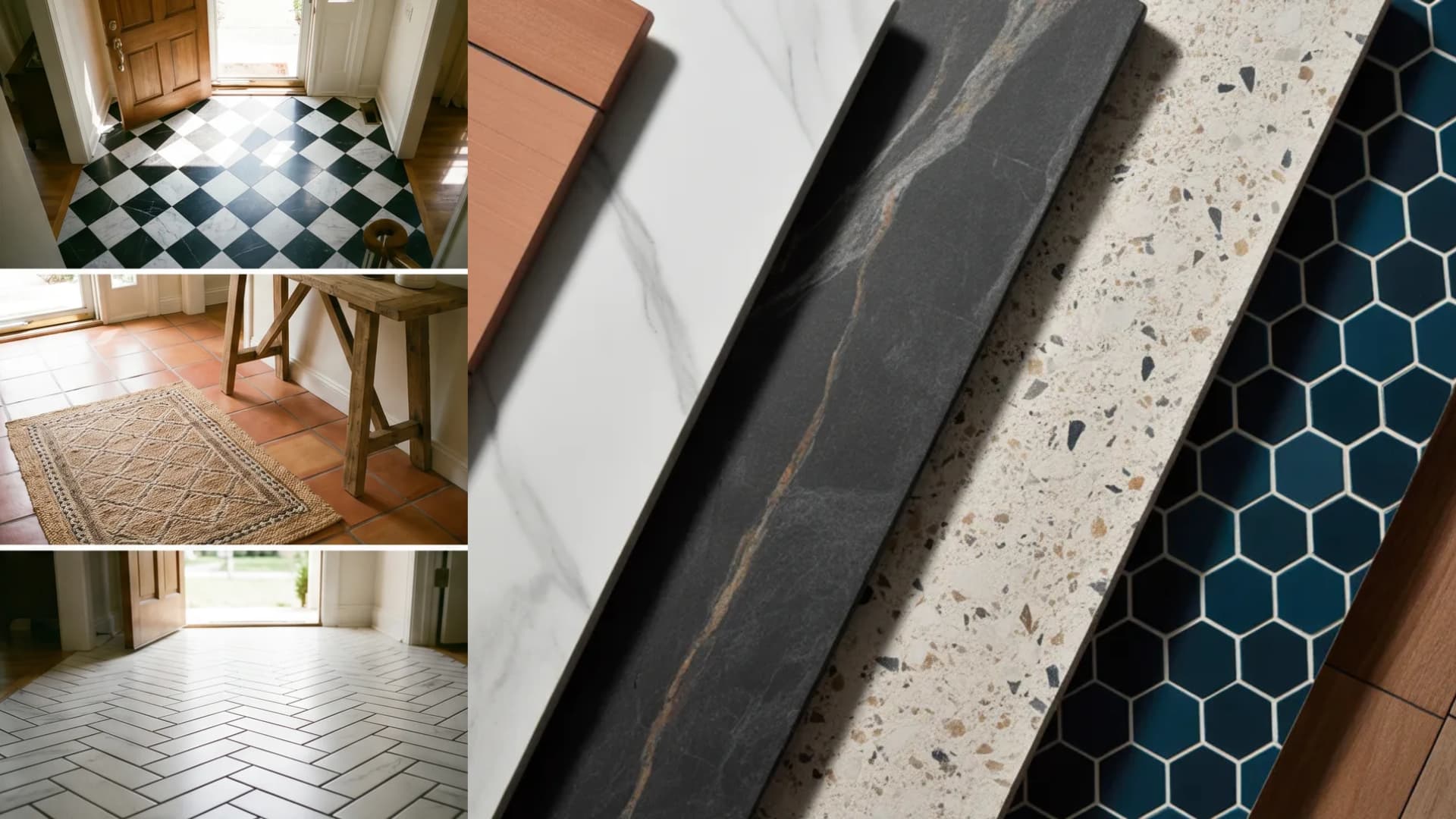
What’s the first thing people notice when they walk into your home? The entryway.
Before they see the furniture, the paint colors, or the art on your walls, they look down. And if the floor is wrong, the whole space feels off.
Picking entryway tile sounds simple, but it’s easy to get wrong. The good news? With a bit of direction, you can choose a design that holds up to daily wear and still looks great years later.
This guide covers distinct entryway tile ideas, how to pick the right size and pattern, what mistakes to avoid, and what the whole thing will cost you.
Why Tile Is the Best Choice for Your Entryway
Tile is the most practical flooring option for an entryway, and that’s not just a design opinion. It handles foot traffic, moisture, pet paws, and dirt better than hardwood or carpet.
A quick mop is all it takes to clean up after a rainy day. Unlike carpet, tile does not trap allergens, dust, or pollen. It also works with radiant in-floor heating systems, which is something most flooring types cannot do. And with the number of styles, textures, and finishes available today, there is a tile option for every kind of home.
| Feature | Tile | Hardwood | Carpet | Vinyl |
|---|---|---|---|---|
| Water resistance | High | Low | Low | High |
| Durability | High | Medium | Low | Medium |
| Easy to clean | Yes | Medium | No | Yes |
| Works with radiant heat | Yes | Sometimes | No | Sometimes |
| Design variety | Very high | Medium | Medium | High |
15 Entryway Tile Ideas
There is no single right answer when it comes to entryway tile design. The best choice depends on your home’s style, your floor’s size, and how much upkeep you’re willing to do. Here are ideas that each take a different direction.
1. Black and White Checkerboard Tile
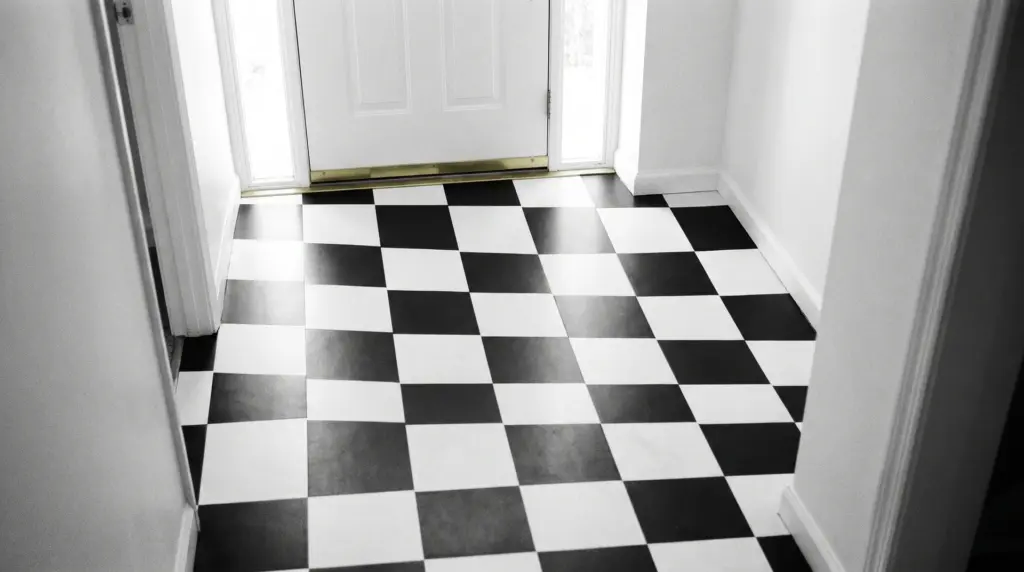
This pattern has appeared in European homes, historic mansions, and boutique hotels for centuries. It still works because the contrast is clean and the look is timeless.
Large-format tiles give it a modern feel. Smaller tiles push it toward a vintage, retro look. Porcelain and ceramic are the go-to materials because they handle moisture and heavy use without cracking or fading.
- Best for: Traditional, Victorian, Parisian-style homes
- Top material: Porcelain or ceramic
- Grout tip: White grout keeps it bright; gray grout tones it down
- Cost range: $3 to $8 per square foot for tile; $12 to $25 installed
- Pairs well with: Brass or gold hardware, dark wood furniture
2. Large-Format Polished Porcelain Tile
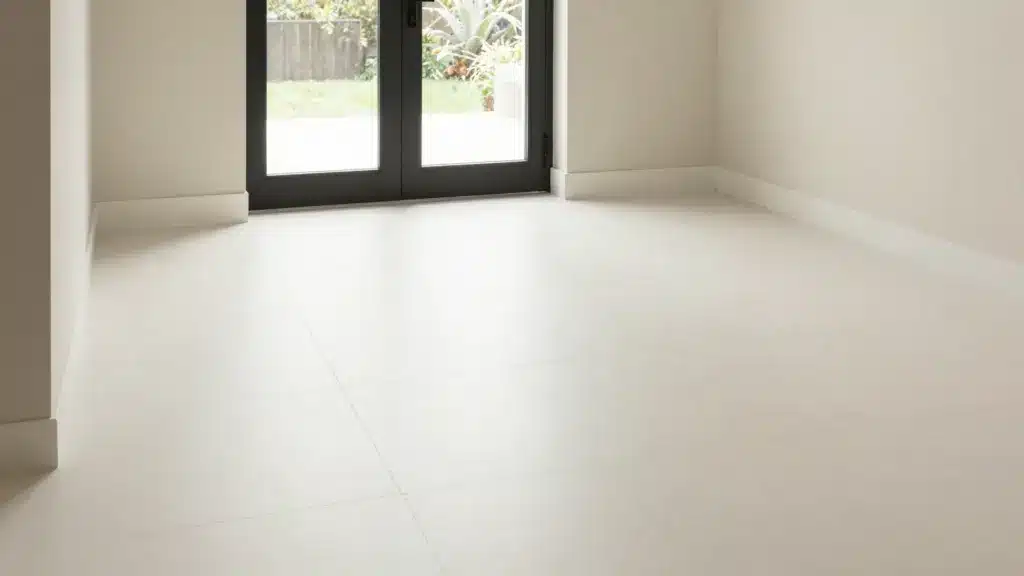
Big tiles create a clean, open look. Fewer grout lines mean less dirt buildup, and the surface reflects light, which makes smaller entries feel bigger than they are.
The 24×24 or 32×32 inch formats work especially well in modern and minimalist spaces. You do not need a grand foyer to pull this off. Even a small entry looks polished and intentional with large-format tiles laid in a straight grid.
- Best for: Modern, minimalist, contemporary homes
- Top material: Polished or satin-finish porcelain
- Grout tip: Thin grout lines in a matching color keep the look clean
- Cost range: $4 to $12 per square foot for tile; $15 to $30 installed
- Pairs well with: Neutral walls, metal accents, simple furniture
3. Moroccan or Encaustic Patterned Tile
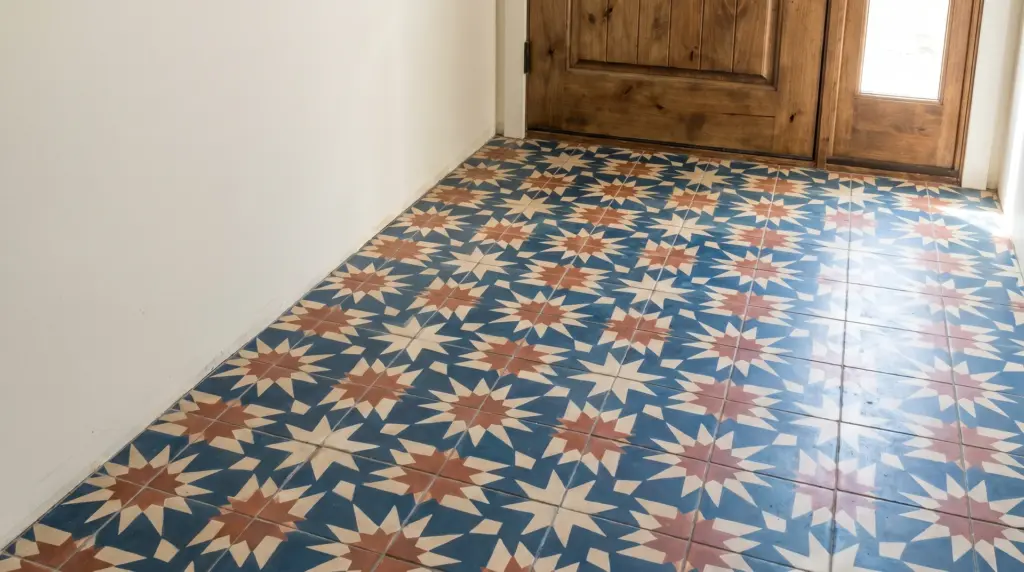
Moroccan and encaustic patterns use bold geometric shapes, repeat designs, and deep saturated colors. They work especially well in small entries where a full floor in a single color would feel flat.
The key is pairing them with calm, neutral walls so the floor stays the focus. White or off-white walls let the pattern breathe.
- Best for: Bohemian, eclectic, global-inspired homes
- Top material: Cement encaustic tile, patterned porcelain
- Grout tip: Match grout to the tile’s background color to let the pattern pop
- Cost range: $5 to $15 per square foot; installation runs higher due to complexity
- Pairs well with: Natural fiber rugs, rattan furniture, warm wood tones
4. Wood-Look Porcelain Tile
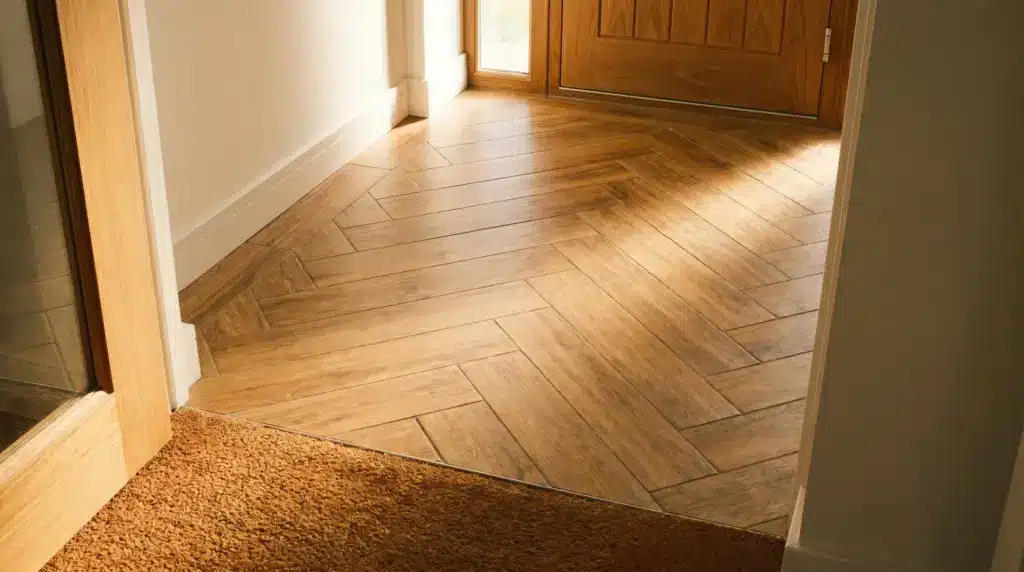
Real wood floors look warm and inviting at the entrance, but they swell, scratch, and stain when wet. Wood-look porcelain gives you the same visual warmth with none of those problems.
Today’s wood-look tiles are convincing. The grain texture, color variation, and plank format all mimic the real thing closely. Lay them in a herringbone pattern for added visual interest, or go straight for a simpler, cleaner look.
- Best for: Farmhouse, rustic, Scandinavian, transitional homes
- Top material: Textured porcelain with realistic wood-grain print
- Grout tip: Use grout in a tone that matches the tile for a seamless look
- Cost range: $3 to $9 per square foot; similar installation cost to standard tile
- Pairs well with: Shiplap walls, woven rugs, natural wood furniture
5. Natural Marble Tile
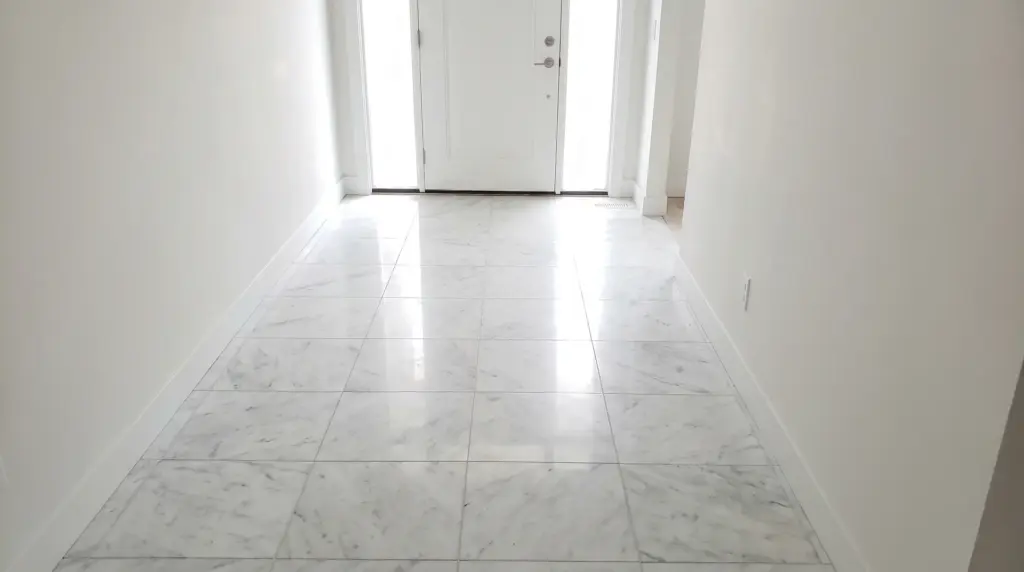
Marble is the go-to choice when the goal is a luxury feel. The veining, the weight, the finish, nothing quite replicates it. Polished Carrara marble reads bright and classic. Honed Calacatta reads warmer and more editorial.
The catch with marble is maintenance. It needs sealing before use and again every year or two. Acidic cleaners, red wine, and citrus will etch the surface permanently if left unwiped. If your entry sees a lot of kids, pets, or muddy boots, marble-look porcelain gives you the visual result with far less upkeep.
- Best for: Grand foyers, luxury homes, formal traditional and modern interiors
- Top material: Polished or honed natural marble; porcelain alternative available
- Grout tip: Light gray grout on white marble keeps the look sophisticated
- Cost range: $10 to $30+ per square foot; professional installation required
- Pairs well with: White walls, metallic fixtures, minimal furniture
6. Hexagon Mosaic Tile
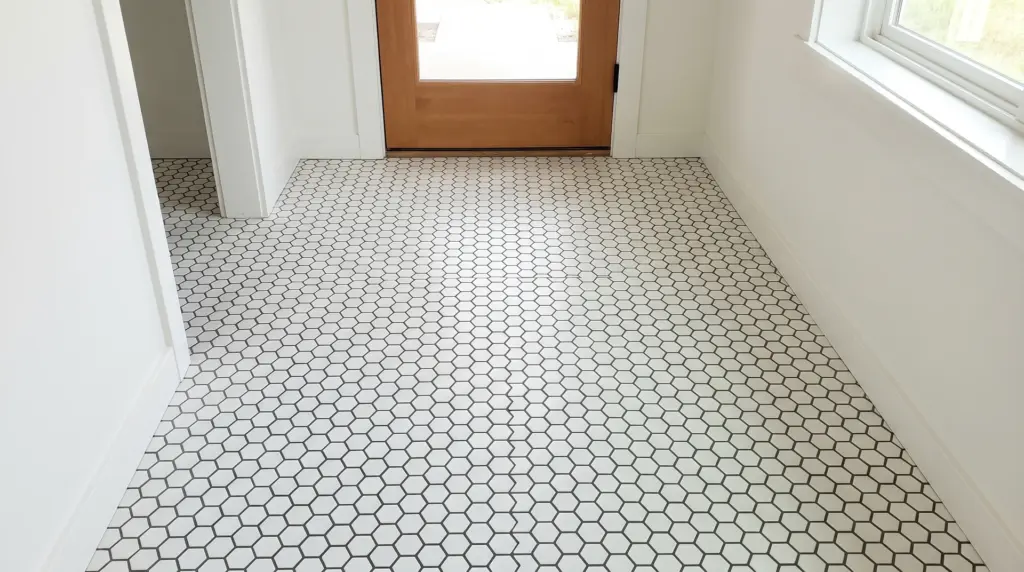
Hexagon tiles add geometry without going overly bold. They work on floors, as a wall panel behind a console table, or as a border around a simpler central tile. The shape gives your entry structure and texture at the same time.
All-white hex tiles work in almost any style home. Black and white combinations are classic. Multicolor options add personality to a space without requiring a full pattern redesign.
- Best for: Modern, mid-century, eclectic homes
- Top material: Porcelain or ceramic in matte or glossy finish
- Grout tip: Dark grout on white hex tiles creates strong graphic definition
- Cost range: $4 to $10 per square foot; mosaic installation takes more time
- Pairs well with: Clean white walls, simple storage benches, modern lighting
7. Terracotta Tile
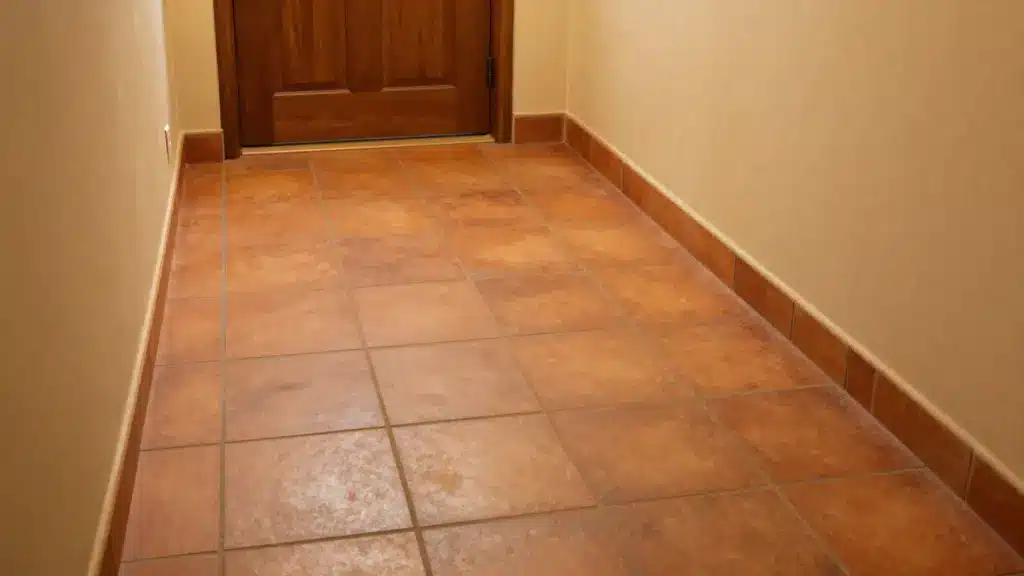
Terracotta brings warmth into the entry in a way no other tile does. The clay-based material has a handcrafted, imperfect quality that ages well. Each tile is slightly different in tone, which gives the floor a natural, lived-in feel.
Glazed terracotta is easier to maintain and more stain-resistant. Unglazed terracotta looks more raw and natural but needs regular sealing to stay clean.
- Best for: Mediterranean, Spanish Colonial, earthy, boho homes
- Top material: Glazed or unglazed terracotta tile
- Grout tip: Buff or cream grout blends with the warm tile tones
- Cost range: $3 to $8 per square foot; sealing adds to ongoing maintenance cost
- Pairs well with: Warm neutrals, exposed beams, rattan furniture, potted plants
8. Slate Tile
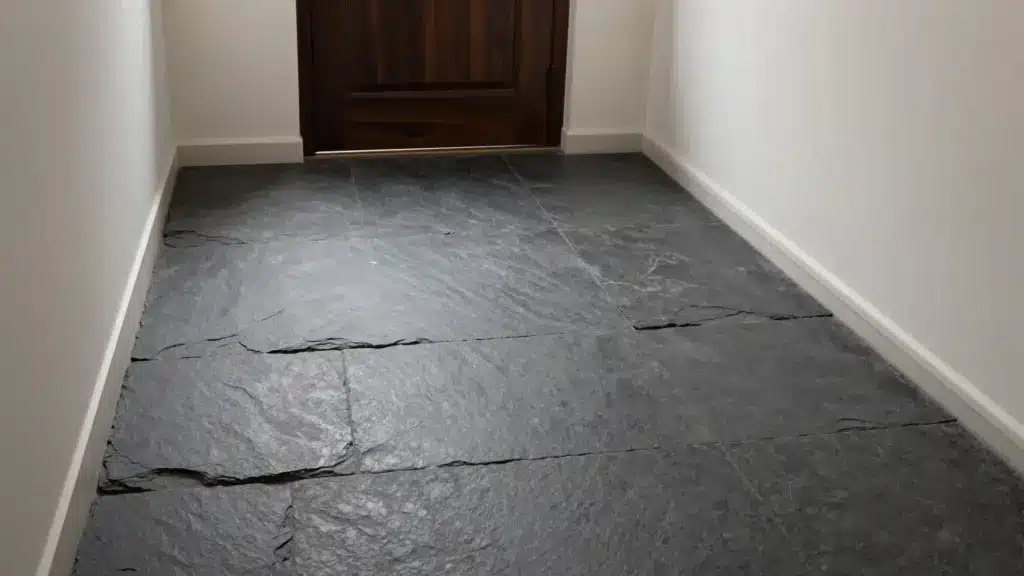
Slate is one of the few natural stones that does not need a polished finish to look good. Its rough, layered surface adds texture, and that texture provides natural grip underfoot. For homes in wet or rainy climates, slate is one of the safer natural stone choices for an entry floor.
The dark, earthy tones of slate also hide grit and scuff marks better than lighter options. It ages without looking worn.
- Best for: Rustic, craftsman, nature-inspired, mountain-style homes
- Top material: Natural cleft slate in charcoal, black, or earth tones
- Grout tip: Dark gray or charcoal grout blends with the stone’s natural color
- Cost range: $5 to $12 per square foot; sealing once a year recommended
- Pairs well with: Dark wood, exposed stone, warm lighting, neutral walls
9. Subway Tile with Contrasting Grout
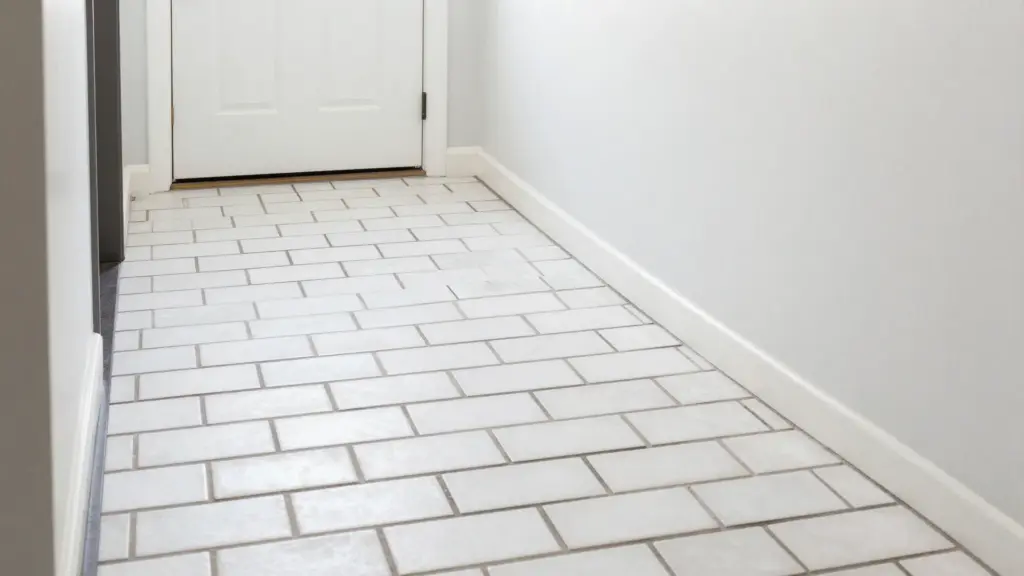
Subway tile is usually thought of as a backsplash option, but it works well on entryway floors and walls. The classic 3×6 inch format in white with a bold charcoal or navy grout line creates a graphic look that feels both timeless and current.
Longer, elongated subway tiles have grown popular and feel more contemporary than the standard format. Carrying the same tile from the entry wall to the floor creates a clean, unified look that works well in open floor plans.
- Best for: Modern, vintage, minimalist homes
- Top material: Ceramic or porcelain in standard or elongated subway format
- Grout tip: Dark grout is the whole point here; it defines the tile layout visually
- Cost range: $2 to $6 per square foot; lower cost material with high visual return
- Pairs well with: Clean white walls, black hardware, simple hooks or shelving
10. Terrazzo-Look Porcelain Tile
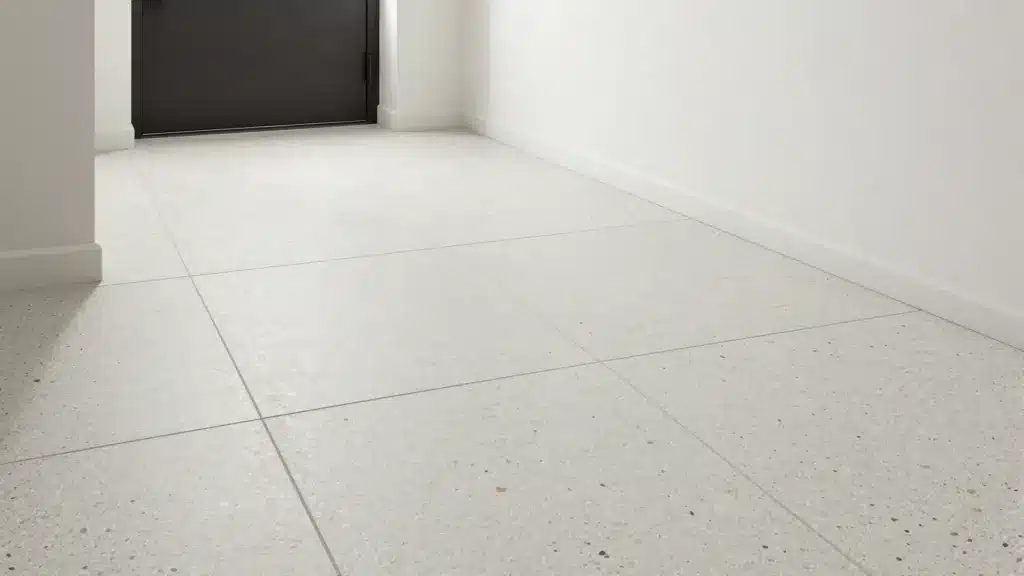
Terrazzo has a long history in public buildings and mid-century homes, and it’s come back in a big way. The speckled, multi-toned surface pattern is distinctive without being loud. Terrazzo-look porcelain captures that same look without the cost of real poured terrazzo.
Light base colors with gray and warm-toned flecks work well in small entries because they reflect light and feel bright without looking stark.
- Best for: Mid-century modern, contemporary, artistic homes
- Top material: Porcelain with aggregate-pattern print finish
- Grout tip: Match the grout to the tile’s background color for a seamless result
- Cost range: $4 to $10 per square foot; low maintenance, no sealing needed
- Pairs well with: Brass hardware, simple furniture, muted wall colors
11. Concrete-Look Porcelain Tile
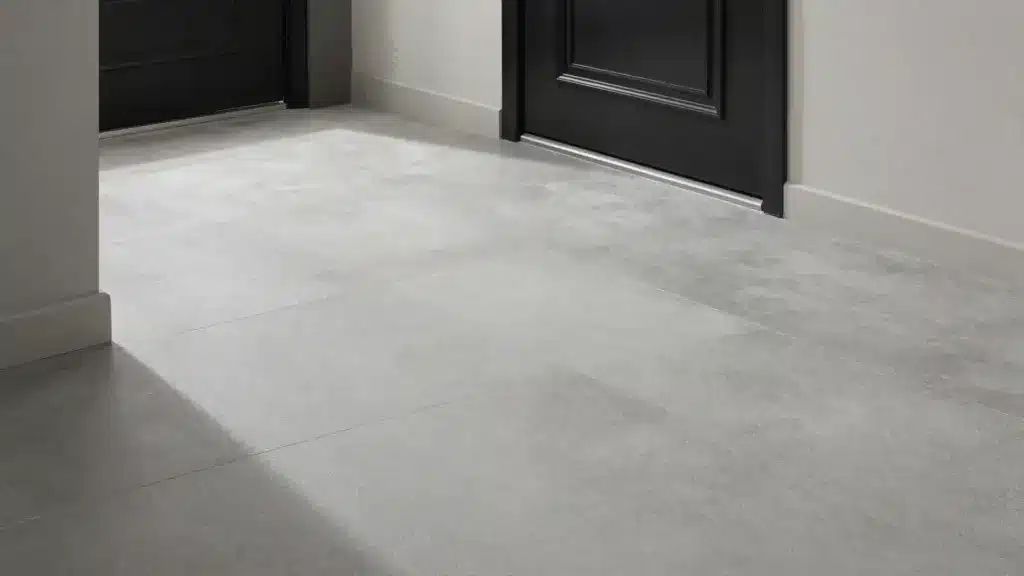
Concrete-look tile delivers an industrial, urban feel without the cold temperature of actual concrete. The matte gray surface reads clean and simple. It works in both large and small entries and holds up to heavy daily use without showing wear quickly.
The matte finish is also more forgiving than polished options. Footprints and scuff marks are far less visible on a textured matte surface.
- Best for: Industrial, urban, loft-style, contemporary homes
- Top material: Matte porcelain in gray or warm concrete tones
- Grout tip: Light gray or matching tone grout keeps the floor looking cohesive
- Cost range: $3 to $8 per square foot; widely available at most tile retailers
- Pairs well with: Exposed brick, black metal fixtures, minimal decor
12. Herringbone Pattern Tile
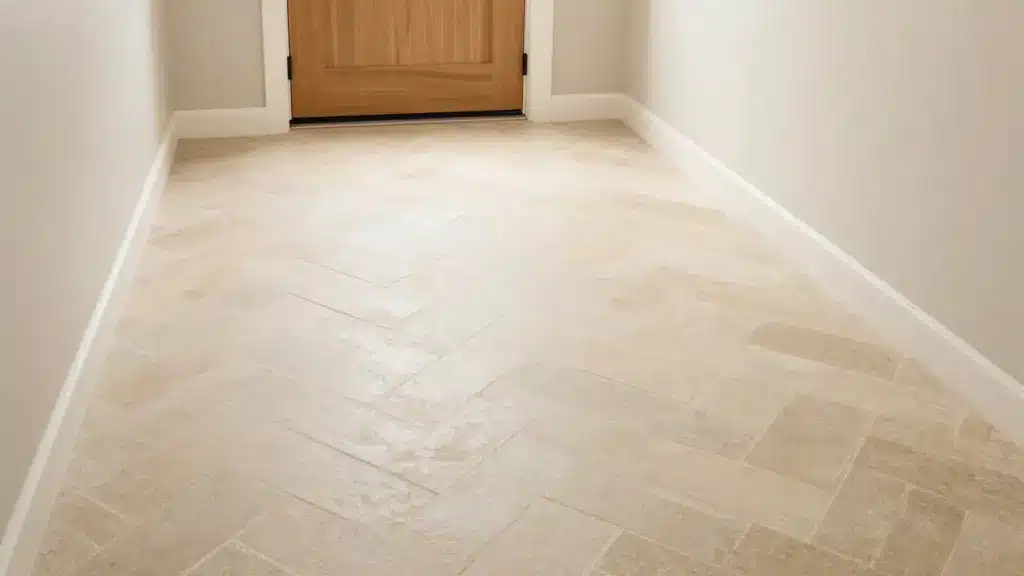
Herringbone is a layout choice, not a tile type, but it completely changes how a tile looks once it is installed. The zigzag arrangement adds movement and draws the eye forward, which works especially well in narrow entries.
It pairs best with wood-look planks, stone-look tiles, and simple rectangular porcelain tiles. The pattern itself provides enough visual interest that the tile does not need to be bold on its own.
- Best for: Transitional, traditional, modern homes
- Top material: Rectangular porcelain, wood-look planks, or stone-look tiles
- Grout tip: A contrasting grout highlights the herringbone pattern cleanly
- Cost range: $2 to $10 per square foot for tile; installation is 15 to 20% more labor-intensive
- Pairs well with: Natural wood, warm metals, soft neutral walls
13. White Tile with Bold Grout
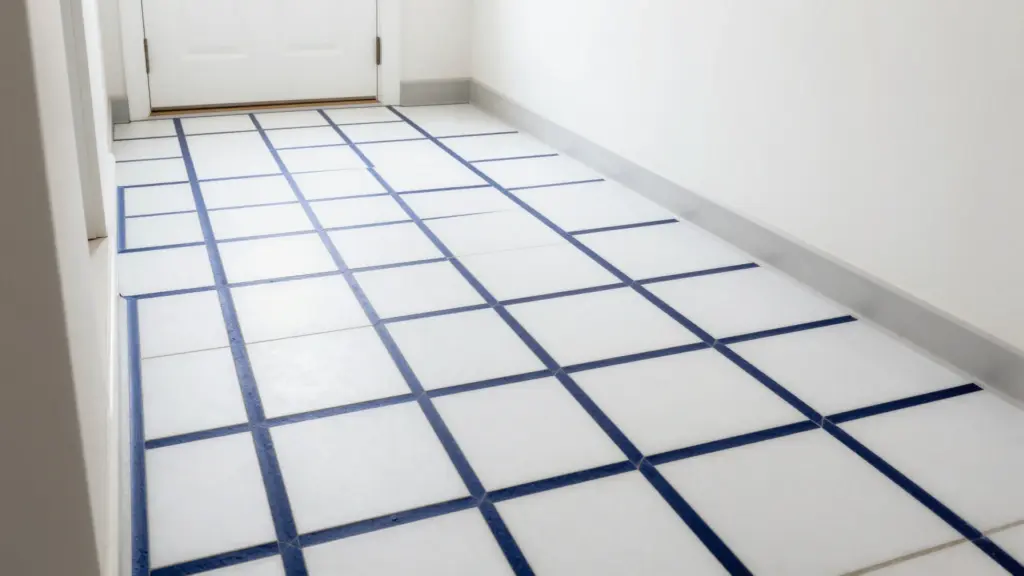
All-white tile with a dark grout color, charcoal, navy, or forest green, is one of the more visually interesting options for a minimal entry. The tile itself stays simple. The grout color does the work. It adds graphic structure to the floor without introducing a busy pattern.
Epoxy grout holds color better over time and resists staining more reliably than standard cement grout, which makes it worth the extra cost in a high-traffic area.
- Best for: Minimalist, Scandinavian, all-white or neutral home interiors
- Top material: Matte or satin-finish white porcelain or ceramic
- Grout tip: Epoxy grout in charcoal, navy, or a deep earth tone
- Cost range: $2 to $6 per square foot for tile; epoxy grout adds $1 to $2 per square foot
- Pairs well with: White walls, black hardware, clean-line furniture
14. Stone-Look Travertine Porcelain Tile
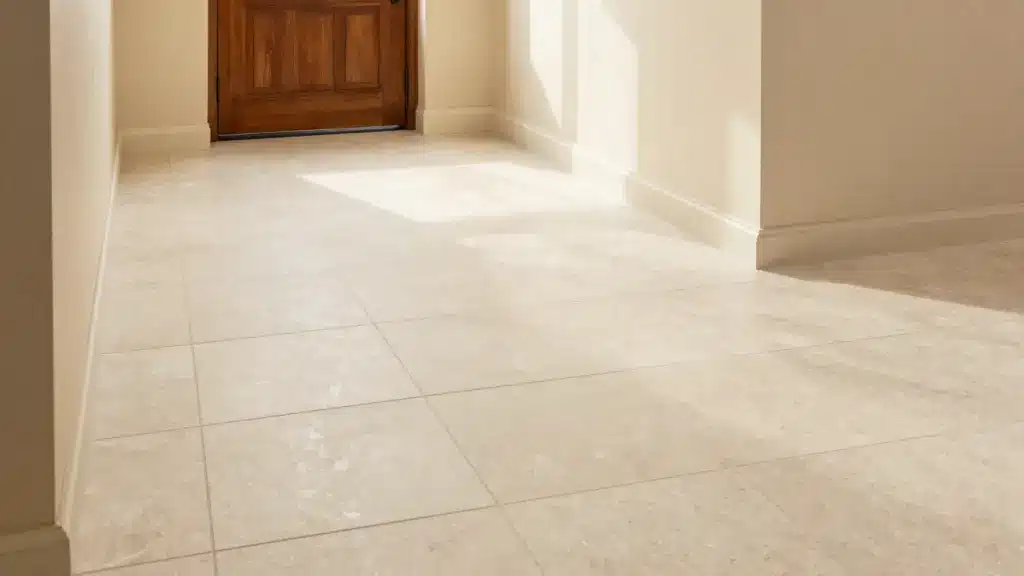
Travertine has a warm, Mediterranean quality that feels both refined and relaxed. Real travertine requires regular sealing and can be fragile in high-traffic areas. Travertine-look porcelain gives you the same warm ivory and beige tones, the same filled-vein texture, with no sealing needed.
The honed finish adds texture and character. It reads as natural and organic without the maintenance commitment of the real stone.
- Best for: Mediterranean, warm-toned, Spanish Colonial, transitional homes
- Top material: Honed porcelain with travertine-look fill and vein pattern
- Grout tip: Warm cream or linen-toned grout blends with the tile’s natural palette
- Cost range: $4 to $10 per square foot; durable and low maintenance
- Pairs well with: Warm wood tones, terracotta accents, arched doorways
15. Mixed-Material Inlay or Medallion Tile
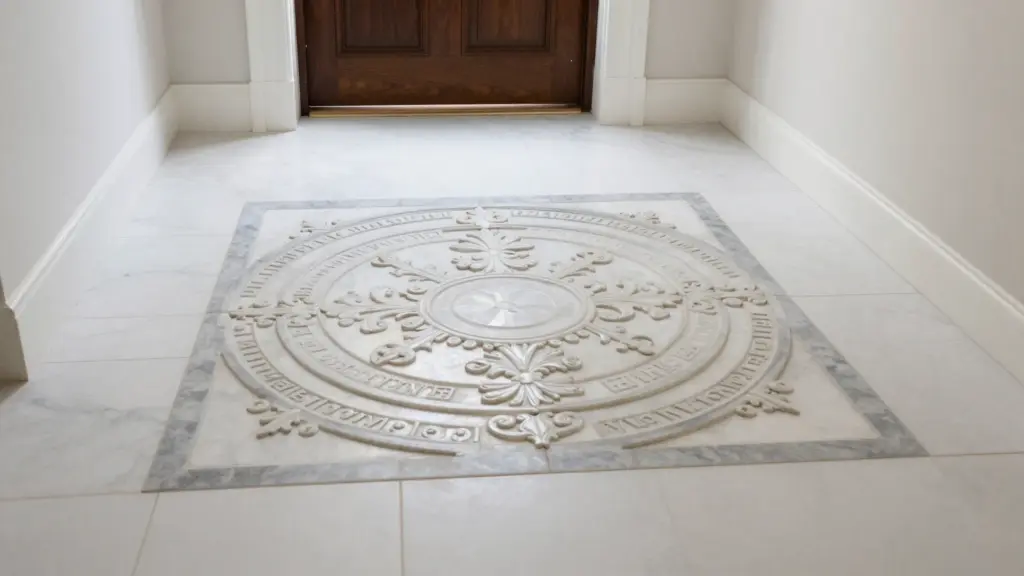
A decorative medallion or inlay at the center of an entry floor makes an immediate visual impact. It does not require a grand foyer. Even a modest entry benefits from having one defined focal point underfoot.
Medallions can be created with porcelain, ceramic, or waterjet-cut marble. They are typically set against a simpler field tile so the detail reads clearly. Custom waterjet designs cost more but allow for unique patterns, monograms, or motifs that match your home’s character.
- Best for: Grand foyers, luxury homes, formal or statement-style entries
- Top material: Waterjet-cut marble, porcelain inlay, or mixed-material mosaic
- Grout tip: Choose grout colors that work with both the medallion and field tile
- Cost range: $20 to $100+ per square foot for waterjet medallion area; varies widely
- Pairs well with: Large-format field tile, formal furniture, statement lighting
What Size Tile Works Best in an Entryway?
Tile size affects how your entry looks and how much the installation costs. Smaller tiles mean more cuts and more grout lines. Larger tiles cover more area but are heavier and require specialized handling. Here is a simple size guide based on entry square footage.
| Entry Size | Recommended Tile Size | Why It Works |
|---|---|---|
| Small (under 40 sq ft) | 12×24 inches | Creates balance; reduces cuts; makes space feel larger |
| Medium (40 to 80 sq ft) | 18×18 or 24×24 inches | Good coverage without overwhelming the space |
| Large / Grand foyer | 24×24 or 32×32 inches | Maximizes the open, spacious feel; fewer grout lines |
| Any size (accent use) | Mosaic or hex tiles | Best used as borders or inlay accents, not full floor coverage |
One practical tip: before finalizing your tile size, divide your entry’s width by the tile’s width. If the remainder is less than one-third of a tile, you will end up with very thin, awkward cut pieces at the wall edges. Choose a format that divides more evenly to avoid that.
Entryway Tile by Home Style
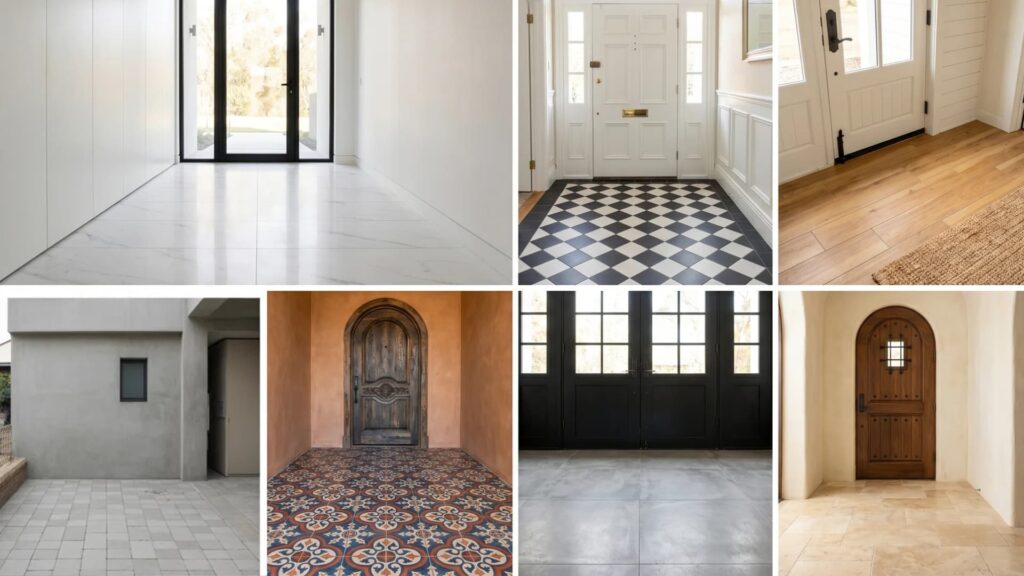
Not every tile idea works in every home. Here is a quick guide to match your home’s style with the right choice from the list above.
Modern / Minimalist: Large-format polished porcelain (Idea 2), concrete-look tile (Idea 11), or white tile with bold grout (Idea 13)
Farmhouse / Rustic / Transitional: Wood-look porcelain (Idea 4), herringbone layout (Idea 12), or stone-look travertine (Idea 14)
Traditional / Victorian / Formal: Black and white checkerboard (Idea 1), natural marble (Idea 5), or tile medallion inlay (Idea 15)
Bohemian / Eclectic / Global: Moroccan patterned tile (Idea 3), terracotta (Idea 7), or hexagon mosaic (Idea 6)
Industrial / Urban / Loft: Concrete-look porcelain (Idea 11), slate (Idea 8), or subway tile with dark grout (Idea 9)
Mediterranean / Warm-Toned: Travertine-look porcelain (Idea 14), terracotta (Idea 7), or stone-look tiles in warm earth tones
How to Clean and Maintain Entryway Tile?
For porcelain and ceramic tile, a mop and warm water with a pH-neutral cleaner handles most daily cleaning. Avoid harsh chemicals or anything acidic, which can break down grout over time.
For natural stone like marble or travertine, skip any acidic cleaners entirely and re-seal the surface every one to two years. Grout needs attention too.
Use a stiff bristle brush to clean grout lines every few months, and re-seal the grout annually in a high-traffic entry.
Placing a mat outside the door and one just inside cuts down on grit, moisture, and debris before they reach the tile.
Closing Remarks
The right entryway tile ideas are the ones that work for your home’s style, your floor’s size, and your daily life. Good-looking tile that can’t handle muddy boots or a wet umbrella will look worn in two years.
Tile that holds up but clashes with your home’s feel will bother you every time you walk in.
Pick based on traffic, slip resistance, grout color, and material, not just the photo on the box. Get the size right for your space. Buy extra.
And if you’re not confident about the install, hire someone who does this full-time. Done well, a tiled entry holds up for decades and sets the right tone from the moment your front door opens.
What idea from this list are you most likely to try? Let us know in the comments.