

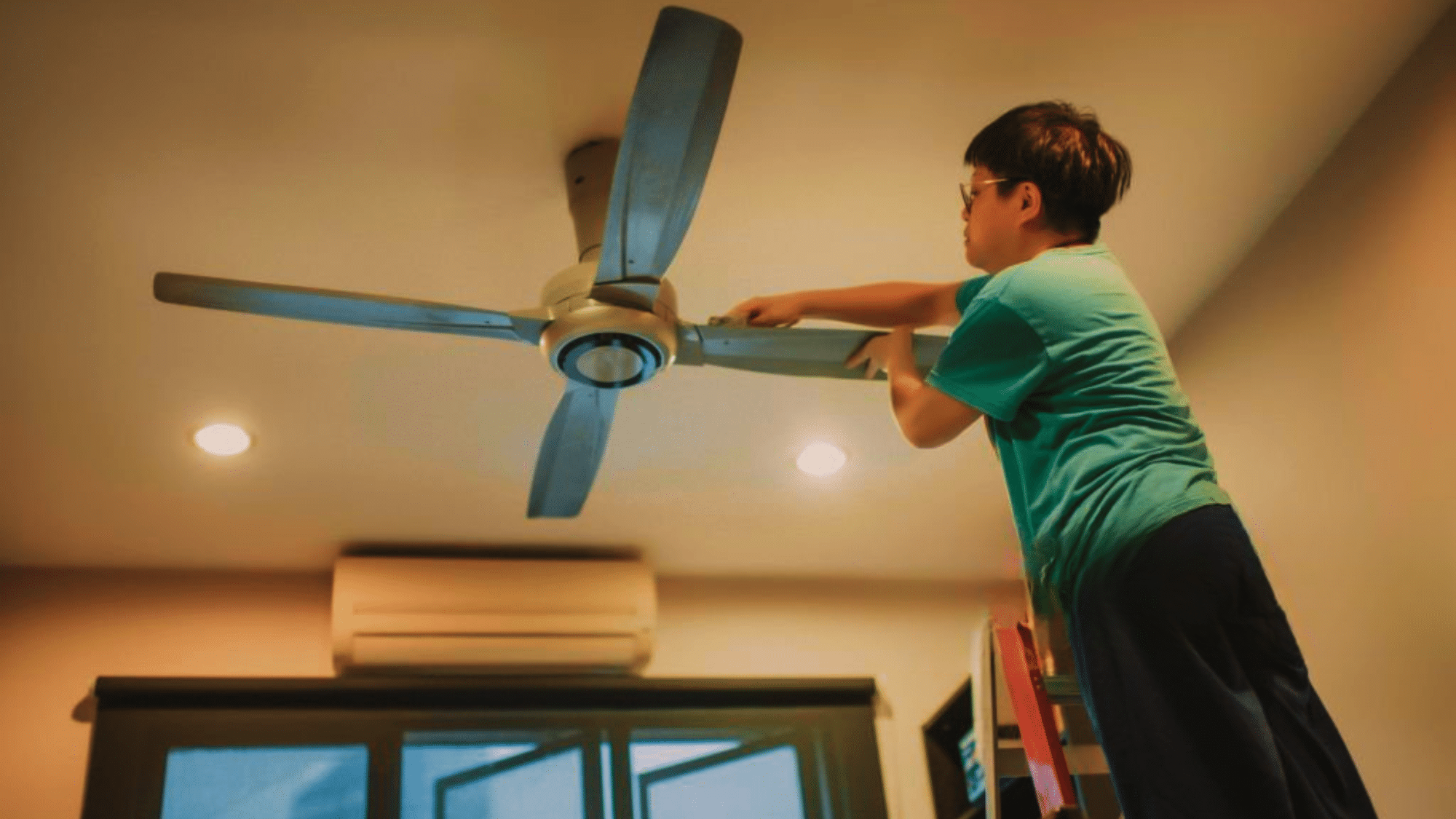
Ceiling fans collect dust quickly because their rotating blades attract airborne particles, including dust, pet hair, and allergens.
Over time, this buildup not only makes the room look dirty but also reduces airflow efficiency and spreads dust throughout the room whenever the fan is switched on.
Learning how to clean ceiling fans properly helps improve indoor air quality, maintain better airflow, and keep your home cleaner.
Regular cleaning also prevents the buildup of thick layers of grime on the blades, making future maintenance much easier.
Why Is Regular Cleaning of Ceiling Fans Important?

Dust buildup on ceiling fan blades reduces airflow efficiency, forcing the fan to work harder to circulate air. This can lead to uneven cooling in the room and increased energy consumption over time.
Dirty blades also degrade indoor air quality by releasing fine dust particles into the air whenever the fan operates.
These particles often contain allergens such as dust mites, pollen, and pet dander, which can cause discomfort for people with allergies or respiratory issues.
Regular cleaning helps maintain healthier indoor air, improves fan performance, and extends the lifespan of the motor by reducing unnecessary strain.
Things to Remember Before Cleaning
Following basic safety steps before cleaning helps prevent accidents and protects your ceiling fan from damage.
- Power Off: Turn off the fan and power supply before cleaning to avoid accidental movement and reduce the risk of electrical hazards.
- Stable Ladder: Use a strong, stable ladder for safe access to the fan. Ensure the ladder is placed on a flat surface before climbing.
- Motor Protection: Avoid spraying liquid directly on the motor, as moisture can damage electrical components and affect fan performance.
- Proper Cloth: Use a dry or lightly damp cloth instead of a wet one to clean blades safely without exposing electrical parts to excess moisture.
- Dry Hands: Keep your hands dry when touching electrical switches to minimize the risk of electric shock and ensure safe operation.
A few simple precautions can also make the cleaning process safer and more effective.
Best Tools for Cleaning Ceiling Fans Easily

Using the right tools makes ceiling fan cleaning faster, safer, and more effective. Each tool helps handle dust in a different way, from light cleaning to deep maintenance.
- Extendable Duster helps reach high ceiling fans without frequently needing a chair or ladder. Makes dust removal quick and reduces effort during regular cleaning.
- Microfiber ClothTraps dust effectively instead of spreading it around the room. Ideal for regular blade cleaning and gives a more polished finish.
- Vacuum CleanerAttachmentremoves hidden dust from motor housing, edges, and tight corners. Useful for deep cleaning and improving overall fan performance.
- Disposable Dusting Wipesprovide a quick and convenient option for light cleaning. Best for regular maintenance when a full cleaning session is not required.
- Stable Ladder/Step Stoolensures safe access to ceiling fans for cleaning. Provides better balance and stability compared to chairs, reducing the risk of accidents.
Using a microfiber cloth instead of a dry rag made a big difference, as it trapped dust more effectively and prevented it from spreading around the room.
How to Clean Ceiling Fans without Spreading Dust?
Keeping dust under control while cleaning ceiling fans makes the job much easier. Using the right method helps catch loose dust before it falls onto furniture, floors, and bedding.
1. Pillowcase Method
The pillowcase method is a practical way to clean ceiling fan blades without spreading dust around the room. Place a clean pillowcase over each blade and slowly pull it back to collect dirt inside the fabric.
This approach helps keep surrounding surfaces cleaner and supports better indoor air quality. Handle the blades carefully to maintain their alignment and condition.
- Purpose: Suitable for routine ceiling fan dust removal
- Process: Slide the pillowcase over each blade and pull back slowly
- Benefit: Captures debris inside the fabric for cleaner results
- Safety: Apply light pressure to protect the blade balance
- Care: Wash the pillowcase after use
2. Microfiber Cloth Method
The microfiber cloth method is ideal for removing light dust from ceiling fan blades. The soft fibers attract and hold particles, making cleaning more efficient while protecting delicate finishes.
Wipe each blade carefully from the base toward the tip to achieve an even finish.
This technique supports regular fan maintenance and helps improve airflow throughout the room.
- Material: Use a soft microfiber cloth for best results
- Cleaning: Wipe blades thoroughly from end to end
- Advantage: Helps protect painted and wooden surfaces
- Maintenance: Effective for frequent ceiling fan upkeep
- Avoid: Do not use abrasive fabrics or rough cloths
3. Vacuum Cleaning Method
The vacuum cleaning method works well for ceiling fans with significant dust accumulation or hard-to-reach installations.
Attach a soft-bristled brush to the vacuum and gently move it across each blade. This process removes particles efficiently while limiting dust circulation indoors.
It is a useful option for maintaining cleaner air and reducing allergens within living spaces.
- Equipment: Use a vacuum with a brush attachment
- Application: Suitable for elevated or heavily coated fan blades
- Benefit: Limits airborne particles during cleaning
- Access: Use a secure ladder when reaching higher fans
- Result: Supports improved indoor cleanliness
4. Soap or Vinegar Cleaning Method
The soap or vinegar cleaning method is effective for ceiling fan blades affected by grease, residue, or stubborn marks.
Dampen a soft cloth with a mild cleaning mixture and wipe each blade carefully.
This technique helps restore the appearance of the fan while removing buildup that dry cleaning methods may miss. Use only a small amount of moisture to protect the blade finish.
- Solution: Mix mild soap or white vinegar with water
- Use: Ideal for greasy or sticky blade surfaces
- Benefit: Helps remove residue and restore appearance
- Protection: Avoid excessive moisture during cleaning
- Warning: Do not use strong chemical cleaners on finishes
Using the right method ensures effective cleaning, keeps your room neat, and reduces the need for extra cleanup.
Tips to Keep Ceiling Fans Dust-Free Longer
Simple preventive habits can help reduce dust buildup on ceiling fans and keep them cleaner for longer.
- Air Purifiers: Use air purifiers to reduce airborne dust and improve overall indoor air quality. Cleaner air means fewer dust particles settle on fan blades over time.
- Regular Dusting: Dust your ceiling fan regularly to prevent heavy buildup. Frequent light cleaning is easier and more effective than removing thick layers of accumulated dust.
- Closed Windows: Keep windows closed during windy days to minimize the amount of dust entering the room. This helps reduce the rate at which dust collects on fan blades.
- Anti-Static Spray: Apply a light anti-static spray to fan blades after cleaning. This creates a surface that attracts less dust, helping the fan stay cleaner for longer periods.
How Often Should You Be Cleaning Ceiling Fans?
Ceiling fans should ideally be cleaned every 3–4 weeks to prevent dust buildup and maintain proper airflow.
However, the exact cleaning frequency depends on the room type, usage level, and the amount of dust, grease, or humidity present in the environment.
Fans installed in bedrooms and living rooms usually collect normal household dust and should be cleaned at least once a month to ensure smooth airflow and a clean indoor atmosphere.
Kitchen ceiling fans need cleaning every 1–2 weeks since grease, smoke, and sticky residue build up quickly on the blades.
Outdoor ceiling fans collect dirt and pollen quickly due to weather exposure and need regular cleaning. Homes in dusty areas may also need more frequent maintenance.
Seasonal deep cleaning, especially before and after summer, helps maintain performance, reduce motor strain, and prevent stubborn grime buildup.
Regular cleaning ensures better air quality, improved cooling efficiency, and longer fan lifespan.
Common Mistakes to avoid when Cleaning CeIling Fans
Avoiding common cleaning mistakes helps protect your ceiling fan from damage and improves cleaning results.
- Water: Using too much water while cleaning the fan
- Running: Cleaning the fan while it is still running
- Motor: Forgetting to clean the motor housing and blade edges
- Chemicals: Using harsh chemicals on wooden or painted blades
- Spray: Applying cleaning spray directly onto the fan motor
- Ladder: Using unstable chairs instead of a proper ladder
- Maintenance: Skipping regular cleaning and allowing heavy dust buildup
Using the right cleaning method also helps maintain fan performance and keeps dust from spreading around the room.
Conclusion
Cleaning ceiling fans using simple methods like a pillowcase, microfiber cloth, or vacuum attachment helps remove dust efficiently without creating a mess.
Regular maintenance improves airflow, supports better indoor air quality, and enhances fan performance.
A clean ceiling fan ensures smoother rotation, reduces motor strain, and helps maintain consistent cooling in every season.
It also reduces long-term cleaning effort by preventing heavy dust buildup that becomes harder to remove over time.
With a consistent cleaning routine, smoother airflow, better comfort, and longer ceiling fan durability can be achieved throughout the year.
Frequently Asked Questions
How to Clean a Ceiling Fan without Making a Mess?
Turn off the fan and use a pillowcase or microfiber cloth to clean each blade. This helps trap dust instead of letting it fall on furniture or the floor, making the process cleaner and easier.
What Direction Warms a Room in Winter?
In winter, ceiling fans should rotate clockwise at a low speed. This pushes warm air near the ceiling down into the room, helping maintain a warmer indoor temperature.
What Is Grandma’s Simple Trick to Eliminate Dust?
A common simple method is using a damp cloth or pillowcase to trap dust while cleaning. Some also use mild natural solutions like vinegar water to wipe surfaces and reduce dust buildup.
How to Efficiently Clean a Fan?
Turn off the fan, clean the blades with a microfiber cloth or pillowcase, and use a vacuum brush for deep cleaning; regular maintenance prevents dust buildup.
Can a Fan Be Submerged in Water for Cleaning?
No, a fan should not be submerged in water, as it can damage electrical components and compromise safe operation.