

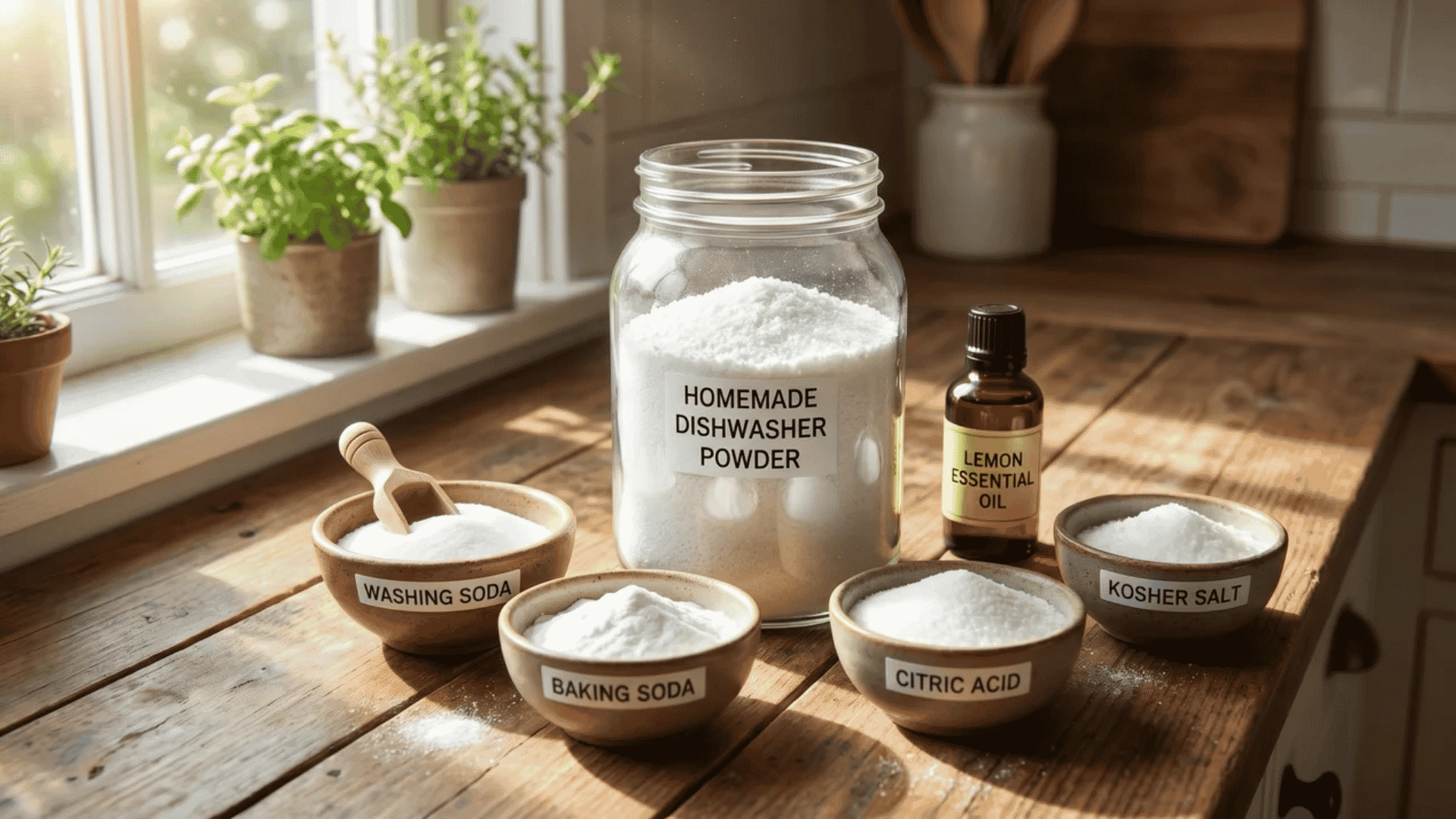
Cloudy glasses, greasy film, and a $20 pod box emptied in three weeks; most dishwasher frustrations trace back to the detergent, not the machine.
DIY dishwasher detergent fixes all three problems using four simple powders that cost a fraction of what pods do per load.
What makes homemade work isn’t just the ingredients;it’s knowing how they interact, how to adjust for your water, and where most recipes quietly go wrong.
Keep reading to find out exactly what goes into a batch that actually cleans, and how to dial it in for your kitchen.
How to Make DIY Dishwasher Detergent at Home?
Five minutes, four ingredients, and you’ll never panic-buy a $20 box of pods again. The beauty of homemade dishwasher detergent is that it’s mostly mixing. No cooking, no chemistry degree.
Let’s get into what goes in the jar.
Supplies You’ll Need
- 1 cup washing soda: Cuts grease and lifts stuck-on food.
- 1 cup baking soda: Scrubs gently and neutralizes dishwasher odors.
- ½ to 1 cup citric acid: Fights hard water spots and chalky white film.
- ½ cup kosher salt: Softens water so the other ingredients can work effectively.
Skipping citric acid removes mineral control from the system; other ingredients lose their effectiveness; hard water leads to residue buildup; and cloudy glasses frequently appear during wash cycles.
One warning that trips up beginners: washing soda is not baking soda. They look like twins but behave nothing alike. For citric acid, check the canning section or order it online. And skip fine table salt, or it may clog your machine. Stick with coarse kosher.
What About Borax? Do You Need it?
If you’ve seen other DIY dishwasher detergent recipes online, many include borax.
Borax (sodium tetraborate) increases the alkalinity of wash water, helping washing soda break down grease more effectively while supporting particle suspension and mild antibacterial activity overall.
The recipe leaves it out because a four-ingredient base works for most households without it, simplifying sourcing and avoiding reliance on harder-to-find grocery store ingredients for overall convenience.
Add borax by replacing half a cup of washing soda, not adding extra. Concerns typically relate to powder-handling safety, not to dishwasher residue levels on dishes themselves.
Step 1: Measure Ingredients
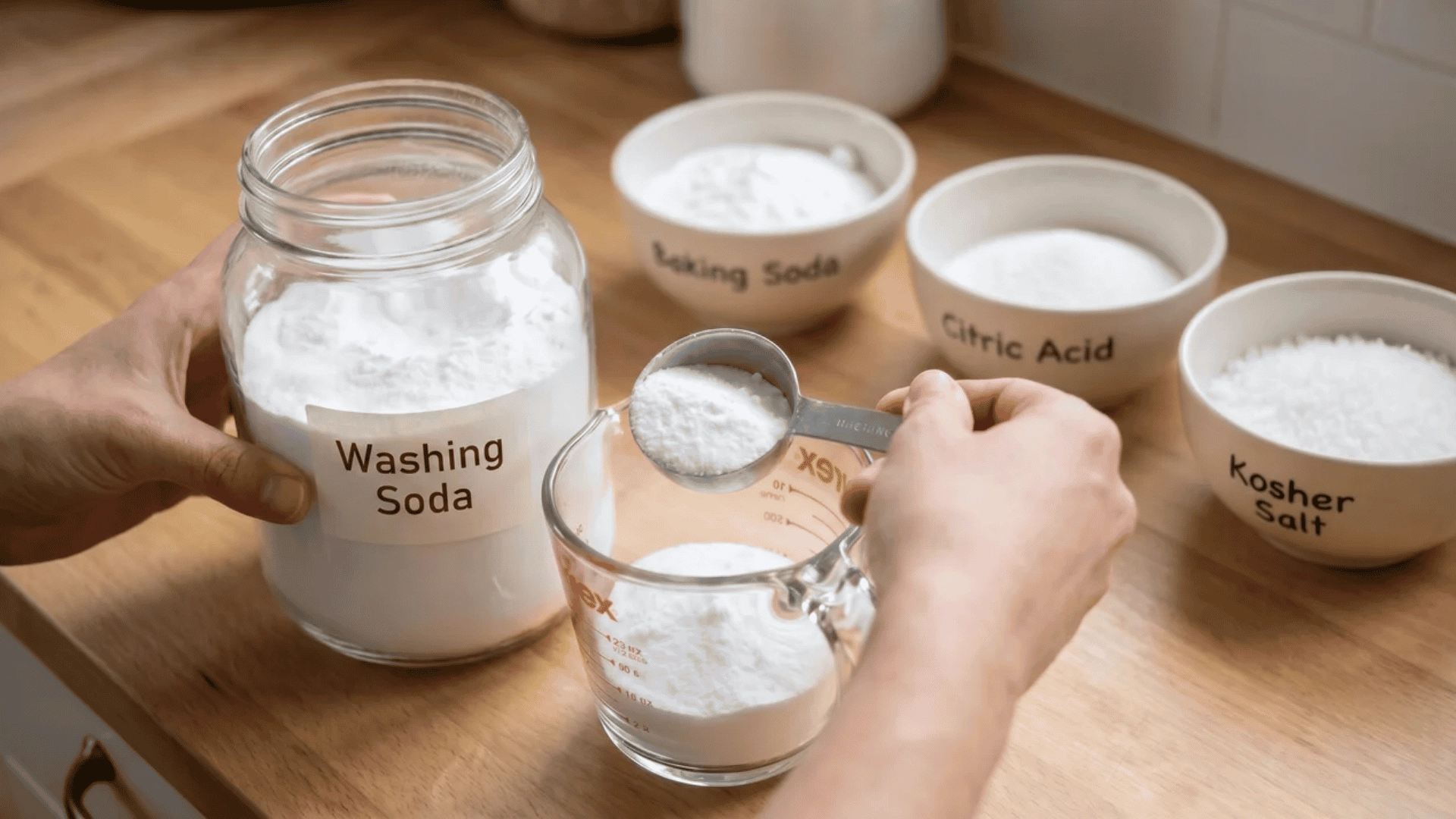
Start by measuring each powder using dry measuring cups. Precision matters here because even small imbalances affect cleaning performance and can leave residue.
Use level measurements, not heaped scoops. Keep each ingredient consistent so every batch delivers the same cleaning strength.
Step 2: Mix Ingredients
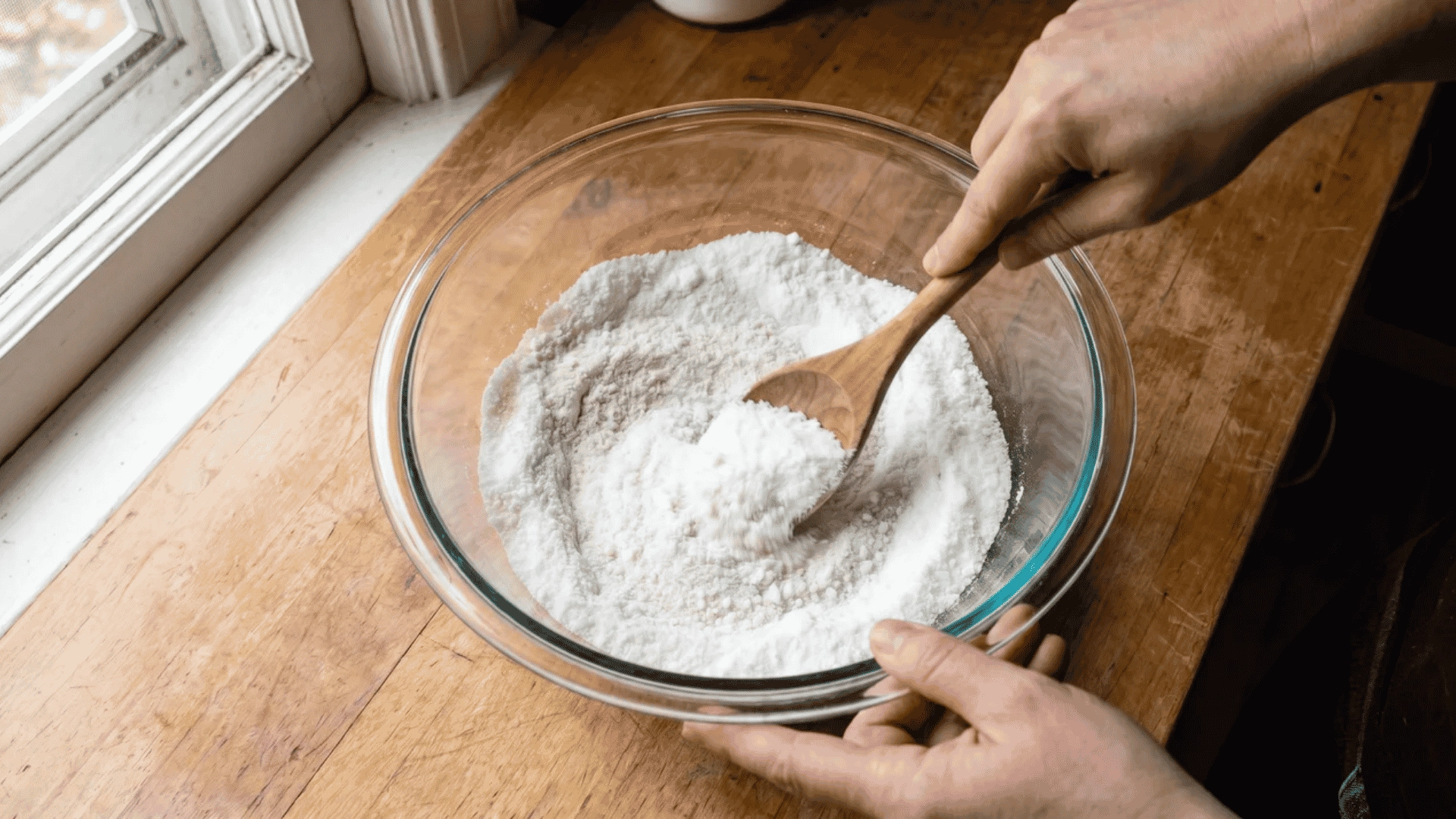
Combine all powders in a large dry mixing bowl. Stir slowly and evenly so everything blends into a uniform mixture.
Break up any clumps while mixing so the texture stays fine and consistent. A smooth blend ensures each scoop contains the same cleaning power.
Step 3: Store the Mixture
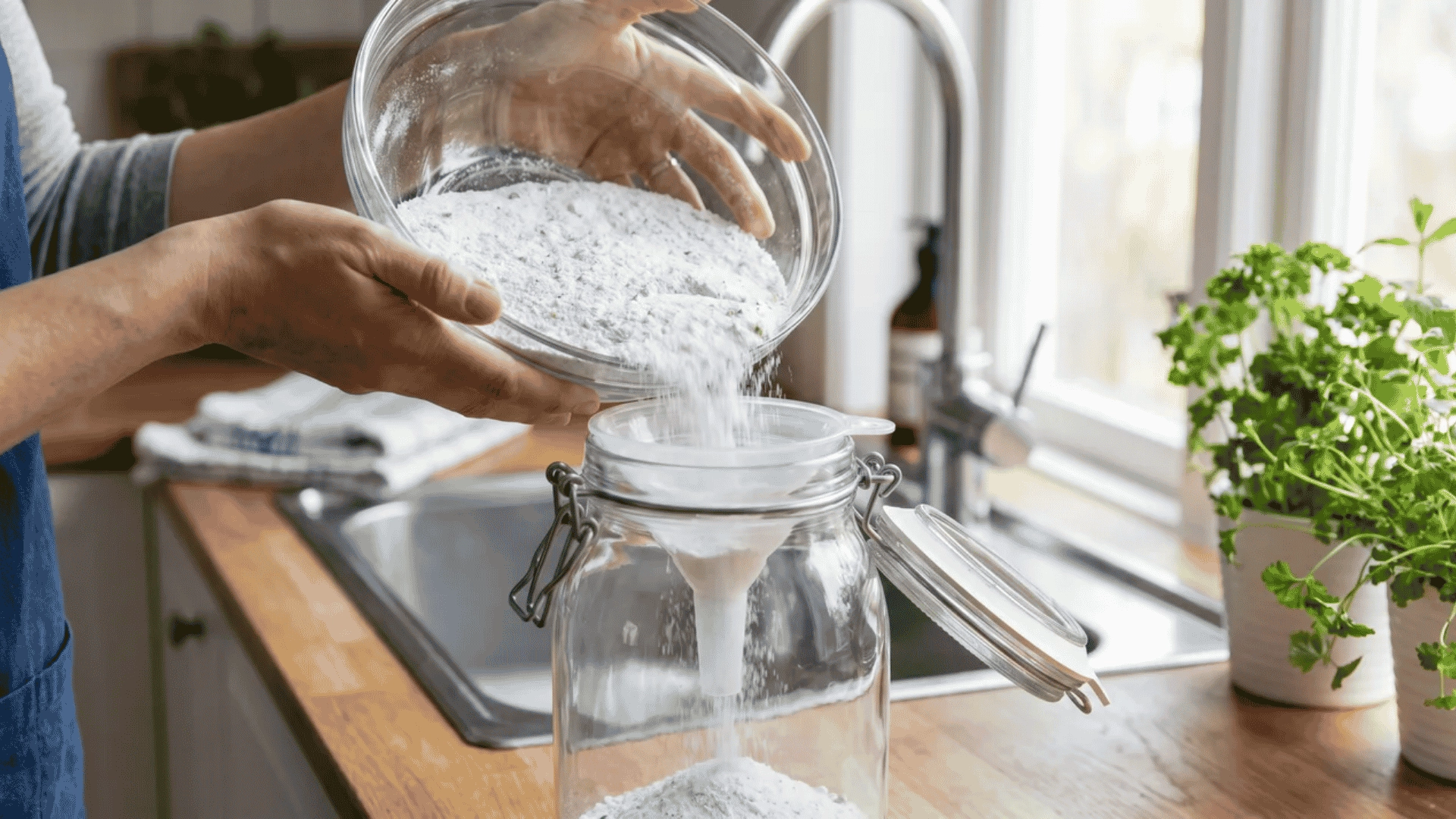
Transfer the finished powder into an airtight container immediately after mixing. Exposure to moisture will cause clumping and reduce effectiveness over time.
Choose a dry storage spot away from heat and humidity. A sealed jar or container keeps the powder free-flowing and ready for daily use.
Step 4: Optional Scent
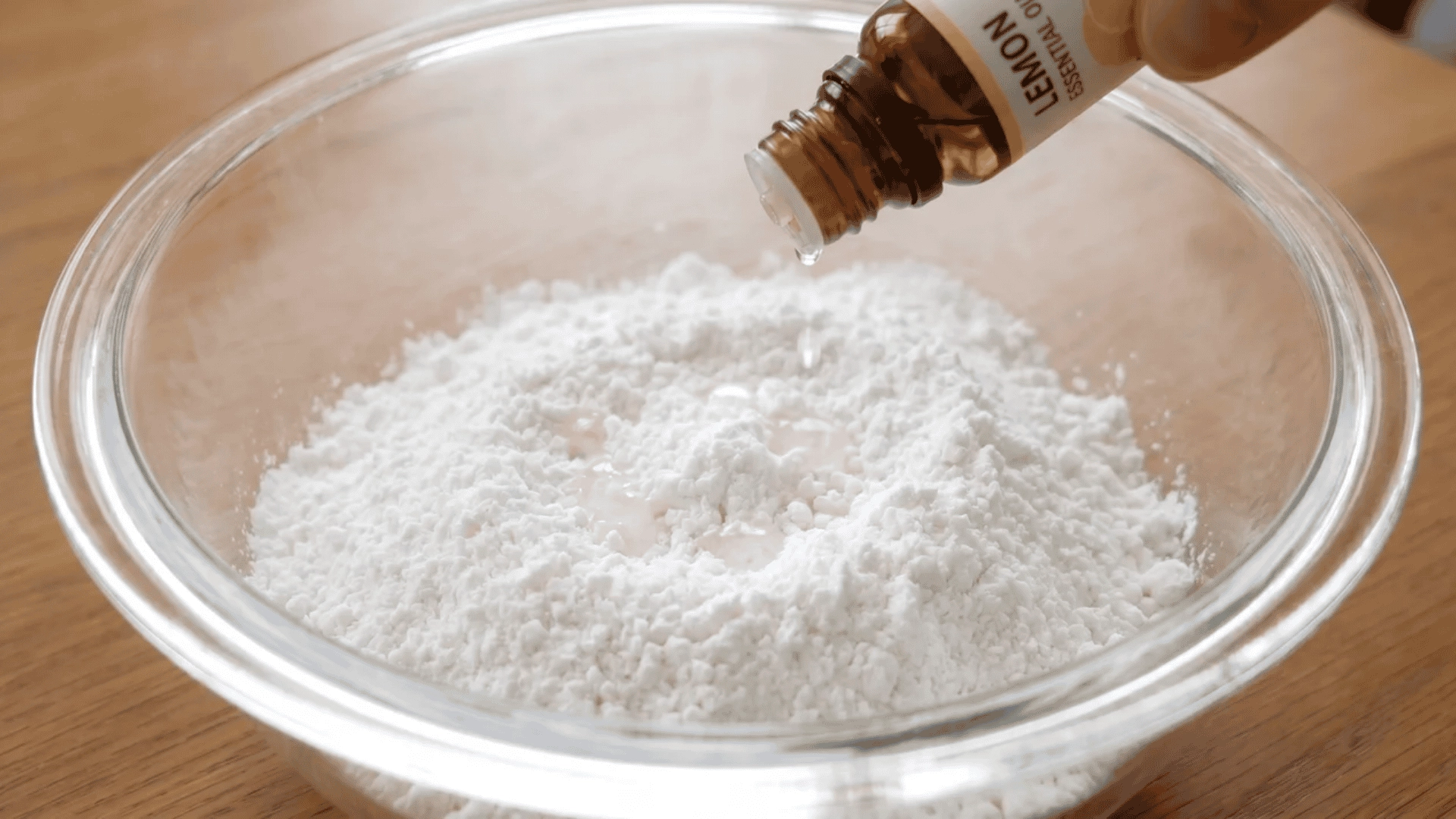
If you prefer a fresh scent, add 10–15 drops of lemon essential oil. Add it slowly so it distributes evenly through the powder.
Stir gently after adding fragrance to avoid clumping. Do not overdo the oil, as excessive moisture can affect the powder’s texture.
Step 5: Determine Amount Per Load
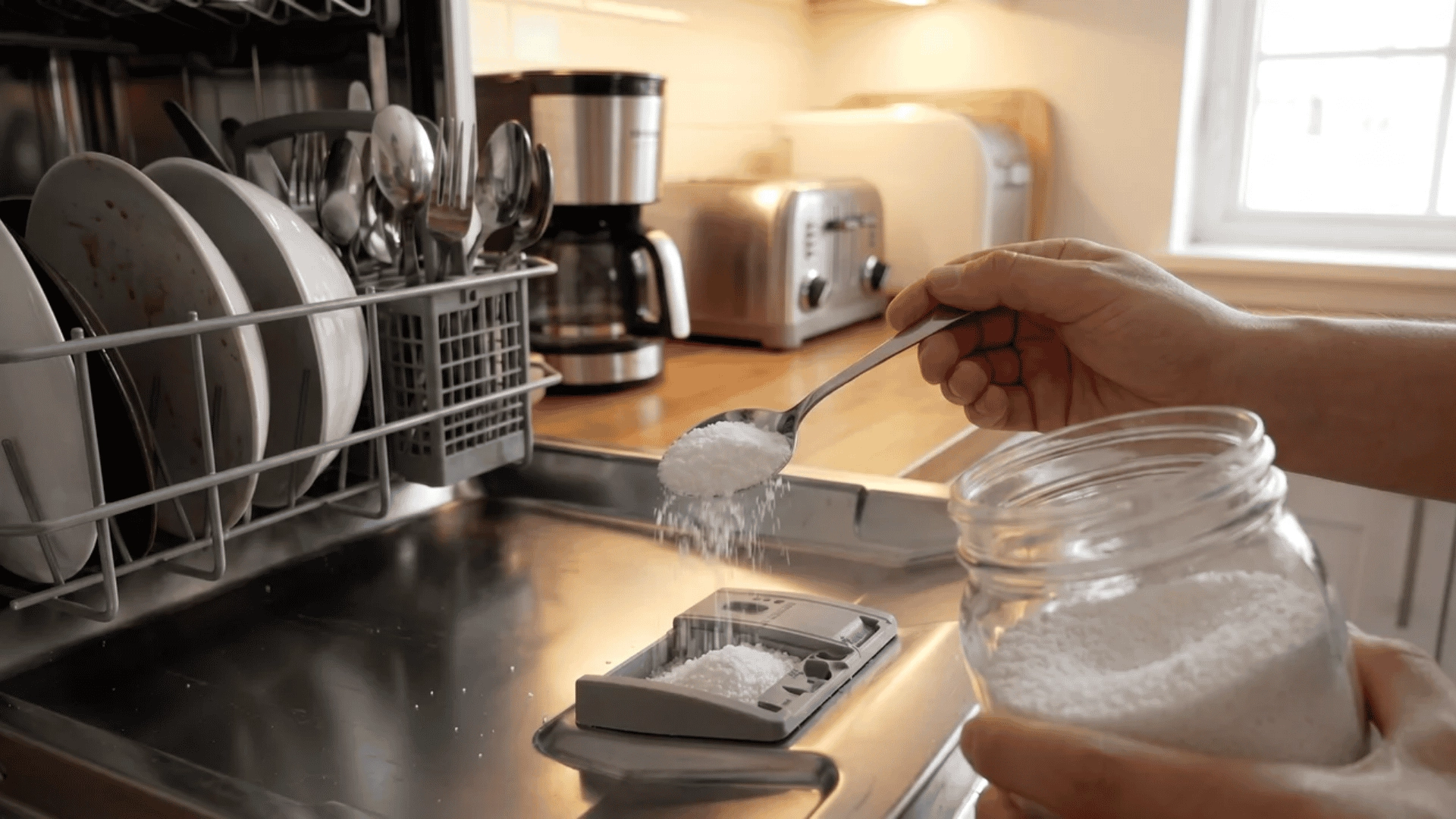
Begin with 1 tablespoon per dishwasher load. This is enough for most standard cycles under normal water conditions.
Adjust by up to 2 tablespoons if the dishes still show spots or if your water is hard. Fine-tune based on real performance, not assumption.
Step 6: Scale Up for Larger Batches
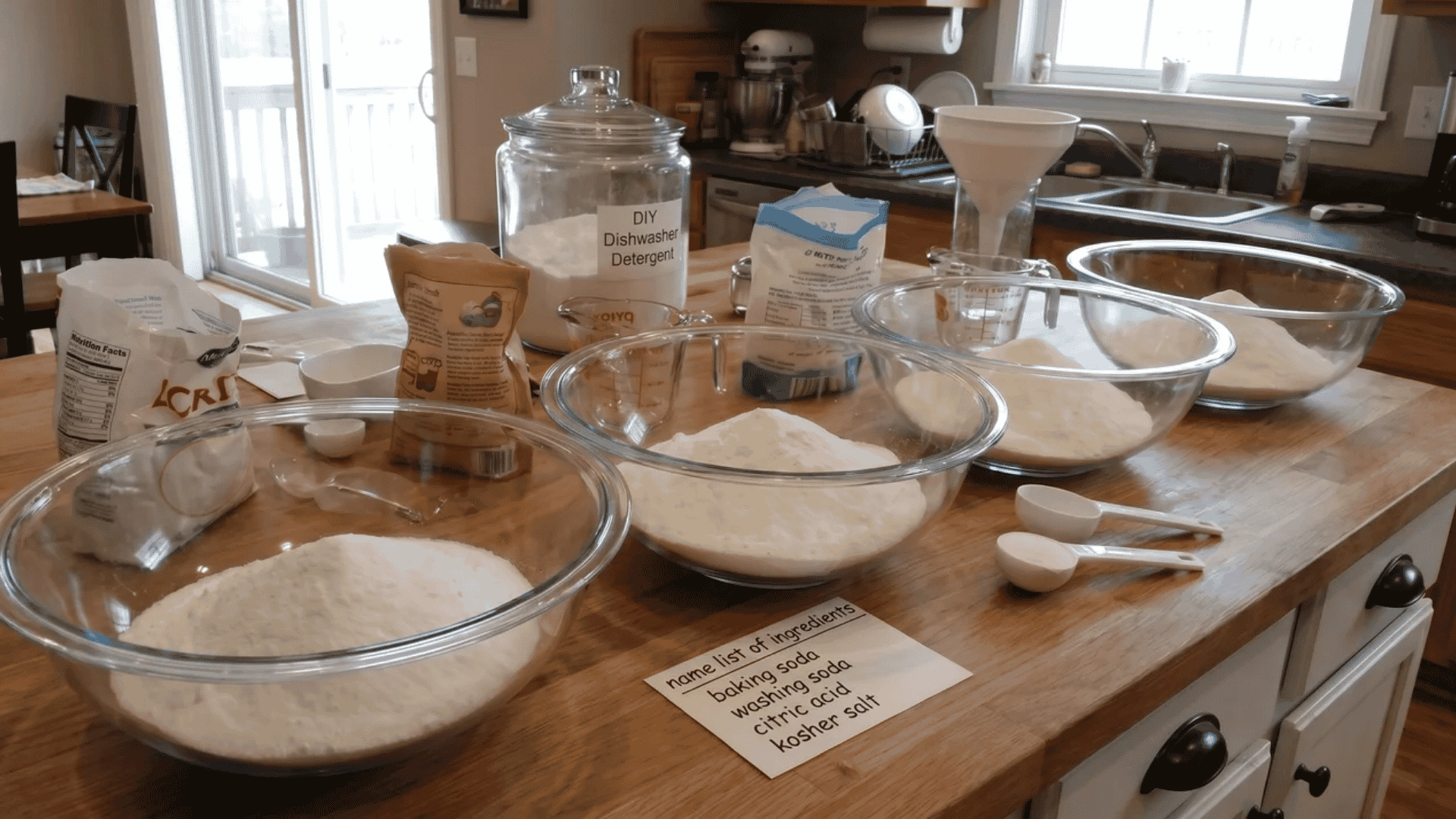
Multiply all ingredients evenly if you want to prepare a larger supply. A four-times batch is common for long-term use.
Mix thoroughly after scaling so ratios stay balanced. This keeps performance consistent even when producing in bulk.
Once your powder is ready, you’re just one step away from making your own DIY dishwasher pods.
Turn Your Homemade Dishwasher Detergent into Pods
Same recipe, slightly fancier delivery. If you love the grab-and-go ease of store pods, this trick is for you.
- The only real change is your salt. Swap the dry kosher salt for a wet kosher sea salt, like Celtic, which acts as the glue that holds each pod together.
- Mix your batch as usual, then press it firmly into ice cube trays or silicone candy molds. Pack it down tight, the way you’d pack a sandcastle, so the pods hold their shape.
- Then comes the hard part: waiting. Let them sit out for 24 hours to harden fully. No freezing needed, just patience.
- If the pods are still crumbly the next day, add a drop or two of water, re-press, and give them another night. Once they pop out clean, store them in an airtight jar and use one per load.
With these pods ready, you get the convenience of store-bought detergent while keeping it homemade, natural, and budget-friendly.
The Secret to Truly Spotless Dishes
Most recipes stop at the powder. But a couple of small habits are what actually get your glasses clear instead of cloudy.
Your homemade detergent cleans well on its own. These extra steps just handle the spots and film that powder alone tends to leave behind.
Don’t Skip the Rinse Aid
A rinse aid is what keeps water from drying into spots on your glassware. Without one, even clean dishes can look streaky.
White vinegar is the cheap option. Pour it into the rinse aid compartment, or set a small bowl of it on the top rack before the load runs.
There’s one catch. Dishwasher rubber gaskets and hoses use EPDM, which handles normal cycles well but slowly degrades with repeated acid exposure.
Note: White vinegar is around pH 2.5. Using it daily in rinse aid adds up over months. Damage is gradual, not immediate, but manufacturers still warn.
Use food-grade citric acid instead, about one tablespoon per cup of water in rinse aid. It chelates minerals directly, reducing acid contact while preventing spots.
Hard Water vs. Soft Water
Water type quietly decides how clean your dishes actually look. Even a strong DIY detergent can underperform if the water conditions are ignored.
| Factor | Hard Water | Soft Water |
|---|---|---|
| Mineral Content | High calcium and magnesium | Very low mineral content |
| Effect on Dishes | Spots, haze, white film | Clean finish, minimal residue |
| Detergent Needs | Stronger mix with citric acid | Reduced detergent amount |
| Common Issue | Chalky buildup on glassware | Light film from overuse of detergent |
| Best Fix | Add citric acid or vinegar rinse | Reduce salt and detergent slightly |
| Dishwasher Impact | Faster scale buildup inside the machine | Gentler on internal parts |
| Visual Result | Dull, spotted glass | Clear, shiny finish when balanced |
Hard water usually needs more mineral control, while soft water needs restraint in dosing. One adjustment difference is often enough to fix most cleaning issues.
Once water balance is handled correctly, the rest of your dishwasher routine starts performing consistently without guesswork.
Why Your Homemade Detergent isn’t Cleaning and How to Fix it
Even a solid recipe can act up sometimes. Most issues come down to a few simple things, and they’re easy to fix.
Powdery Dust on Everything
Gritty white film on dishes usually means the water isn’t hot enough to dissolve the washing soda properly.
The fix is simple. Run the kitchen tap until it’s hot before starting the cycle so the dishwasher fills with hot water from the beginning.
A Greasy Film that Won’t Go Away
A slick or oily layer usually means the wrong soap got in. Castile soap or hand dish soap is a common mistake.
They foam too much and don’t rinse clean, sometimes even causing leaks. Stick to the basic four-ingredient mix and keep other soaps out.
Your Mix Turned into a Brick
A hard lump in the container means the citric acid pulled in moisture and set the mix solid.
Store it in an airtight jar and add a silica packet if needed. If it keeps happening, keep citric acid separate until ready to use.
Why Make Your Own Dishwasher Detergent?
Cost is the biggest reason people switch.
Homemade detergent runs 3–10 cents per load versus 25–40 cents for store-bought pods. At daily use, pods cost $90–$145 yearly. Homemade cuts range from $10–$35, with bulk purchasing pushing costs even lower.
Ingredient control is the second advantage.
Pods contain fragrances, dyes, and bleaching agents, some of which linger on the dishes your food sits on. Most pods are also phosphate-free. That’s better for waterways, but it does less to fight the chalky film hard water leaves on glassware.
Homemade lets you adjust. More citric acid for hard water, less salt for soft, no separate booster product needed, no guessing.
The one thing pods do better is consistency. You never measure, never adjust. For some households, that convenience is worth the premium.
Will DIY Dishwasher Detergent Hurt Your Dishwasher?
It’s a fair thing to wonder before you put a homemade mix into a machine that cost you a few hundred dollars. The short answer is that for most dishwashers, it’s just fine.
Washing soda and baking soda are already in many store-bought powders, so your machine isn’t getting anything strange or new.
Still, there are two things worth knowing first:
- Your warranty: Some brands say you should only use approved detergents, so check your manual before you make the switch.
- The daily vinegar rinse: Used every load for months, vinegar is acidic enough to wear down the rubber seals and hoses over time. Use citric acid instead if you want to be safe.
For everyday use in a machine that works well, neither one is a dealbreaker. A little care is all it takes to keep things running smoothly.
Wrapping Up
DIY dishwasher detergent cuts costs to a fraction of pods, works with both hard and soft water, and takes five minutes to mix from ingredients most households already have on hand.
Four powders, the right ratios, and one small rinse-aid step are the difference between cloudy glasses and a clean that actually holds up, load after load.
Water hardness is the one variable worth paying attention to: more citric acid for hard water, less salt for soft, and the results stay consistent without guesswork.
Mix a batch this week, run a few loads, and adjust from there.
Frequently Asked Questions
Does homemade dishwasher detergent actually work?
Yes. A correctly formulated DIY dishwasher detergent cleans as effectively as store-bought powder for everyday loads. Performance depends on using all four ingredients in the right ratios and adjusting citric acid for your water hardness. Stripped-down recipes with only one or two ingredients tend to disappoint.
How much does DIY dishwasher detergent cost per load?
Homemade dishwasher detergent typically costs between 3 and 10 cents per load, depending on ingredient sourcing and how much you use per cycle. Buying washing soda and citric acid in bulk brings costs toward the lower end. Store-bought pods generally run 25 to 40 cents per load by comparison.
Can DIY dishwasher detergent damage my dishwasher?
No, for most machines, a homemade powder made from washing soda, baking soda, citric acid, and salt is safe. These ingredients already appear in many commercial powders. The one precaution worth taking is to check your warranty, as some manufacturers specify only approved detergents.
Why does my DIY dishwasher detergent leave residue?
Residue after using DIY dishwasher detergent usually points to one of three causes: insufficient citric acid for your water hardness, water temperature too low to dissolve washing soda, or moisture that has partially set the powder before use. Increasing citric acid and ensuring the machine fills with hot water resolves