

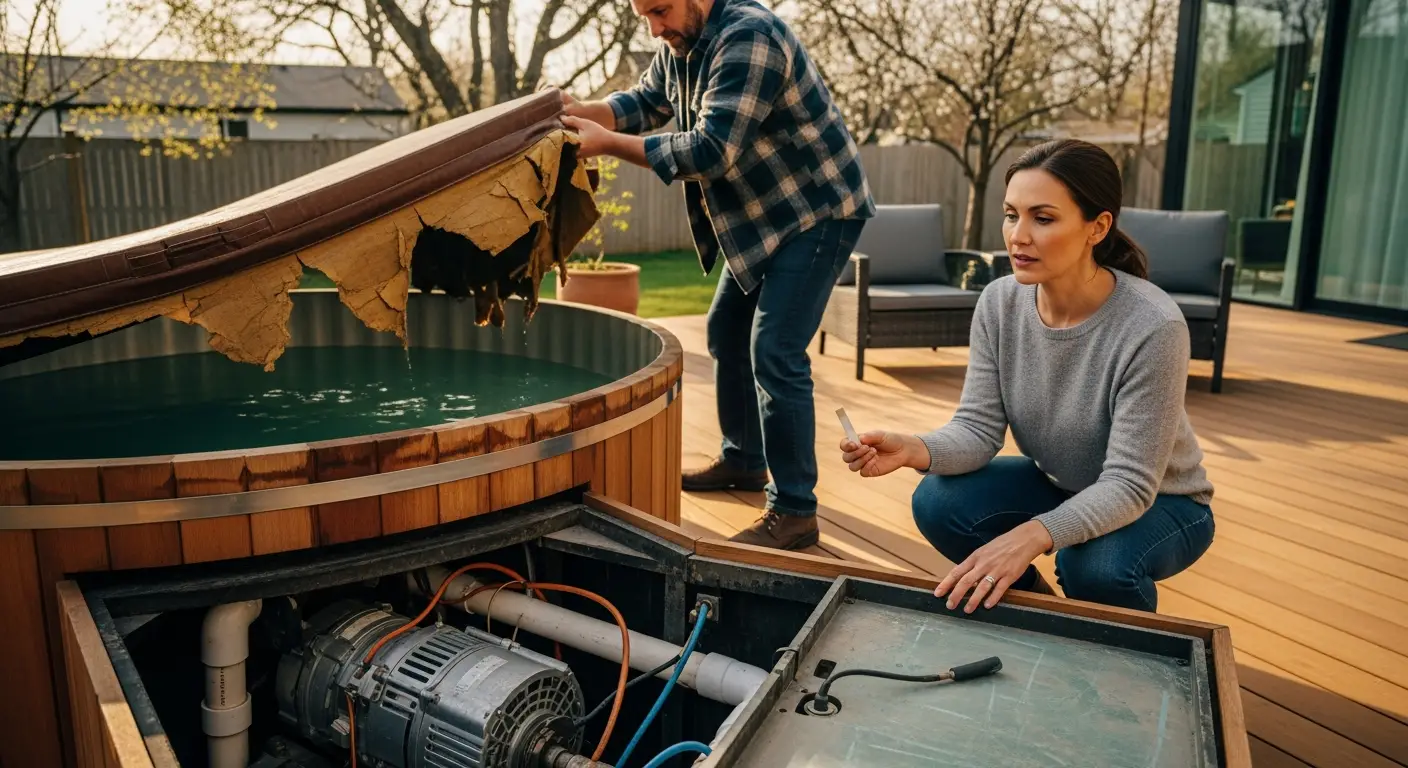
Spring’s finally here, and after months of cold weather, firing up the backyard hot tub sounds like a dream. But skipping essential startup steps can lead to thousands of dollars in ruined equipment, or worse, a genuine safety hazard.
When water and electricity share a large vessel, there’s zero room for shortcuts. Emergency rooms see roughly 140 million visits annually, and 25% of those happen during summer months. Hot tubs contribute to that number more than most people realize, especially when owners skip maintenance or neglect proper covers and fencing.
This guide covers the mechanical, chemical, and structural red flags worth watching for this season. Spot them early and you’ll protect both your investment and your family’s safety.
What Happens When You Ignore Water Chemistry
Leaving stagnant winter water sitting in your tub is asking for trouble. Unbalanced pH and alkalinity levels don’t just irritate skin; they actively corrode heater elements and pump seals. That old water? It’s a ticking clock for mechanical failure.
Specialty installers emphasize a strict spring startup protocol that involves replacing winter water and inspecting the shell surface before bringing the unit back online. Draining the entire system flushes dissolved solids and gives you a genuinely clean slate for fresh-water chemistry.
Shocking the tub is another critical step in the spring, but there’s a major caveat. Every time you shock the water, leave the cover open for 15 to 30 minutes. Skip this, and the buildup of chemical gases will eat away at the underside of your lid. It’s one of the most common mistakes people make.
Mechanical Red Flags to Listen For
Just as HVAC systems experience a 40% spike in failures during seasonal transitions, hot tubs face similar strain when they wake from winter dormancy. Motors that have been sitting idle for months don’t always respond kindly to sudden demand.
So when you prime your pumps, listen closely. Normal sounds mean healthy flow. But unusual noises? That’s your first warning. Use the table below to figure out whether you’re looking at a quick fix or a bigger problem:
| Component | Normal Operation | Warning Sign | Potential Issue |
|---|---|---|---|
| Component | Normal Operation | Warning Sign | Potential Issue |
| Circulation pump | Low, steady humming | Grinding or screeching | Worn bearings or trapped debris |
| Heater | Silent or faint clicking | Tripping breakers repeatedly | Corroded or shorted element |
| Air blower | Smooth rushing air | Loud rattling | Broken fan blades or loose housing |
Don’t ignore a subtle change in how your system sounds. What starts as a slight performance dip can turn into a total shutdown surprisingly fast. Catching that odd hum today could save you from having to replace an entire pump next month.
Your Hot Tub Cover Costs You More Than You Think
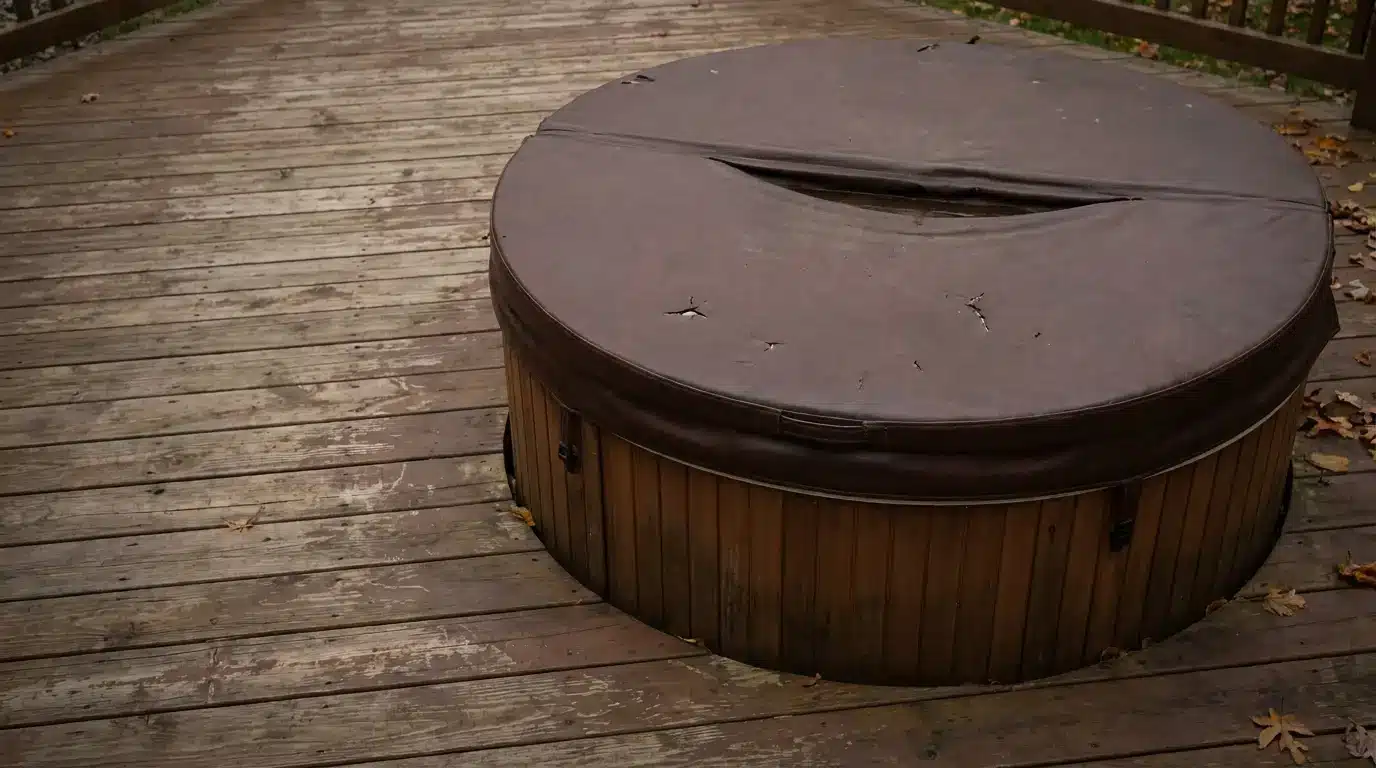
The most neglected piece of hot tub equipment? The cover. A waterlogged cover loses virtually all of its insulating value, and your energy bills will reflect that immediately. Micro-tears in the vinyl let moisture seep into the foam core, turning a lightweight lid into a back-breaking slab.
Replacing a standard cover runs roughly $300 to $400, while a deluxe model for harsh climates costs $350 to $450. But here’s the thing: with regular care, a quality cover lasts 5 to 7 years. Neglect it, and you’re looking at replacement every 2 to 3 years. The math speaks for itself.
Preventing mold, mildew, and UV cracking comes down to a consistent cleaning routine. Spending $30 to $50 a year on proper protectants can save hundreds over your cover’s lifespan. And whatever you do, skip the household bleach; it strips away UV protection and can void most warranties.
Not sure where to start? A solid five-step process to clean your hot tub cover safely makes a real difference in how long it lasts. Here’s what that routine generally looks like:
- Remove and lay flat: Take the cover off and place it on a smooth, flat surface to avoid stressing the center hinge.
- Rinse away chemicals: Spray the underside to remove chemical splashes, then flip and rinse debris off the top.
- Apply a vinyl-specific cleaner: Use a soft cloth in circular motions. Avoid harsh household detergents completely.
- Final rinse and air dry: Wash away all remaining residue and let the cover dry fully in open air.
- Apply UV protectant: Coat the top with a quality UV spray to prevent sun cracking. Do this every 1 to 3 months, and handle basic cleaning at least once a month.
Keep Your Hot Tub Running All Summer
Thirty minutes. That’s all it takes to check your water chemistry, listen to your motors, and inspect your cover. Skipping these basic spring steps is the fastest way to ruin a spa.
A hot tub is a luxury investment, so treat it like one. Staying ahead of small problems keeps your backyard a place for relaxation instead of a source of constant stress. And when in doubt? Don’t ignore that weird grinding noise or that abnormally heavy cover. Address it today so you can relax tomorrow.
Frequently Asked Questions
How Do I Know if My Hot Tub Cover Is Waterlogged?
If it’s unusually heavy to lift, sags in the middle, or puddles water on top, the internal vapor barrier has likely failed. That means the foam core is absorbing water and you’ll need a replacement.
Can I Use Regular Household Bleach to Clean Hot Tub Mold?
Highly diluted bleach can kill mold, but it’s incredibly harsh on vinyl and can permanently strip UV protectants. You’re better off using a dedicated spa cover cleaner formulated for hot tub materials.
How Often Should I Drain My Hot Tub Entirely?
For typical use, plan on draining, cleaning, and refilling every 3 to 4 months. This keeps total dissolved solids (TDS) from overwhelming your sanitizers and helps maintain crystal-clear water.