

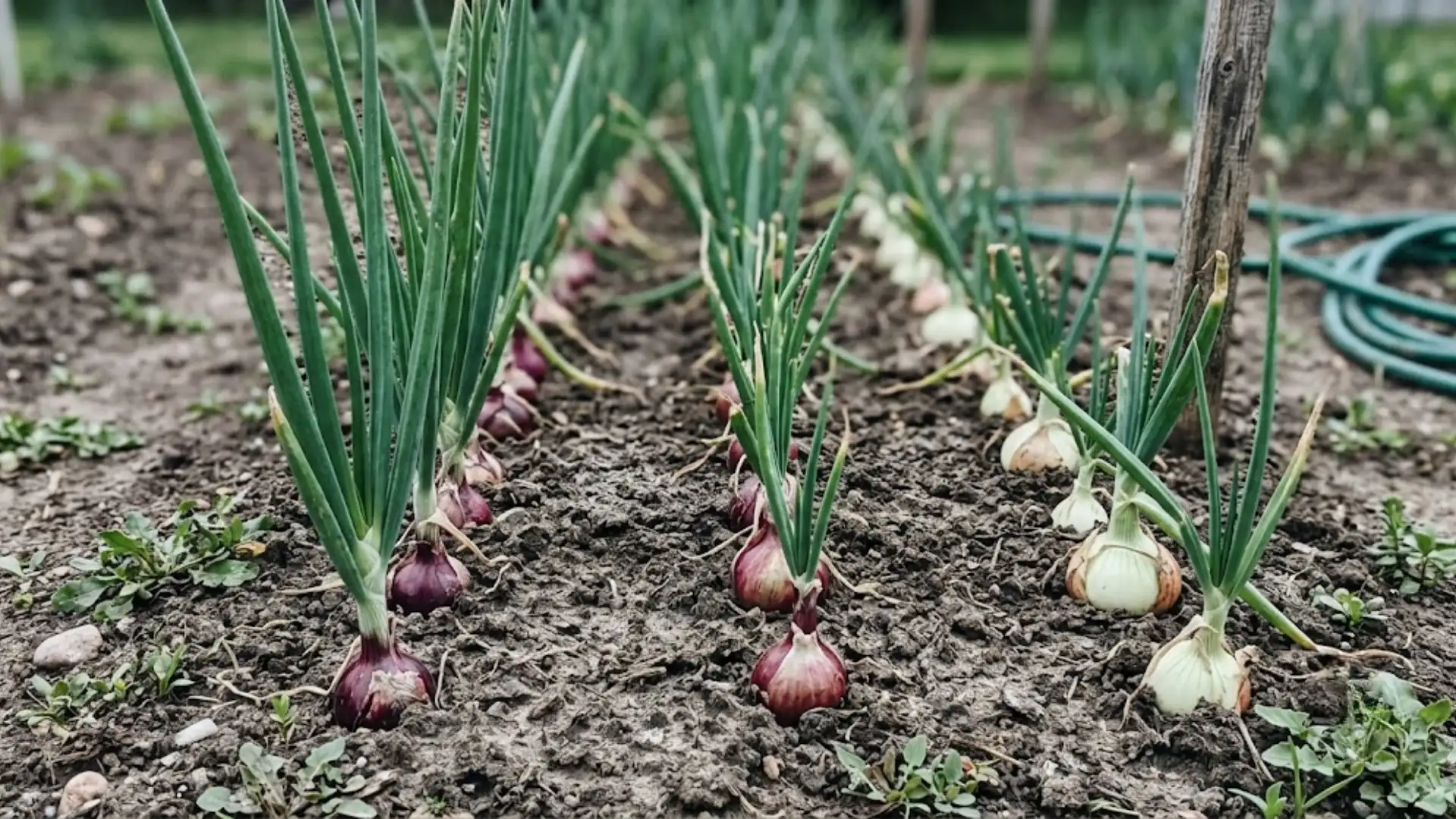
| Botanical Name | Allium cepa |
| USDA Zone | Grown as an annual in Zones 3-10 |
| Sunlight | Full sun, 6+ hours daily |
| Water Needs | About 1 inch per week, evenly moist |
| Bloom/Harvest Season | Bulbs mature in 90-120 days; harvest when tops fall |
| Maintenance | Low to moderate once established |
Growing onions looks easy until the plants produce plenty of green tops but very little underground. The problem often starts with the wrong variety, poor timing, or crowded spacing.
I know how disappointing that can feel after weeks of watering and care. Learning how to grow onions properly begins with matching the variety to your region’s daylight hours. You also need loose soil, steady moisture, correct planting depth, and enough room for each bulb to expand.
This guide explains planting methods, care, growth stages, pests, harvesting, curing, and storage so you can raise firm, healthy onions and avoid the mistakes that commonly lead to small or rotting bulbs.
How Do You Choose the Right Onion Variety for Your Region?
Bulb size depends on day length more than any other single factor, because onions use the number of daylight hours as the trigger to stop growing leaves and start swelling a bulb. Get the variety wrong, and you’ll harvest a bed of skinny green tops with almost nothing underground.
- Short-day onions need roughly 10 to 12 hours of daylight before bulbing starts. They suit southern states with mild winters and shorter summer days.
- Intermediate-day onions begin bulbing around 12 to 14 hours of daylight and perform well across most of the central US.
- Long-day onions require about 14 to 16 hours of daylight and are the right call for northern gardens where summer days stretch long.
Plant a short-day variety in the north, and it bulbs too early, before the plant has built enough leaves to feed a large bulb. Plant a long-day variety in the south, and it may never see enough daylight hours to bulb at all. Check the seed packet or nursery tag for the day-length category before you compare anything else, including color or flavor.
What Soil Do Onions Need?
Onions want loose, fertile, well-draining soil that lets their shallow roots and developing bulbs expand without resistance. Work finished compost into the bed before planting, since that’s what raises your garden soil’s humus levels and keeps the shallow root zone fed through the whole season.
Remove stones and compacted clumps that can trap moisture around a forming bulb, and aim for a soil pH between 6.0 and 7.0. Skip fresh manure right before planting; it pushes excess leaf growth at the expense of the bulb and can burn young roots.
Raised beds help in areas with heavy clay, and they’re worth the extra setup if your yard holds water after rain. Never plant onions where puddles linger, since waterlogged soil is the fastest route to bulb rot.
How to Grow Onions Step by Step
Your planting method affects when you begin, but seeds, sets, and transplants all need full sun, loose soil, and enough space to form healthy bulbs.
Step 1: Choose Your Planting Method
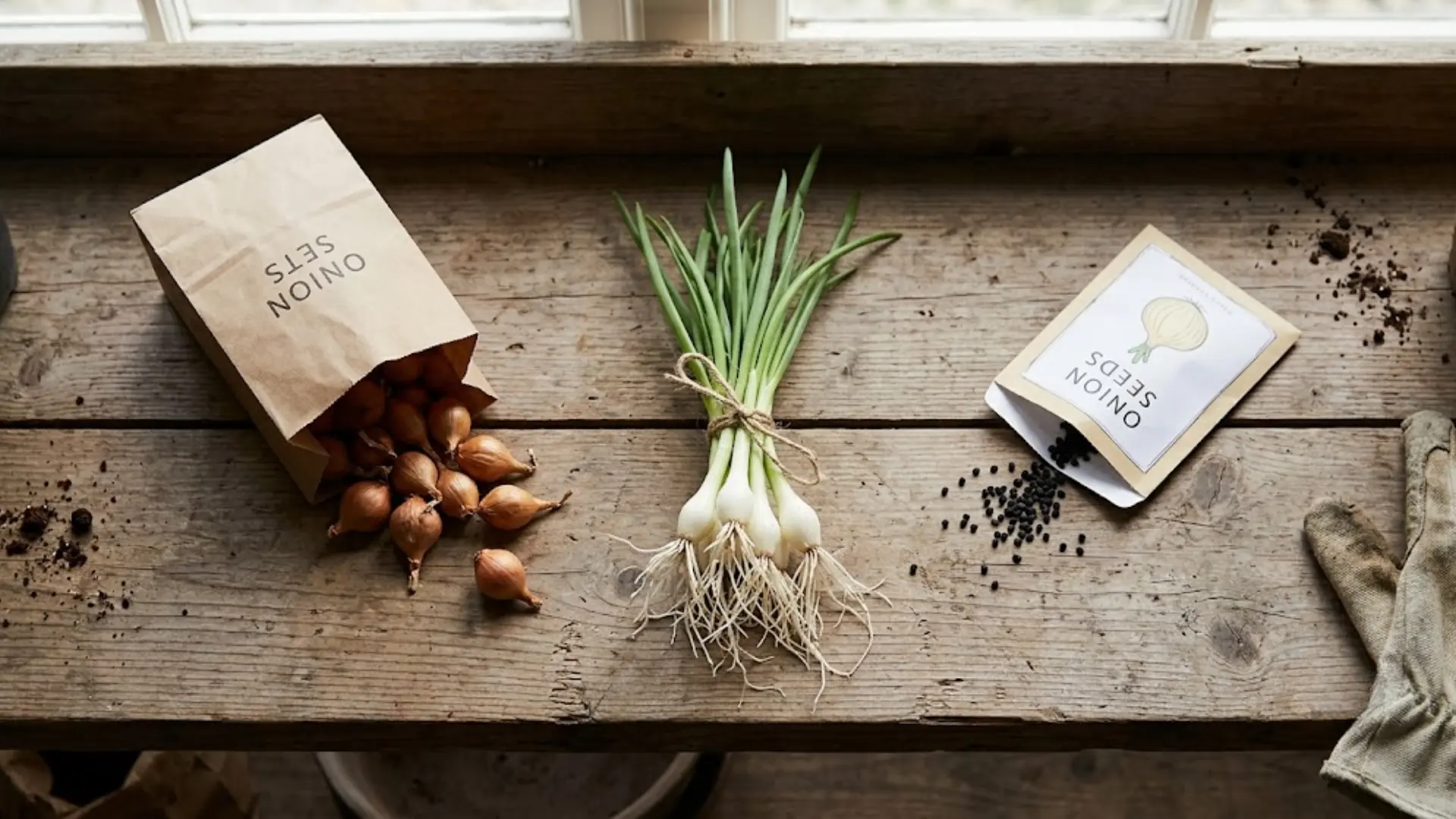
Choose between sets, transplants, and seeds based on your experience, growing season, and desired varieties. Sets are small dormant bulbs that grow quickly and suit beginners.
Transplants establish faster than seeds and reduce early preparation. Seeds offer the widest choice of colors, flavors, and storage types, but success depends on starting vegetable seeds early enough indoors before outdoor planting begins.
Step 2: Plant at the Right Time
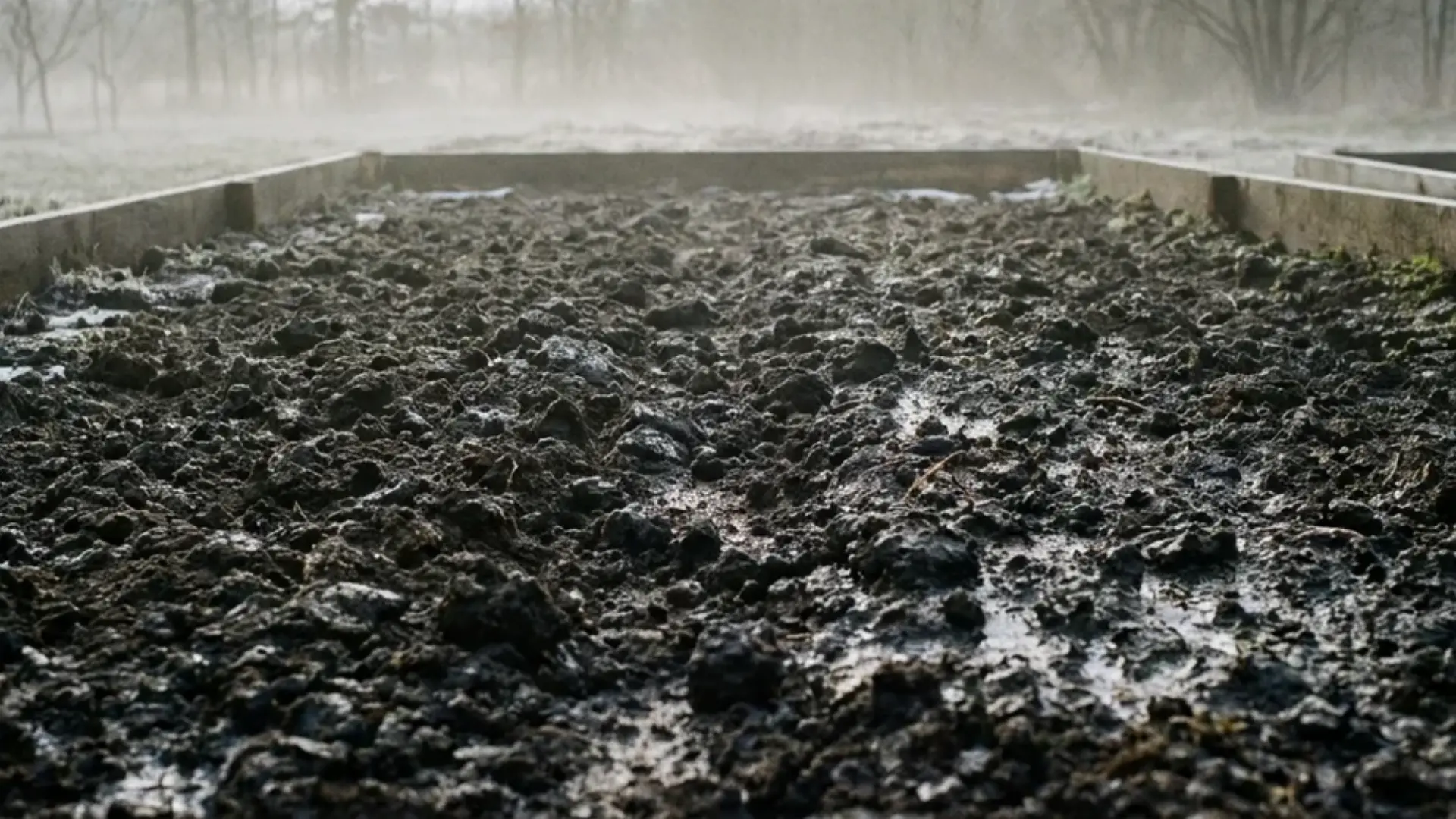
Plant onions early enough to develop several healthy leaves before longer days trigger bulb formation. Start seeds indoors 8 to 10 weeks before the last expected frost.
Move sets and transplants outside 2 to 4 weeks before that date. Wait until frozen soil thaws, drains well, and can be loosened without becoming wet, sticky, or heavily clumped during preparation.
Step 3: Prepare the Planting Area
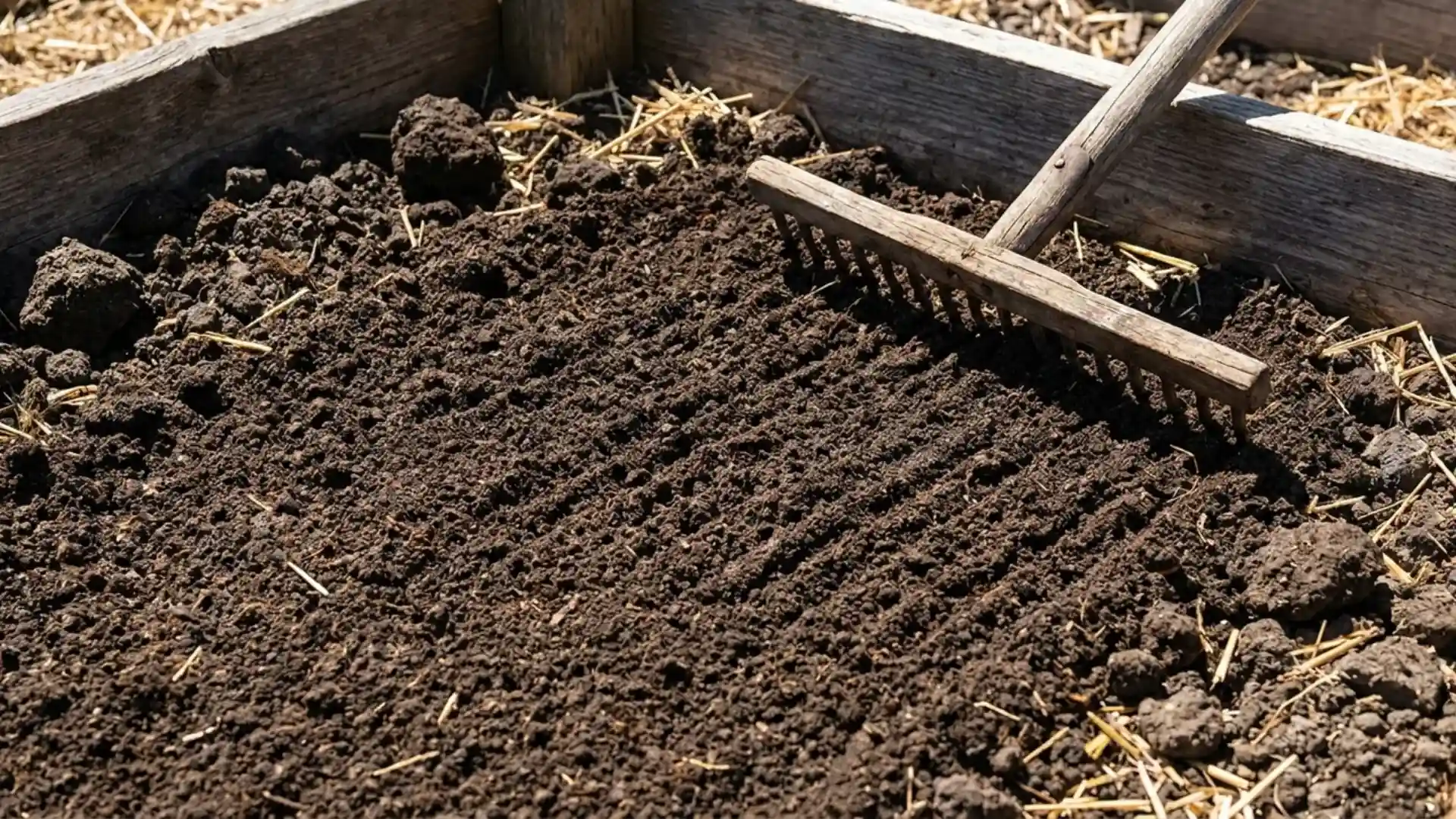
Choose a planting bed that receives at least six hours of direct sunlight each day. Loosen compacted soil so shallow roots can spread and bulbs can expand properly.
Remove weeds, rocks, roots, and large clumps before planting. Mix in finished compost to improve fertility, drainage, and moisture retention, since this is what builds richer garden soil for the whole growing season. Avoid low areas where rainwater collects and keeps the soil consistently soggy.
Step 4: Set the Correct Depth
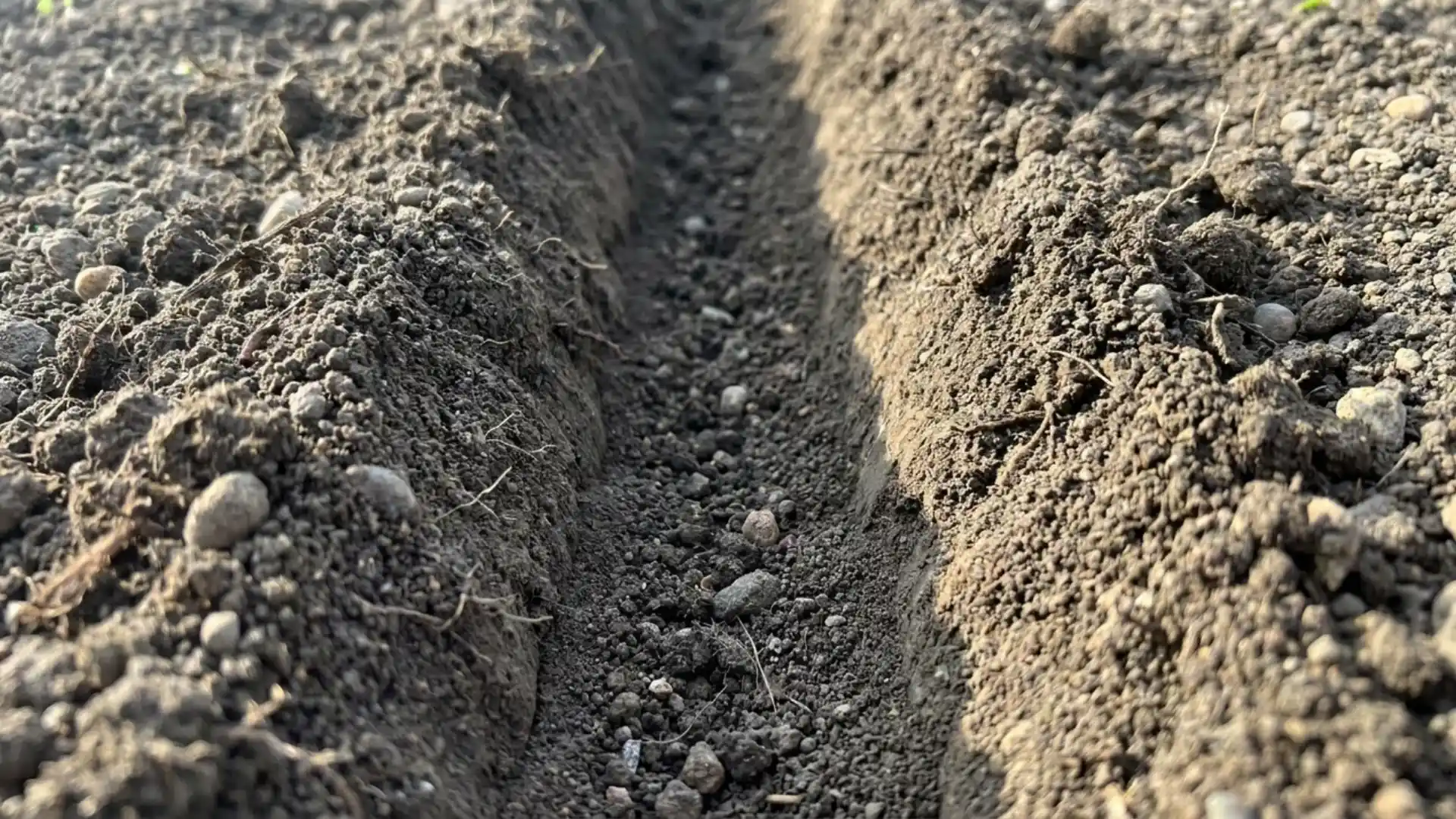
Plant sets about 1 inch deep with the pointed end facing upward. Place transplants at the same depth they grew in their containers, covering the roots and lower bulb while keeping the neck above the soil.
Sow seeds about half an inch deep. After planting, press the soil gently around each onion without compacting the bed or restricting root growth.
Step 5: Leave Enough Space
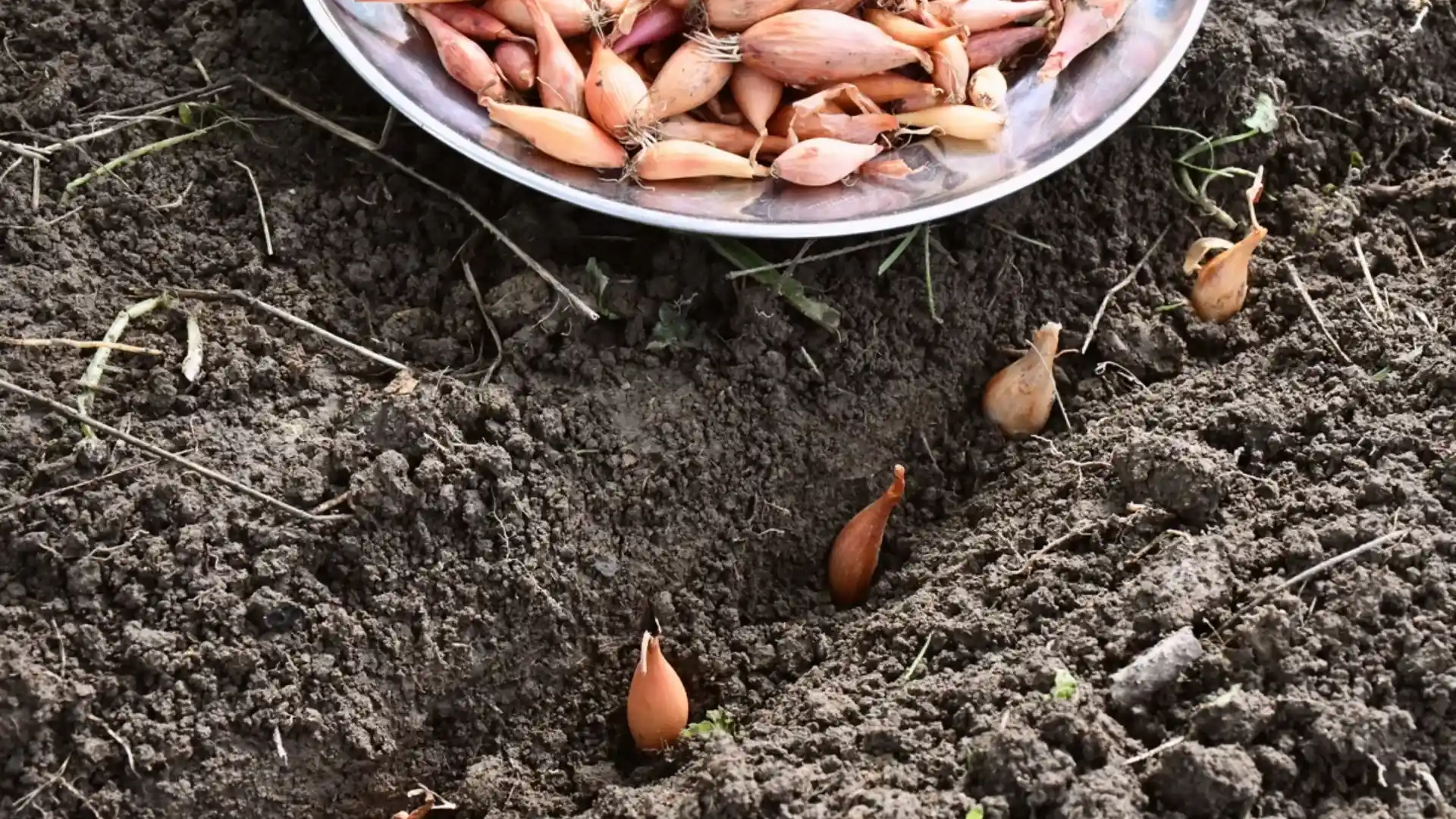
Space onion plants about 4 inches apart so each bulb has enough room, water, and nutrients to mature. Leave roughly 12 inches between rows for airflow, watering, and weeding access.
Thin crowded seedlings before their roots become tangled. Use closer spacing only for green onions. Overcrowded plants usually form smaller bulbs and may develop uneven shapes by harvest time overall.
How Do You Care for Onions as They Grow?
Consistent moisture, timely feeding, and regular weeding help onions build healthy leaves before developing firm bulbs, and these same habits go a long way toward improving overall garden yields across every bed you tend.
- Water consistently: Give onions about 1 inch of water each week, including rainfall, and keep the soil evenly moist.
- Avoid soggy soil: Do not let water collect around the bulbs because excess moisture can cause root and bulb rot.
- Prepare the soil: Mix compost into the bed before planting to improve fertility, drainage, and moisture retention.
- Feed early growth: Apply a nitrogen-rich fertilizer while the plants are producing leaves, since each healthy leaf supports bulb development.
- Stop nitrogen later: Reduce nitrogen once bulb formation begins so the plant directs more energy toward enlarging the onion.
- Control weeds: Remove weeds regularly because onions have shallow roots and struggle to compete for nutrients, space, and water.
Adjusting care as the plant grows gives onions the moisture and nutrients they need without encouraging rot or excessive leaf growth.
What Are the Growth Stages of a Red Onion?
A red onion passes through four clear growth stages, usually completing the full cycle within 90 to 120 days.
1. Germination and Sprouting
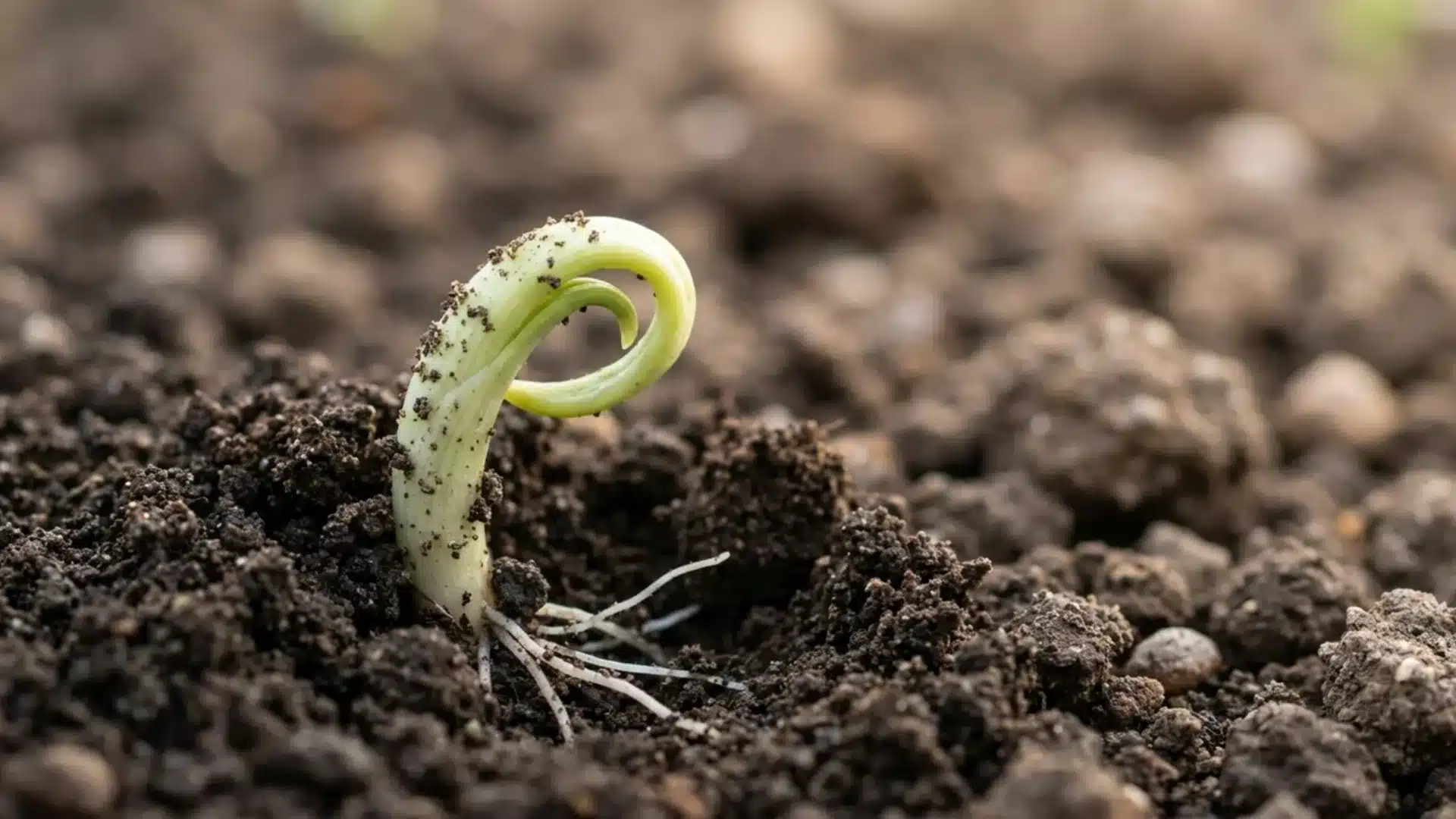
The cycle begins when a small white root grows downward and anchors the plant in the soil. A green shoot then pushes above the surface and begins collecting sunlight.
This stage usually lasts one to two weeks, although warm soil speeds germination while cold, overly wet conditions slow early growth.
2. Vegetative Growth
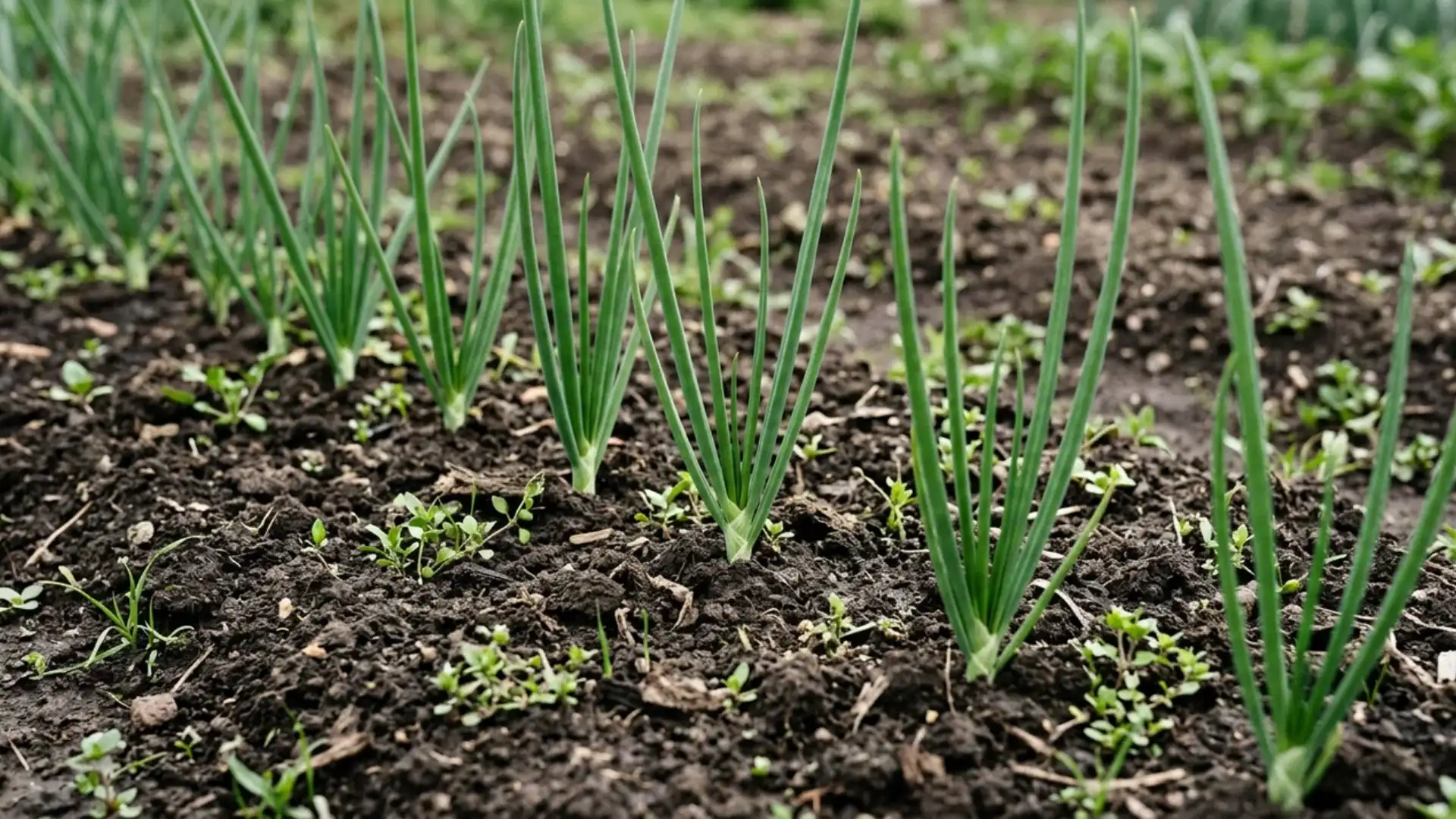
During vegetative growth, the plant directs most of its energy toward producing strong green leaves. Each new leaf later forms another ring inside the mature bulb, so healthy top growth supports a larger harvest.
Maintain consistent watering and early nitrogen feeding throughout this several-week stage to encourage steady leaf development.
3. Bulbing Phase
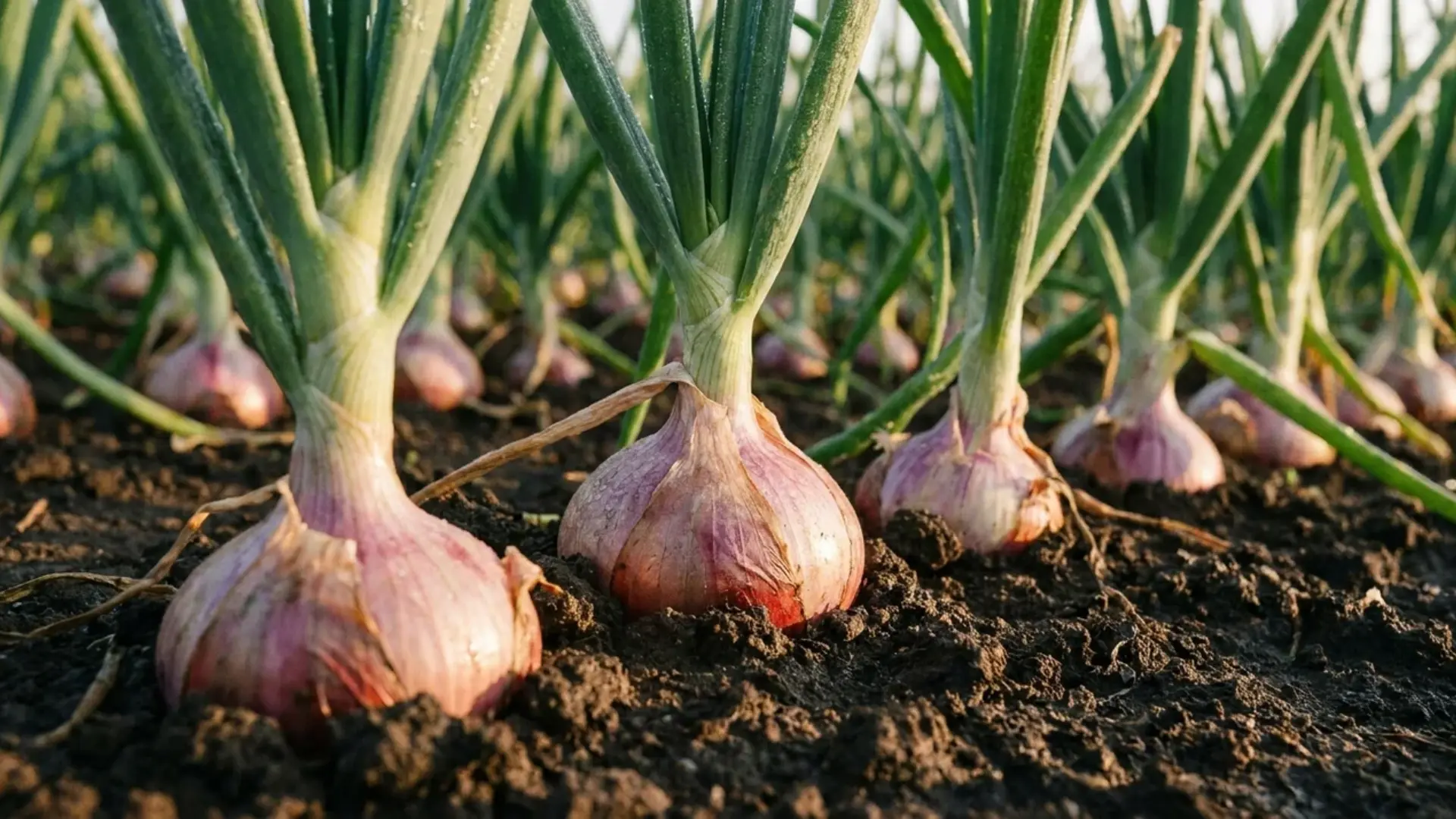
Bulbing begins once the plant receives the daylight hours required by its variety. Leaf production slows, and the base starts swelling underground.
This stage lasts several weeks and requires steady moisture with limited nitrogen. Irregular watering, crowding, or excess fertilizer can slow bulb growth, cause splitting, or produce misshapen onions.
4. Maturation
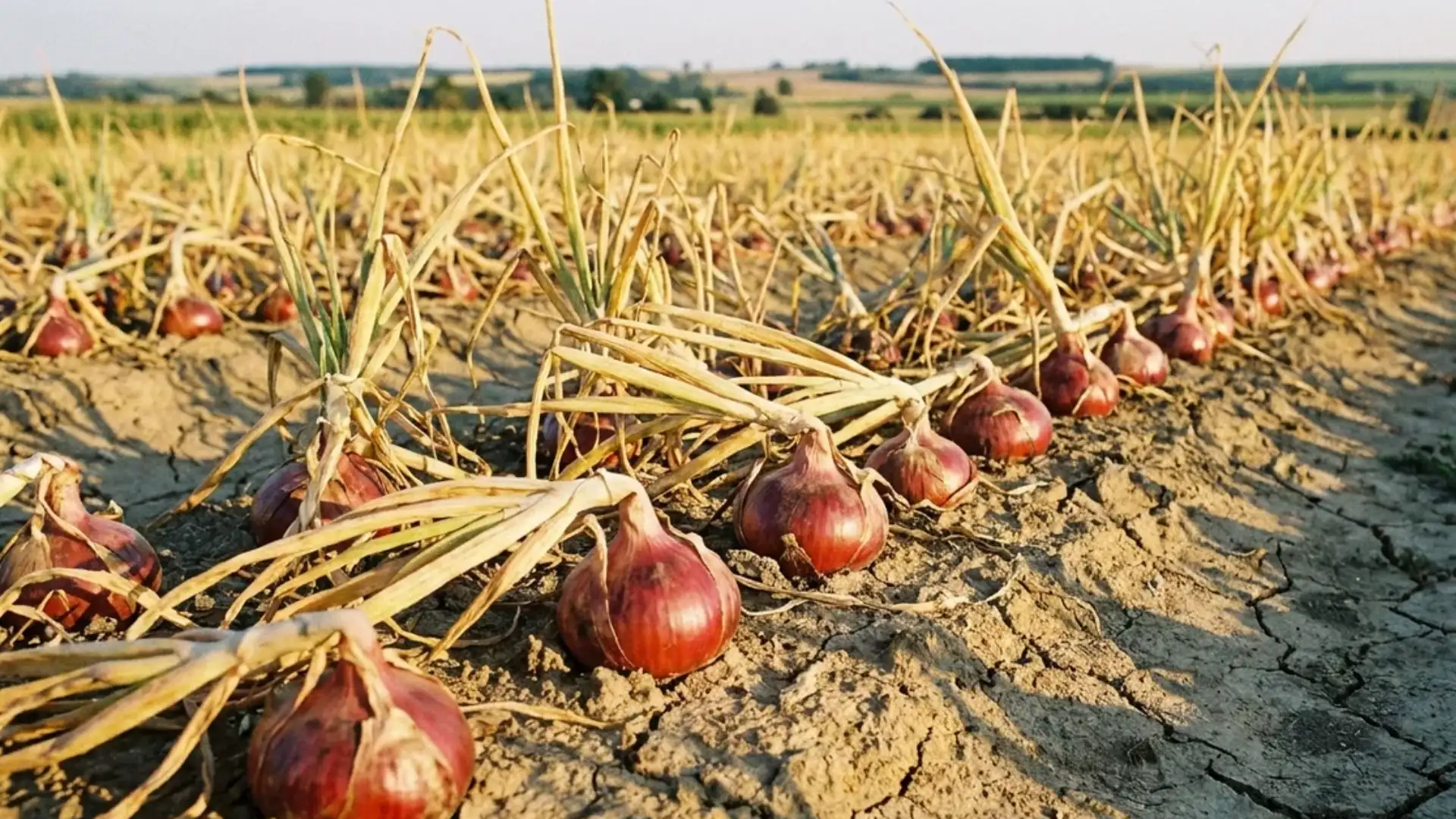
As the onion reaches maturity, its green tops begin to yellow, weaken, and fall naturally toward the ground. The bulb develops its final size, color, and protective outer skin.
Reduce watering during this stage, then harvest once most tops have fallen. Cure the bulbs thoroughly before trimming or placing them in storage.
Recognizing each stage helps you adjust watering, feeding, and harvest timing before small problems affect the final bulb.
What Pests and Diseases Affect Onions?
Onion maggots and thrips are the two pests I watch for most closely. A lightweight floating row cover over young seedlings blocks the adult flies that lay maggot eggs near the base of the plant, and it’s cheap insurance during the vulnerable early weeks.
Thrips show up as silvery streaking on the leaves during hot, dry spells; a strong water spray knocks populations down without resorting to anything harsher.
Crop rotation matters more here than with most vegetables; avoid planting onions or other alliums in the same bed more than once every three years to keep soil-borne rot organisms from building up.
How Do You Store Cured Onions?
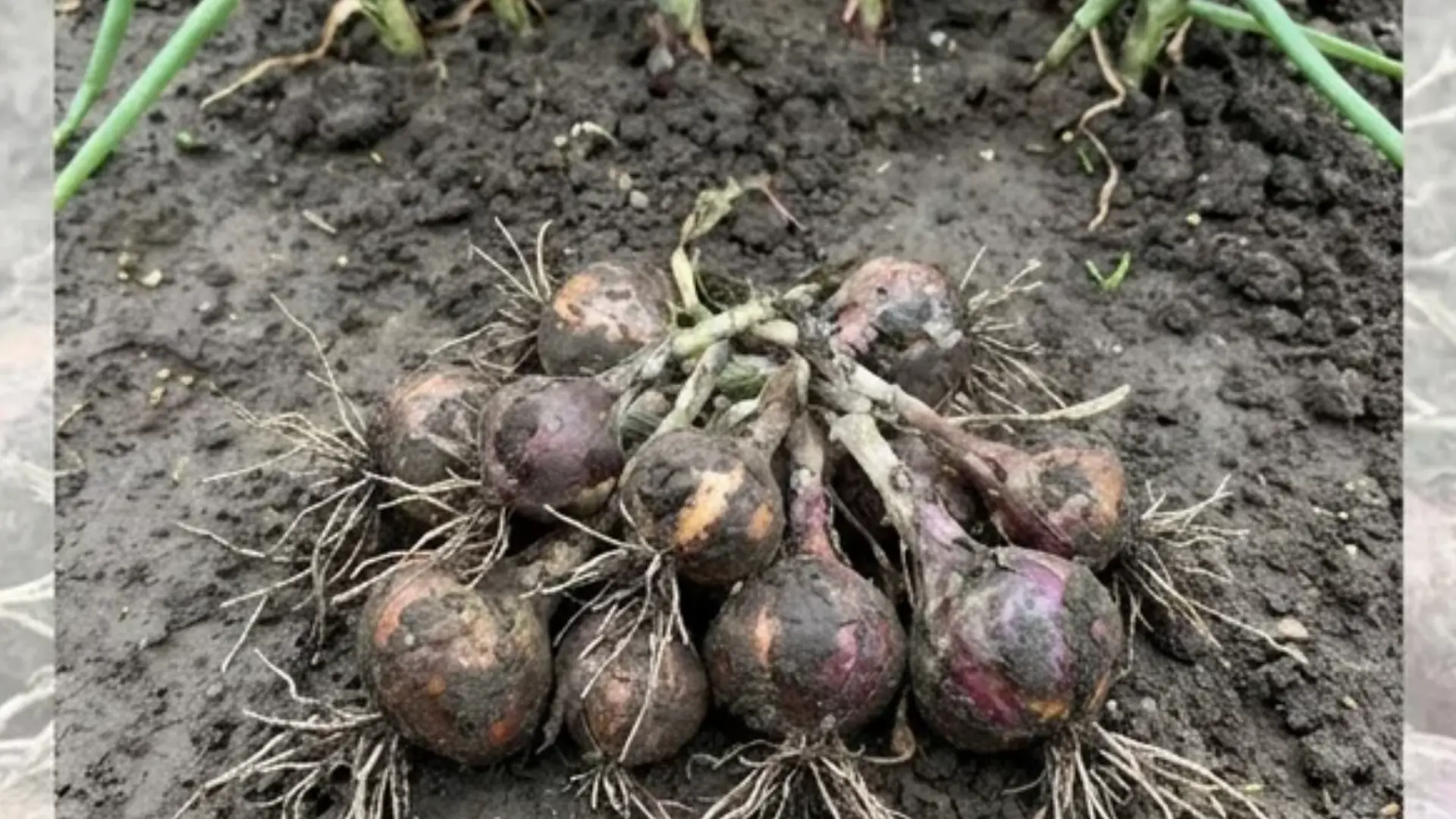
Store cured onions in a cool, dark, dry place with good airflow, such as a pantry, cellar, shed, or ventilated cupboard.
Place them in mesh bags, open baskets, or slatted crates so air can move around each bulb. Avoid sealed plastic bags because trapped moisture encourages mold and rot.
Keep onions away from potatoes, which release moisture and gases that can shorten storage life. Check the bulbs every few weeks and remove any that feel soft, smell unusual, or show signs of sprouting.
Use onions with minor bruises or damaged skins first rather than storing them long term. Properly cured, firm onions can last for several months, although storage time depends on the variety, temperature, humidity, and condition of each bulb.
Common Onion Growing Mistakes and How to Fix Them
Most onion problems trace back to variety choice, spacing, or watering. Use this table to identify the cause and apply the right fix.
| Onion Problem | Likely Cause | Recommended Fix |
|---|---|---|
| No bulb forms | The onion variety does not match the region’s day length. | This cannot usually be corrected midseason. Choose the appropriate short-day, intermediate-day, or long-day variety next season. |
| Bulbs stay small | Plants are overcrowded and competing for water, nutrients, and growing space. | Thin seedlings early or space sets and transplants about 4 inches apart when planting. |
| Bulbs rot near harvest | Excess watering late in the growing season encourages decay. | Reduce watering when the tops begin yellowing and falling over. |
| Store-bought onions regrow only greens | The root end can produce shoots but rarely develops another full bulb. | Grow onions from seeds, sets, or transplants when full-sized bulbs are the goal. |
Addressing these issues early helps onions form larger bulbs, stronger skins, and better shape while improving overall harvest quality and storage life.
Final Verdict
Successful onion growing depends more on timing and variety than on complicated garden techniques. I would start by matching short-day, intermediate-day, or long-day onions to your region, then focus on loose soil, proper spacing, and steady watering.
Once you understand how to grow onions, the leaves become useful signals. Strong green growth supports bulb development, while yellowing and falling tops show that harvest time is near. Reducing water before harvest and curing the bulbs correctly also improves storage life.
Use these steps to plan your next planting, watch each growth stage, and correct problems early. Try the method in your garden, then share which onion variety performs best in your area.
Frequently Asked Questions
How many onions do you get from one plant?
Each onion set, seed, or transplant produces a single bulb, not a cluster. One planted onion yields one harvested onion. Bulb size depends on spacing, variety, and growing conditions rather than the number of onions per plant. Wider spacing and consistent watering typically produce larger individual bulbs at harvest.
What month should you start planting onions?
Timing depends on your starting method. Seeds are typically started 8 to 10 weeks indoors before your last frost date. Sets and transplants go directly into the ground in early spring, once the soil is workable. Aim for 2 to 4 weeks before that same frost date.
Can you regrow onions from a store-bought onion?
Placing the root end of a store-bought onion in soil will often regrow green shoots. It rarely produces a full, properly formed bulb. The regrowth mainly yields edible green tops rather than a new onion. Store onions aren’t grown under conditions suited to bulb development.
How long does it take for red onions to fully grow?
Red onions typically take 90 to 120 days from planting to maturity, depending on variety and growing conditions. Onions started from sets or transplants mature faster than those grown from seed. Seed-started onions need extra weeks of indoor growth before transplanting outdoors.