

| Plant Name | Green Onion (Allium cepa, young bulb onion; true bunching types are Allium fistulosum) |
| USDA Zones | Grown as an annual in all zones; true bunching onion (Allium fistulosum) overwinters as a perennial in Zones 6-9 |
| Sunlight | Full sun outdoors (6+ hours); bright south or west-facing window indoors |
| Water Needs | Moderate, consistent moisture; roots are shallow and dislike drying out |
| Bloom Season | Late spring to early summer if left unharvested (flowering signals bolting) |
| Best Use | Windowsill jars, containers, raised beds, kitchen garden borders |
Your green onions turned to mush again, didn’t it? I hear this constantly from readers trying to regrow green onions from a kitchen scrap, watching it thrive for a week, then losing it just as fast.
Most of the time, the plant isn’t the problem; the setup is. Once you know how to grow green onions the right way, you won’t lose another jar to slime or bolting.
I’ll show you how to pick scraps that actually regrow, set up water, soil, or seed correctly, and keep the plant healthy through repeat harvests for months.
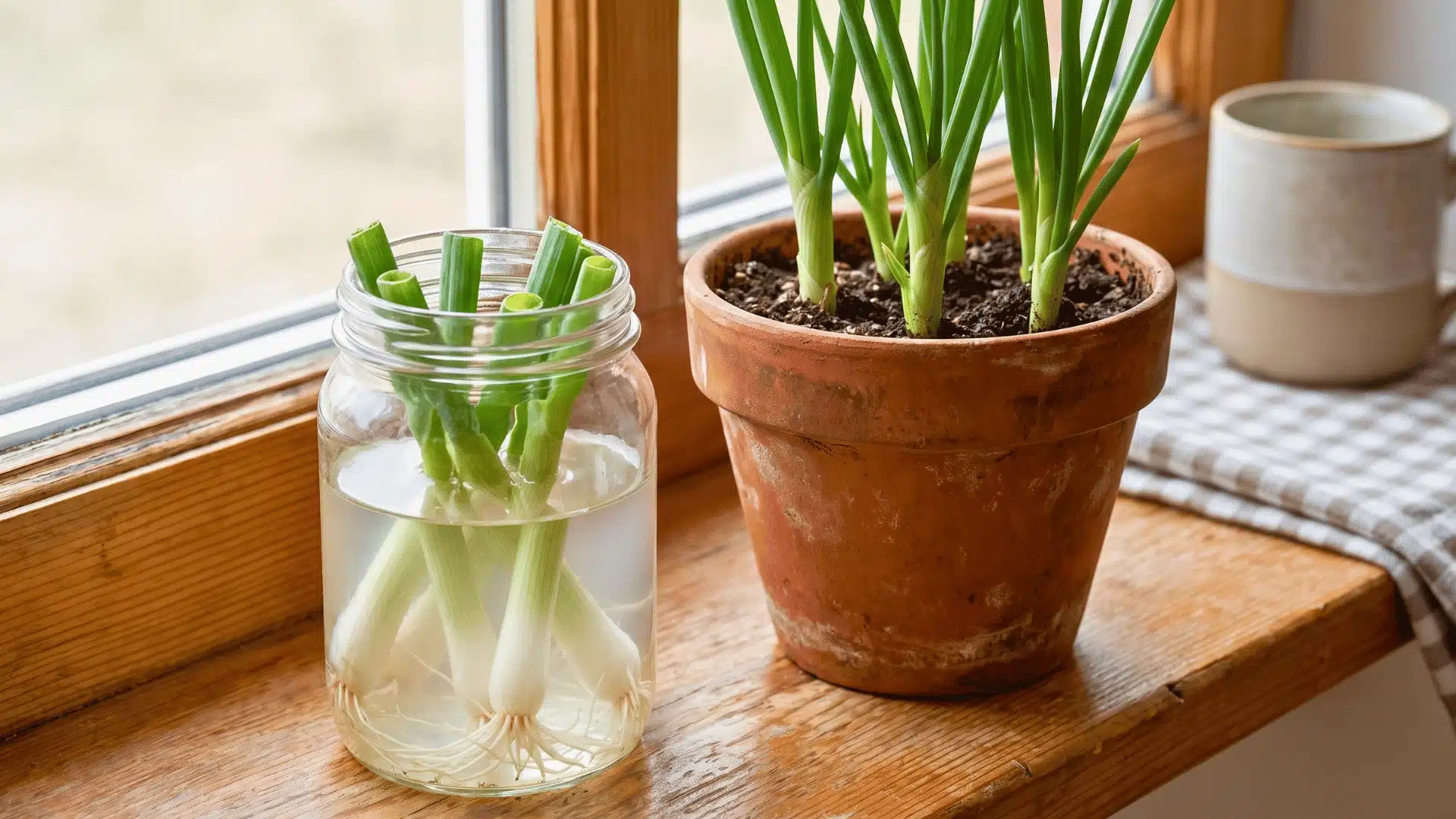
| Tip: Treat water as a rooting stage, not a growing medium. Once new shoots reach four to five inches, move the scrap into soil within one to two weeks. Roots left in the same jar past that window start pulling from their own reserves instead of building new growth, and that’s when they turn soft. |
Choosing Scraps and Varieties That Actually Regrow
A grocery store bunch only regrows well if the root end is still alive when you cut it, so it’s worth checking a few things before you commit a scrap to a jar.
- Look for firm white roots with a light tan color and no sliminess at the base.
- Green tops should look fresh and upright, not wilted or yellowing at the tips.
- Skip anything with mushy, gray, or foul-smelling roots – that scrap has already started to rot.
- Most bunches labeled “green onions” are common onions (Allium cepa) harvested before they form a bulb, per UC Master Gardeners of Santa Clara County.
- True bunching onions, Allium fistulosum, are a separate perennial species that never bulbs and can be divided year after year.
Both types regrow from scraps the same way, but for a plant that comes back on its own outdoors, look for fistulosum seed or starts labeled “Welsh onion” instead of relying on grocery scraps.
Ideal Growing Conditions for Green Onions
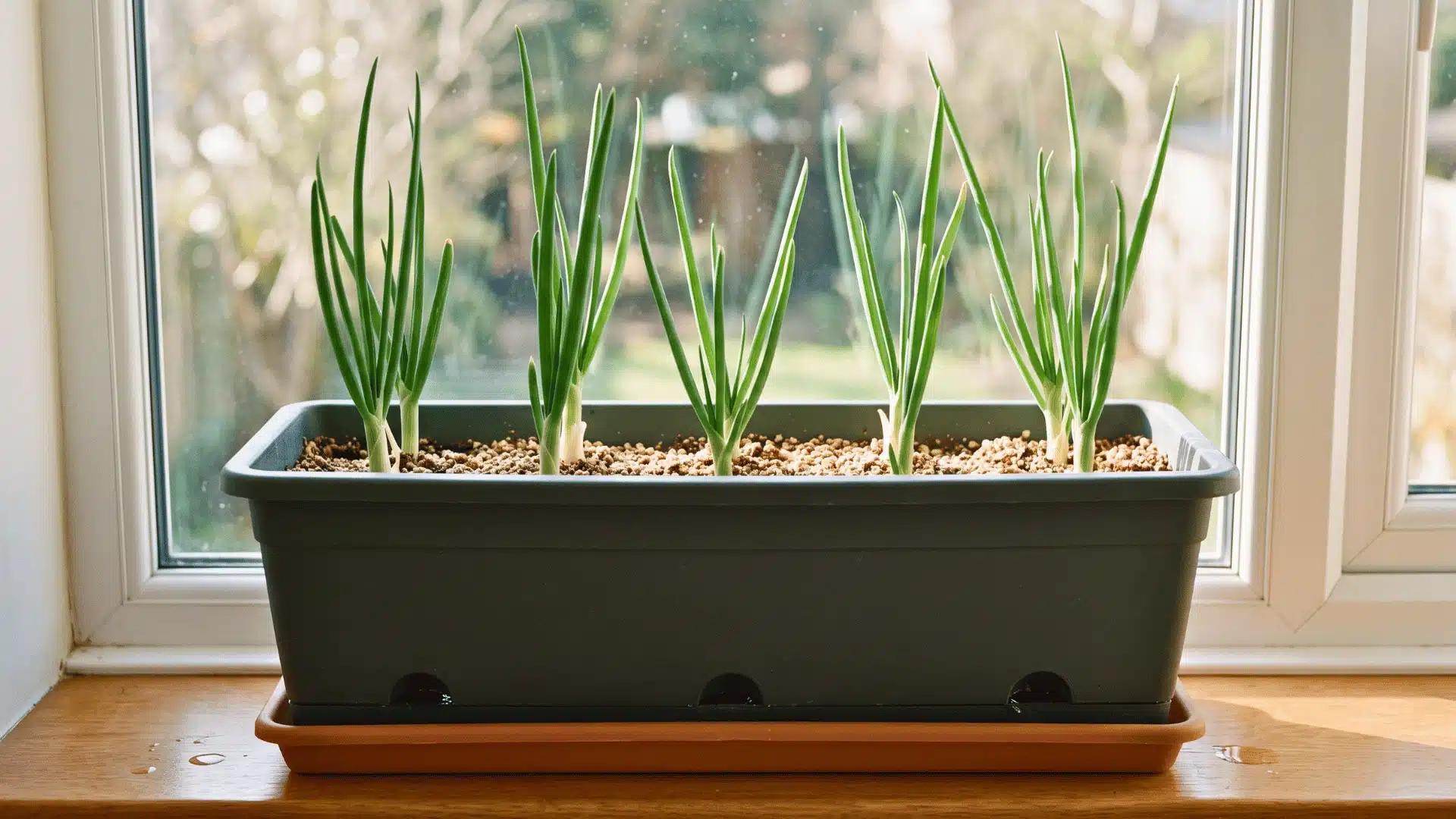
Green onions want close to six hours of direct light a day, whether that light comes through a window or falls straight from the sky.
Indoors, a south- or west-facing sill is usually strong enough on its own; anything dimmer and I’d add a small grow light rather than hope for the best. Thin, pale stalks that lean hard toward the glass are the plant telling you it isn’t getting enough.
Temperature matters more than most first-time growers expect. Green onions are a cool-season crop that grows best between roughly 60 and 75°F.
They tolerate light frost once established but will bolt – send up a tough, bitter flower stalk – if a spell of hot weather hits young plants too early, which is why fall and early spring plantings usually outperform a mid-summer start outdoors.
Preparing the Soil for Green Onions
Skip garden soil for container growing; it compacts inside a pot and tends to hold more water than shallow onion roots can handle. A light, well-draining potting mix works better and drains through a container’s holes the way it’s supposed to.
If you’re planting in a bed, work in a couple of inches of compost – the University of Minnesota Extension recommends well-drained soil with a pH between 6.0 and 7.0 and good organic matter content for healthy onion growth.
Whatever the container, drainage is non-negotiable. Choose a pot at least six inches deep with holes at the bottom, since standing water around the base is one of the fastest ways to rot a green onion’s shallow root system.
If you’re setting up a longer-term outdoor bed instead of a windowsill jar, a raised garden bed solves the drainage question for you and warms up faster in spring than ground-level soil.
How to Grow Green Onions: Water, Soil, and Seed
Growing green onions can go a few simple ways: root scraps in water, plant them in soil, or try both before your first harvest.
1. Rooting Scraps in Water
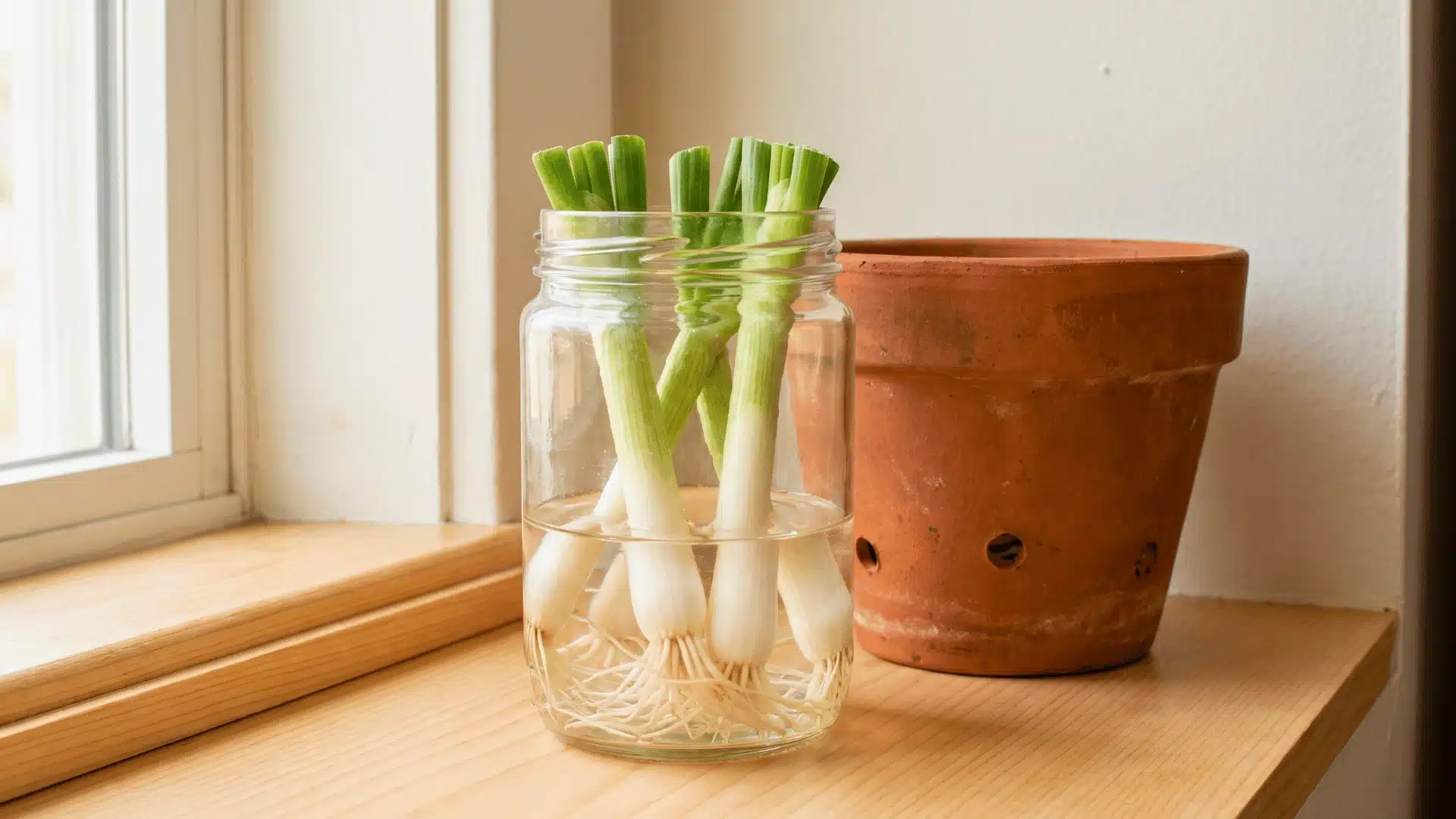
This method roots a grocery store scrap in a matter of days using nothing but a jar, and it’s the fastest way to see new green growth on a windowsill.
- Cut the root end from a bunch, keeping one to two inches of white base attached to the roots.
- Stand the scrap upright in a small jar so the roots rest at the bottom, touching the glass.
- Add water to cover the roots only, keeping the green shoots above the waterline to prevent stem rot.
- Set the jar somewhere it gets strong, direct light for most of the day, ideally a south-facing window.
- Swap the water every two to three days so it stays clear and doesn’t build up bacteria.
- Watch for new roots within two to four days, with green shoots following around four to ten days later.
This is the same rooting logic behind propagating succulents from a single leaf – the plant draws on stored energy until it builds a real root system, so the jar is only ever a temporary stop.
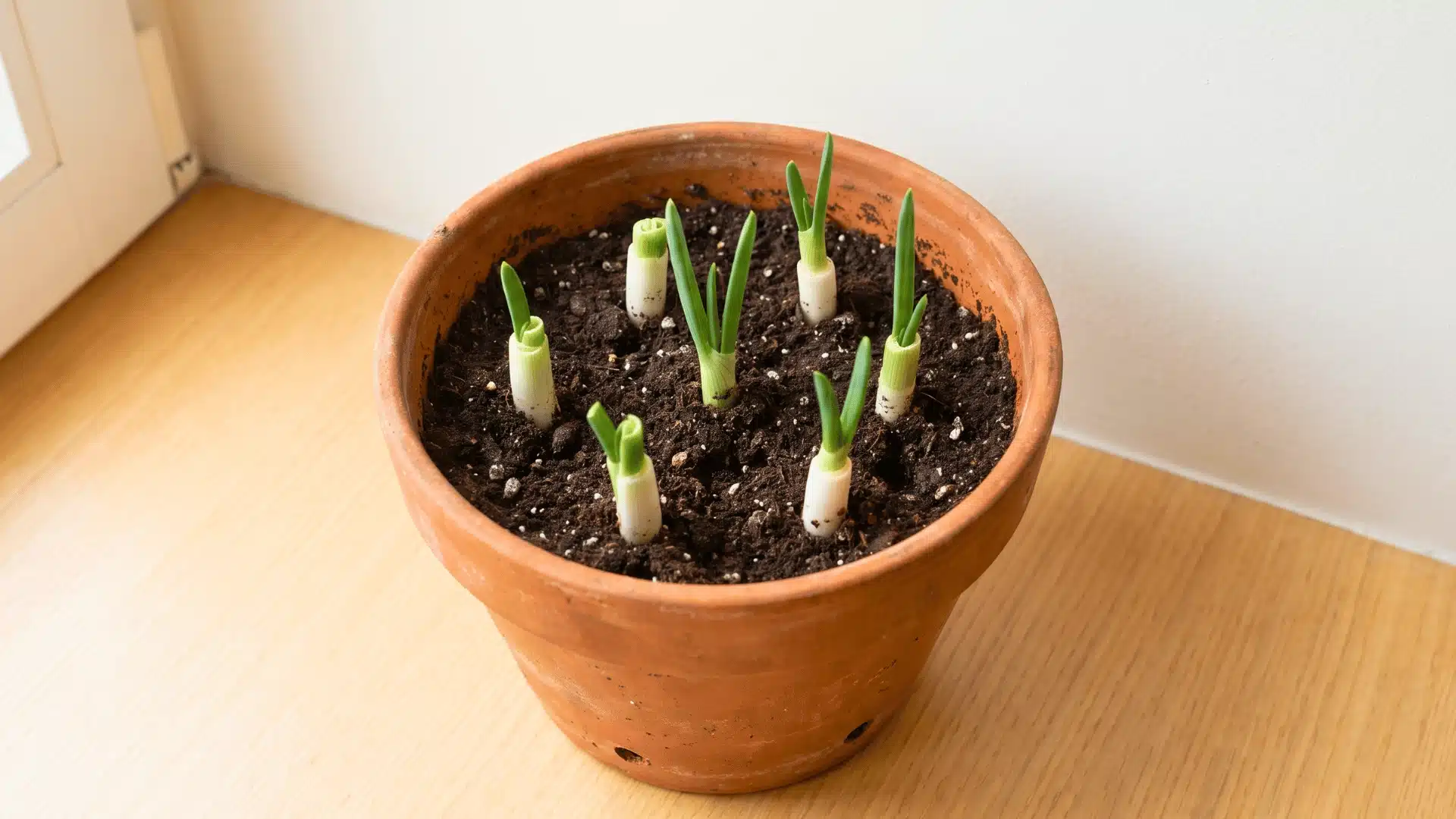
2. Transplanting Rooted Scraps Into Soil
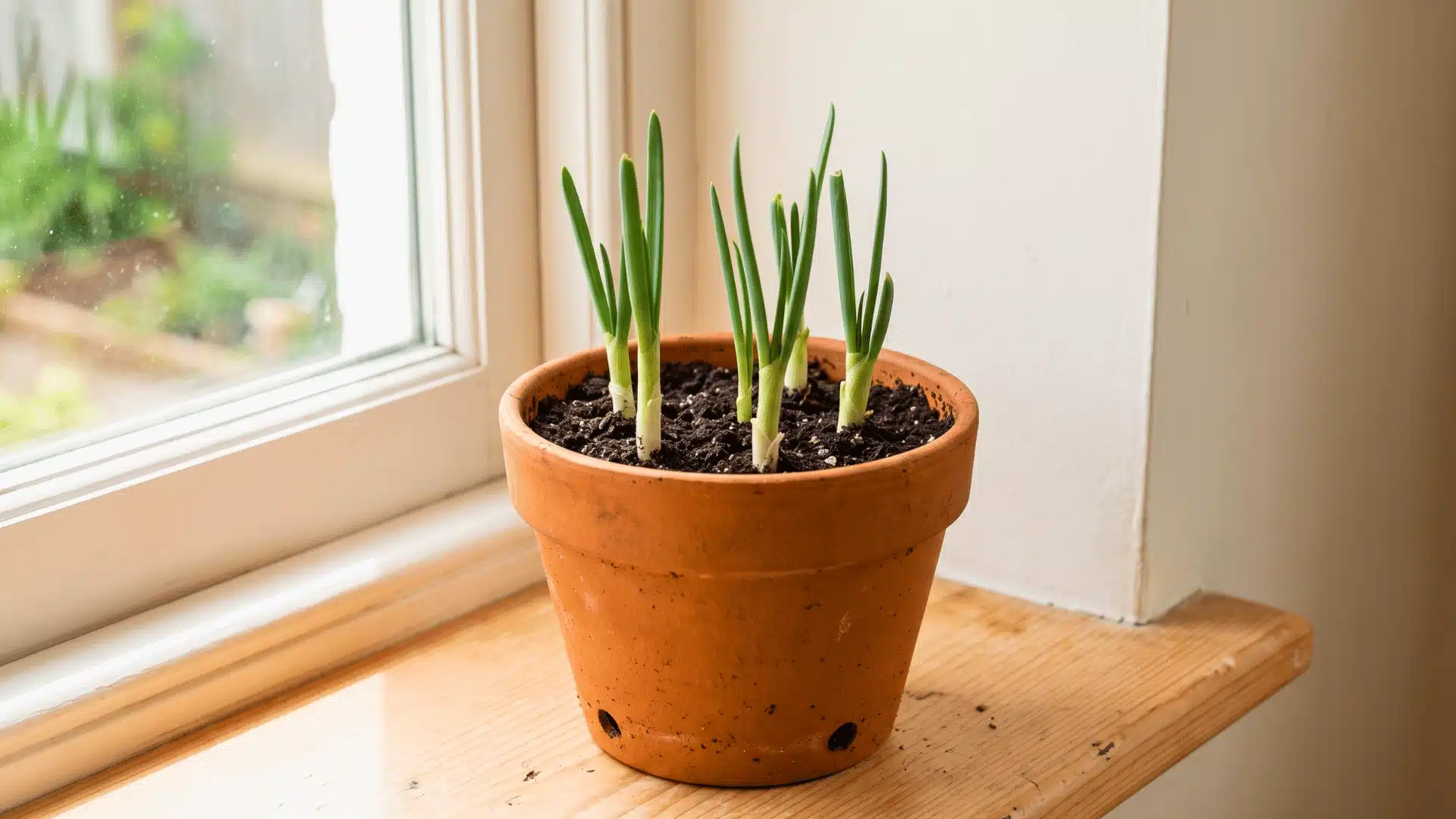
Moving a rooted scrap into soil is the single step that decides whether you get one quick cutting or months of repeat harvests from the same plant.
- Wait until the green shoots reach four to five inches tall before attempting the transplant.
- Move the scrap into soil within one to two weeks of reaching that height, not longer.
- Bury the white base and roots completely, leaving only the green shoots above the soil line.
- Water the pot in well immediately after planting so the roots make contact with moist soil.
Soil supplies the steady nutrients that water alone can’t provide, which is why this transplant window matters more than almost any other step in the process.
3. Starting Green Onions From Seed
Seed takes longer than a rooted scrap, but it builds a sturdier root system from day one and gives you access to true bunching varieties.
- Fill a seed tray or pot with quality potting mix and moisten it evenly before sowing.
- Sow seeds about a quarter-inch deep, spacing them roughly two to three inches apart.
- Keep the soil consistently moist until germination, checking daily so the surface never fully dries out.
- Direct-seed outdoors once soil reaches at least 50°F, or start indoors eight to ten weeks early, per Oregon State University Extension.
- Expect a full harvest window of 60 to 80 days from seed to your first cutting.
Seasonal Care Calendar for Green Onions
Spring is the best window to start new plantings, whether from seed, sets, or a fresh batch of kitchen scraps, since soil temperatures are climbing but haven’t hit the highs that trigger bolting.
Through summer, keep an eye on established plants for early flower stalks – once a green onion bolts, the greens turn bitter and tough, so it’s worth pulling and replacing rather than fighting it.
Fall is a strong second planting window in most climates, and if you’re growing true bunching onions outdoors in Zones 6 through 9, a layer of mulch over the clump before winter protects the roots through cold snaps so they resume growth in spring.
Preventing Pests and Diseases in Green Onions
Green onions deal with fewer pest problems than most vegetable crops, but a few issues show up often enough to watch for.
Onion thrips leave silvery streaks on the leaves and thrive in hot, dry conditions – consistent watering and good airflow between plants keep populations down.
Root rot and downy mildew both trace back to the same root cause: soil or water that stays too wet for too long.
If you notice yellowing leaves alongside soft, discolored roots, ease off watering before you assume it’s a disease problem, since overwatering causes the same symptoms.
| Note: If you’re growing bunching onions outdoors as a perennial rather than a kitchen-scrap annual, check with your local extension office before applying any pest or disease treatment. Correct identification matters more than a fast fix, and university extension services will identify the problem from a photo or sample. |
Companion Plants That Help Green Onions Thrive
Alliums like green onions do more than fill space in a bed – their scent confuses pests that would otherwise target the crops planted around them.
- Carrots: onion scent masks the smell that attracts carrot rust flies to the row.
- Tomatoes: benefit from the same pest-confusing effect without competing for the same nutrients.
- Lettuce: shallow-rooted and low-growing, so it shares space well beneath taller onion tops.
- Garlic and chives: close relatives of the green onion, commonly used to deter aphids in a mixed bed, a principle I’ve applied when troubleshooting pest pressure on ornamental shrubs.
Keep beans and peas out of the same row, though – alliums can slow legume growth by sharing their root zone, so give each its own container or bed.
Common Mistakes That Stop Green Onion Regrowth
| Mistake | Why It Happens | Fix |
| Water left too long between changes | Stagnant water breeds bacteria that weaken roots | Change water every 2-3 days; move to soil within 1-2 weeks |
| Cutting into the white base | Removes the stored energy the plant regrows from | Harvest only the green tops; leave the base and roots undisturbed |
| Soil that stays soggy | Poor drainage suffocates shallow roots | Use a container with drainage holes and a light potting mix |
| Not enough light | Low light produces thin, pale, leggy stalks | Move to a south- or west-facing window or add a grow light |
| Harvesting more than a third at once | Leaves too little green growth for the plant to recover | Cut no more than one-third of the greens per harvest |
Final Thoughts
A rooted scrap only turns into a lasting harvest once it makes the move from water into soil – that’s the one decision that separates a quick garnish from months of fresh cuttings.
Whether you started with a grocery bunch, a packet of seeds, or true bunching onion sets, the same rules apply: give it real light, don’t let the base sit in stagnant water, and harvest only the green tops so the plant keeps coming back.
That’s really how to grow green onions that produce well past your first cutting. Try rooting one scrap this week, watch how it responds, and let me know how your jar turns out.
Frequently Asked Questions
Is it better to grow green onions in water or dirt?
Water helps scraps start growing quickly, but soil keeps them growing longer by adding nutrients, air, and stronger support for the roots.
Do green onions grow back after you cut them?
Yes, green onions can grow again when you keep the white base and roots attached. Just trim the green tops and leave the base in place.
Can green onions grow from a regular onion?
Regular onions can grow green shoots, but they do not regrow like scallions. They usually produce only one round of growth.
Can you grow green onions from seed instead of scraps?
Yes, seeds work well but take longer. They need soil, sunlight, and regular watering to develop strong roots.