

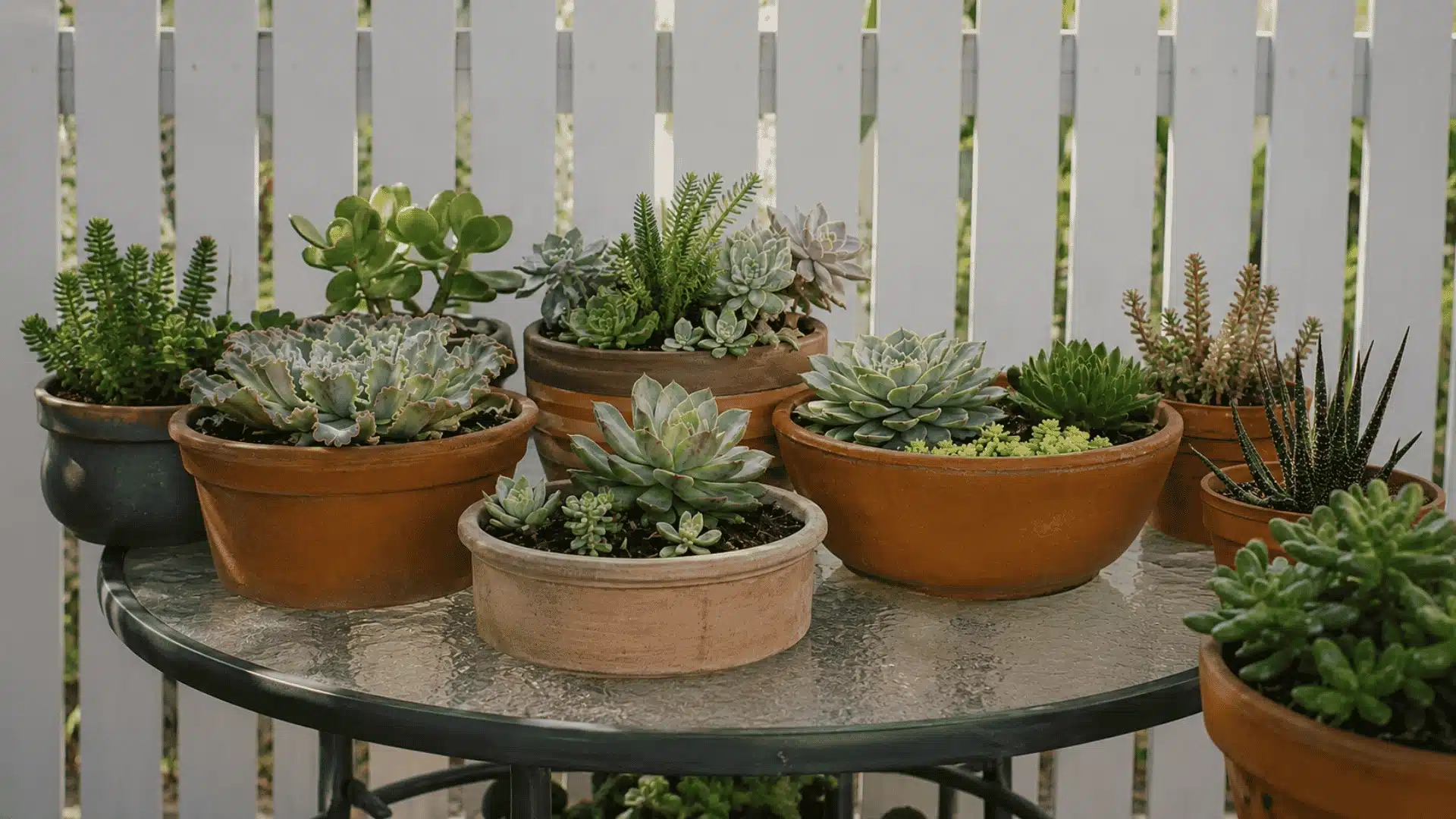
Ever bought a cute succulent, only to watch it turn to mush a few weeks later? You are not alone. Most succulent problems start before the plant ever settles into its new pot.
Learning how to plant succulents the right way, with the right soil, container, and depth, is what separates a plant that thrives for years from one that rots by spring.
In two decades of turning dead corners of a yard or a windowsill green again, I have found that poor planting habits are the single biggest reason succulents fail.
The fix takes just a few extra minutes. Here is exactly what you need before you start.
What You Need Before Planting Succulents
Before planting succulents, prepare the three essential supplies you need: healthy succulent plants, a pot with drainage holes, and a cactus or succulent soil mix.
Succulent plants are the main item, as they will be placed into the prepared container. Choose plants that look healthy before starting the planting process.
Beginner-friendly varieties like jade plants and echeveria are especially forgiving while you get the hang of these basics.
A trowel and gardening gloves are useful extras that can make the work easier. They help with handling soil and plants but are not necessary for growth.
Top dressing, like small stones or gravel, is an optional final touch. It is added after planting for appearance and is not part of the growing medium.
One habit that has saved me the most plants over the years: always check the roots before you commit to a pot. A healthy root system tells you more about a succulent’s readiness than the leaves ever will.
How to Put Succulents in a Pot: Step-by-Step
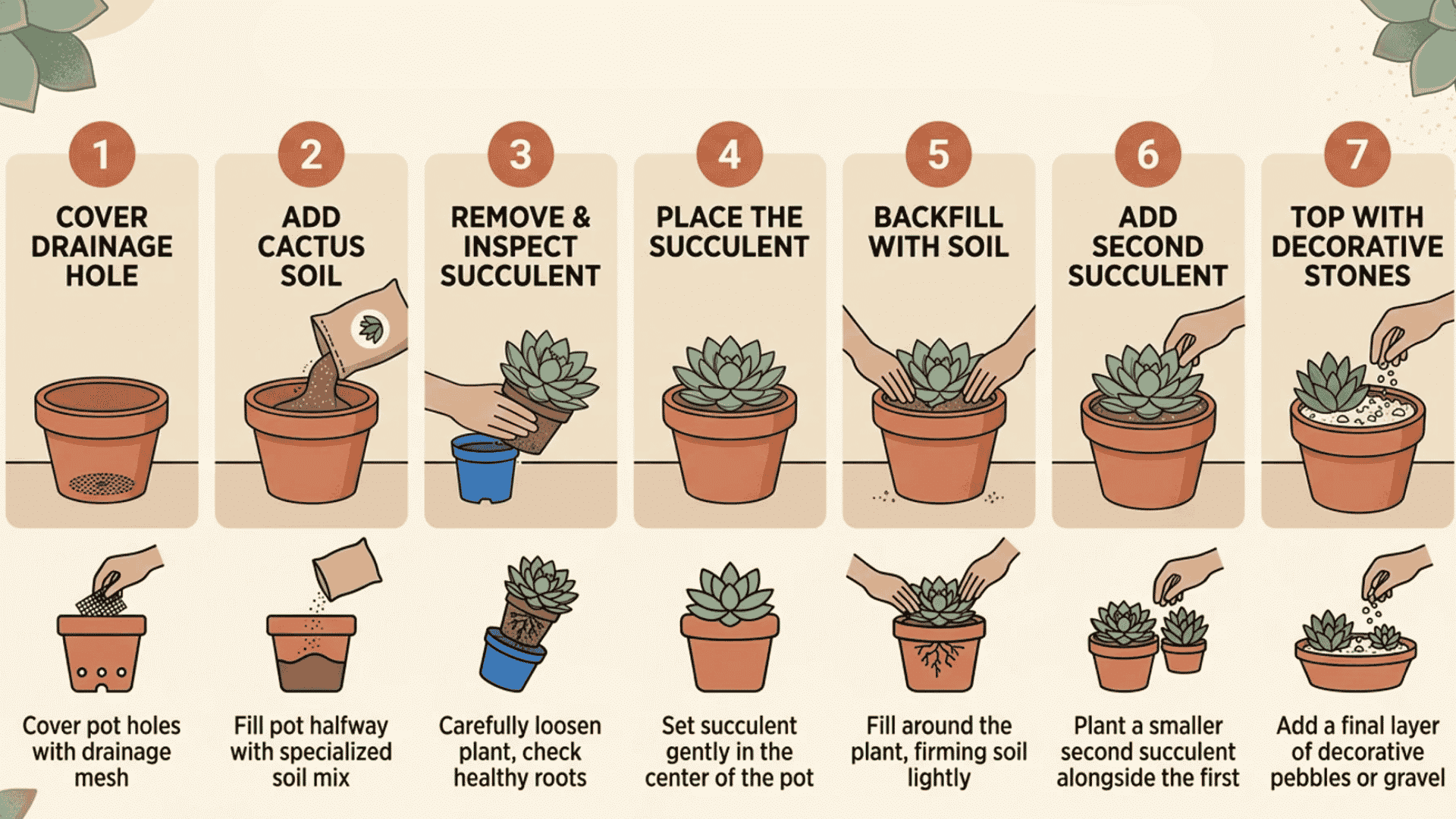
This step order works for both potting a single succulent and starting a multi-plant arrangement. Each stage helps protect the roots, maintain the correct depth, and prevent moisture problems.
- Prepare the pot: Cover the drainage hole with mesh or a coffee filter to keep soil from escaping. Make sure the pot is clean and ready before adding the soil mix.
- Add the soil mix: Fill the pot partway with dry cactus or succulent soil mix. This creates a stable base where the roots can sit without the soil becoming too compact.
- Remove and check the succulent: Gently remove the plant from its nursery pot and clear away loose old soil. Check the roots and remove any damaged or unhealthy parts before planting.
- Place the succulent at the right depth: Set the succulent into the pot so the roots sit naturally and the base remains at the same level as before. Avoid covering the leaves or burying the stem.
- Backfill around the roots: Add more soil around the plant and press lightly to hold it in place. The roots should have support without being packed too tightly.
- Add more plants if arranging: For a succulent arrangement, place extra plants only after the first one is positioned correctly. This keeps the depth consistent and makes spacing easier to manage.
- Finish with top dressing: Add small stones or gravel on the surface after planting. This optional layer improves the appearance but is not part of the growing mix.
After planting, allow the succulent a short settling period before watering.
This gives disturbed roots time to recover and helps the plant adjust to its new pot. Following the correct order makes the planting process smoother and supports healthier root growth.
Pick the Right Pot and Soil for Succulents
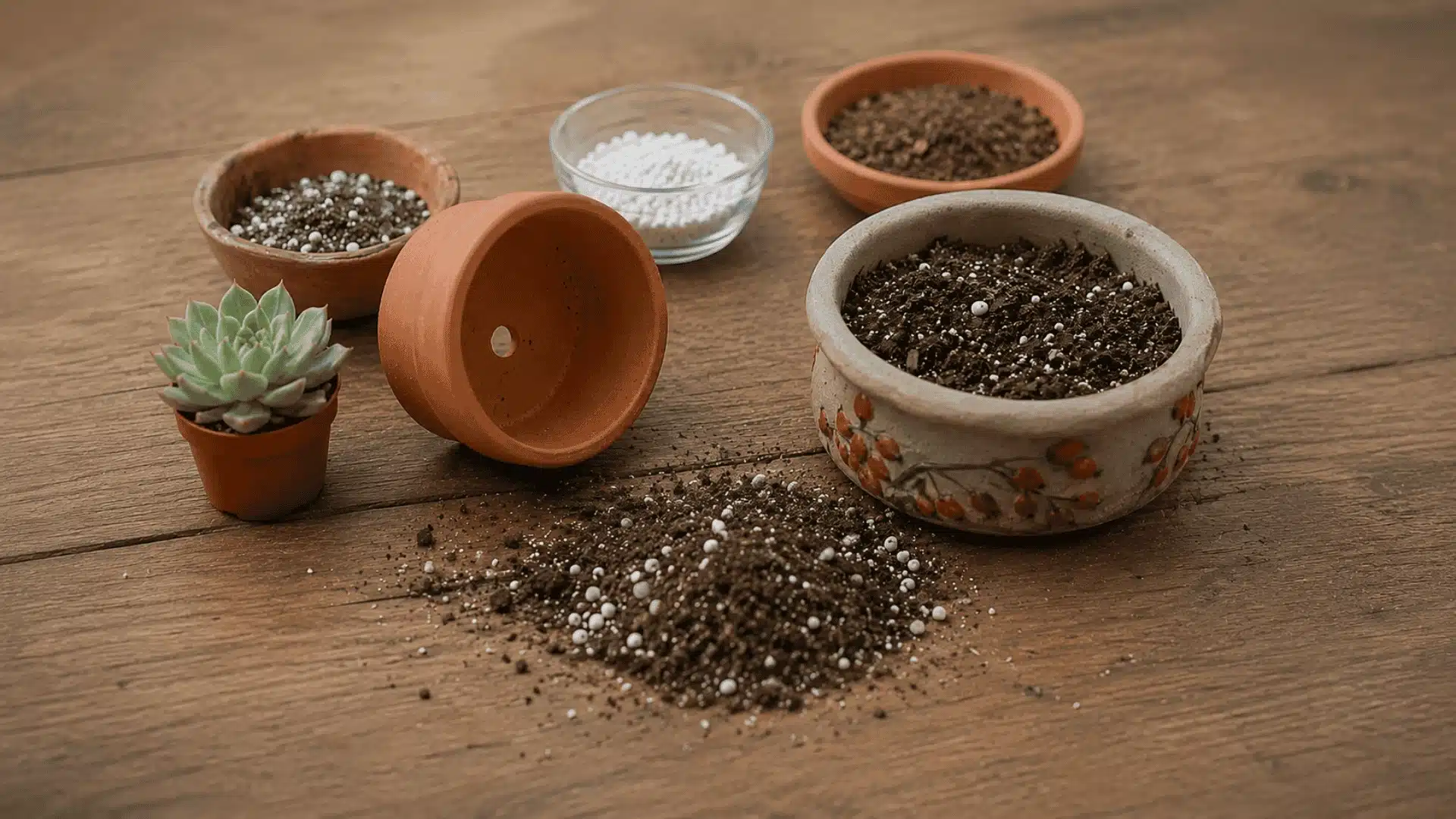
Before choosing a pot and soil, understand that succulents need fast-draining conditions. The right container and mix help roots stay healthy by preventing excess moisture after watering.
University extension research points to a simple test: moisten the mix and squeeze it in your hand. If it falls apart on release rather than holding together, the drainage is right for succulents.
| Pot Type | Best For | What to Look For |
|---|---|---|
| Small pot | Single succulents or plants with smaller root systems | Choose a pot slightly larger than the root ball with drainage holes |
| Terracotta pot | Succulents that need quicker drying | Look for unglazed clay that allows moisture to escape |
| Decorative pot | Display purposes | Make sure it has drainage holes or use it as an outer cover |
Choosing the right pot size and a well-draining soil mix gives succulents the dry root conditions they need. These simple choices help prevent moisture problems and support healthier growth.
How to Plant Succulents in a Bowl without Crowding Them?
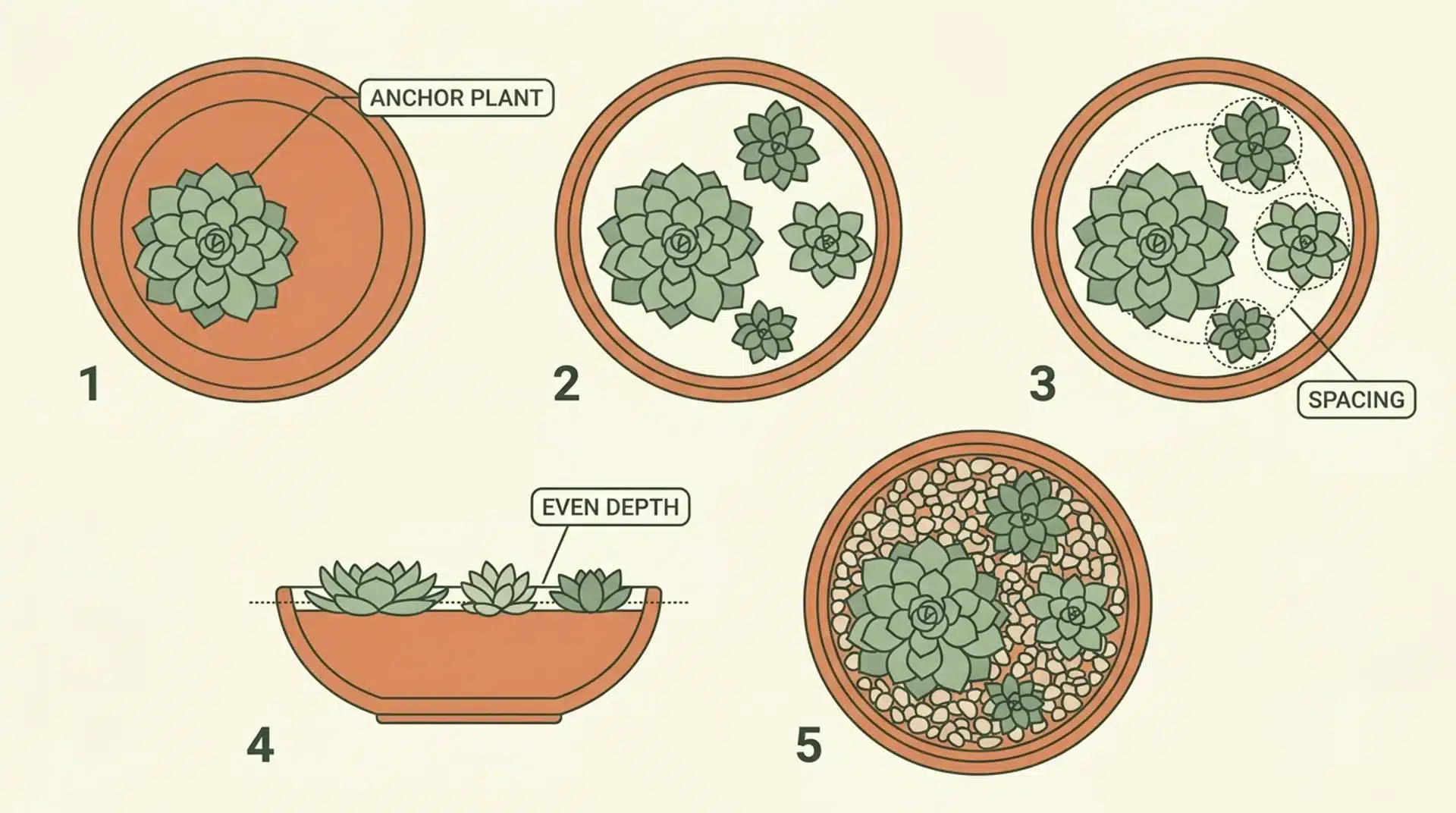
Arranging multiple succulents in one bowl follows different spacing rules than potting a single plant. A good layout gives each plant room to grow while keeping the bowl balanced and healthy.
- Place the largest plant first: Start with the tallest or biggest succulent to create a visual anchor. This makes it easier to position smaller plants around it without disturbing the layout.
- Add smaller plants around it: Place shorter succulents around the main plant while keeping each one visible. Arrange them by size and shape for a balanced look.
- Leave room between plants: Avoid placing succulents too close together. Space between plants allows future growth and improves airflow, which helps reduce problems caused by overcrowding.
- Keep the soil depth consistent: Set each succulent at a similar height so the arrangement looks even. Avoid having some plants sit much higher or lower than others.
- Check the final layout: Adjust the position of each plant before adding the finishing layer. This ensures every succulent has enough space and the bowl looks well arranged.
A little extra space goes a long way when planting succulents together.
Giving each plant room to grow helps maintain airflow, keeps the arrangement balanced, and prevents the bowl from becoming crowded over time.
Once your arrangement is established, you can fill any gaps over time by propagating succulents from healthy leaves instead of buying more plants.
Where to Place Newly Planted Succulents?
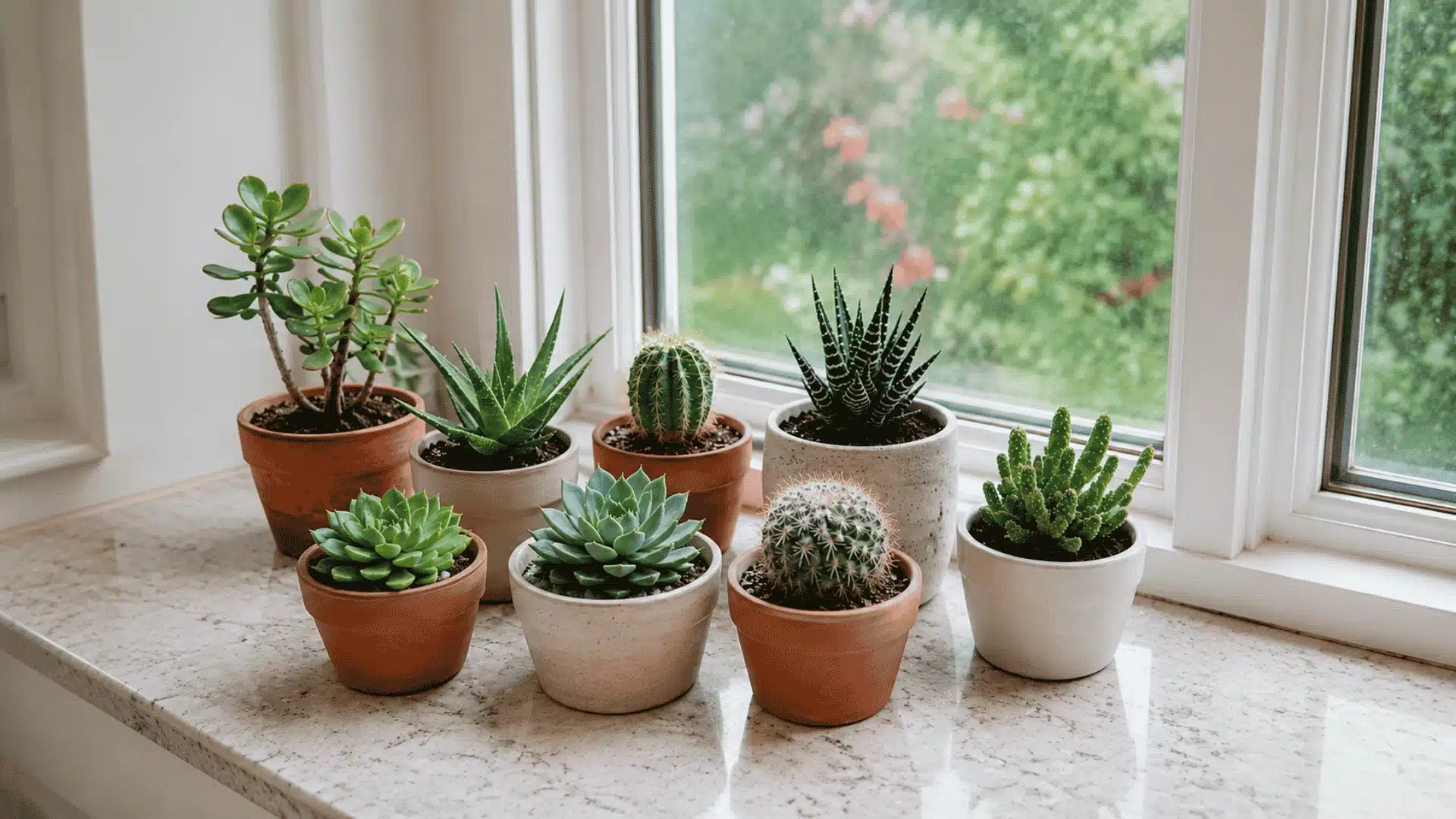
Light needs differ for a freshly planted succulent compared to an established one.
A new plant needs a gentler location while it adjusts, even though mature succulents tolerate stronger sunlight.
Indoors, place newly planted succulents near a bright window where they receive plenty of natural light. Avoid harsh direct rays at first, as they can stress the plant.
For outdoor succulents, begin with a spot that receives some shade before moving them into fuller sun. This gradual change helps the plant adjust without sudden exposure.
Watch for signs like stretching toward light or fading color, as these can show the current location is not providing enough light. Move the plant if needed.
Watering Succulents After Planting
The main watering rule for succulents is to let the soil dry completely between waterings, then water thoroughly. Their roots need periods without excess moisture to stay healthy.
Watering frequency changes based on location, pot size, soil mix, and light. Check the soil first instead of following a fixed schedule, as overwatering often causes failures.
| Do | Don’t |
|---|---|
| Check that the soil is completely dry before watering. | Water only because a certain number of days have passed. |
| Soak the soil thoroughly when watering to reach the roots properly. | Give small amounts of water frequently, as this keeps the soil damp. |
| Adjust watering based on how quickly the soil dries in your setup. | Follow the same watering schedule for every succulent. |
| Check the plant and soil condition before adding more water. | Water based only on habit without checking the actual moisture level. |
After planting, patience is important. Waiting for the soil to dry before adding more water helps prevent excess moisture and supports healthier root growth.
Common Succulent Planting Mistakes to Avoid
This section recaps the mistakes covered earlier as a simple checklist. Avoid these issues to help succulents adjust properly after planting.
- Using pots without drainage holes: Excess water gets trapped at the bottom, keeping roots wet for too long and increasing the risk of root problems.
- Using heavy garden soil: Soil that holds too much moisture creates unsuitable conditions for succulent roots.
- Choosing an oversized pot: Extra space around the roots takes longer to dry, which can leave the soil wet for extended periods.
- Crowding succulents in a bowl: Placing plants too close together reduces airflow and limits space for future growth.
- Giving new plants strong direct sun immediately: Freshly planted succulents need time to adjust before facing intense sunlight.
- Watering too frequently: Adding water before the soil dries is the most common mistake and can prevent healthy root development.
Avoiding these simple mistakes makes it easier for newly planted succulents to settle in. Focus on dry soil conditions, proper spacing, and gradual adjustments to give plants a better start.
Conclusion
Learning how to plant succulents is mostly about giving the roots the right start.
A pot with drainage, a loose soil mix, the correct planting depth, and enough space all matter more than fancy top dressing or constant attention.
I would let the plant settle before watering, then check the soil instead of following a fixed schedule.
That simple habit prevents most rot problems before they begin. Succulents do best when you give them dry roots, bright but gentle light at first, and time to adjust.
Start with one healthy plant, set it up the right way, and watch how much easier succulent care becomes.
Frequently Asked Questions
Do succulents need a big pot or a small one?
Succulents do better in a pot that’s only slightly larger than the root ball rather than a big decorative one. A smaller pot holds less soil, so it dries out faster after watering, and quick drying is exactly what succulent roots need to stay healthy and avoid rot.
Do you plant succulents in soil or rocks?
Succulents grow in a fast-draining cactus or succulent soil mix, not rocks. The small stones or gravel on top of a finished planting are a top dressing added after planting to keep soil from splashing and leaves dry. They sit on the surface only and aren’t the growing medium the roots sit in.
How soon should you water a succulent after planting?
Wait three to five days before watering a newly planted succulent. This gives any roots disturbed or trimmed during planting time to heal over. Watering too soon lets moisture reach those small wounds and can lead to rot before the plant has settled into its new pot.
Can you use regular potting soil for succulents?
Regular potting soil holds too much moisture on its own, but it works once mixed with perlite or pumice in roughly equal parts. This raises drainage to match a cactus or succulent mix, so roots aren’t sitting in damp soil after each watering.