

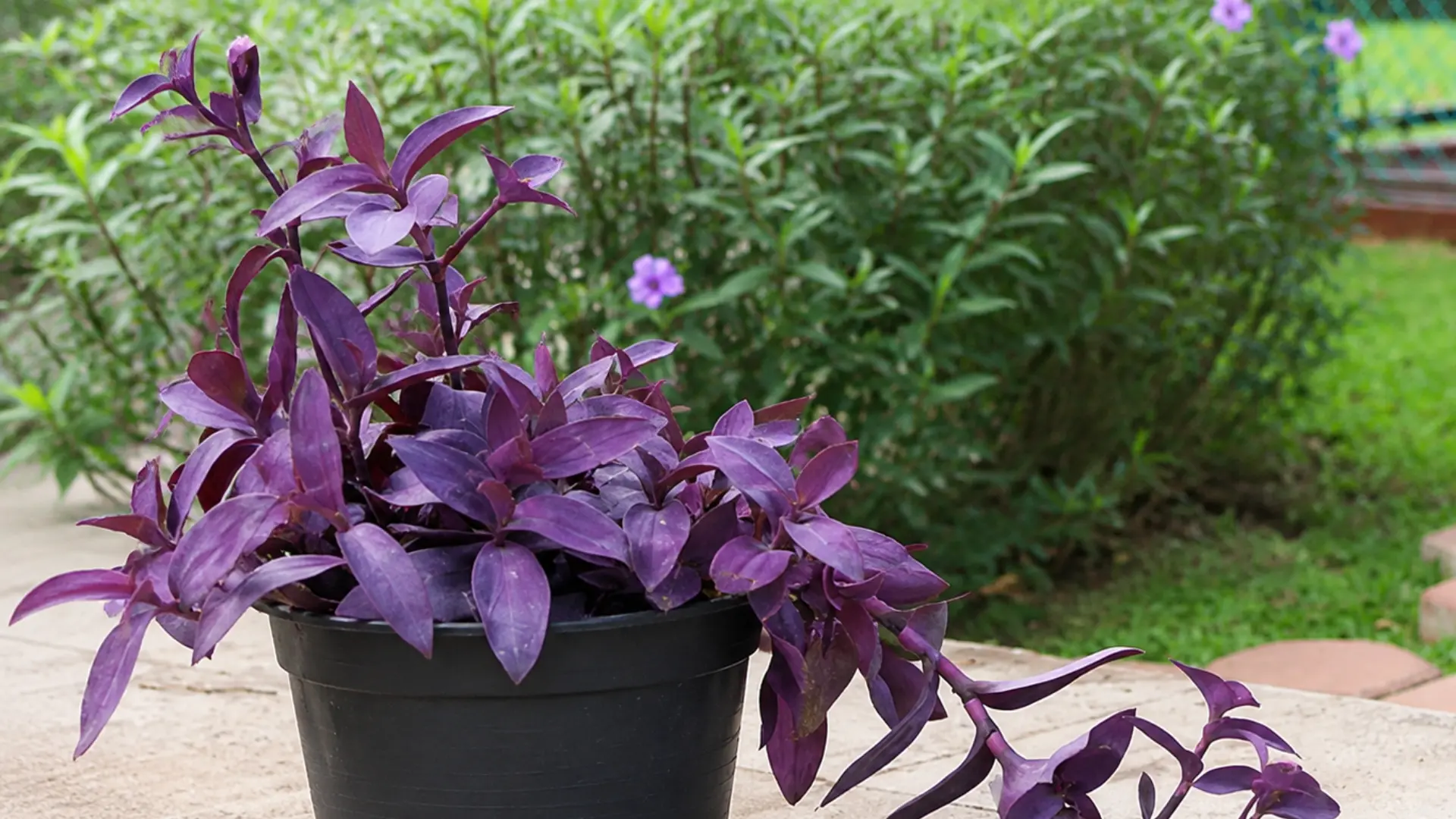
| Plant Name | Wandering Jew (Tradescantia zebrina) |
| USDA Zones | 9 to 11 outdoors, grown as a houseplant everywhere else |
| Sunlight | Bright, Indirect Light |
| Water Needs | Moderate, evenly moist but never soggy |
| Bloom Season | Sporadic small blooms, spring through summer |
| Best Use | Hanging baskets, shelves, and mixed containers |
Your wandering jew plant looked full and vibrant a month ago, and now the leaves are pale and the stems keep stretching toward the window.
Good wandering jew plant care usually solves that gap fast, since Tradescantia zebrina reacts to small changes quicker than almost any other houseplant I grow.
I’ve watched one thin out and turn leggy in a matter of weeks after its basic needs slipped, so the fix has to be consistent rather than occasional.
By the end of this guide, you’ll know why your plant is thinning out, how to fix root rot, and what keeps its purple and silver striping from fading.
Understanding How a Wandering Jew Plant Grows
Tradescantia zebrina is a fast growing trailing plant known for its striped green, silver, and purple foliage. Its stems spill outward instead of standing upright, which is exactly why it earns a spot on shelves, in raised pots, and in hanging baskets rather than on a plain windowsill.
Each stem carries several nodes where new leaves and roots can form. Those nodes are the reason this plant propagates so easily, and why a trimmed stem left in the right spot will often root again on its own.
If you keep other trailing houseplants around the house, the same node structure shows up across several other trailing vine varieties, which is part of why they all share similar propagation habits.
Growth can thin out near the base as the older vines lengthen. That is not automatically a sign of poor health. Regular trimming, combined with tucking fresh cuttings back into the same pot, keeps the plant looking full as it matures instead of scraggly at the crown.
What Growing Conditions Does a Wandering Jew Plant Need?
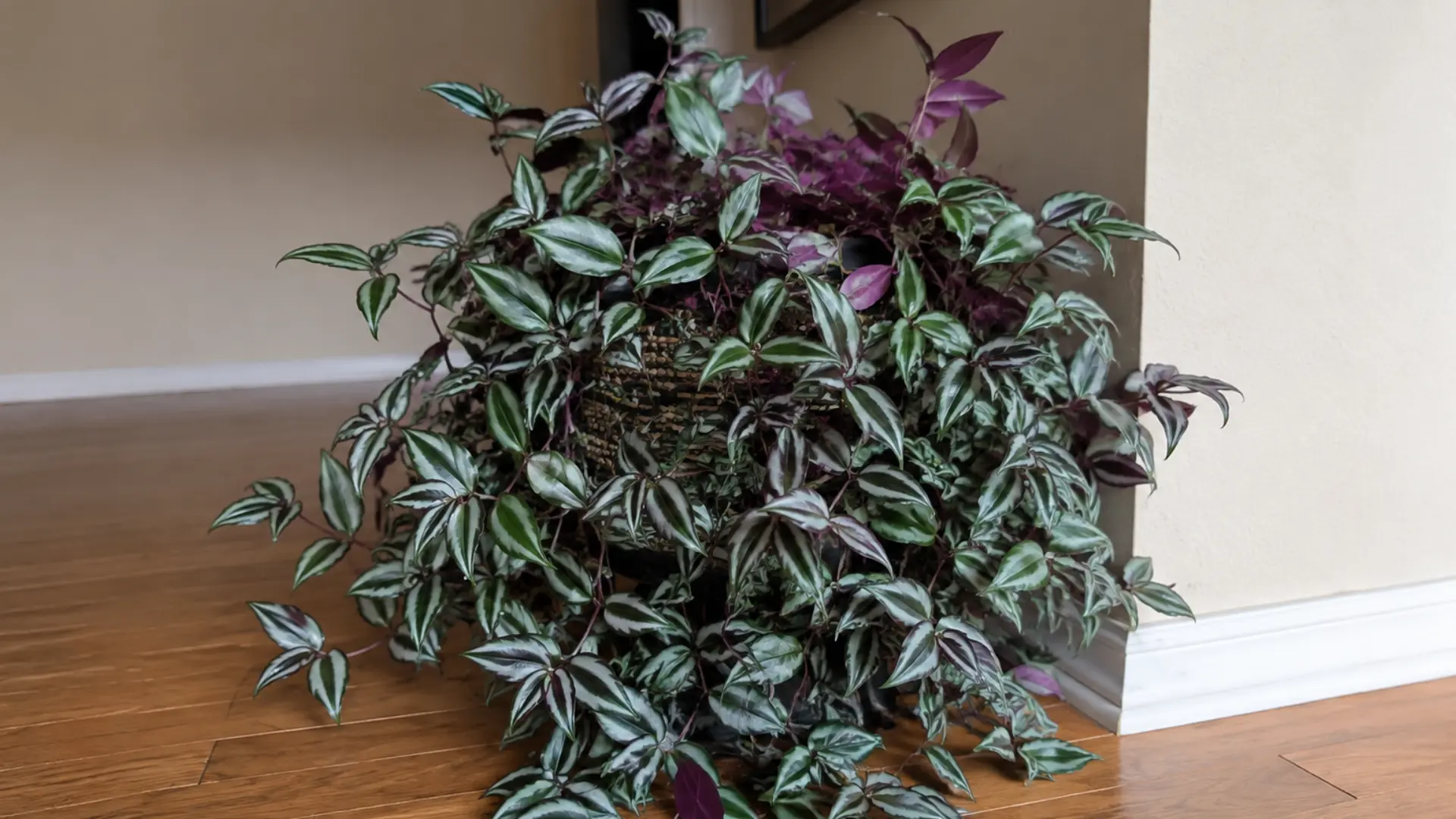
Light, temperature, soil, and drainage are the four variables that decide whether Tradescantia thrives or slowly declines. Getting these right from the start heads off most of the problems homeowners bring to me later.
Give It Bright, Indirect Light
Place Tradescantia near a bright window where the leaves receive plenty of filtered daylight throughout the day.
An east facing window usually works best because it delivers gentle morning sun without the harsh afternoon heat. A west facing spot can also work as long as the strongest afternoon rays are not hitting the foliage directly for hours at a time.
Strong, direct sunlight tends to leave pale or scorched brown patches on the leaves. Too little light causes the opposite problem: stems stretch, the space between leaves widens, and the purple and silver striping starts to fade. New growth usually shows a lighting problem before the older leaves do, so that is the first place I check.
Keep Temperatures Warm and Stable
Tradescantia performs best in warm indoor temperatures, generally between 65°F and 85°F.
Keep the pot away from cold windows, direct air conditioning vents, and doors that open to the outside often. Sudden temperature swings stress the tender leaves and stems faster than most people expect.
Bring any outdoor containers back inside before the first frost. Cold weather can damage soft new growth in a single night, even on a plant that looked completely healthy all summer.
Use Loose, Fast Draining Soil
Choose a light indoor potting mix that lets extra water move through the container instead of pooling. Working in some perlite improves drainage and keeps the root zone from turning dense and airless.
Heavy, compact soil stays wet for far too long and starves the roots of oxygen. That is one of the most common setups for the root problems covered later in this guide. If you are unsure which base mix to start from, the right potting mix makes a bigger difference to long term health than most people assume when they first pick up a bag at the garden center.
The container itself also needs drainage holes. Water needs somewhere to go, rather than collecting beneath the roots after every watering session.
| Tip: Pinch back the growing tips of young stems every few weeks. It costs you a bit of length in the short term, but it forces the plant to branch lower down, which is the fastest way I know to fix a Tradescantia that is starting to look thin near the base. |
With light, temperature, and soil handled, the next variable to get right is how and when you water, since Tradescantia is far more forgiving of a missed watering than an overwatered one.
How Should You Water and Feed a Wandering Jew Plant?
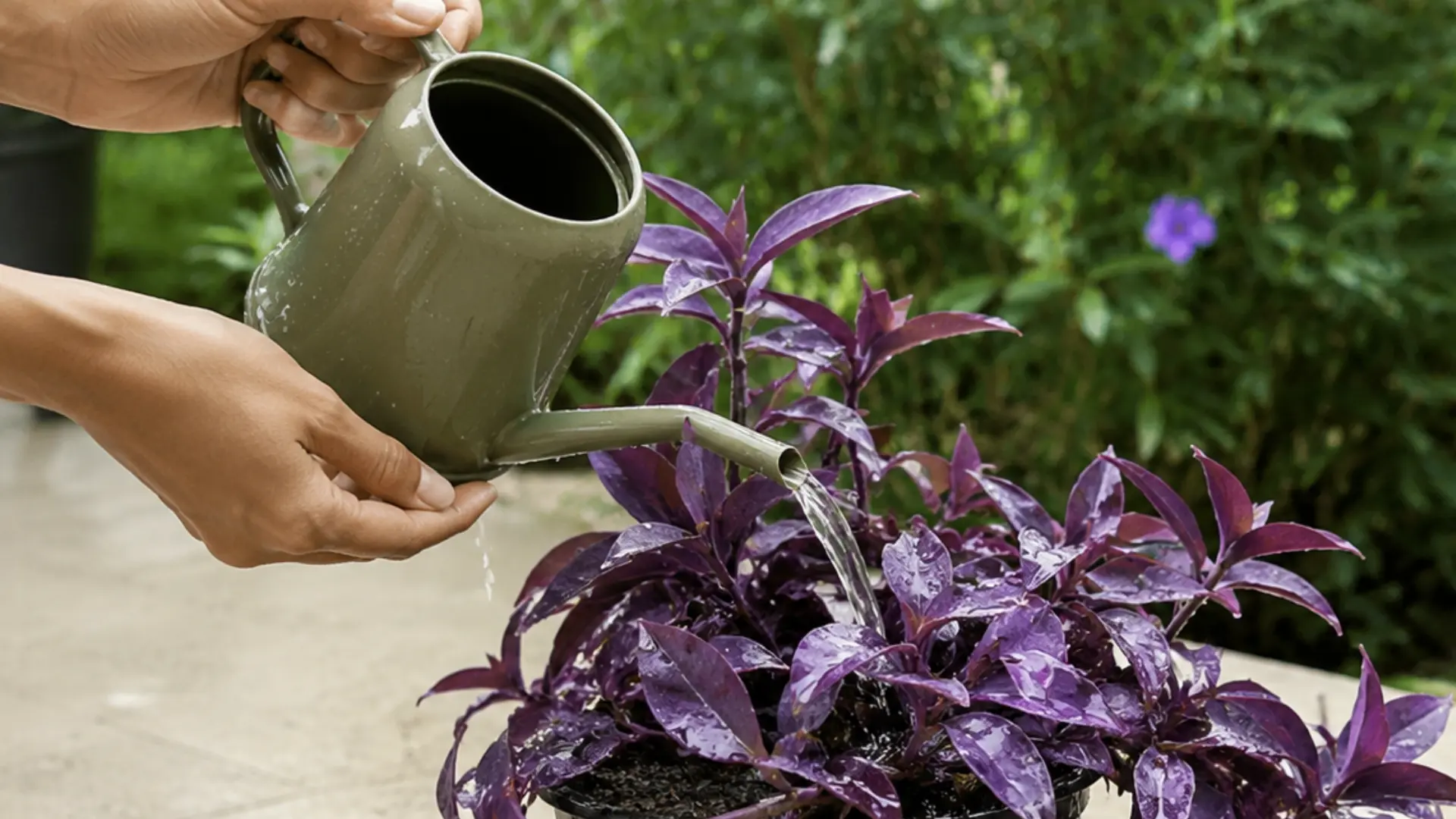
Tradescantia grows quickly, but that growth depends on balanced moisture and light feeding rather than heavy, frequent watering. Adjust your routine based on soil dryness, temperature, and how active the plant currently is.
- Check Soil First: Feel the top inch of soil before watering. If it still feels damp, wait a few more days. Water only once that upper layer feels dry to the touch.
- Water Thoroughly: Soak the soil evenly until water drains from the bottom of the pot. Empty any saucer or outer pot afterward so the roots never sit in standing water.
- Adjust With the Seasons: Warm, bright conditions dry the soil faster, while cooler winter temperatures slow moisture use and usually call for less frequent watering.
- Feed During Active Growth: Apply a diluted, balanced houseplant fertilizer through spring and summer. Cut back or pause feeding once growth slows in the colder months.
Checking the soil before every watering, and feeding only while the plant is actively growing, keeps care simple and avoids most of the moisture related problems that show up further down in this guide.
How Do You Propagate a Wandering Jew Plant?
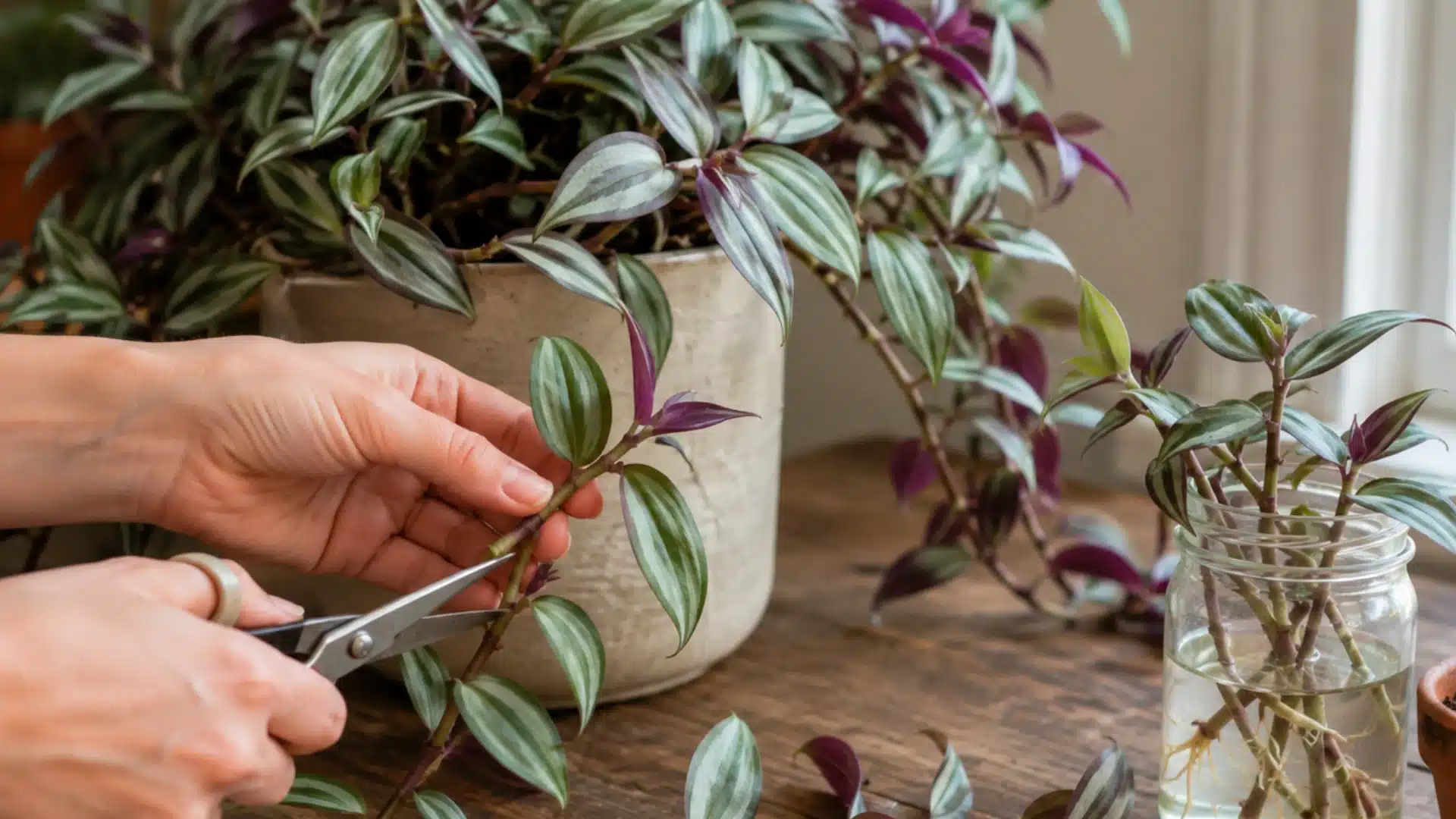
Tradescantia roots readily from its stem nodes, which makes propagation one of the easiest ways to start new plants or refresh an older, leggy one. If this is your first time taking cuttings from any houseplant, these beginner plant propagation steps apply just as well to Tradescantia as they do to most other trailing varieties.
Root Cuttings in Water
Choose a healthy stem about four inches long and cut it just below a node. Strip the lowest leaves so nothing sits underwater. Set the exposed node into a clean container of water and keep it in bright, indirect light.
Fresh roots usually appear within a couple of weeks under warm conditions. Move the cutting into potting soil once the roots reach roughly one to two inches long.
Root Cuttings Directly in Soil
Water is not required at all. Take a healthy cutting, remove the lower leaves, and bury at least one bare node beneath the surface of a lightly moist potting mix.
Keep the soil slightly damp while roots establish, but do not saturate it. Bright, indirect light and warm temperatures support new growth. You can place several cuttings in one pot if a fuller plant is the goal from the start.
What Causes a Wandering Jew Plant to Struggle?
Leaf and stem changes usually point toward a specific underlying problem. Check the whole plant, not just the symptom, before changing several care habits at once.
| Symptom | Likely Cause | What to Check |
| Yellow leaves | Excess moisture | Soil dryness and drainage |
| Soft stems | Root or stem rot | Roots, soil smell, standing water |
| Pale coloring | Insufficient light | Distance from the window |
| Long, thin stems | Weak light or limited pruning | New growth and node spacing |
| Brown patches | Strong direct sun | Afternoon light exposure |
| Crisp leaf edges | Dry air or salt buildup | Soil moisture and fertilizer use |
| Weak new growth | Root, light, pest, or temperature stress | The entire growing environment |
A single symptom rarely has one clean cause. Reviewing light, soil moisture, roots, and any recent changes together almost always gives a clearer answer than treating one symptom in isolation.
How to Treat Root Rot in a Wandering Jew Plant
Root rot usually develops once the soil stays saturated long enough that oxygen can no longer reach the root system.
Remove the plant from its container and inspect the roots. Healthy roots feel firm. Cut away anything dark, mushy, or foul smelling with clean tools, and remove any stems that were damaged along with them.
Once the damage is cleared out, repot the remaining healthy growth into fresh, loose mix and a clean container with drainage holes, then hold off on frequent watering while it recovers. If you want a fuller walkthrough before you start, repotting houseplants correctly covers timing, pot sizing, and how deep to set the plant.
If very little healthy root material survives, taking fresh cuttings from the unaffected stems is usually the faster way to save the plant rather than nursing a badly damaged root ball back to health.
What Pests Affect Wandering Jew Plants?
Tradescantia can attract the usual indoor houseplant pests, including spider mites, aphids, mealybugs, and scale.
Check the undersides of leaves, the stem joints, and any soft new growth whenever the plant suddenly starts declining without an obvious watering or lighting problem behind it.
Spider mites tend to show up as fine speckling and light webbing. Mealybugs look like small cotton like clusters around the stems and leaf joints, aphids cluster on tender new growth, and scale appears as small, fixed bumps on stems or leaves. These spider mite treatment methods work well on Tradescantia specifically because the trailing stems make it easy to isolate and treat one section at a time.
Move an affected plant away from your other houseplants when you can. Catching an infestation early is always easier than trying to bring a heavily infested plant back from the brink.
How Do You Care for a Wandering Jew Plant in Winter?
Growth naturally slows as the days shorten and indoor temperatures shift. Winter care should respond to that slower pace rather than copying the summer routine out of habit.
Let the soil dry out for longer stretches before watering, since the plant is using moisture more slowly. Reduce or pause fertilizer entirely until active growth returns, because fertilizer cannot make up for weak winter light no matter how much you apply.
Move the pot closer to whatever natural daylight is available, while still keeping the foliage away from cold window glass. Drafty doors and unheated rooms can expose the plant to sudden temperature drops, so stable indoor conditions matter more now than at any other point in the year.
Can a Wandering Jew Plant Grow Outdoors?
Tradescantia can live outdoors during warm weather as long as light and temperature stay within its comfort range.
| Note: According to the North Carolina State Extension Gardener Plant Toolbox, Tradescantia zebrina can be grown outdoors as a trailing groundcover in USDA hardiness zones 9 through 11. Outside that range, it is best treated as a seasonal patio plant that comes back indoors before the weather turns. |
Place containers in bright shade or filtered sunlight rather than moving an indoor grown plant straight into strong midday sun. Increase outdoor exposure gradually so the foliage has time to adjust without scorching.
Outdoor pots dry out faster because of heat and wind, so check the soil more often instead of assuming your indoor watering schedule still applies. Rain creates the opposite concern, so make sure water can drain freely after every storm. In areas with cold winters, bring container plants back indoors before frost or damaging low temperatures arrive.
Disposing of Tradescantia Cuttings Safely Outdoors
Tradescantia stems root so easily from their nodes that trimmed pieces should never just be left lying around a garden bed.
- Collect Cut Stems: Pick up trimmings after pruning instead of leaving them on soil, mulch, or damp ground.
- Keep Them Contained: Avoid tossing fresh cuttings into open garden beds, where the stems can stay moist enough to root on their own.
- Check Local Guidance: Some Tradescantia species can spread aggressively in warm climates, so it is worth checking local disposal advice for your area.
- Use Managed Disposal: Household waste or a properly managed composting system prevents unwanted rooting outside the pot.
Responsible disposal matters most in warm, humid climates, where detached stems have the best chance of surviving and rooting outside where you planted them.
Between the light, soil, and watering habits already covered, most of the questions I get about this plant come down to a handful of repeat concerns, which is exactly what the next section covers.
Final Verdict
Keeping a wandering jew thriving comes down to attention, not a strict calendar. Bright indirect light, fast draining soil, and watering only when the top inch dries out will keep it full and colorful instead of leggy and pale.
Root rot and thinning growth, the two problems I hear about most, are both easy to prevent once you know what to check and when to prune.
That’s really what wandering jew plant care is, responding to what the plant shows you instead of following a fixed routine. Try adjusting your light first and watch how fast it responds.
Tell me how yours is doing, and check out my other houseplant guides for more care tips.
Frequently Asked Questions
Are coffee grounds good for a wandering jew plant?
Used sparingly and well composted, coffee grounds can add mild nutrients and slightly acidify the soil, which Tradescantia tolerates fine. They are not a substitute for regular feeding, and fresh, uncomposted grounds can encourage mold, so a diluted liquid fertilizer remains the safer choice.
What do I do with my wandering jew in the winter?
Reduce watering since the plant uses less moisture in lower light and cooler temperatures, and stop feeding until spring. Keep it away from cold drafts and frost, since temperatures below its comfort range can damage the leaves. Slower growth over winter is completely normal.
Is Tradescantia zebrina toxic to pets?
The ASPCA lists a closely related Tradescantia species as a skin irritant for cats, dogs, and horses, and the sap in wandering jew can cause similar mild dermatitis on contact. Keep trailing stems out of reach of curious pets, especially in hanging baskets.
How often should you repot a wandering jew plant?
Repot every twelve to eighteen months, or sooner if roots circle the drainage holes or growth slows despite good light and watering. Spring, right as active growth resumes, is the easiest time to handle the move with minimal stress on the plant.
Why is my wandering jew plant losing its purple color?
Fading purple and silver striping almost always traces back to weak light. Move the plant closer to a bright window, since strong indirect light is what keeps the variegated coloring saturated on new growth.