

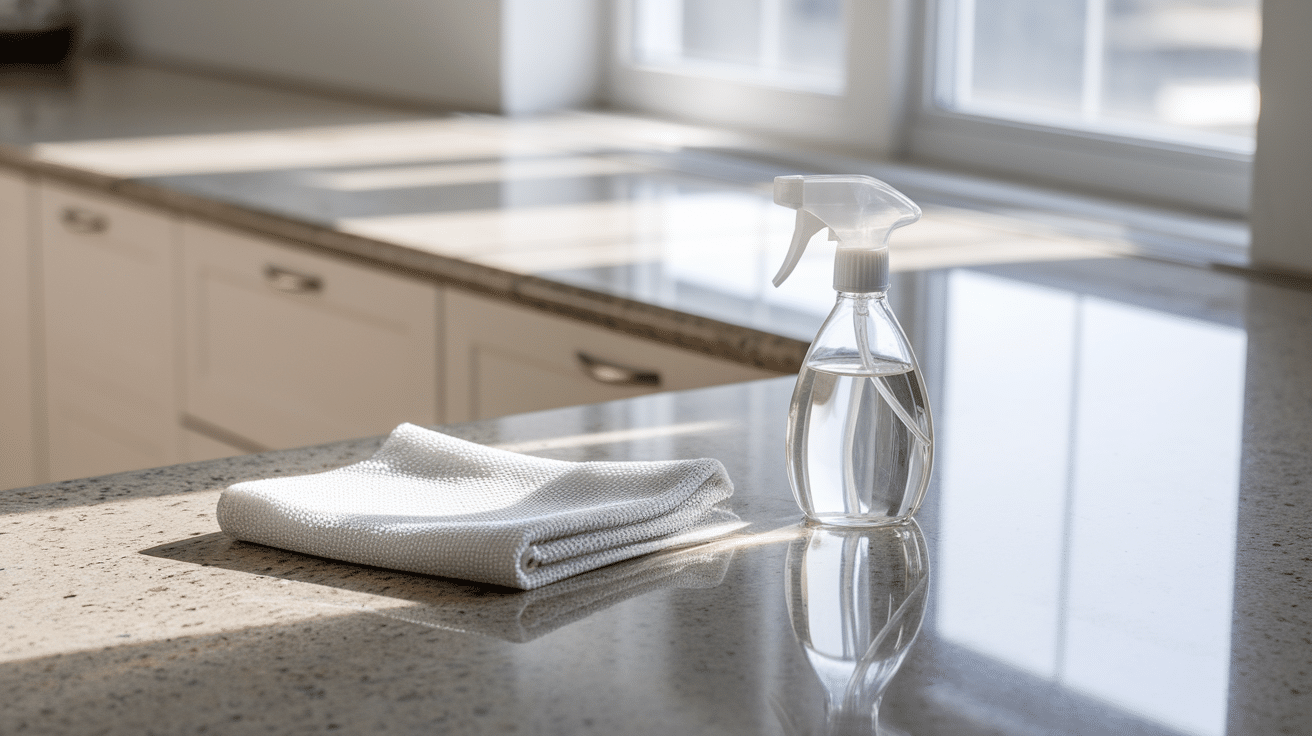
Granite countertops are a big investment. They look great, they last long, and they add real value to a kitchen or bathroom. But cleaning them the wrong way can quietly cause damage over time.
Most store-bought all-purpose cleaners are too harsh for granite’s porous surface. I’ve seen people reach for vinegar or lemon juice, thinking it’s a safe, natural option, only to find out later it’s been eating away at the sealant all along.
The good news is that a homemade granite cleaner is easy to make, costs very little, and works just as well as the expensive stuff from the store.
Why Granite Needs a Special Cleaner
Granite is a porous natural stone, which means it has tiny gaps and channels that can absorb liquids, bacteria, and cleaning residue if you are not careful.
Most granite surfaces are sealed with a clear protective coating that fills those pores and shields the stone from staining and discoloration.
The problem is that the wrong cleaner can break down that sealant over time, leaving the stone underneath exposed and vulnerable.
Standard all-purpose cleaners are too harsh for granite. Many contain acids, bleach, or ammonia that strip the sealant without you even noticing until the damage is done.
Even common natural alternatives like vinegar and lemon juice are highly acidic and will corrode the sealant over time.
What granite needs is a pH-neutral cleaner that removes dirt and bacteria without touching the protective layer.
That is exactly what a good homemade granite cleaner does: it uses simple, gentle ingredients that are safe for the stone and the sealant, both.
What You Need to Make a Homemade Granite Cleaner
- Rubbing alcohol (isopropyl alcohol): The main cleaning and disinfecting agent in most recipes
- Distilled or filtered water: Prevents mineral deposits and streaking that tap water can leave behind
- Mild dish soap: Cuts through grease and food residue in small amounts
- Castile soap: A gentler soap alternative that works well on natural stone surfaces
- Witch hazel: An alcohol-free option that works as a substitute for rubbing alcohol
- Baking soda: Used in the stain removal paste for lifting set-in stains
- Hydrogen peroxide: Paired with baking soda for a stain-lifting paste on light-colored granite
- Essential oils: Optional, used to mask the smell of alcohol and add a light scent
- 16 oz spray bottle: Glass is preferred when using citrus essential oils
- Microfiber cloth: The best tool for applying and wiping off the cleaner without scratching
Homemade Granite Cleaner Recipes
There are four simple recipes to choose from depending on what you need. Each one uses safe, gentle ingredients that won’t harm your granite or its sealant.
1. Basic Daily Spray Cleaner
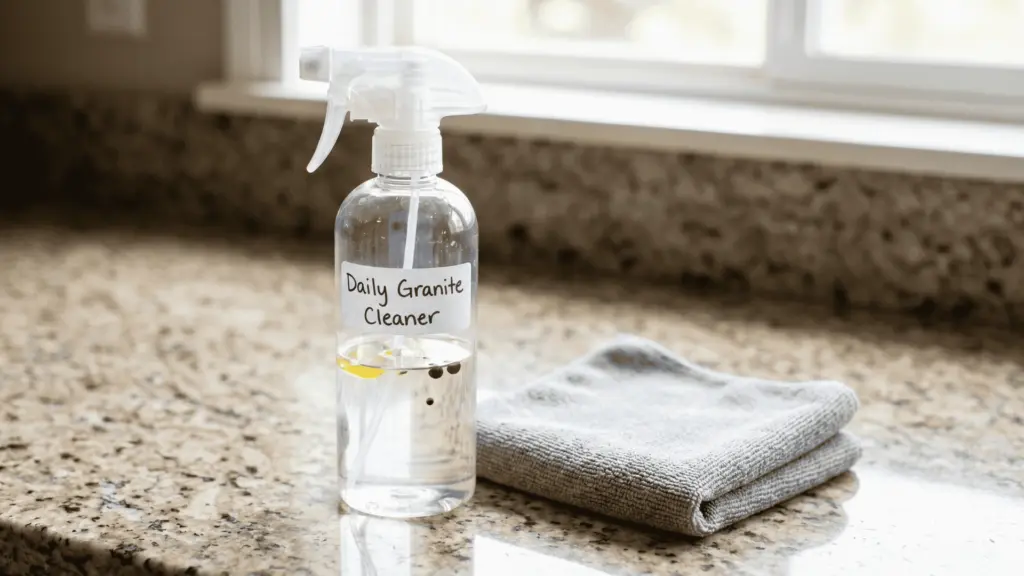
This is the go-to recipe for everyday cleaning. It takes less than two minutes to make and works on all sealed granite surfaces.
Ingredients:
- 1/2 cup rubbing alcohol
- 1 1/2 cups distilled water
- 1/2 teaspoon mild dish soap
- 10–20 drops of essential oil (for a light scent)
Simple ingredients you likely already have, no store run needed.
- Pour the rubbing alcohol into a 16-oz spray bottle first.
- Add the dish soap directly into the bottle.
- Fill the rest of the bottle with distilled water.
- Add essential oil drops if using.
- Secure the lid and shake gently to combine.
- Label the bottle and store it away from children and pets.
Tip: Shake well before each use, spray directly onto the granite surface, and immediately wipe down with a clean microfiber cloth.
2. Castile Soap and Alcohol Cleaner
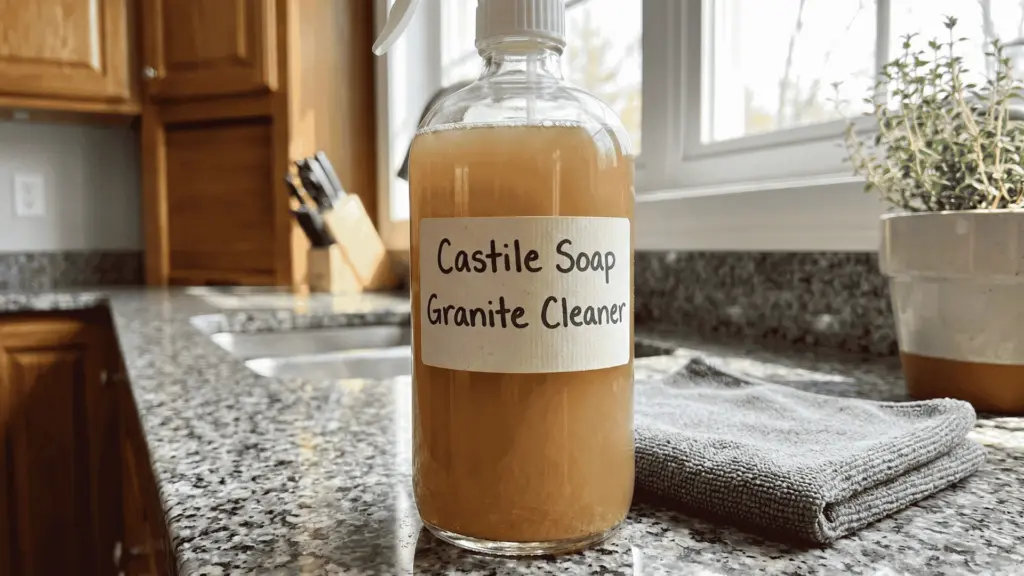
This version swaps dish soap for castile soap, which is gentler and less likely to leave a soapy buildup over time. It is a good option if you clean your granite surfaces frequently.
Ingredients:
- 1/2 cup rubbing alcohol
- 1 1/2 cups distilled water
- 1 teaspoon castile soap
- 10–15 drops of essential oil (optional)
A small swap, a gentler clean, your granite will thank you for it.
- Pour rubbing alcohol into a 16-oz glass spray bottle.
- Add the castile soap to the bottle.
- Add essential oil drops if desired.
- Fill the rest of the bottle with distilled water.
- Place the lid on and shake well to combine all ingredients.
Tip: Spray onto granite and wipe clean with a microfiber cloth if the surface stays wet, buff it dry with a second one.
3. Alcohol-Free Granite Cleaner
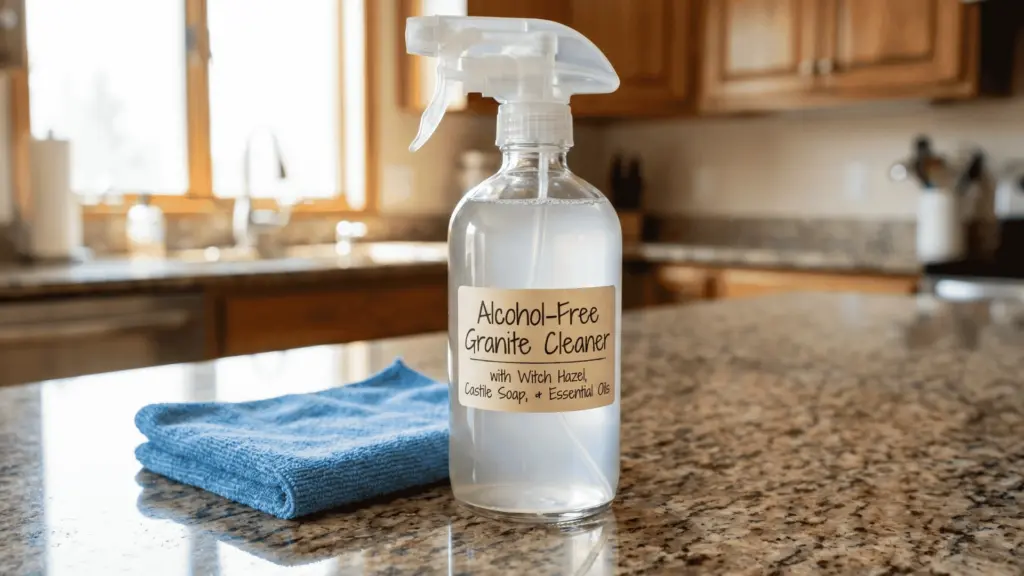
If you prefer to skip rubbing alcohol entirely, witch hazel makes a solid substitute. It is gentler, still effective at cutting through grime, and safer around young children and pets.
Ingredients:
- 1/2 cup witch hazel
- 1 1/2 cups distilled water
- 1 teaspoon castile soap
- 10 drops of essential oil (optional)
Soft on surfaces, safe for the whole household, a gentle clean without compromise.
- Pour witch hazel into a 16-oz spray bottle.
- Add the castile soap.
- Add essential oil drops if using.
- Fill the remainder of the bottle with distilled water.
- Secure the lid and shake well before use.
Tip: Spray lightly onto granite and wipe immediately with a microfiber cloth, don’t let it sit.
4. Stain Removal Paste
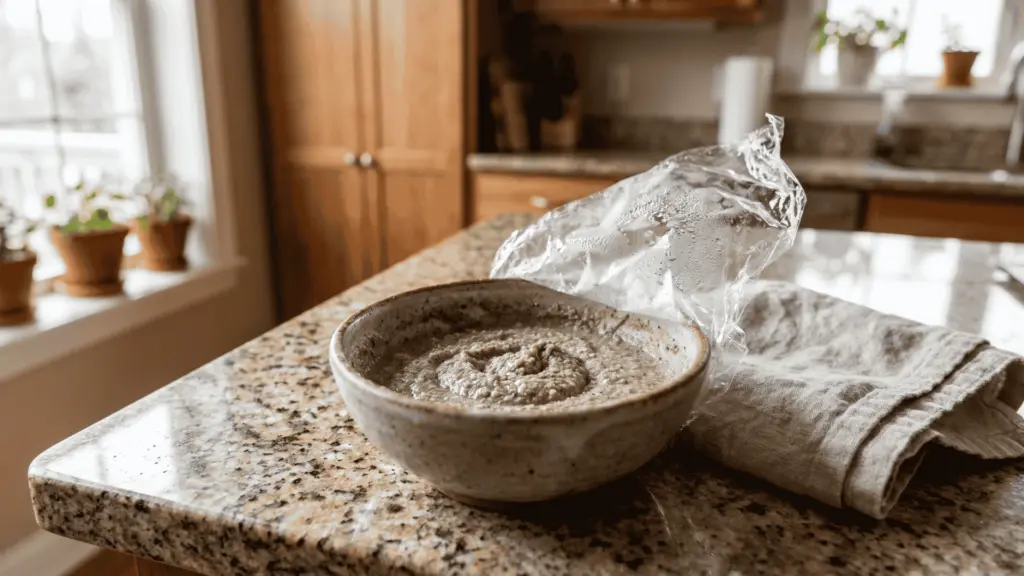
For stubborn stains like coffee, tea, hard water marks, or wine that have set into the granite, a paste works better than a spray. This is not for daily use but for targeted stain removal when needed.
Ingredients:
| Stain Type | Ingredient 1 | Ingredient 2 |
|---|---|---|
| Water or food-based stains | Baking soda | Hydrogen peroxide |
| Oil-based stains | Dish soap | Water |
The right mix depends on the stain, but the solution is always close by.
- Mix baking soda with just enough hydrogen peroxide to form a thick paste.
- For oil-based stains, replace hydrogen peroxide with a few drops of dish soap and a little water instead.
- Spread the paste generously over the stained area.
- Cover the paste with a piece of plastic wrap to keep it from drying out.
- Let the paste sit for up to 24 hours.
Tip: Remove the plastic wrap, then gently scrub away the paste with water and a soft cloth, rinse clean, and dry with a microfiber cloth.
How to Use Your Homemade Granite Cleaner?
Using the right method matters just as much as using the right cleaner. Here’s how to apply your homemade spray to different granite surfaces around your home.
Countertops
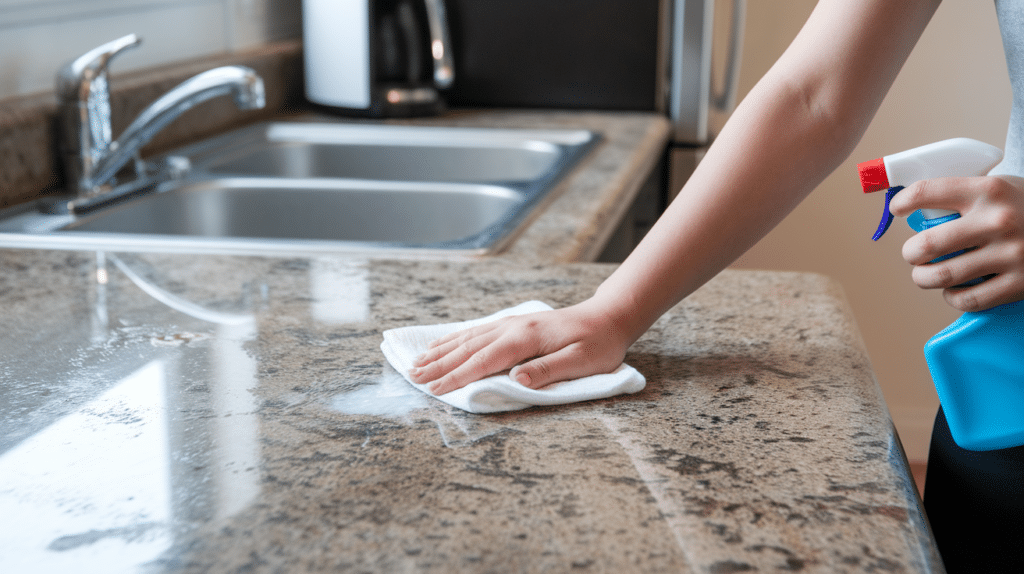
Start by wiping the surface with a clean, dry cloth to remove any loose crumbs or debris. Spray your homemade granite cleaner generously across the entire countertop.
Using a microfiber cloth, wipe the surface down in gentle circular motions. For any stubborn spots or sticky buildup, apply a little extra spray and use slightly more pressure to loosen the grime.
Once clean, go back over the whole surface with a fresh dry cloth to pick up any remaining moisture. Leaving liquid to dry on granite can cause minor streaking, so wiping it dry is an important final step.
Granite Floors
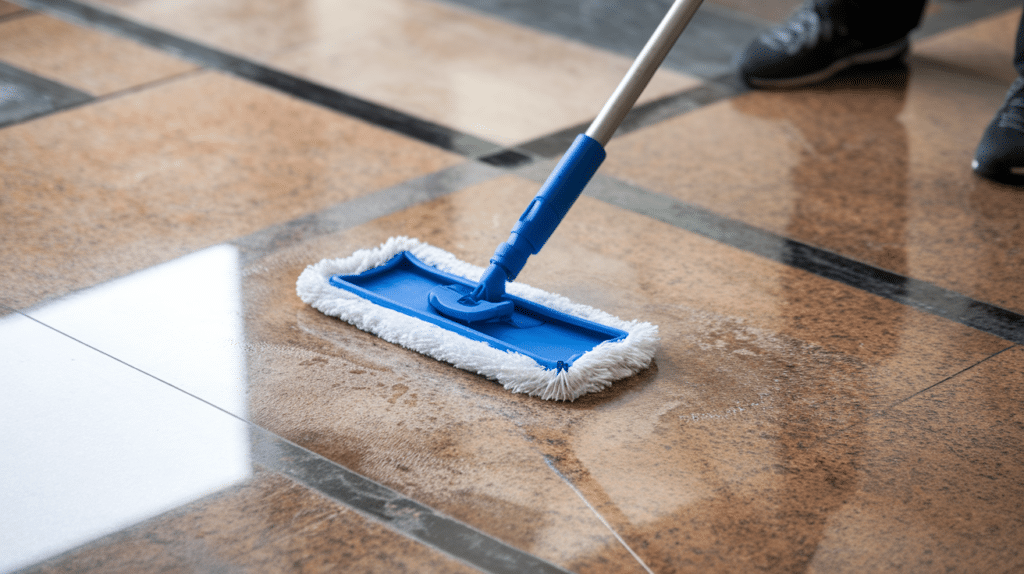
The same cleaner works on granite floors, but uses a microfiber mop instead of a cloth to cover the surface more efficiently and save your back.
Spray the cleaner in small sections and mop with the grain of the stone if visible. Wring the mop head well between sections to avoid leaving too much moisture on the floor.
Granite floors in kitchens and bathrooms pick up grease, dirt, and foot traffic quickly, so a light clean every few days keeps them looking sharp without needing a deep clean as often.
Backsplashes
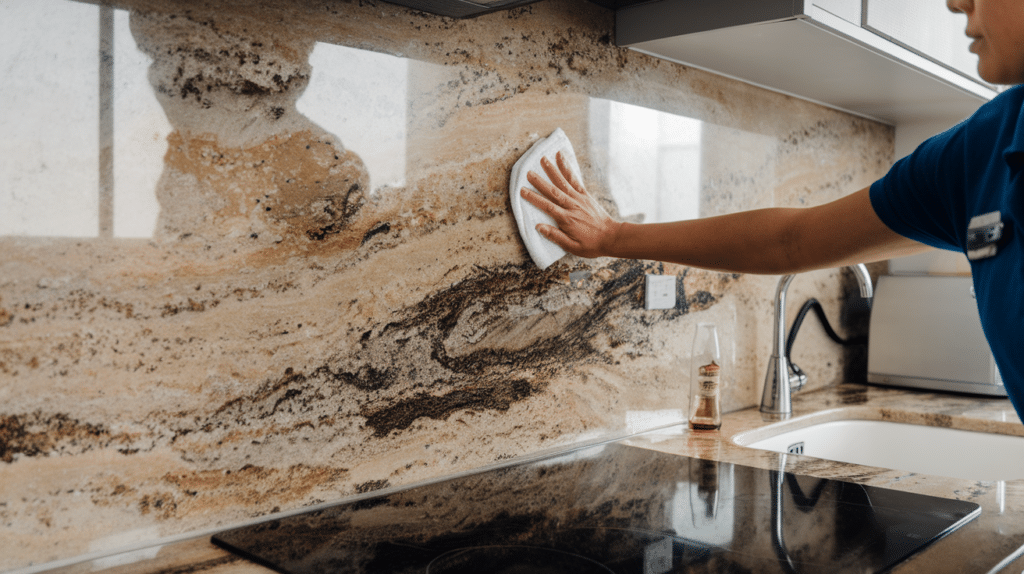
Granite backsplashes collect grease, cooking residue, and water splatter regularly. Spray the cleaner directly onto the backsplash and wipe down with a microfiber cloth.
One important note here: avoid spraying the cleaner onto any surrounding finished wood, such as cabinet frames or wood trim.
Rubbing alcohol can erode paint or lacquer on wood surfaces, so spray carefully and wipe any overspray immediately.
Does Homemade Granite Cleaner Actually Work?
Once you’ve made a batch, it’s reasonable to wonder how it stacks up against the $10 bottles at the hardware store. For most households, the answer is: just as well.
Why Rubbing Alcohol Does the Heavy Lifting
The key ingredient in most homemade granite cleaner recipes is rubbing alcohol or witch hazel.
Rubbing alcohol at 70% concentration is an effective disinfectant; it kills common kitchen bacteria on contact, cuts through grease, and evaporates quickly without leaving a residue behind.
Concentrations above 90% actually evaporate too fast to disinfect properly, so the standard 70% bottle from the drugstore is the right choice.
Why It Dries Without Streaks
That fast evaporation is what makes rubbing alcohol ideal for granite, since excess moisture sitting on the surface is one of the main causes of long-term damage.
Distilled water keeps the formula streak-free by removing the minerals found in tap water that can leave behind white spots.
Why It Cuts Through Grease
Adding a small amount of castile soap or dish soap gives the cleaner extra degreasing power for kitchen surfaces where food oils and residue build up. The result is a cleaner that disinfects, cuts through grime, and dries without streaks, which is everything a granite surface needs.
The One Thing It Can’t Do
The only thing a homemade cleaner cannot do is reseal granite. That should be done separately once a year using a dedicated granite sealer.
What Not to Use on Granite
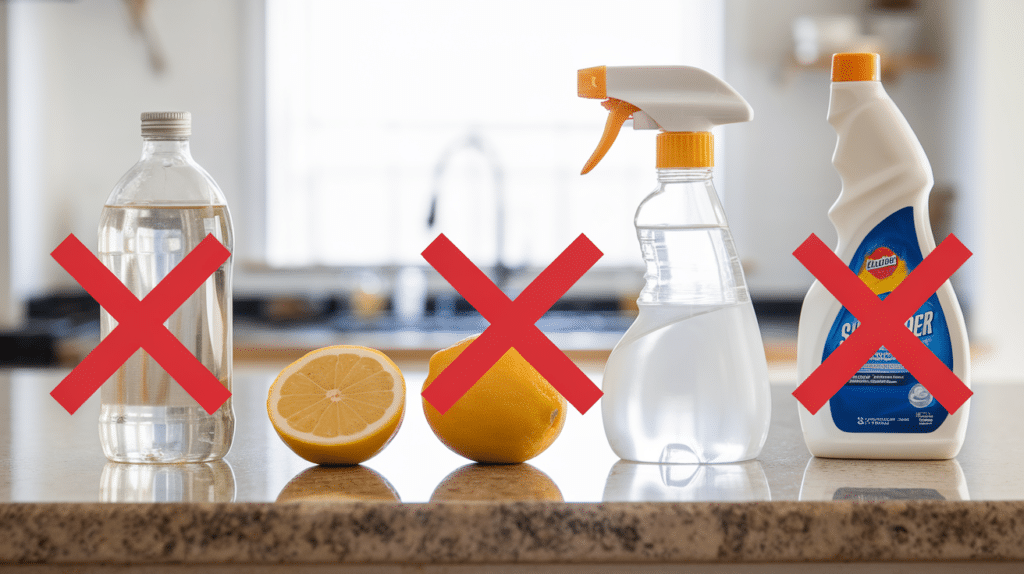
These common household products seem harmless, but can cause lasting damage to granite and its sealant:
- Vinegar: Highly acidic and will corrode the sealant with repeated use, even when diluted
- Lemon juice or citric acid: Same problem as vinegar; the acidity eats away at the protective layer
- Bleach: Too harsh for granite and can cause permanent discoloration on the stone
- Ammonia-based cleaners: These break down the sealant and dull the surface finish over time. Many glass cleaners contain ammonia, so check the label before using them near granite.
- Abrasive scrubbers or steel wool: Scratches the surface and strips the polish permanently
- Disinfecting wipes: Most contain citric acid or bleach; fine for other surfaces, but damaging to granite with regular use
- Oil-based soaps: Leave a greasy film that builds up over time and attracts more dirt
- Hard tap water: The minerals leave white deposits that are difficult to remove once they dry
Homemade vs. Store-Bought Granite Cleaner
Both options can get the job done, but they’re not equal in cost, safety, or convenience.
| Factor | Homemade | Store-Bought |
|---|---|---|
| Cost | Very low; uses ingredients you already have | $5–$15 per bottle |
| Ingredients | Known, simple household items | Often contains unknown chemicals |
| Safety | Non-toxic, gentle on stone and sealant | Varies; some are too harsh for granite |
| Effectiveness | Works well for daily cleaning and stain removal | Formulated specifically for granite |
| Scent | Customizable with essential oils | Pre-scented, no control over fragrance |
| Convenience | Takes a few minutes to mix | Ready to use straight away |
| Availability | Made at home anytime | Requires a store trip or online order |
| Eco-friendliness | Less packaging waste, fewer chemicals | More packaging, often more chemical waste |
Tips to Keep Granite Clean Longer
- Wipe up spills immediately. Liquids left sitting on granite can seep into unsealed areas and cause staining that is difficult to reverse.
- Use cutting boards and trivets. Granite handles heat and scratches better than most surfaces, but direct cuts and very hot pans still wear down the polish over time.
- Seal granite once a year. A fresh coat of granite sealer keeps the protective layer intact and makes everyday cleaning noticeably easier. To check whether your granite needs resealing, drop a small amount of water on the surface. If it beads up, the seal is holding. If it soaks in within a few minutes, it’s time to reseal.
- Always use a microfiber cloth. Sponges and rough cloths leave scratches and soap residue that dull the surface.
- Dry the surface after cleaning. Never let your cleaner air dry; it leaves streaks or water marks, even with a good formula.
- Keep citrus off the surface. A cut lemon resting on granite for even a few minutes can start to etch the sealant.
- Don’t leave soap dispensers directly on granite. Soap drips are acidic and slowly damage the stone beneath the bottle.
- Clean lightly and often. A quick wipe every day or two is far easier than breaking down heavy buildup once a week.
Conclusion
Making your own homemade granite cleaner is one of the simplest swaps you can make in your cleaning routine.
It costs almost nothing, takes a few minutes to mix, and does a great job of keeping granite surfaces clean, shiny, and protected without the risk of harsh chemicals breaking down the sealant.
Start with the basic daily spray recipe and see how your countertops respond. Once you find the combination you like, you can batch it up and keep a bottle ready under the sink at all times.
Granite is a long-term investment in your home, and it deserves a cleaner that treats it right.
Have you tried making your own granite cleaner before? Drop a comment below and share which recipe works best for you.