

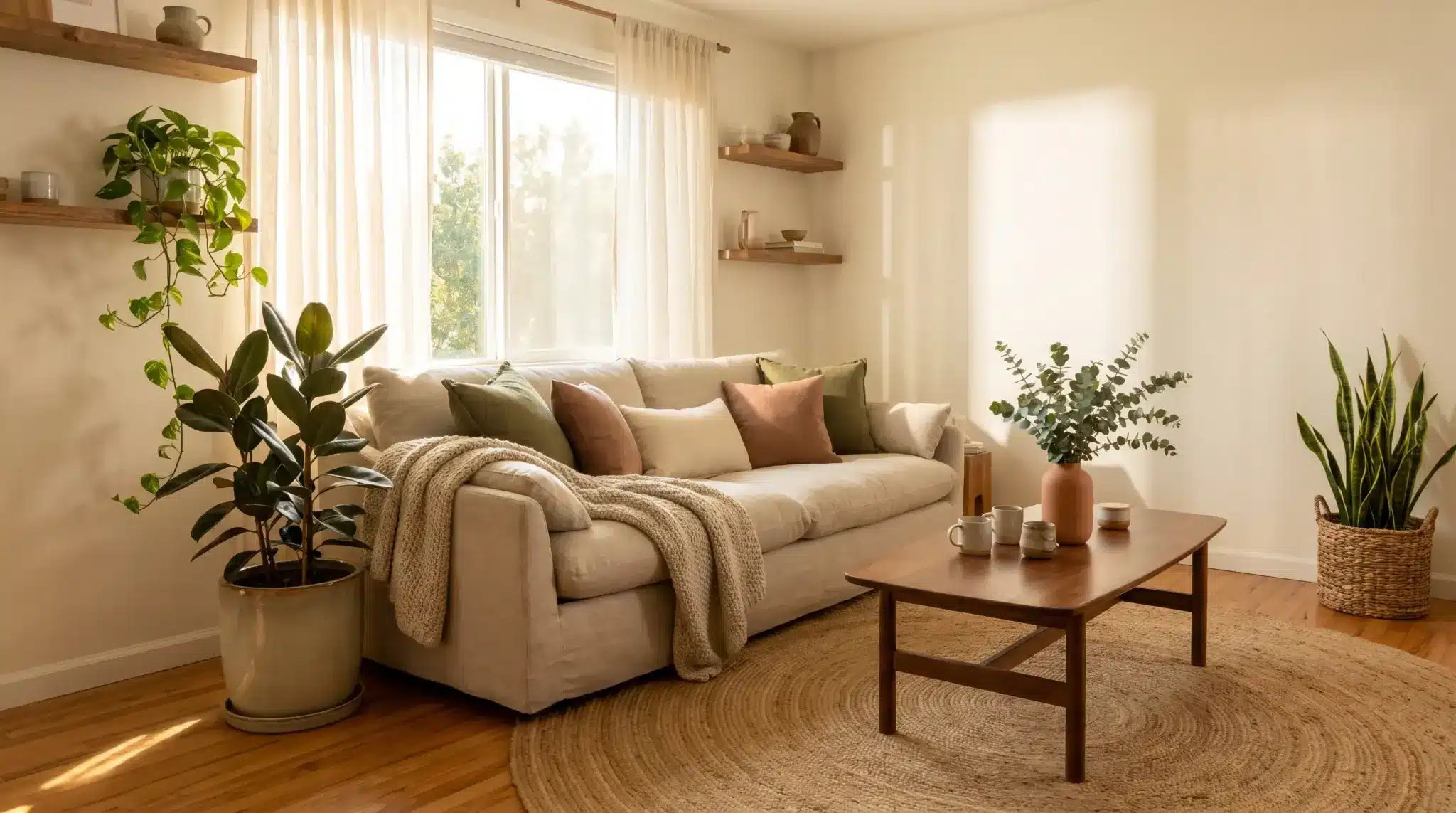
A cozy living room is not only about soft pillows or warm lighting. The best rooms often feel calm because they have a natural rhythm to them. The colors are easy on the eyes, the textures feel good to touch, and the furniture invites people to slow down rather than simply sit down.
For anyone who loves gardening, outdoor living, or bringing a little more nature indoors, the living room can become more than a place to watch TV. It can feel like a quiet extension of the garden: grounded, breathable, and full of small details that make everyday life feel more settled.
The good news is that creating this kind of space does not require a full renovation. A few thoughtful choices in color, seating, materials, plants, and layout can make a room feel warmer and more connected to the natural world.
The sofa is usually the best place to start because it sets the tone for how the room is used. Soft, generous seating makes the space feel welcoming from the moment someone enters. For homeowners looking for that relaxed, sink-in feeling, cozy living room sofas can work beautifully as the anchor of a nature-inspired room, especially when paired with earthy textures, natural light, and simple greenery.
Start With a Softer Color Palette
Nature rarely feels harsh. Even when it is full of color, it usually has balance: soft greens, warm browns, pale stones, creamy flowers, muted clay, and the quiet gray of weathered wood. A cozy living room can borrow from that same palette.
Instead of starting with bright or overly polished colors, try building the room around gentler tones. Warm white walls, oatmeal upholstery, soft beige rugs, olive green accents, and walnut or oak furniture can create a calm foundation.
This does not mean the room has to be plain. Natural spaces have plenty of variation. The trick is to let the colors feel connected rather than competing. A moss green cushion, a terracotta vase, and a light wood coffee table can all work together because they feel like they belong to the same world.
If the room already has darker furniture or stronger colors, you do not have to replace everything. Add softness through textiles, curtains, throws, or a lighter rug. Cozy design is often about balance, not starting over.
Choose Seating That Invites Rest
A living room connected to nature should not feel stiff. It should feel like a place where people can read, nap, stretch out, talk, or sit quietly with a cup of tea.
That is why seating matters so much. A sofa with a deep seat, soft cushions, and a relaxed shape can immediately change the mood of the room. It suggests comfort without needing to say anything.
Cloud-style sofas work especially well in this kind of setting because they create an easy, casual feeling. They pair nicely with natural textures like linen, cotton, jute, wool, and wood. They also soften rooms that have hard floors, large windows, or open layouts.
When choosing a sofa, think about how the room is actually used. Is it a family gathering space? A quiet reading corner? A place for guests? A weekend nap zone? The best sofa is not just the one that looks good in photos. It is the one that supports the way people really live.
This is where Povison’s fully assembled approach can be helpful for homeowners who want comfort without the stress of complicated setup. A ready-to-use piece can become part of the room quickly, which matters when the goal is to make home feel easier, not more demanding.
Layer Natural Textures
Texture is one of the simplest ways to make a room feel closer to nature. Even a neutral room can feel rich and warm when different materials are layered thoughtfully.
A few useful combinations include:
- a linen sofa with a chunky knit throw;
- a jute rug under a smooth wood coffee table;
- ceramic planters beside woven baskets;
- cotton curtains paired with wooden blinds;
- wool cushions against soft upholstery.
The goal is not to fill the room with rustic decor. A modern living room can still feel natural. The difference is in the materials. Pieces that show grain, weave, weight, or softness tend to feel more grounded than surfaces that are too glossy or artificial.
If the room feels cold, add something tactile. If it feels flat, add contrast. A soft sofa, woven rug, clay vase, and leafy plant can do more for coziness than a dozen decorative objects.
Let Plants Shape the Room
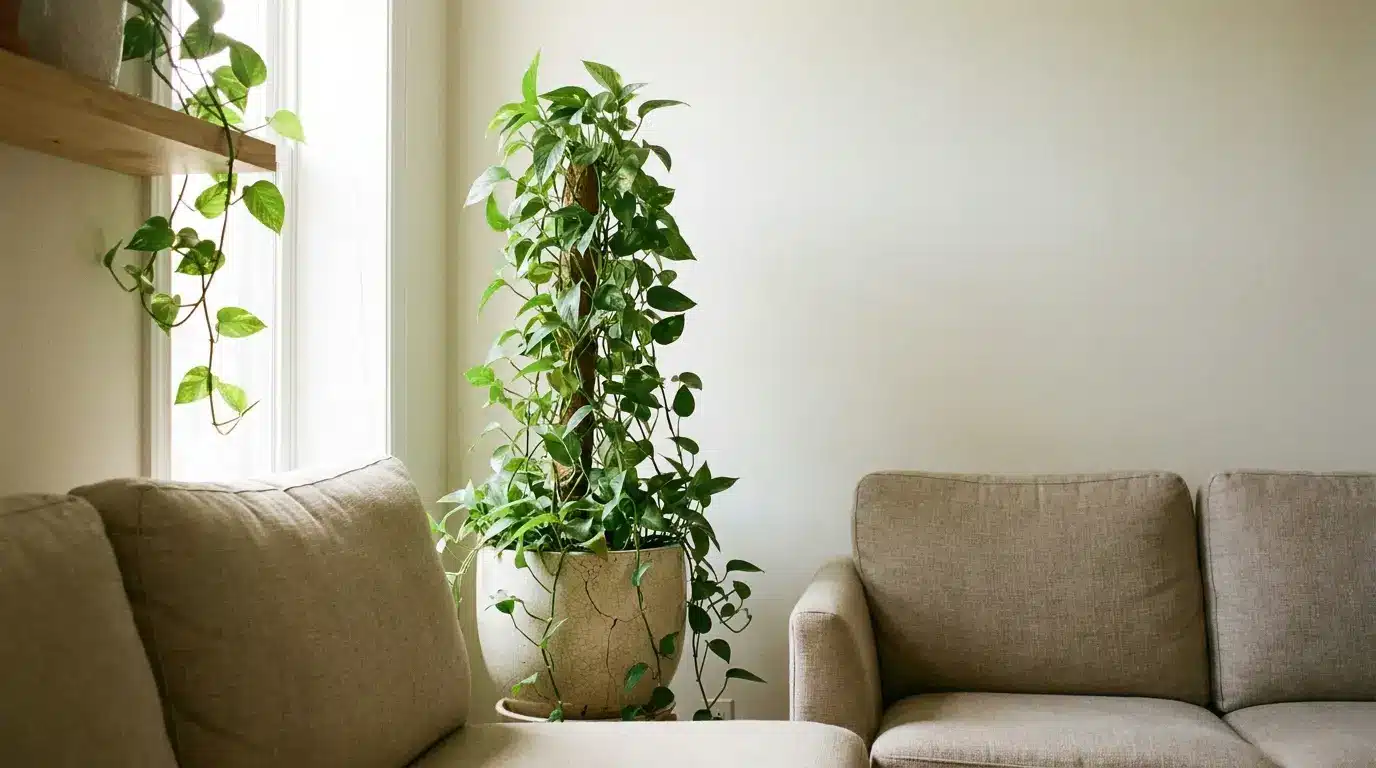
Plants are the most direct way to bring nature into a living room, but they work best when they are treated as part of the room’s design rather than afterthoughts.
A tall plant near a window can soften an empty corner. A trailing plant on a shelf can make the room feel more relaxed. A cluster of small herbs or leafy plants near the coffee table can add life without making the space feel crowded.
The key is scale. A large sofa can handle a taller plant nearby. A small apartment living room may work better with one statement plant rather than many small pots. If the room already has a lot of furniture, use vertical space: plant stands, shelves, or hanging planters can help without taking up too much floor area.
Low-maintenance plants are often the best choice for a cozy room because they support calm rather than creating another chore. Snake plants, pothos, ZZ plants, rubber plants, and peace lilies can all work well depending on the light.
A nature-inspired living room should feel alive, not overstyled.
Use Light Like a Design Material
Natural light changes how a room feels more than almost any decor choice. A bright room can feel open and fresh, while softer evening light can make the same room feel intimate.
If your living room has good windows, avoid blocking them with heavy furniture. Let the sofa face or sit near the light when possible. A sunny corner can become a reading spot. A coffee table near the window can hold plants, books, or a simple vase.
For rooms with limited daylight, warm artificial lighting can help create a similar feeling. Avoid relying only on overhead lights. Instead, layer lighting with floor lamps, table lamps, wall sconces, or candles.
Soft pools of light make a room feel restful. They also help divide the space naturally. A lamp beside the sofa says, “This is where you can sit and unwind.”
Lighting is not only functional. It tells the body how to feel in the space.
Keep the Layout Easy to Live In
A cozy room should be comfortable to move through. If the layout feels crowded, even beautiful furniture can make the room feel tense.
Start by looking at the main path through the room. Can people walk easily from the entrance to the sofa? Is the coffee table too close to the seating? Are plants or side tables blocking natural movement?
A nature-inspired room should have a sense of flow. Furniture does not need to line the walls, but it should create clear, relaxed zones. A sofa can anchor the conversation area. A chair near the window can become a quiet corner. A basket beside the sofa can hold blankets or books.
Try not to overfill the space. Cozy does not mean cluttered. In fact, a little breathing room around furniture often makes the room feel more peaceful.
Add Personal Details Slowly
The most inviting living rooms are not designed all at once. They grow over time. A favorite book, a handmade bowl, a framed garden photo, a woven basket from a trip, or flowers from the yard can make the room feel personal.
This is where many people go wrong with decorating. They try to finish the room too quickly. But rooms connected to nature often feel best when they have a collected quality. They change a little with the seasons. A heavier throw in winter, fresh branches in spring, dried flowers in autumn, lighter cushions in summer.
These small shifts keep the room alive.
A cozy living room should not feel like a showroom. It should feel like a place where life happens gently.
Make the Room Support Slower Moments
At its best, a nature-inspired living room supports the habits that make home feel restorative. It invites you to read instead of scroll, talk instead of rush, rest instead of keep moving.
A comfortable sofa, soft textures, plants, warm light, and natural colors all work together toward that feeling. None of these choices needs to be expensive or complicated. What matters is whether the room supports the kind of life you want to return to at the end of the day.
A cozy living room is not only a design goal. It is a way of creating space for calm. When the room feels connected to nature, it reminds you to slow down, breathe, and notice the small comforts already around you.