

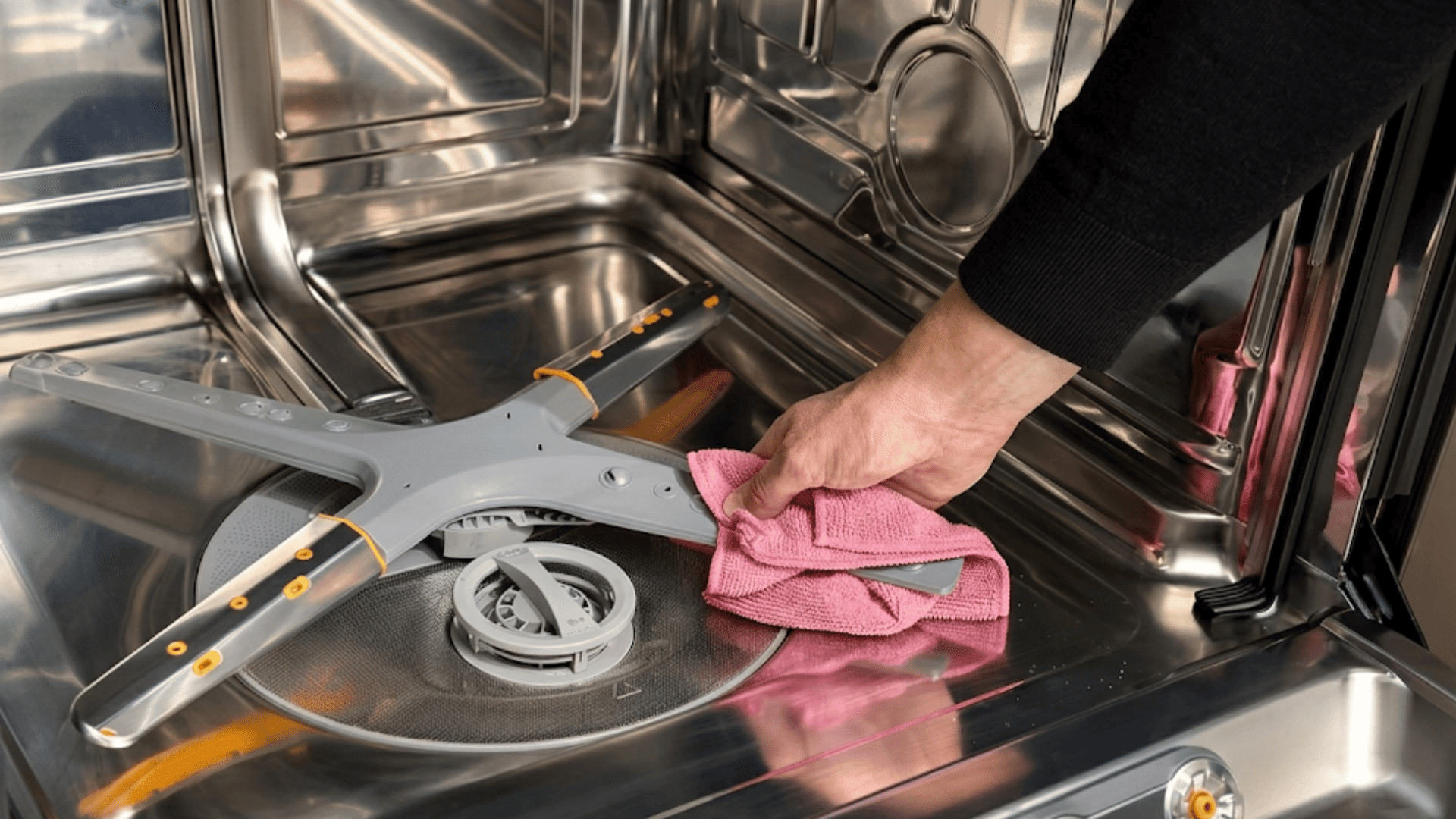
You open the dishwasher, and something smells off. Maybe there is grime caked along the edges of the door or a film on your glasses.
I have seen this in so many homes, and the cause is almost always the same: a dishwasher that never gets cleaned itself.
Most people assume the machine self-cleans with every cycle, but that is not how it works.
Food bits, grease, and hard water deposits build up quietly over time.
In this guide, you will learn how to clean a dishwasher from the filter all the way to the exterior, so your machine runs better and your dishes come out the way they should.
Signs Your Dishwasher Needs Cleaning Now
Knowing when to clean is just as useful as knowing how. Here are the clearest signs that your dishwasher is overdue.
- Persistent bad odors: a sour or musty smell coming from inside the machine almost always points to food trapped in the filter or grime sitting along the door seals.
- Dishes coming out with a film or residue: a white or cloudy coating left on glasses and plates usually means hard water deposits have built up inside.
- Visible grime along door edges: if you can see dark buildup or discoloration along the rubber seals, the machine is well past due for a thorough cleaning.
- Water sitting in the bottom longer than usual: slow drainage often signals a partial clog forming near the filter, especially if food debris has been collecting there for weeks.
- Stiff or clogged spray arms: spray arms that do not spin freely or have blocked nozzle holes reduce cleaning performance across every cycle until the issue is cleared.
What Do You Need to Clean a Dishwasher?
Most of the supplies you need are probably already sitting in your kitchen. Before you get started, gather these items so everything is within reach.
- Blue Dawn dish soap
- White vinegar
- Spray bottle
- Old toothbrush or scrub brush
- Microfiber cloths
- Dishwasher cleaning pod or tablet
- Non-scratch scrub sponge
How to Clean a Dishwasher Easily at Home?
Follow each step in order for the best results. This process takes about 30 to 45 minutes, and most of that time is hands-off soaking and running cycles.
Step 1: Remove the Filter and Spray Arms
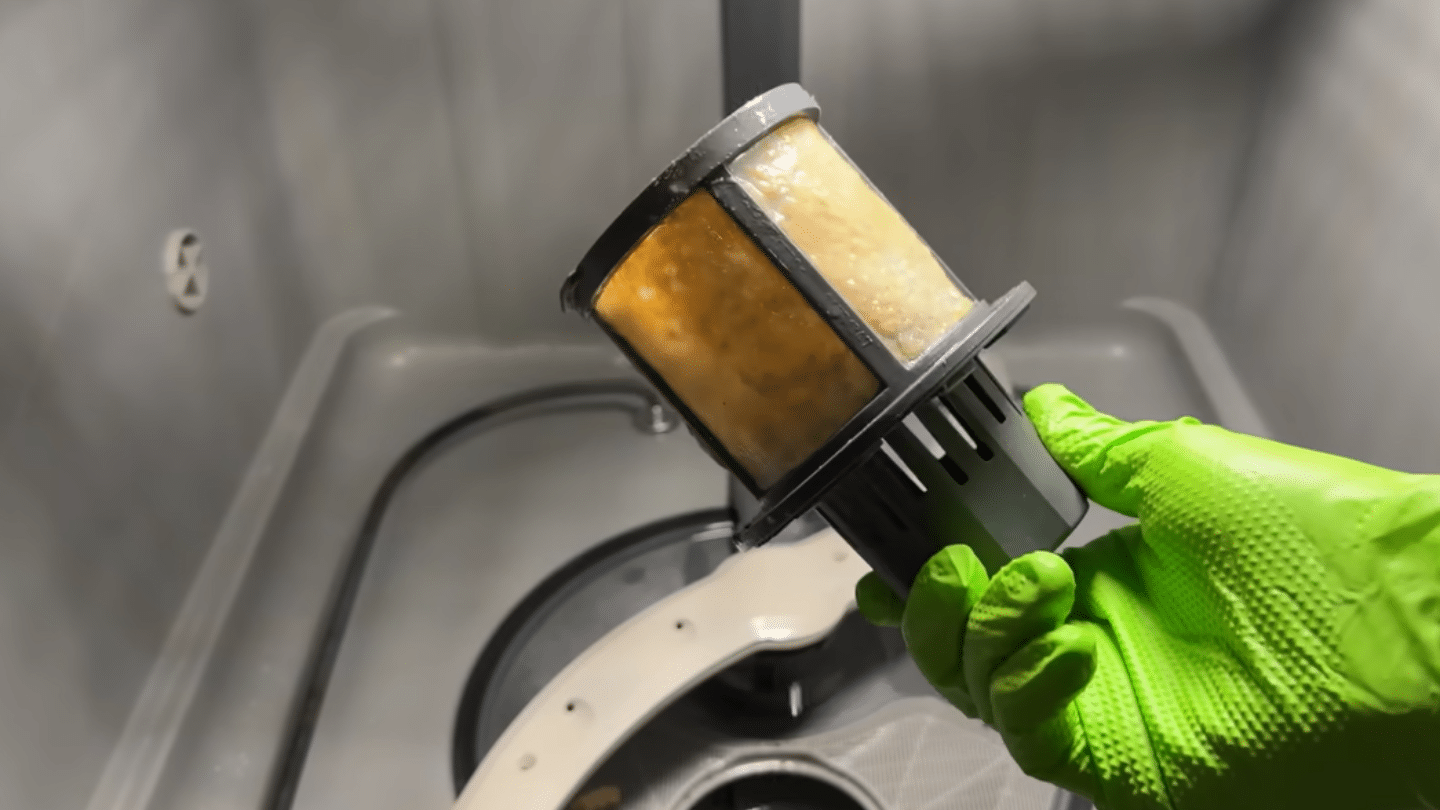
The filter sits at the center of the dishwasher floor. Most modern machines use a twist-and-lift design. Turn it counterclockwise and pull it straight up.
A dirty filter is the most common reason dishwashers develop bad odors, since trapped food breaks down over time.
Check whether the spray arms lift off too. Many do so with a simple twist or pull.
Older machines, 15 or more years old, may have fixed parts. A quick Google search with the make and model number will confirm.
Step 2: Soak the Filter and Spray Arms
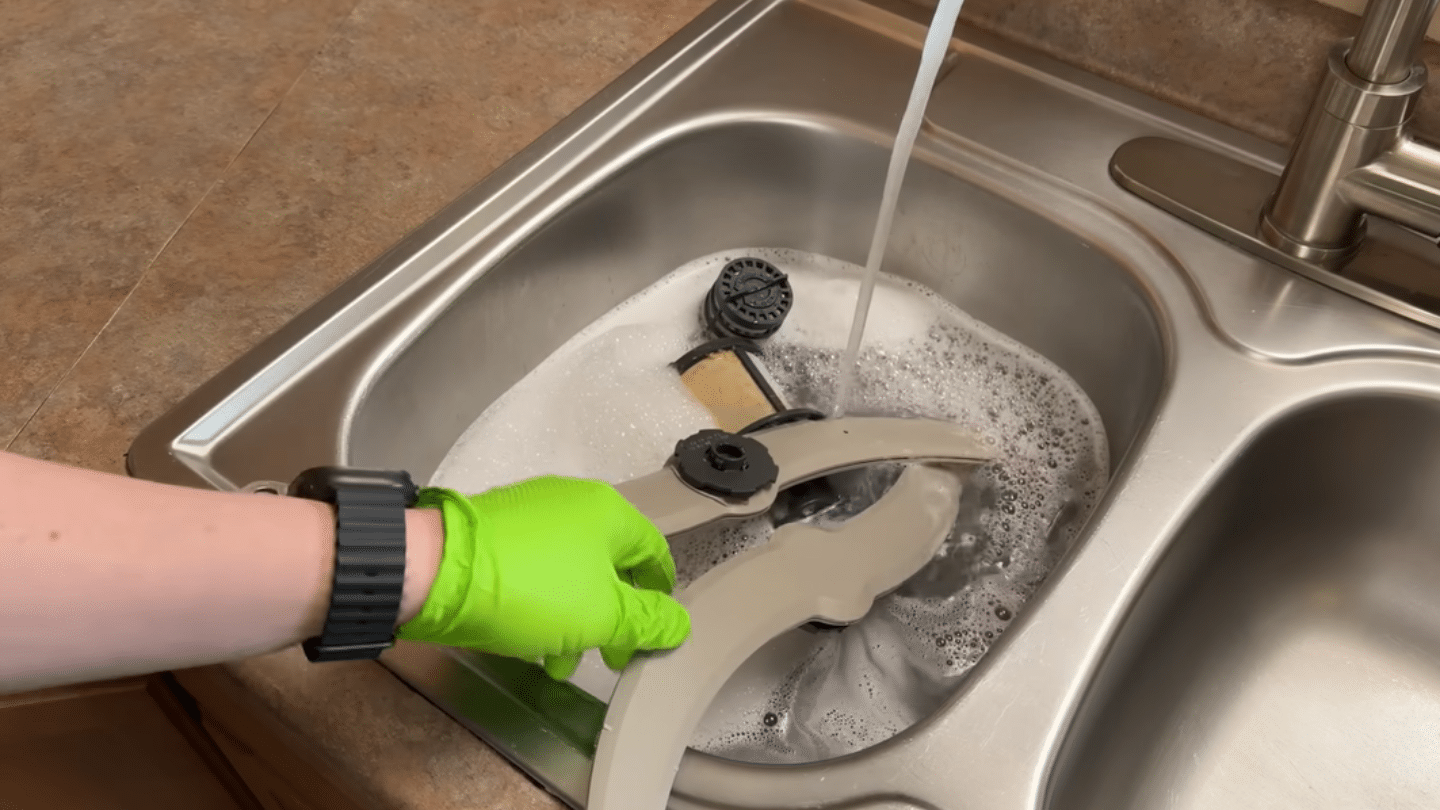
Fill the sink with hot water, add a squirt of Dawn, and pour in about a cup of white vinegar.
Dawn cuts through grease on the filter mesh while vinegar breaks down hard water deposits and knocks out odors at the source.
Set the filter and spray arms in the sink for about 10 minutes. Around the 5-minute mark, flip the spray arms so both sides get equal contact with the solution.
This soak does most of the work before a brush is even needed.
Step 3: Clean the Door Edges and Seals
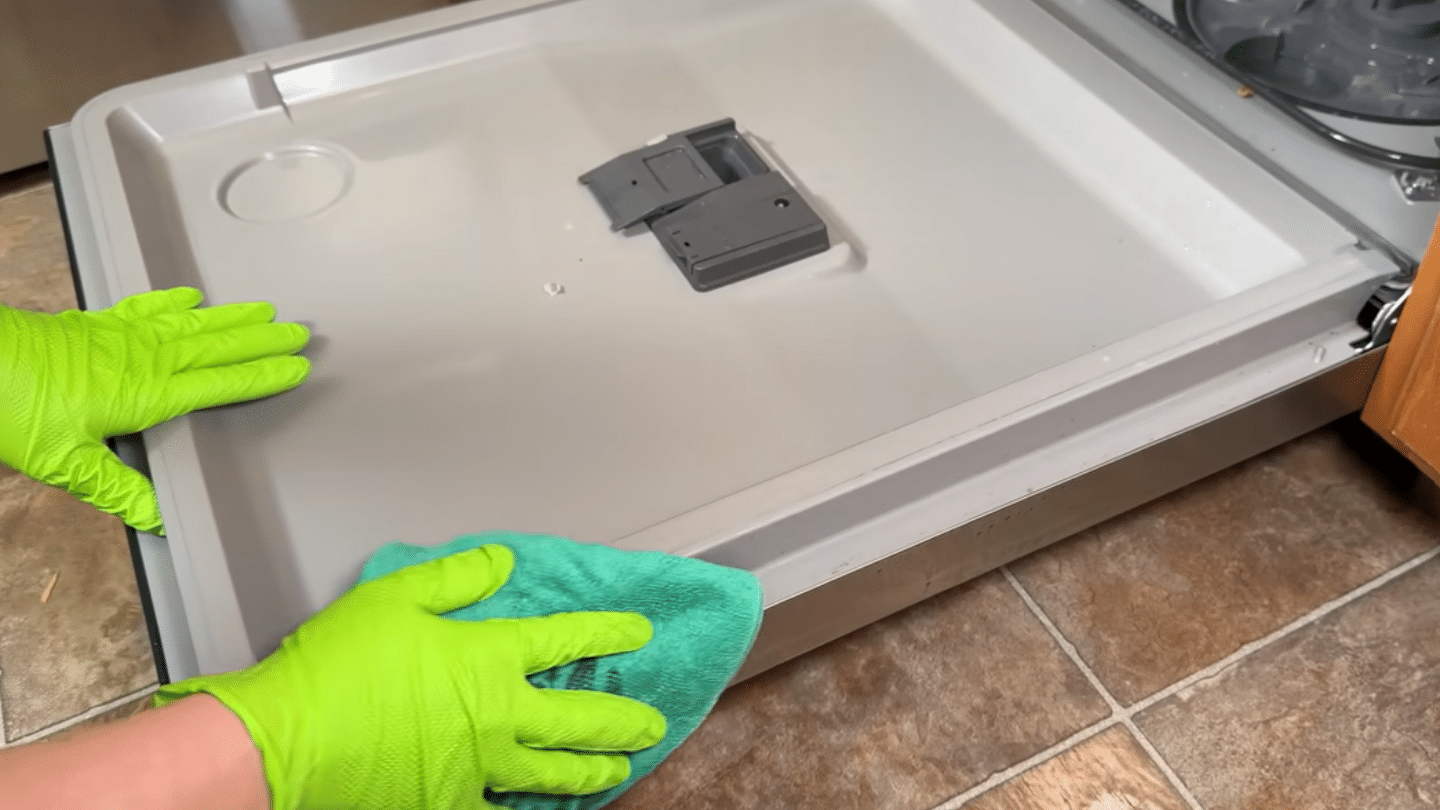
Mix 1 cup of white vinegar, 1 teaspoon of Dawn, and 1 cup of water in a spray bottle. Spray along the door edges and rubber seals, then scrub with an old toothbrush.
The seals never get hit during a wash cycle, so grime builds up fast. The bottom lip where the door hinges meet the frame is the most missed spot during routine cleaning.
It collects the heaviest buildup and is often the main source of the musty smell that comes from the machine.
Step 4: Clear Standing Water and Wipe the Interior
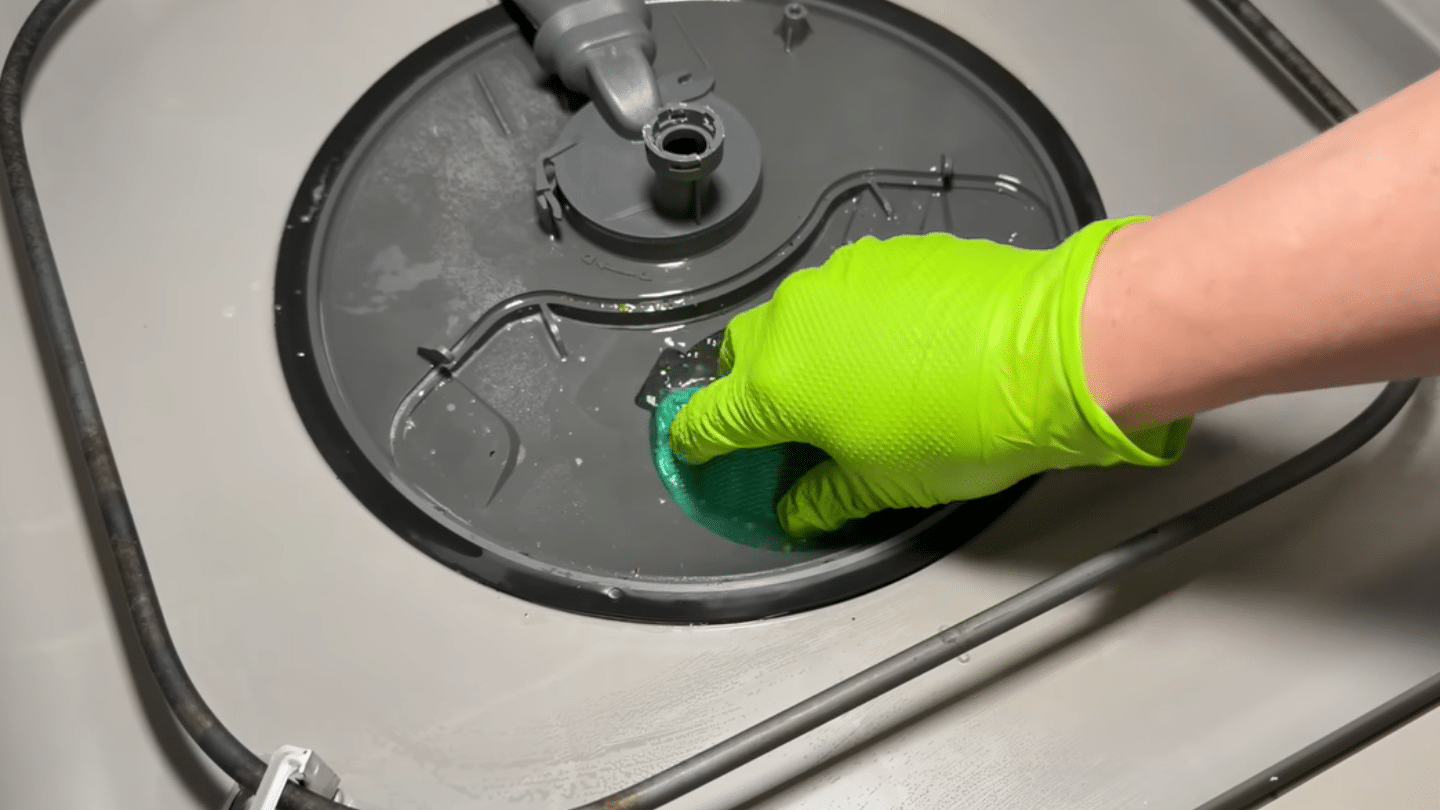
Check the bottom of the machine near the filter opening. A small amount of standing water is completely normal.
Water sitting well above the drain hole usually indicates a partial clog that’s worth clearing out.
Use a towel to absorb the water during a deep clean, then check for old food chunks sitting at the bottom. Give the floor a quick wipe while you’re down there.
The walls do not need heavy scrubbing since a full wash cycle is coming right after this step.
Step 5: Scrub and Rinse the Removable Parts

The soak has already loosened most of the buildup, so scrubbing is straightforward. Use a toothbrush or scrub brush to work through the filter mesh in small circular motions.
Focus on the nozzle holes on the spray arms, since food particles and mineral deposits collect inside those small openings and block water flow.
This directly affects how well dishes get cleaned each cycle. Rinse everything under warm running water until the water runs clear, then set the parts aside for reinstallation.
Step 6: Run a Deep Clean Cycle with a Dishwasher Pod
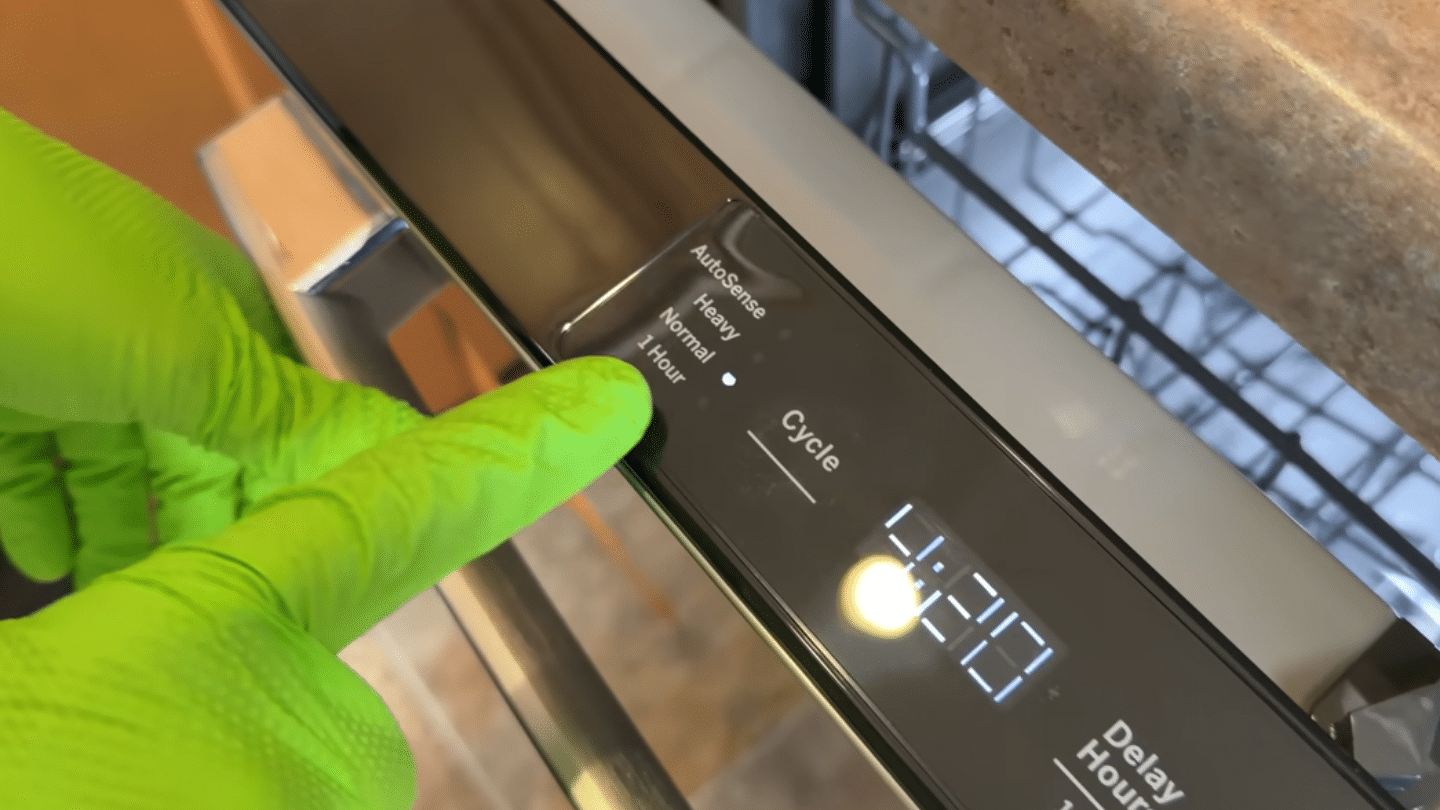
Load the dishwasher empty and drop a cleaning tablet or pod into the detergent tray. Regular dish detergent will not do the same job here.
Dedicated cleaning tablets contain citric acid, which dissolves grease, food residue, and hard water deposits that a normal wash cycle cannot touch. Run the hottest cycle the machine offers.
This cleans the racks, utensil drawer, and interior walls from top to bottom without any extra scrubbing needed.
Step 7: Clean the Exterior
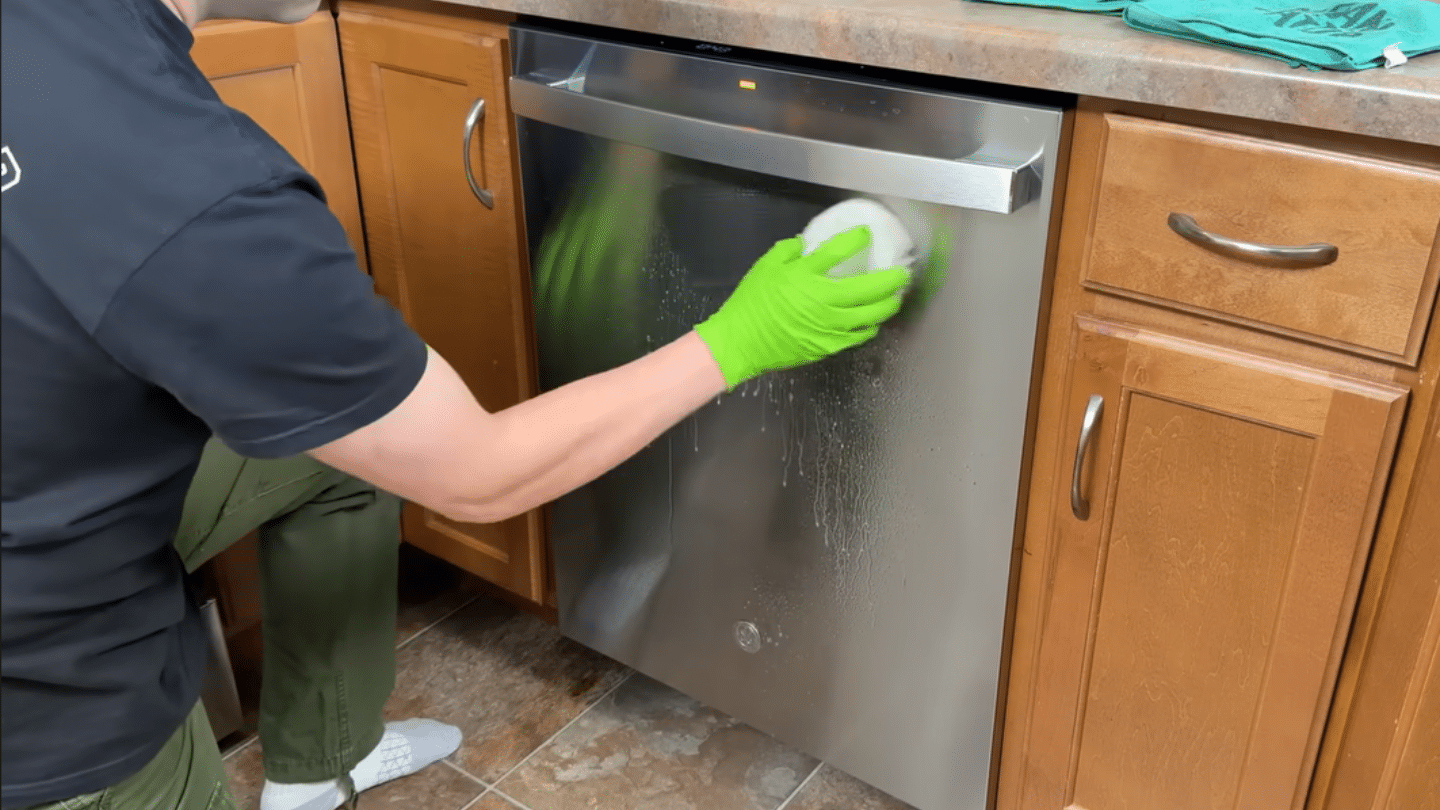
Mix a few drops of dish soap into a small bowl of warm water. Dip a non-scratch sponge and wipe down the outside of the door, control panel edges, and handle. For stainless steel finishes, always scrub with the grain of the metal.
Going against it causes micro-scratches that permanently dull the surface.
Follow with a damp microfiber cloth to remove soap residue, then buff dry with a clean microfiber cloth for a streak-free finish.
This tutorial is based on a helpful video by Clean That Up. You can check out the original video on their YouTube channel here or watch it below.
Dishwasher Cleaning Mistakes to Avoid
Even with the best intentions, a few common slip-ups can leave your dishwasher still smelling stale or performing poorly.
- Skipping the bottom door lip: this spot sits right where the door closes and never gets rinsed during a cycle, making it the single most missed buildup zone in any dishwasher.
- Using regular dish detergent for the cleaning cycle: standard detergent lacks citric acid, so it can’t break down hard water deposits and grease accumulated over months of use.
- Ignoring the filter because the machine seems fine: odors start at the filter well before you notice anything wrong with your dishes; if it smells off, then the buildup is really heavy.
- Assuming all standing water is a problem, a small pool of water near the drain area is completely normal and is built into the design of most modern dishwashers.
- Scrubbing stainless steel against the grain: going against the grain creates scratches across the finish that are impossible to reverse and make the surface look dull over time.
- Neglecting the spray arm nozzles: blocked holes reduce water pressure during cycles, which means the top rack, especially, ends up with dishes that are not fully cleaned.
How Often Should You Clean Your Dishwasher?
How often you clean depends on how hard your machine works. A household that runs the dishwasher once a day needs more frequent attention than one that uses it a few times a week.
| Task | How Often | Notes |
| Clean the filter | Once a month | Clean twice a month if you use the dishwasher daily |
| Run a cleaning pod cycle | Once a month | Helps prevent buildup between deep cleans |
| Wipe door seals and edges | Every 2 weeks | Removes dirt before it hardens |
| Deep clean the dishwasher | Every 1 to 3 months | Adjust based on usage and any odors |
| Wipe the exterior | As needed | Keeps the dishwasher looking clean and neat |
Staying on top of the filter alone makes the biggest difference. A quick monthly rinse of the filter keeps odors from forming and reduces how often you need to do the full deep clean process.
Conclusion
Cleaning a dishwasher is one of those tasks that feels like a big deal until you actually do it. Once you get through it the first time, you realize it mostly runs on its own.
The payoff is real: your kitchen smells better, your dishes come out cleaner, and your appliance lasts longer without costly repairs.
If you are not sure where to start, do the filter check first. Pull it out, give it a look, and soak it for 10 minutes.
That one step alone will tell you a lot about what your machine has been dealing with.
Now that you know how to clean a dishwasher properly, bookmark this guide, grab your supplies, and give your machine the reset it deserves.
Frequently Asked Questions
What Is the Best Thing to Clean a Dishwasher With?
White vinegar and baking soda help remove grease, odors, soap residue, and light mineral deposits from dishwasher surfaces.
How Does a Dishwasher Deep Cleaning Process Work?
Deep cleaning includes washing the filter, spray arms, door seals, and drain area, and running a hot cleaning cycle.
What Is the Best Way to Clean the Inside of a Dishwasher?
Cleaning removable parts first, followed by a hot cleaning cycle, helps remove residue, grease, and unpleasant odors.
Can Vinegar Be Used to Clean a Dishwasher?
Yes, vinegar helps break down grease, soap scum, and odor-causing buildup when used during a hot cycle.
Why Is There White Residue Inside a Dishwasher?
White residue usually results from hard water minerals, detergent buildup, or rinse aid issues that affect dishwasher performance.